Discover the Hidden Gems of Fort Ross Vineyard

People living on the edge, the bet it all risk takers, and even those simply taking the less traveled road are exceptions in today’s wine world. Because they don’t follow conventional wisdom or marketing trends, these outliers can be exciting to follow. And when they succeed, they can come up with brilliant wines. But by going against the grain they risk going unnoticed, flying way under the radar of wine writers, somms, and influencers. 

Well, this writer was lucky to have been directed to one of those wineries by a good friend, and after tasting through the wines, I’m going to blow through the cloud cover and shine the spotlight on a great discovery: Fort Ross Vineyard.

In 1988, when phylloxera was beginning to take its toll in the North Coast wine regions, Lester and Linda Schwartz purchased a large slice of rugged land on a steep coastal ridge above the Pacific Ocean near the historic Russian settlement of Fort Ross. In 1994 they established Fort Ross Vineyard and made their first wine in 2000.

First, the Vineyard Story

 South African natives who had immigrated to the San Francisco Bay Area in the 1970s, they appreciated  fine wine and food and were convinced the site was suitable for growing wine grapes. Located 5 miles north of Jenner, their land is literally along the Coast of Sonoma. As an AVA, the “Sonoma Coast” extends inland and includes parts of Carneros, Russian River Valley  and the so-called Petaluma Gap. The land they were considering turning into a vineyard, however, would be the closest in California to the Pacific Ocean.

So, to review, 1988 was not the best of times for venturing into winemaking and the site sitting above and less than a mile in from the Ocean had not yet been explored.  There were many risks but the elevations of these potential vineyards range dramatically from 1,200 to 1,700 feet, or just above the coastal fog.

In 1991 Lester ordered two dozen dormant rootstocks, and when the initial plantings proved successful, the couple expanded their experiment, planting a test vineyard with 16 varieties, three trellis systems, assorted clones and several rootstocks. 

When all of the extensive trials were evaluated, they developed a vineyard  which now consists of four varieties: Chardonnay, Pinot Noir, Chenin Blanc and Pinotage.  No surprise with the first two; Sonoma Coast Chardonnay and Pinot Noir were made famous by the likes of Marcassin, Flowers, Hirsch, and Peter Michael  But their vineyards are hidden away inland, not along the riskier coast.  

And although both Chenin Blanc and Pinotage are popular in South Africa, no one else, except  native South Africans, would even think about planting them in California. Chenin Blanc had fallen out of favor by 1991 and there was nowhere you could obtain Pinotage vines. 

Not a problem for them. They sourced Pinotage budwood from two of the finest sites in South Africa, and became the first independent growers to import grapevine cuttings from there through the Foundation Plant Services that operates alongside the U.C. Davis School of Viticulture and Enology. 

Then when they laid out their vineyard, they didn’t take the easy way of uniformity. Instead, the Fort Ross Seaview Vineyard comprises 32 vineyard blocks over 53 planted acres, with each block varying in size from approximately one-half to two acres each.  Having 32 blocks is not the easy way to plant, to tend, and to harvest for sure. 

But each block is based upon a carefully selected clone and rootstock for the variety. The vineyard is planted with heritage clones and field selections, which generally produce low yields with small bunches and berries that deliver very distinct wines.  

  • Pinot Noir – Calera, Pommard, Swan, Dijon clones 115 and 777
  • Chardonnay – Old Hyde, Wente, 
  • Pinotage – Proprietary clones MM1, MM3 from South African budwood

Now for the Wines

Fort Ross Vineyard Seaview Sonoma Coast Pinotage 2019 $62

If you’re unfamiliar with Pinotage, here’s a great place to start. Created by crossing Pinot Noir with Cinsault, Pinotage led the way to the revival of winemaking in South Africa. At the time, Cinsault was associated with Hermitage which explains the “tage” in the name. This rendition from Fort Ross is a stunning example.  

After the fruit was hand harvested in early October of 2019, winemaker Jeff Pisoni aged the wine for 12 months in 20% new French oak and bottled it unfined and unfiltered. In the glass this wine is quite dark in color with an intriguing aroma that leans slightly toward the earthy Rhone side with berry fruit, green tea and cassis. On the palate it is vibrant and energized with black plum, spice and tea leaf flavors that are supported by velvety tannins. Finishes with good length, suggesting this would reward lengthy cellaring. Not to sound corny, but it does capture the earthiness of a Rhone and the velvety smooth texture of a Pinot. Who knew?  360 cases made 94

Fort Ross Vineyard  Fort Ross-Seaview Sonoma Coast, Chenin Blanc 2023 $44

Popular decades ago and made in a slightly sweet style, Chenin Blanc rarely gets anyone’s attention these days and few people know that it can yield an excellent dry wine.  Cool climate Chenin Blanc is rare in California with most acreage now in warm sites. In its third vintage of estate grown Chenin Blanc, Fort Ross came up with an extraordinary rendition. It  brings together concentration, energy, complexity in a seamless package. 

In the glass it is light yellow with a healthy green tint and the Initial assertive aroma asserts itself in a combination of lemon meringue and fresh pear. With airing, the aroma takes on some ginger spice and melon. On the palate it is medium bodied with concentrated flavors of lemon and stone fruits. From start to finish it is solidly structured and remains lively on the palate. With its crisp acidity, the flavors continue to a crisp finish with background notes of honeysuckle and bosc pear fruit. Unquestionably one of the finest Chenins in my experience, the wine was made by Jeff Pisoni who aged 80% of the wine in neutral French oak for seven months and bottled it unfiltered. 100 cases made. 95

And Now Bring On the Clones

Fort Ross Vineyard Stagecoach Road Fort Ross-Seaview Sonoma Coast Pinot Noir 2022 $80

This pitch perfect Pinot is from two clones (Calera and Pommard) planted on steep hillsides overlooking the Pacific Ocean. Early spring rains during flowering reduced the crop in 2022 and at the harvest the berries were unusually small. That comes across once the wine is poured and the color is a deep garnet. Initial scents of cranberry and plum with anise are a bit reticent, but with airing and swirling, black cherry, tea and toasty oak scents emerge. 

Smooth and silky on the palate, it offers concentrated flavors of cherry and earthy, forest floor that are bright and charming with very light tannins. Youthful and balanced, it was showing even greater harmony a day later, indicating a long future lies ahead. But can be enjoyed whenever the mood hits.  230 cases.  94

Fort Ross Vineyard The Terraces Fort Ross-Seaview Sonoma Coast Pinot Noir 2022 $80

Pinot lovers should make room in their cellars for this one. From a low yielding vintage, this Pinot was made from a vineyard block planted entirely to the Calera clone, and the wine was aged for 11 months in French oak, 40% new. Known for its small berries, high acidity and solid frame, the Calera clone is often a key component in multi-clone Pinots. 

Once poured, this ‘22  gets your attention with its lovely ripe plum and raspberry aroma, and the palate impression also makes it stand out with its bright cherry flavors along with definite oak spice and youthful acidity. Concentrated with some tannic grip, this one is for the cellar and, with aging, it should be outstanding. 250 cases made 94-95

For the Final Touch: Chardonnay

Not surprisingly, the Fort Ross Chardonnay is not your Rombauer’s  buttery, oaky, commercial stuff.  To begin with, the  clones planted are the Went and Hyde  field selections, seldom seen these days. Grown in the coastal, breezy climate, the vines in 2022 yielded a small crop.

But once poured, the ‘22 Chardonnay announces its individuality with its unusual yellow color. Then the aroma is fresh and vibrant with lovely apple, and lemon as it expands.

On the palate the apple and stone fruit flavors are concentrated and sustained right through a long finish. It also is one of the very few Chardonnays that will reward cellaring which became apparent when it showed great complexity 24 hours after being opened.

So there you have it. 

Go to http://www.fortrossvineyard.com to get on their mailing list. 

You can purchase new releases at a 10% discount and don’t have to be club members.

Also, they now have a line of wines called Sea Slopes to supply top restaurants and wine shops in select markets around the country.

Sea Slopes wines are made by the same winemaker using the estate vineyards.

Going On and On About Roussanne

Roussanne is a white wine that is full of promise. It is a challenge to grow, but winemakers and vineyard owners are on a sharp learning curve.

Here are two textbook examples:

Truchard Vineyards Carneros, Napa Valley Estate Bottled Roussanne 2023 $30
One of the first to make a Roussanne in California, Truchard planted 3 acres back in 1998. Over the years the Truchards have learned how to deal with the variety’s many challenges. In 2023, they harvested Roussanne in early November, and fermented the juice in French oak barrels (20% new). As the wine aged on the lees for 6 months, it was frequently stirred and went through a partial malolactic fermentation. Showing some green in its light yellow color, the wine opens up and is both vibrant and full flavored.  Nectarine and apricot fruit aromatics lead the way and pick up subtle jasmine and a touch of oak with swirling.  Medium full-bodied, the wine is smooth and continues with flavors of peach, apricot and citrus which are delivered with a hint of minerality and firming acidity. Layered and balanced, it is solid now and should peak in 3-4 years.  94

Peter William Vineyard Rogue Valley (Oregon) Roussanne 2024 $28.50 Roussanne Is a challenge to grow, and the winery made a few viticultural changes in its estate vineyard. In 2024 those changes paid off and resulted in a vibrant, textured wine. Harvested in mid-october at a relatively low Brix of 22.8, this Roussanne was barrel fermented and aged for 5 months in neutral French oak. Straw colored, it offers an attractive aroma of white peach with hints of ginger and jasmine for added intrigue. Medium-bodied and smooth in texture, the wine remains vibrant with rich flavors of peach and some honeyed notes. The finish is long and lively with some of that ginger spice showing up in the aftertaste. 93

If you love hearing about winemakers who think out of the box, well then read on. Founded by Sue Tipton, Acquiesce Winery & Vineyards is a white wine specialist in Lodi. You heard right, Lodi white wines only. The story goes that when vacationing in the Rhone Valley, she tasted a white Châteauneuf-du-Pape and that changed everything. Not long afterwards, she researched the white varieties, discovered Tablas Creek and its nursery, and, well, uprooted her Zinfandel vineyard and went full on white rhones. At Acquiesce today she offers wines made from Picpoul Blanc, Grenache Blanc, Roussanne, Viognier, Bourboulenc, and Clairette Blanche as well as several blends.

She was the first in California to plant the Bourboulenc variety and has not backed down when dealing with the white Rhone problem child, Roussanne.  But to those winemakers who love a challenge, it can be rewarding.

Acquiesce Winery & Vineyards Mokelumne River, Lodi Roussanne 2022 $41

The 2022 Acquiesce Roussanne is a perfect example of the multi-faceted white. Harvested in late august from the estate’s 2 acres, this Roussanne  is incredible in many ways. It keeps changing in the glass as it airs, and in the final analysis, is nuanced and balanced. The medium yellow color has a youthful green edge. The initial aroma of peach and jasmine takes on a hint of honeysuckle and tea.  On the palate it is medium full-bodied, soft and smooth in texture, and the flavors of peach and green tea also have a mineral, chalky back taste. There’s just enough acidity to add to the finish which still has a fresh fruit and chalky aftertaste. Entirely stainless steel fermented and lees aged, it can be matched with your favorite white wine main course.  94 points

Roussanne is known to improve with cellaring, so this 2022 will be fascinating to try again in a few years.

And here is proof positive that it ages well indeed:

Domaine de la Terre Rouge Sierra Foothills (California) Roussanne 2005 

From the winery’s cellar courtesy of Bill Easton. The color here is medium yellow but with some lively green glints. Don’t let the “old” look mislead you because this wine is still very much alive. The aroma is a combination of nectarine and candlewax with some citrus and green tea subtleties. Concentrated with layers and layers of flavors, the wine offers a silky smooth, creamy texture through bottle aging. Ii has developed some pear and honey flavors and a touch of almond but it is all seamless and harmonious at this stage. Finishes long and lively. What a treat to experience how well Roussanne responds to cellaring. It held up well when tasted a day later. Amazing wine.


Also, see my  other reviews of  Roussannes at http://www.winereviewonline.com

Sales Alert!

At Tooth & Nail which is one of my favs. Great wines from Paso and the Central Coast.

Shop at  toothandnailwine.com

Here you go:

“We are opening our warehouse for a major sale of all of our wines.

All of our wines are now 40% off and if you’re a member with us, you’ll receive an additional 10% off, making all of our wines 50% off for our members.

Since our tasting room is closed, this is an online offer only with complimentary shipping on orders of $100 or more.”

While supplies last. All sales are final.

For reviews, see the reviews at winereviewonline.com

I love the Syrahs and gave one of their Grenache a score of 97 points!

There are several different labels, such as:

Amor Fati: Syrah, Grenache, Pinot Noir and Chardonnay, all from cool climates.

For me, these 4 were love at first taste. All scored 92 points or higher. See reviews at 

http://www.winereviewonline.com

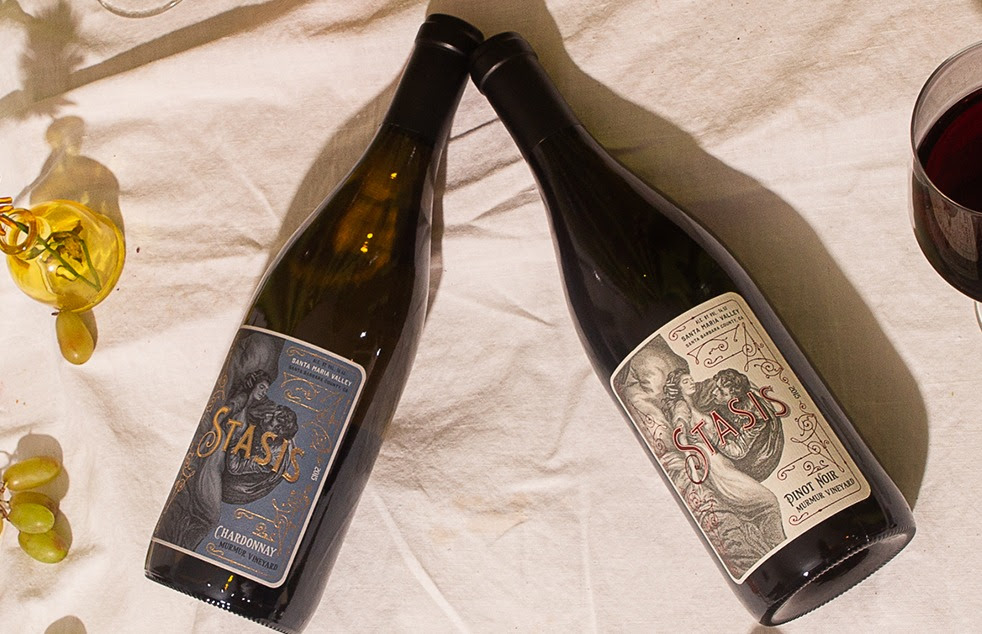
 Stasis: Pinot Noir from Santa Maria and a Viognier. Both excellent.
Destinata: Drink now, no fanfare Chenin Blanc, Riesling, and Syrah. All good. All fun. Especially the drink-now style Syrah. The dry Riesling and Chenin will surprise you.

Tasting Well-Aged Cult Wines 


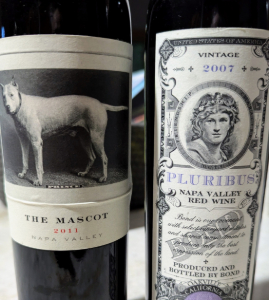
As 2024 was coming to an end, I had an opportunity to taste two aged Napa Valley cult wines.  They were the Bond 2007 Pluribus and the 2011 The Mascot. Both belong to the father of cult wines, Bill Harlan of Harlan Estate. 

Just to make sure I got a good fix on the aging trajectory of these two, the bottles before me were half bottles, 375ml. There’s no argument that wine ages faster in half-bottles, we just don’t know how much faster. Both bottles before me had excellent levels of fill, and the corks were in excellent condition. There was some sediment on both corks. Those signs usually indicate the wines were properly cellared.

Parker’s Wine Advocate rated the 07 Pluribus 98+ and the Spectator gave it a 97.  From Parker’s notes, it was  “A wine of great intensity and full-bodied power yet with a freshness and delineation that are remarkable, this stunning wine should drink well for 25-30 years. Drink: 2010-2040.” 

The Wine Spectator reported: “Wonderful aromatics lead to a rich, layered mix of spicy currant, blackberry, wild berry and currant flavors that are full-bodied, intense, dense and concentrated, slow to reveal pleasing earth, black licorice, graphite and roasted herb. The tannins give the flavors great traction. To be released spring 2011. Best from 2012 through 2024. 566 cases made. “ 

Yes, both publications were reviewing the wine several months before it was released to the public.  That both these guys were given special treatment might explain the use of words like “stunning” and “wonderful” as some sort of indirect payback for advanced review samples. 

To return to the wines, here are my notes for the 07 Pluribus:

Good dark color.  With aeration, the nose was vague and with diligent swirling showed dried prune, a hint of tobacco, and walnut. Overall, it smelled like old wine. The body was smooth and the flavors were gentle. But the wine was going gently into that good night for sure. 

It would not surprise me to hear the Pluribus is now over the hill in a standard bottle. The value given it by wine-searcher is $525. Then again, people who pay that kind of money for a bottle are not likely to ever say they were disappointed if only to protect their ego and reputation.  As for some background, the Bond Pluribus which debuted in 2003  is from a  mountainous 7-acre site in the Spring Mountain District with steep exposures to the north, east and southeast. It comes with a high price and wine pedigree and was sold only to members  on a mailing list.

Among Harlan’s other wine projects is  “The Mascot” which was the brainstorm of his son, Will.  This wine was a Cabernet made from a selection of younger vines from the primary estate vineyards, and The Mascot made its debut in 2008. As I understand it, The Mascot was made from a selection of new vines created by the routine replanting procedure. The concept is similar to the way many of Bordeaux’s famous estates produce wine from young vines and they are known as “second label” wines. 

In 2018, Decanter Magazine reviewed the 2011 The Mascot and the description is interesting. I was intrigued by the last line: “2011 was a relatively cool year, which gives the wine its freshness. The nose is vibrant and seductive, with blackcurrant aromas. Sumptuous and concentrated on the palate, it’s also sustained by firm tannins and sufficient acidity. The finish is robust and long, and although intended to be drunk on release, it will certainly age.”

So seven years after the vintage and after being bottle aged for five years,  The 2011 Mascot seemed to have surprised the Brits, even though they awarded it only 92 points, as capable of further cellaring. The current vintage is priced from $125 a bottle on up, and according to wine-searcher, you can buy the 2011 for the same price at several retailers in the UK.

Of the two wines I tasted, The Mascot was more attractive and in much better condition. Even in a half-bottle, it opened up with airing and displayed a delicate aroma or bouquet of dark fruit and dried herbs. It was soft and harmonious on the palate and had just a touch of velvety tannin left that carried through in the aftertaste. It is 4 years younger and tasted younger. But on its own, it may have been more exciting to taste in 2018. 

The Takeaways

Tasting old wines is an experience that should never be passed up, but often it is not a pleasurable experience. 

Not all wines get better with age is an old saying but even those capable of aging dont always reward long term cellaring. 

With aged wine, it often turned out that each individual bottle ages differently. This I’ve learned over the years: two bottles from the same case in the same cellar  can and often do, taste different. Wine is full of surprises, both pleasant and disappointing.

As for wine reviewers suggesting a wine’s aging capability is a sign of greatness, it is at best a guess. People like Parker and many Somms today pump themselves up believing they have a special gift.  

Maybe they should heed Mark Twain’s view: “It is difficult to make predictions, especially about the future.”

Do you know the way to Vezelay?

Do you know the way to Vezelay? Well, it leads to a great wine discovery in France and I, pumped up like a new WSET level 4 “expert,” was about to invite you to come along in the journey, only to be brought back to reality. As I learned from a little research. My discovery road trip was 40 years too late.  I found that out when I opened a favorite book from my wine library.

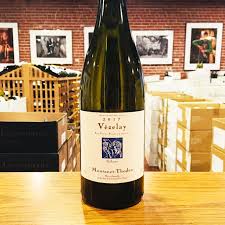
In 1988 in his Adventures of the Wine Route Kermit Lynch described Vezelay as a then “freshly minted AOC capable of producing distinct, world-class Chardonnay.” Just to rub it in a little further, my discovery was a 2022 wine made by Domaine Montanet-Thoden. Kermit’s reference was to Vezelay wine  “especially in the hands of a vigneron as talented as Valentin Montanet.” Same family of winemakers, just different generations.

Well, better late than never, or whatever cliche AI might use. Another point brought home to me when browsing through the Kermit Lynch book is how mechanical, predictable and boring a lot of wine reviews have become these days.  Here’s how Lynch described the Vezelay Chardonnay: “This climate, a clay-and-limestone soil, and stainless-steel vinification are the pillars of Valentin’s Galerne Blanc, a divine rendition of pure, chiseled Chardonnay, bearing notes of orchard fruit, citrus, and oyster shells.” 

a divine rendition of pure, chiseled Chardonnay.

Yep, he described the wine as “a divine rendition of pure, chiseled Chardonnay.” If this has caught your attention, you should try to get hold of the latest edition of  Adventures of the Wine Route which is available from Amazon. 

The writing style is so different from today’s wine ramblings.  It was not only written in a different era in which Lynch was not shackled by the 100 point rating system but it is also written from the point of a view of a wine retailer, a wine merchant. A self-taught wine merchant who approaches visiting wine regions as an “adventure” no less. Not a SOMM, not a WSET holder, not an influencer.

Returning  to Vezelay

And now back to Vezelay and what I learned. It is located south of Chablis and its winemaking goes back for centuries. The medieval village was an important resting place in pilgrimages. And of course, good pilgrims likely enjoyed the local wine. But the vineyards were pretty much wiped out by phylloxera, and it was not until the late 1970s that replanting was underway. 

By 1985, the vineyards were still growing and they were merged into the Burgundy AOC. A few years later they were upgraded to the regional AOC of “Bourgogne-Vezelay.”

Montanet-Thoden, the producer that I “discovered,”  was founded in 2000 by Catherine Montanet of Domaine de La Cadette in collaboration with Tom Thoden. Around that time they planted 6 hectares of Chardonnay and farmed them organically in Vezelay. Largely due to their efforts, Vezelay was granted AOC status in 2017. 

The soils are said to have more clay than Chablis, but they still have a good amount of limestone for their minerality.  Most of the Vezelay vineyards are planted along the higher elevations of the region. Montanet-Thoden Bourgogne Vézelay Blanc Le Galerne is the wine’s full identity, and “Le Galerne” refers to the wind that also helps define this appellation.

In a review posted in winereviewonline.com I gave Domaine Montanet-Thoden Bourgogne Vézelay Blanc Le Galerne 2022 which sells for $39 with a rating of 93. 

Now I realize how impersonal any score is. But I did describe the wine as having oyster shell minerality, and wish I could have come up with “divine, pure chiseled Chardonnay.”  

Checking the Lists of Best Wines of 2024

“The Best Wines of 2024” lists keep coming our way in December as each day another one pops up.  The major publications like The Wine Spectator and the Wine Enthusiast magazines have been offering these Best of the Year lists for decades. Both recently announced their 2024  100 best wines. Though they try to make the announcements dramatic, both The Wine Spectator and the Wine Enthusiasts annual lists have lost whatever drama and sizzle they may once have had.  

No surprise since by now most readers have figured out these lists are either payback for an advertiser or fodder for a PR campaign from the producer. Many of the wines are off the market by year’s end, so the lists are often not useful as buying guides.

 What criteria are used to come up with the typical Best of lists is an interesting subplot. It seems that the major publications ask each reviewer for his or her candidates for best of the year. Scores on the 100 point system are a major consideration, but every so often a wine touted for great value makes the list. But it has to also be rated in the 90-94 point range, of course. I applaud the fact that the Enthusiast also publishes an annual list of great values. 

Listicles

Lists have emerged as a popular format that has taken over the internet over the last decade. “Listicles” have replaced articles in a way. Probably because the number appears in the title or subject line and it sounds newsworthy. More likely, search engines love them. 

Or most likely because a list is easy to compile, while articles need a thesis and require some command of the language to present the argument or position. It wouldn’t surprise me to learn some of these Top 100 lists of wines or of other subjects are done by AI. 

But since listicles, whether compiled by humans or non-humans, have now become a mainstream communications format, I still look them over. One that caught my eye was an end of the year “The Best Argentinian Wines of 2024.”  It appeared at Wine-Searcher, a highly respected and popular website. Like many of my colleagues, I find Argentina to be one of the most dynamic wine countries to follow. The list was based on the 100 point scoring system used by the major reviewers.

As I made my way through the top ten, things got weird. After noting how wonderful Argentina is I read that “prices remain as attractive as ever.” All good. Then the stuff hit the fan. The #1 wine was priced at $245 a bottle, #2 at $226, and, well, the least expensive wine was $128.  Only one white wine made the list, it was a Catena Chardonnay, and the list maker noted, “the White Bones Chardonnay back in 2015 sat at $105, today it comes in at an average of $137. ”  For a Chardonnay from Argentina?

Excuse me, but none of those are attractive prices nor are wines priced at triple digits what Argentina is best known for. Back to Argentina wine #1 in this  wine-searcher list I read, “It’s also extremely attractive pricewise, having gone from $153 in 2020 to today’s price of $246.” 

So that’s what happens when the selection is based on wine ratings from the prime time reviewers. You end up with a list of wines that normal people, non-snobs will never find even if they were fool enough to pay these exorbitant prices.

The Better “Best of Wine” Lists

But for the rest of us, a few “Best of” lists are well worth reading.  James Suckling is much better with the top wines of Argentina. As you go through the list of top 100 wines, you hear about trends and are alerted to new wines to look for. Here’s the method behind the choices: “In curating this year’s Top 100 Wines of Argentina list, we prioritized quality, value for money, each wine’s “wow” factor and general market availability.” 

And as for trend-spotting, Suckling adds this: “Chardonnay may dominate the 14 white wines featured on this list, but rising interest in old-vine semillons and chenin blanc highlights the growing diversity of Argentine whites.”  Suckling’s list also mentions Cabernet Franc, a rising star, and also a Torrontes, the often overlooked wine, made by Susana Balbo.

The “wow factor” is also part of another fascinating list offered by the New York Times list of “Most Memorable” wines of 2024. Compiled by Eric Asimov, the wines are chosen for their quality but also for their impact on the taster and for the reactions they spark. You know, human reactions. And the pleasure wine brings to people. 

Forbes offered several Best of lists. One is “The World’s Best Wine Values of 2024.” Fascinating selections that show a lot of thought went into them.  

Better yet, Forbes asked writer Katie Bell for her “Best Wines of 2024” and she came up with a fabulous list. Her premise, which I thoroughly  support is this: 

“Every year I take note of the wines that moved me, rocked my universe or dazzled me with their quality at an unbelievable price. Long ago I started sharing this list because the best things in life are shared and wine is the ultimate shared experience.” Looking for values and believing that wines are for sharing, now that’s the basis of a great list.

Among the wines she lists are an under the radar Oregon Pinot Noir from Maysara, a white wine from Greece and a Viura from Spain. Oh, and a wine from Argentina: a Malbec from Catena that sells for $20.

And one other list really caught my attention a few days ago. It was posted on Jeb Dunnick’s website. He, of course, offered his top 100 wines, but the list that everyone should read is the Top 50 Best wines of 2024 by R. Drexel. It begins with a Chenin Blanc from  Nalley, a winery new to me and moves along with all kinds of thought-provoking choices and ends up with the #1 wine of the year being a Grenache. A Napa Valley Grenache…totally unexpected but makes me want to get my hands on a bottle.

Discovering a new wine. Now that’s a great way to end a year or celebrate the New Year.

In 2025, Let’s Make Wine Fun Again!

Chablis’ Dirty Little Secret

Chablis may well be one of the most recognizable wine names and also among the most  misunderstood by wine consumers. Some old-timers associate the Chablis name with cheap jug white wine. Then the French don’t help by their obsessive categorization of wine regions. So there are 4 types of Chablis which is a major wine region located in the northeast of France, all made 100% from Chardonnay. 

The four types which are really appellations are: Grand Cru, Premier Cru, Chablis, and Petit Chablis. And the most understood is “Petit Chablis.”  And the most likely of the four to offer super bang for your bucks is…Petit Chablis. So do I have your attention now?

Petit Chablis has nothing to do with being little, but everything to do with place and soils. That’s what most French wine is all about, in case you forgot. While the other categories of Chablis share a type of ancient limestone soil known as Kimmeridgian, Petit Chablis is grown on a more recent type of limestone categorized as Portlandian. 

As vineyards were expanded in Chablis, all of the vineyards on this type of soil were most often on the higher slopes or the beginning of the plateau. In other words, on the outskirts.   A relative newcomer in French wine history,  Petit Chablis became official in 1944.

By today’s standards, the vineyards of Petit Chablis which now represent 20% of all Chablis are not inferior so much as they are not located on that precious ancient limestone soil. And, no surprise, Somms and influencers thrive on babbling about how much they know about the 180 million year old soils. And that rant might lead to terroir, another soil-related subject SOMMS will beat to death.

So back to plain talk and the wine that ignited this conversation.

The wine is: Prieuré Saint-Come Petit Chablis (France)  2021 $25 and I’ve seen it selling for $20. 

It is bright and lively from the get-go with an aroma of fresh cut apple, and a little hint of lemongrass and citrus. The taste is again vibrant with tart apple and a chalky, crisp aftertaste that is a hallmark of Chablis. ALL Chablis.  This Petit has all the right stuff without oak and is moderate in alcohol, so it invites a second glass and is ever so food-friendly.

Fresh, lively, and with no ponderous oak or alcohol, Petit Chablis is worth exploring as a white wine that happens to be made from Chardonnay. In addition to the wine mentioned earlier, here are my 5 suggestions of the leading producers of Petit Chablis.

Domaine Jean-Marc Brocard 

Michel Laroche et Ses Enfants 

Samuel Billaud

Domaine Jolly et Fils

Domaine Roland Lavantureux

 A Super Sale and the Latest Happenings in Online Wine Clubs


cawineclub.com 

A Harvest Sale with 30% off all wines was an upbeat headliner coming from the California Wine Club. Based in California, this is one of the oldest and most reliable wine clubs around.

The website went through a redesign and upgrade earlier this year and is not only more attractive but also much easier to use.

As for the wines offered, what is most appealing is that the wineries are real, not custom labels, and the wines are not the typical fare or your pretend cult wine.

As I’ve mentioned before, when you see a $100 or so bottle of wine reduced by 50-60% in a flash sale or a daily offering, it was overpriced to begin with. Regardless of the hype, it is being dumped.

With the current wines offered by the California Wine Club, here are a few of the wines  that have great appeal at 30% and are seldom offered online. 

Heading my list are these:

2020 Handley Cellars Pinot Noir

2021 Testarossa Pinot Noir and also its Chardonnay

2020 Dragonette Syrah from Santa Ynez

2019 Keller Estate Syrah

2020 Wrath Pinot Noir

2020 Jeff Cohn Zinfandel

2022 Onesta Rose of Cinsault

The sale is on until September 30th Code: HARVEST

Other Breaking News!!

Vinesse

Vinesse, once a big and active wine club, is part of Vintage Wine Estates’ portfolio.  Last month, that company filed for bankruptcy and over the last few weeks some brands have been sold at auction. 

Vinesse was recently the target of a bid from the Full Glass company, a specialist in direct to consumer wines. 

Full Glass already owns three wine clubs: Winc, Bright Cellars, and Wine Insiders. So Vinesse seems destined to join this group. 

Vintage Wine Estates was a mix of wineries such as Clos Pegase, Kunde, Swanson, Girard  and brands without the winery like Qupe. It also has custom labels like Bar Dog which must be a woofer.

Since those wineries and brands have been auctioned off to multiple buyers,  Vinesse will likely not have access to them. 

Members may want to stock up on their favorite wines before they disappear.

nakedwines.com

Don’t know what to make of it, if anything, but a few wines from nakedwines.com are showing up in discount stores at drastically reduced prices.

As one example, wines from Rick Boyer, a well-known winemaker, were spotted at several stores. The 2021 Rick Boyer Syrah caught my attention at the $6.99 bottle price. 

Another winemaker in the nakedwine stable is Benjamin Darnault whose wines I’ve liked in the past.

His 2020 La Cote Doree has also been seen on several store shelves for $6.99.

Maybe these winemakers have dropped out of the program. 

Or maybe the particular wine has been discontinued.

Or whatever!!

Sales Alert!

Terre Rouge Wines

On Thursday, August 22, Bill Easton with Terre RougeWines will begin a major sale:

Mediterranean Madness Sale 2024

Starts Thursday, August 22nd Online

Watch for our email Thursday morning with all the details!

So my best advice is get on the mailing list.  

sales@terrerougewines.com

And here are my recent reviews to whet your appetite:

2011 Domaine de la Terre Rouge, Sierra Foothills (California) Roussanne Monarch Mine Vineyard              

 Following whole cluster pressing, the juice was barrel fermented and the wine aged on the lees. Beginning with its deep golden color, this wine was a unique experience.  Rich and deeply concentrated with great viscosity, it delivers ripe pear flavors with some floral notes.  This vintage is maturing nicely, but still has plenty of life ahead of it.  As for a rating, how about rare and wonderful.     97 points Norm Roby 

WINES FROM THE CELLAR2005 Domaine de la Terre Rouge, Sierra Foothills (California) Roussanne  ($75): From the winery’s cellar courtesy of Bill Easton.  The color here is medium yellow but with some lively green glints.  You really have to suspend your instincts about an “old” looking white because this wine is still very much alive.  The intense aroma is a combination of nectarine and candle wax with some citrus and green tea subtleties.  Concentrated with layers and layers of flavors, the wine offers a silky smooth, creamy texture from bottle aging.  It has developed nuances of pear and honey flavors and a touch of almond but it is all seamless and harmonious at this stage.  Finishes long and lively.  What a treat to experience how well Roussanne responds to cellaring.  It held up well when tasted again a day later.  Amazing wine.     98 points Norm Roby

Sauvignon Blanc: Exploring Oregon’s New & Distinct Style

As a longtime Sauvignon Blanc lover, I was amazed to find that some of the most exciting versions are now coming from Oregon. Yes, Oregon is a key player in the surge of Sauvignon Blanc. It may take a minute to let that sink in since Oregon is automatically associated with Pinot Noir, Pinot Gris and in some minds, Chardonnay. This is not totally unprecedented because back in 1961 when Richard Sommer launched Oregon’s post-Prohibition era of winegrowing he planted Sauvignon Blanc — among other varieties at his Hillcrest Vineyard in the Umpqua Valley. But that was back then. 

Patricia Green, one of the most respected winemakers, was the first in the modern era to advocate for Oregon Sauvignon Blanc. In 2000, she and her partner Jim Andersen purchased vineyards in the Willamette Valley and earned high marks for Pinot Noir. For white wines, Patricia Green believed that the climate and terroir of Oregon is well-suited. On several occasions she went on record as preferring to work with Sauvignon Blanc over Pinot Gris.  Patricia, who passed away in 2017, would be happy to know that here in 2024 other multi-talented winemakers and proven wineries are out to prove her right.

 King Estate’s CEO Ed King, Jr.  thinks the world is ready for an Oregon-style Sauvignon Blanc. You heard that; the major producer of Pinot Gris is backing Sauvignon Blanc and now producing over 5,000 cases a year. King Estate’s Viticultural Director Ray Nuclo explains it this way:

“We see a lot of promise with this varietal due to the cooler climate in Oregon producing a unique expression of Sauvignon Blanc. It’s more akin to cool climate areas like the Loire Valley in France and parts of New Zealand, than, say, California and Burgundy.” 

Then Joe Dobbs, the veteran winemaker behind Wines by Joe, Dobbes Family and now Iterum Wines does not hold back in his enthusiasm. He recently said,  “I believe that Sauvignon Blanc from the Willamette Valley has the potential to be considered world class and I predict that it will eventually surpass Pinot Gris plantings.”  Brent Stone, King Estate’s winemaker sums things for the Willamette Valley this way:  “We know the variety can do well here and think it can be one of the next great wines that Oregon is known for.”

Not to be outdone, winemakers in the Rogue Valley are also devoting a lot of attention to their version of Sauvignon Blanc. Eric Weisinger, who made wines in New Zealand for several years, is busy exploring special sites. In 2023 he made a Sauvignon Blanc from The Cole Family Vineyard, a high-elevation, cool site, in the Applegate Valley sub AVA.  Eric barrel fermented the wine in neutral oak and then aged it on the lees. With its bright fruit and lime aroma, it offers a rich smooth texture, great length but retains vibrancy.

Similarly, Kiley Evans of Padigan Wines barrel fermented their 2024 in neutral oak and then extended the lees contact for 6 months. And voila! It is loaded with vibrant fruit aromas and has a rich, smooth texture, bright minerality in its flavors and a crisp finish.

Not to be overlooked, the 2024 Sauvignon Blanc from Peter William Vineyard is a stunner. It offers an attractive Sancerre-like aroma, but has loads of flavors and a lengthy finish.

While there’s plenty of excitement in Southern Oregon to match that of the Willamette Valley, the northerly AVA of the Columbia Gorge AVA has its formidable advocates. Anna Matzinger, now also a busy consultant, served as winemaker and general manager for Archery Summit for 14 vintages before joining forces with Michael Davies who made wines for Rex Hill and A to Z wineries.  For their own label, they make Pinot Noir and Chardonnay from the Willamette Valley, and Grenache and Sauvignon Blanc from the cool, windy Columbia Gorge. Their 2021 “Gorgeous Savvy” Sauvignon stands out from the crowd. My note ends with this: “Light in color, the nose of this wine is seriously flinty, chalky with lime and lemon zest.  Medium bodied, it offers flavors of vibrant fruit with a leesy texture.  Brisk in the finish with hints of flint and minerality.”

Matzinger-Davies’ other Sauvignon Blanc, subtitled “Unabridged” goes way off the chart. Cold fermented with whole clusters for 8 weeks, it was aged on the light lees for 14 months. So much is going on that it’s best to let the winemaker describe this amazing wine: “I love the expression of greenness here fresh and newly risen like fiddleheads, pea shoots, spruce tips and nettle. There is lime zest and ginger, bay leaf and sea greens, angelica, bee balm, cardamom and salt. This wine is expansive, mouthwatering and wide with a texture and acidity almost crystalline.”

Coming from diverse viticultural sub-regions, we can naturally ponder whether there is a distinct Oregon style of Sauvignon Blanc. Surprisingly at this early stage, there seems to be one emerging that aims toward Sauvignon Blanc that lean toward the Loire Valley in aroma and texture but also retain some of the zippy, bright style that is New Zealand’s distinctive component. 

Brent Stone of King Estate describes it this way: “The Sauvignon Blanc wine style in Oregon can be really nice. You still get some of those traditional tropical and stone fruit notes but also subtle minerality and crisp acidity that can add balance and often make the wines very food-friendly at the same time.”

 To Joe Dobbes, the stylistic goal is this: “What world class Sauvignon Blanc should look like [for me] is true varietal character showcasing primarily copious amounts of fruit and not herbs and vegetables; crisp, forward acidity and freshness in the palate; and attention to combining all the above with palate weight, which makes the wine more interesting.” He adds, “I love the character and the richness of Sancerre and also appreciate the fresh zestiness of New Zealand.”

As this story continues to unfold over the next few vintages, it is clear that Oregon Sauvignon Blanc is no Chardonnay wannabe, nor a simple quaffing Pinot Gris. One unifying theme is that whether from the northern boundary of the Columbia Gorge or the Southern end of the Rogue Valley, the new Sauvignons are food-friendly, showing their best features as a complement to food. They are because the acidity brings vibrancy but the savory texture or palate weight enables them to stand up to a range of main courses.

The timing is great since so many of the California pioneers of Sauvignon Blanc/Fume Blanc have been acquired by corporations which over time have diluted the wine. Gone are the days when you could savor the excellent versions from Matanzas Creek, Murphy-Goode, Ferrari-Carano, Folie A Deux, Geyser Peak, Kunde Girard and so on. 

One major exception: Dry Creek Vineyards.

For readers who want to catch the wave, you should know Oregon’s trend setters are generally small family owned wineries making relatively small batches. So going direct to the winery to buy or to learn where their Sauvignons are available, here are my top ten:

Iterum Wines  ‘Old Friend’ Oak Grove Vineyard, Willamette Valley Sauvignon Blanc 2023

Andrew Rich Vintner Croft Vineyard, Willamette Valley Sauvignon Blanc 2022  

Patricia Green Cellars, Willamette Valley  Sauvignon Blanc 2022 

Padigan Wines, Rogue Valley Sauvignon Blanc 2023 

Matzinger Davies Winery, Columbia Gorge (Oregon) Sauvignon Blanc “Gorgeous-Savvy” 2021 

Weisinger Family Vineyard Cole Family Vineyard, Sauvignon Blanc 2023  

Peter William Vineyard Rogue Valley Sauvignon 2023 

King Estate Oregon Sauvignon Blanc 2022 

Kriselle Cellars Rogue Valley Sauvignon Blanc 2022

Quady North 4 Diamonds Vineyard Sauvignon Blanc , Southern Oregon