Exploring the Role of a Winegrower: A Unique Perspective

“Winegrower” is rarely used in wine conversations these days because there really are very few situations where it fits. A recent experience had me searching through my wine vocabulary for an appropriate descriptor and then it hit me: “winegrower.” 

Arriving a few minutes early for a meeting, I was told the owner-winemaker was in the vineyards on his tractor. Honestly, I can’t recall the last time I heard those three words: owner, winemaker and tractor–  in the same sentence. And this was happening on a Sunday no less. 

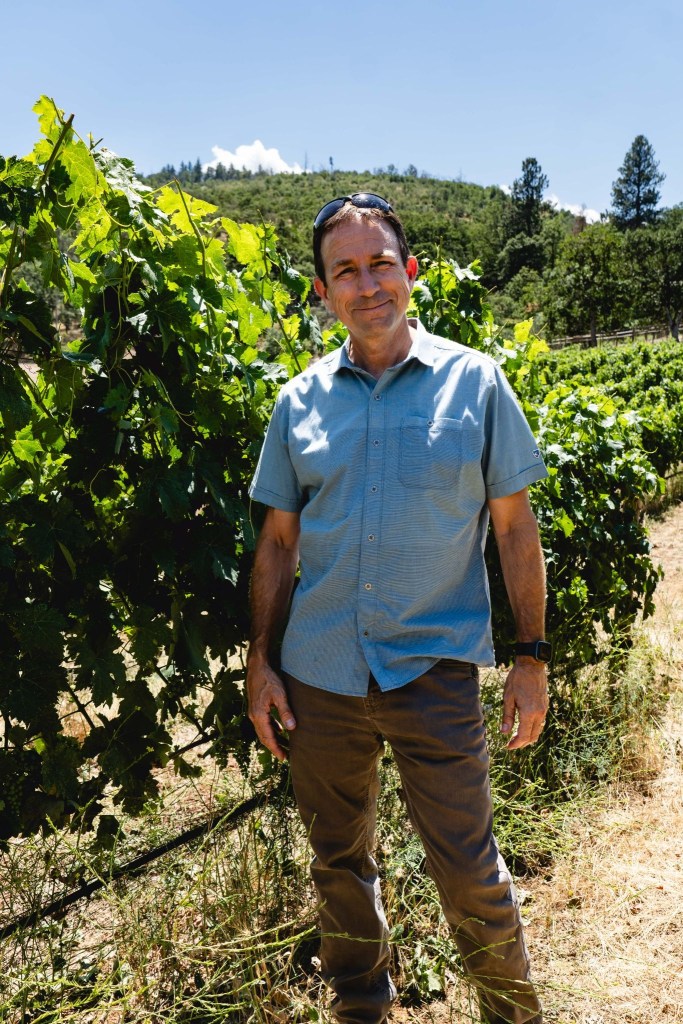
Sure enough, Eric showed up on time and had to shake the dust off before shaking hands.

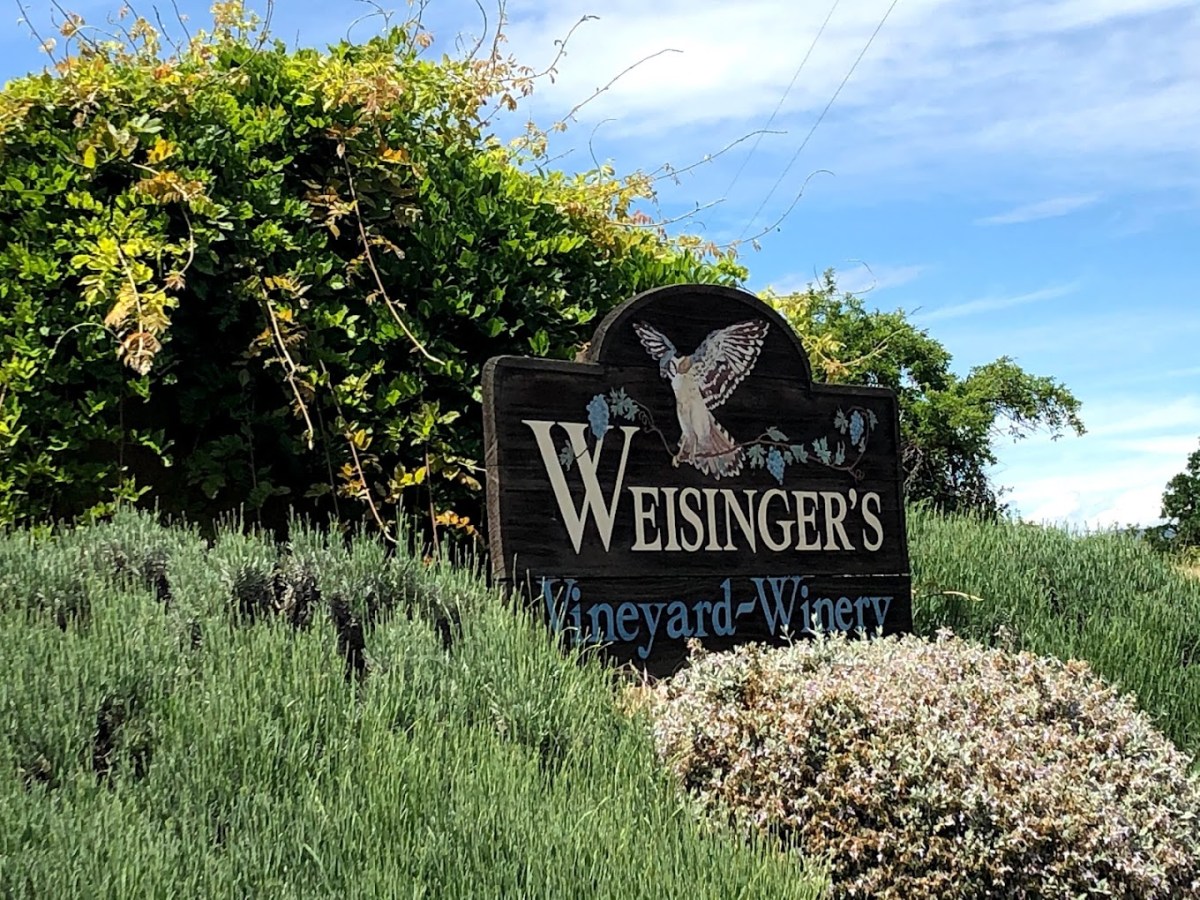
Eric Weisinger with his Weisinger Family Winery is definitely not your typical winemaker. Some of his colleagues in Oregon label him a “winemaker’s winemaker.” But after my most recent visit and after tasting many of his new  wines, “winegrower” fits him perfectly.

His bio on the winery’s website (weisingers.com ) is a brief one paragraph. To summarize: His parents moved from Texas to Oregon and in 1978 he helped plant the original vineyard. Located on the rural outskirts of Ashland, that vineyard was one of the first in Southern Oregon. He and his father planted it to Gewurztraminer. He grew up on the farm and by 1998 became the winemaker. 

One thing he did early on was to re-work the winery’s name to Weisinger Family Winery, emphasizing “Family.”  And he then gradually converted sections of the vineyard to Tempranillo and Pinot Noir. Between 2007 and 2015, he visited Australia and New Zealand working at several wineries during their harvest seasons. Today, he also makes wines for his Oregon neighbors, most recently the Peter William brand, and has worked several vintages for a winery in Texas.

With his own winery, he makes a wide variety, adding and dropping wines from time to time. He simply enjoys making wines because, as he says, “No two days are the same and there is always more to learn about wine.”

 Let the Terroir Speak
It may be a cliche, but Eric truly believes that great wines are made in the vineyard. And he backs that up by focusing on single vineyard wines. He works not only with his estate vineyard but sources grapes from independent growers and even other wineries for his single vineyard program.

As he explains, “Our goal as winemakers is to let this terroir come through in the expression of the fruit and in the finished wine, with minimal interference. Rather than using a lot of oak, we focus on cultivating the highest quality fruit, and let the terroir speak for itself.”

The Current Wine Roster

Ten wines were available at the winery during my last visit, and over this summer another 5 or 6 will be released. If you look for a pattern or theme, don’t bother. There is none, only an eclectic mix of Rhone, Bordeaux, Burgundy and Spanish, varietals and blends.

 I almost forgot there was a first-ever Gamay and a Tannat being offered to members and visitors that day. BTW: The 2023 Tannat, sourced from the only vineyard In the Rogue Valley, growing that variety, is a rich, beautiful rendition. Lucky club members!

 Back in 2020, he made an attractive Touriga Nacional from the Gold Vineyard. In 2021, his Malbec from the Peter William Vineyard went off the charts. Well, you get the point.

But the main point is that Weisinger is the proverbial treasure trove of high quality, small batch, hand made wines with the personal touch of a winegrower.

Because there are so many small batch wines, the best approach is to take it slow, one flight or deep dive at a time.

So what follows are my notes and reviews from the initial dip, not quite a dive.

 The scores are there to keep to a consistent format used when posting reviews on winereviewonline.com 

Sampling  Current Releases

Weisinger Family Winery, Applegate Valley Cole Family Vineyards Sauvignon Blanc 2024 $34

Drawing from his experience in New Zealand, Weisinger works with Cole Family Vineyards, a small organic vineyard located in Williams Oregon, a region among the coolest within the Rogue Valley. This is the second vintage I’ve tasted from this vineyard, and both are among my favs. 

In 2024, the fruit ripened in mid-September and the wine was barrel fermented and aged for six months in neutral French oak. The result is a Sauvignon with high toned aromatics of green apple, lemongrass and verbena. Medium bodied, firm and balanced, with lots of bright fruit (melon, and apple) on the palate, it finishes on a crisp note. Overall, it has more depth than New Zealand Sauvignon. 134 cases made. 92

Weisinger Family Winery, Rogue Valley Avra Vineyard Viognier 2024 $36

 Vibrant and balanced from the first sip to the finish, here’s a Viognier that’s easy to like. The steep (2221 ft) hillside Avra Vineyard was planted in 2005, and Eric has also made a Grenache and Sauvignon Blanc from this nearby vineyard. In 2024 the grapes were harvested in late September and the wine is barrel fermented and aged for 6 months in neutral French oak. Light yellow in color, this Viognier combines white peach and apricot fruit with subtle hints of jasmine. Medium full in body, it delivers lively peach and honeysuckle flavors with a touch of green tea popping up toward the finish. More subtle and vibrant than powerful, it ends on a  mouth-watering note.  116 cases made  93

Weisinger Family Winery, Rogue Valley Tempranillo 2023 $49

From the family’s steep, high elevation (2235 feet) vineyard behind the winery, Tempranillo is emerging as the winery’s signature wine.  In 2023 the fruit was harvested in mid-October at a healthy 25 Brix. The wine was barrel aged for 17 months in 35% new French oak. From the first sip it becomes clear this is a generously flavored wine. Dark in color with an enticing aroma of black fruit and anise, along with cloves, it is medium full bodied. Plush and round on the palate, it offers rich, ripe black cherry flavors and spice. No hard edges here, just well-integrated tannins and attractive ripe fruit to make it a versatile, food companion. 91

A 2022 Reserve Tempranillo aged longer in oak, it much more layered and structured, similar to

An age-worthy Rioja Reserve. A  detailed review is set for the next dive session.

Weisinger Family Winery, Rogue Valley  Buxton Vineyard Grenache 2022 $40

Planted in 2015 and located along the Rogue River, Buxton is a new source of Grenache for Weisinger. This vintage was aged in French oak, 30% new and is a rich, fruit-forward style of Grenache. Deep in color, it displays aromas of black cherry, pomegranate with back notes of cloves. Round, smooth and polished on the palate, it delivers bright cherry and cranberry flavors. With soft, integrated tannins, this is a drink now red that can be enjoyed with a wide range of entrees. 90

Weisinger Family Winery, Rogue Valley GSM 2023 $40

This is a winemaker’s wine with each component harvested from a separate vineyard over three days in mid-October. You can imagine the number of different lots after the fermentation process. Anyway the final blend consisted of 49% Grenache, 30% Syrah, and 21% Mourvedre and it was aged  French oak, 30% new. Deep dark in color with lively fragrances of 

plum with a touch of leather and white pepper. Medium bodied with juicy cherry and plum fruit flavors backed by dried herbs and pepper. With well-integrated tannins, it finishes with a layer of yummy plum fruit and earthiness. Overall, quite charming, and yet has the depth and complexity to be ever so food friendly. Then again, isn’t that what a GSM is all about?  108 cases made  92

Though it was not planned, it became apparent when going over these wines and the notes that a common thread is their food affinity. Quite a few wines are too heavy, ripe or powerful to make you think of what to enjoy them with during a tasting. 

Food for thought?
Chateauneuf-du-Pape’s Hidden Gems: New Varietal Wines

“Would you like a rare and totally obscure red wine or how about a difficult to pronounce white?” For the latter, sommeliers may someday suggest a Bourboulenc. As for a rare red, then it could be a Muscardin, a Counoise, or a Cinsaut.  

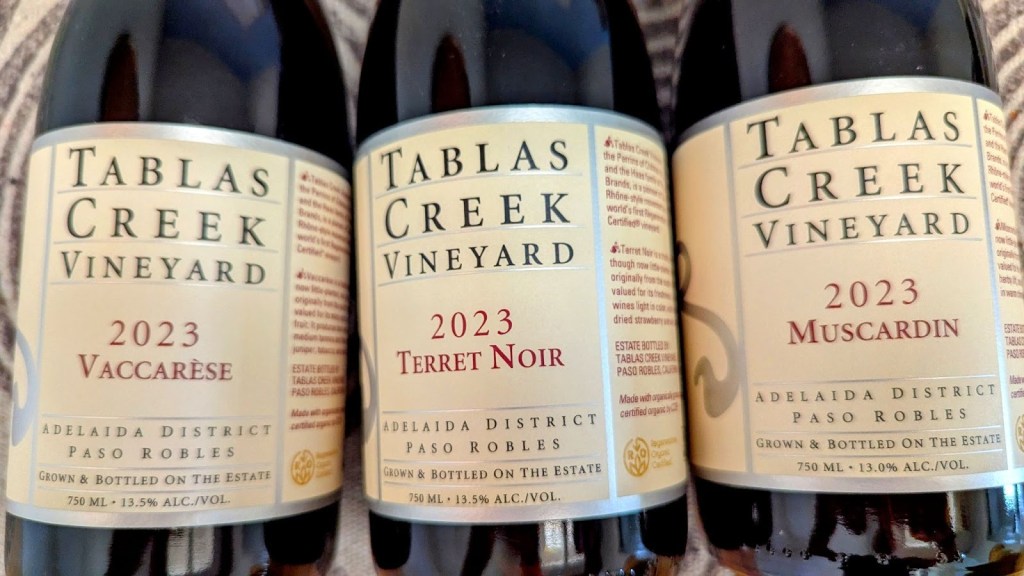
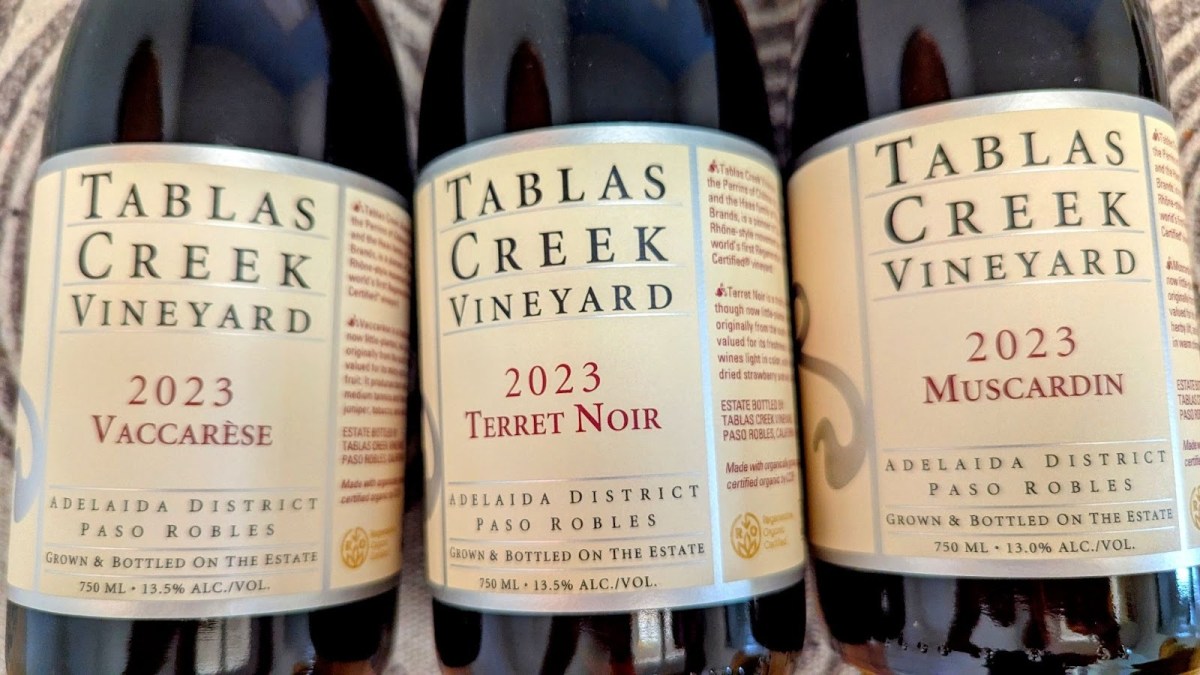
With the recent release of a Muscardin, “one of the most obscure wine grapes,” Tablas Creek Vineyard has now made varietal wines from each and every permitted grape variety in Chateauneuf-du-Pape (CdP).

Better yet, Bourboulenc and other once unknown varieties are being made by many other wineries, again thanks to Tablas Creek which imported and propagated all of them and over time sold something like 5 million cuttings to over 600 wineries. 

Every wine lover is familiar with the big three GSM reds and in recent years, both Roussanne and Picpoul have emerged from the pack as white wine choices. But what about the others that call Chateauneuf-du-Pape home?

Well, I’ve had the opportunity to try most of them and discovered several exciting possibilities for new varietal wines to expand our taste experiences.

At this difficult and confusing juncture for wine, maybe the downtrend in sales can be reversed by first having more choices. And with some of these new varietal wines, those just looking into wine might find them to be an easy to access onramp. One free from all the snobby historical baggage, vintage charts and point scores that probably turn newcomers off.  

Once venturing into the less travelled wine world, there’s always something new. For example, I learned there are now 18 permitted grapes. Originally when the Chateauneuf AOC regulations were drawn up there were 13. 

Among the additions you’ll see the expanded Grenache family that now includes Grenache Blanc and Gris and a couple of Picpoul siblings. Also, I had to be reminded that neither Viognier nor Marsanne, which are so much a part of wines from the Southern Rhone, are not members of the CdP family.

The Full CdP Roster

 Though my mind set is still stuck on 13 grapes permitted in Chateauneuf, here for the record are those now actually allowed:

Red Varieties: 

Grenache, Syrah, Mourvèdre, Cinsault, Counoise, Vaccarèse, Muscardin, Terret Noir, Picpoul Noir.

White Varieties:

 Grenache Blanc, Grenache Gris, Clairette Blanche, Clairette Rose, Roussanne, Bourboulenc, Picpoul Blanc, Picpoul Gris, Picardan

5 Other Wineries to Watch As We Keep Score

Several other wineries have joined Tablas Creek and have been exploring varieties other than Syrah, Grenache and Mourvedre. Here are the other major players I highly recommend:

Holly’s Hills Vineyard in El Dorado   hollyshill.com 

Acquiesce Vineyard in Acampo:      acquiescevineyards.com 

Starfield Vineyard in El Dorado:       starfieldvineyards.com

J. Dusi in Paso Robles :                   jdusiwines.com 

Red Door in Paso Robles                reddoorranchvineyards.com 

First Stop: Bourboulenc

Here’s a white wine with a name that could spark conversations or possibly be included in a French pronunciation final exam. “An ancient white grape from the region surrounding Avignon,  it is still valued in France for its vigor, floral character and ability to maintain acids in warm climates.” Susan Tipton of Acquiesce sees it as a natural fit for Lodi because “This late maturing variety is great at maintaining its acidity throughout the growing season.”

 I recently tasted two standouts that clearly indicate Bourboulenc is a complete wine on its own.  And with climate change, it could well be the white grape of the future.

Tablas Creek Vineyard Adelaida Hills District Paso Robles Bourboulenc 2022 $40. 

From 2/3rd of an acre, this is the winery’s 4th Bourboulenc and it is wonderfully unusual. Medium straw in color, it offers an intriguing aromatic mix of orange rind, apricot and lychee nut. Surprisingly rich and round on the palate, it combines orange and citrus flavors with a hint of stone fruit. The texture is rich, and then it finishes with a rush of lemony flavors and bright acidity. All of this is to be enjoyed in a refreshing wine with only 12% alcohol. 

To summarize: lovely aromas, terrific texture, mouthwatering flavors and youthful acidity holding it together. 91

Acquiesce Winery Mokelumne River, Lodi Bourboulenc 2023 $37

Acquiesce is an exciting new winery focusing on white wines and offering a wide range of Rhone-inspired wines. From the estate vineyard, which has the distinction of being the very first planted in the U.S. to this varietal, the grapes were harvested in late September. The wine is stainless steel fermented and then lees aged until being bottled. 

In the glass it is pale straw in color with a delicate aroma of lime and ginger. Nice and lively on the palate it offers flavors of melon and some chalky nuances. Round and smooth in texture, it has a lengthy finish with a chalky, lip-smacking finale.91

Conclusion: Move over Chardonnay. What’s not to like? 

Cinsaut

Cinsaut is also spelled as Cinsault for some reason. From Josh of Holly’s Hill: “Cinsaut is an interesting grape. It grows with huge oblong, olive-like, berries that seem to have no flavor as harvest gets closer and then all of a sudden, bam!, there’s the flavor.  We like it for its juicy fruits, chili spice and it makes for a very nice food wine.” 

It is fairly common as a Rose, and Long Walk Vineyard in Southern Oregon makes an impressive Rose from Cinsaut.  It is well-known in South Africa on its own and as a parent of Pinotage. California’s acreage is under 100 with the Bechthold Vineyard in Lodi leading the way. Tablas Creek planted it in 2017.

From Tablas Creek: “Its aromas of spicy raspberry, violet, and black tea, and flavors of tart cherry, redcurrant, and new leather make it a useful blending partner to higher-alcohol, more tannic red grapes, and it makes a delicious lighter red on its own.” 

Starfield Vineyards El Dorado, Cinsaut 2019  $32

 From its 31 acre vineyard, Starfield produces several Rhone wines as well as others in its “Mountain Mediterraneans” program. Fresh picked strawberry and cranberry juice dominate the refreshing aroma in this medium light-bodied 2019 red. But it really brings on the charm as its lively flavors expand across the midpalate with fresh berry and spice and red fruit persisting well into the aftertaste. More than a summer sipper, this is a versatile food companion. And delicious.92

Holly’s Hill Vineyard, El Dorado Cinsaut 2020 $28

Though Cinsaut is classified as a lightweight, this is no such thing. Based on its color and the initial sniff, my instinct says this could be a Cotes du Rhone Villages. A real good one! But then after an initial taste, it comes across with subtle, but charming flavors that don’t match anything in my experience. Its bright, fresh cranberry aroma mingles with spices and black tea, and the flavors are full of fresh picked dark cherries.  Balanced, with light tannin it finishes on a slightly tart note and lingering berries. 92

Conclusion: However you spell it, this is a red to explore. 

Clairette Blanche

To me Clairette Blanche is a welcome change of pace white with a bright future in California.  “Once one of the most widely planted white grapes in the south of France, it is now seeing a resurgence because of its freshness, its ability to express minerality, and its capacity to thrive in warm climates.” It was imported in 2003 by Tablas Creek.

Paper Street Vineyards J.Dusi Paso Robles (California) Clairette Blanche 2023 $44

From the Dusi family’s 106 acre vineyard in the Willow Creek AVA, Paper Street is a line of limited volume wines made by Janell Dusi. Clairette Blanche is regarded as a versatile white grape in Provence, the Languedoc and in South Africa. The variety was not available in California until 2009, and the first was made by Tablas Creek in 2014 and Janell followed in 2016. 

The aroma of her 2023 is an enchanting melange of green apple and peach with lime and fennel. It is medium full bodied, mouth-filling wine with vibrant flavors of youthful green fruit conveyed by crisp acidity. Peach and subtle lime linger in the palate cleansing aftertaste. Absolutely lovely. 91

Conclusion: Off to An Impressive Start! 

Grenache Blanc

Grenache Blanc is the tenth most widely planted white grape in France, and the fastest-growing white Rhone in California. Winemakers love working with it and it is widely adaptable to climates. Here are solid examples from two different regions.

Curran Santa Barbara County Grenache Blanc 2022 $22.00

Kris Curran rose to fame as winemaker for Sea Smoke. In 1997, she started her own label  and has been offering a Grenache Blanc since 2003. Entirely stainless steel fermented and with no malo-lactic, this is an all-purpose white to enjoy as an aperitif but it has the body and vibrancy to complement full-flavored entrees. It offers bright aromas of melon and mango with some lime and floral notes. The texture is pleasantly smooth and mouth-coating with decent acidity to add length. Melon flavors continue through the lingering aftertaste. This winery also works with Grenache Gris. 90

Klinker Brick Winery  “Under the Sea” Lodi Grenache Blanc 2023 $20

Made from a vineyard planted in 2011 that sits 13 feet below sea level, the wine is entirely stainless steel fermented and was lees aged for 31 days. First thing noted is that the color is almost opaque with a faint/pale straw look. The nose starts out with direct lemon and  some lime, and then the palate is big and plush. Peach and lime come through in the flavors that are all about freshness. Soft and creamy, it takes you to a gentle finish with just enough acidity. Fun and ever so easy to drink. 1200 cases

91

Conclusion: Move over Pinot Grigio. Keep an eye out for a new release of Grenache Blanc from Rhone specialist, Terre Rouge in the Sierra Foothills, Ridge Vineyards from Paso Robles and, of course, Tablas Creek from 2024.

Counoise 

Josh of Holly’s Hills has this to say: Leaning toward cherry fruit, “Counoise also tends to have a spicy quality that we like and we use it sparingly in our Patriarche blend where it offers highlights of red fruits and spice in the background. It’s a bit challenging to grow.” 

To Jason of Tablas Creek: “Counoise is a translucent purple-red, and has a vibrant, spicy character, with flavors of anise, strawberries, and blueberries. Counoise also makes a delicious single-varietal wine with the character of a Cru Beaujolais: earth, spice, intense floral fruit, light body, vibrant acidity and soft tannins.”

Holly’s Hill Vineyard, El Dorado Counoise 2020 $28

Excellent, deep color with an aroma of raspberries, lovely baking spices and floral notes. On the palate it offers vibrant flavors of spices and berries. The subtle floral component adds intrigue and there’s plenty of crisp acidity keeping it nicely woven together. Tannins are light and smooth. And the finish is fresh and long with spices such as cinnamon and clove.  It is reminiscent of a Moulin-a-Vent in weight and direct appeal, but it offers more layers as a result of the floral note and baking spices.  92     

Conclusion: Counoise has great potential as a beautiful drink now red.

Picpoul

Native to the Languedoc region of Southern France, Picpoul Blanc produces wines known in France for their bright acidity, minerality, and clean lemony flavor. Today the roughly 3,800 acres in France are centered around the village of Pinet in the Côteaux de Languedoc, whose Picpoul de Pinet wines are widely available.

From Tablas Creek: “in California, Picpoul maintains its bright acidity, but also develops an appealing tropical lushness. It is quite rich in the mouth, with an exceptionally long finish. When we have enough fruit, we bottle Picpoul Blanc as a single varietal, and the wine shows a rich nose of pear, pineapple and spice. In the mouth, buttery flavors of pineapple and orange are balanced by crisp acids.”

Vaccarèse

Tablas Creek Vineyard Adelaida District Paso Robles (California) Vaccarèse 2023 $40

This is the 4th vintage of the little-known and rarely grown Vaccarese and it is downright delightfully different. Medium garnet in color, it opens quickly to showcase enchanting rose petal, tea and strawberry on the nose. Medium bodied with delicate flavors of berries and spice with nuances of cherries and black tea.  It finishes with light tannin and a peppery note. It leaves you wondering why this grape remains obscure.  246 cases made.The winery blends some into its flagship Esprit de Tablas red. 92

Terret Noir 

An ancient grape from the Languedoc, its acreage has declined and today in Châteauneuf-du-Pape there are just 2 acres. It is quite light in color, but makes for a pleasant, fun red wine, based on my only tasting.

Tablas Creek Vineyard Adelaida Hills District Paso Robles Terret Noir 2021 $40

 Originally from the Languedoc, it has seldom been made on its own, most often blended with Grenache or its fellow family members,Terret Gris and Terret Blanche. Tablas Creek bottled 70 cases in 2021 and offers it at the winery.  Once poured, it has an unusual light red color that sets it apart from most red wines. The aroma is also strikingly unusual, neither berry-ish nor overtly fruity, it offers a pretty floral nose of roses and orange blossom. While light medium bodied at best, it delivers refreshing flavors reminiscent of red currants that are sustained and persistent. Gentle, fresh and lively in the finish, it is altogether pleasant and refreshing. Not an easy match with traditional food, it is a fun aperitif style red.

Muscardin

Muscardin is a rare grape that appears never to have been very common, or found anywhere outside the Rhone. “With only 27 acres planted in the Châteauneuf-du-Pape and even less in the rest of France, it represents one of the more obscure varieties.”

Tablas Creek Vineyard Adelaida District Paso Robles Muscardin 2023 $40

With this Muscardin, Tablas Creek has now made a single varietal wine from each of the permitted varieties allowed in Chateauneuf-du-Pape. With only 27 acres of Muscadin planted in France, this is a rare opportunity to taste a wine without expectations. It is medium dark in color, and the aroma initially is fresh fruit, similar to a Gamay. But with airing, it displays more red cherry and pomegranate with a touch of rose petal. Lively and smooth on the palate, it has pleasant bright somewhat herbal flavors and a gentle finish. In a word,”elegant” overall. 21 cases made. 90

Grenache Gris

Grenache Gris is often blended with Grenache Blanc in France, and the track record is very impressive. For the latest on Grenache Gris here, I defer to Randy Caparoso whose “Wine Clarion” on Substack has a brilliant in depth report