“Dare to be different!” is how the Isabella Gold back label begins. An artsy image of a female on the front label draws your attention to these words: “Sweet Chardonnay.” Marketed by La Reina Cordials, Isabella Gold is a brand created by the owners of JL Wood Vineyards, Carol and Paul Morrison.
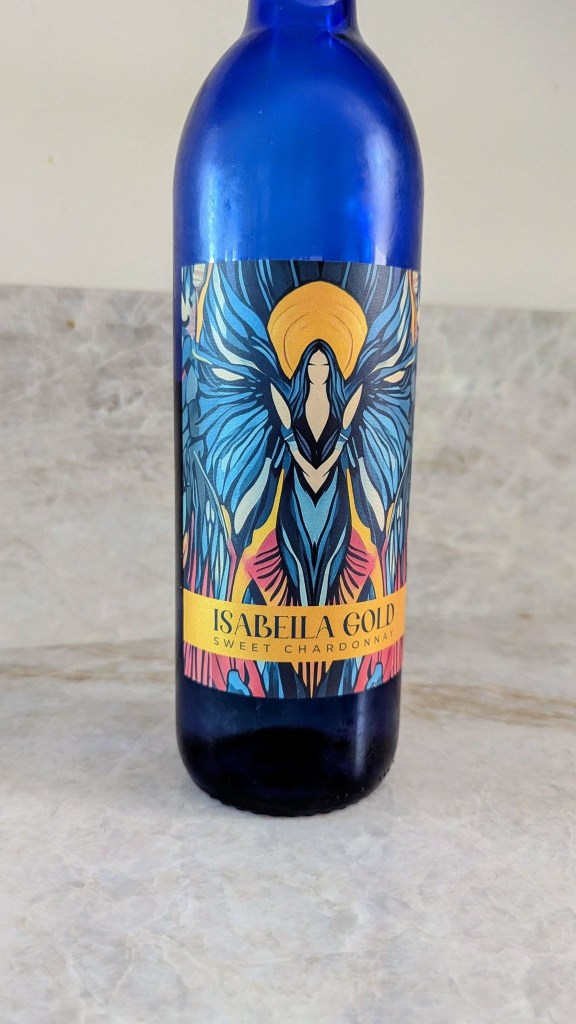
Presented in a striking cobalt blue bottle, the wine is different and the back label invites consumers to serve it over ice, mix it as a cocktail, or whatever is possible.
As a companion piece and marketing tool, Paul Morrison co-authored a novella, titled “The Evil in the Shadows and the Rebirth of Isabella Gold.” The package is aimed at the Tik-Tok crowd, influencers and audience of what’s called “romantasy fans.” It’s available on Amazon and wherever e-books are found.
As one totally unfamiliar with “romantasy” and not much of a fan of sweet Chardonnay, I was nevertheless hooked. The clincher, though, was that the wine was from the Arroyo Seco AVA, a region that has yielded many of my favorite wines. Especially its vibrant, non-buttery Chardonnays.
Recent reports indicate Monterey County has also been hit hard and many vineyards have been removed or went un-harvested in 2025. In mid-June when returning from Paso Robles, we saw vines stacked high in burn piles along Hwy 5 in and around Greenfield. The problems are real, and those in the wine biz are dealing with them in different ways.
Speaking of Different
To begin with, the Morrisons are unabashed Chardonnay specialists. Their JL Wood Vineyards is an established 125 acre vineyard in Monterey County’s Arroyo Seco AVA. They have been selling Chardonnay to many wineries for over two decades and began easing into winemaking in 2020. They acquired a winemaking facility in 2021 and hired veteran winemaker Ed Filice.
When you hit the link jlwoodwine.cm you will see that JL Wood’s roster does indeed include several versions of Chardonnay. In recent vintages they have made a no-oak Chardonnay, a lightly oaked Chardonnay, a classic, barrel fermented, a Nouveau style Chard, a low alcohol (under 10% ABV) labeled “Hoo Knew” and the before mentioned sweet one named “ Isabella Gold.”
But why a sweet Chardonnay? Paul offered two key reasons: “It’s a belief that wine drinkers are ready for innovation and that a sweet wine would further demonstrate the tremendous range of Chardonnay.”
“Younger drinkers grew up on sweetened beverages. When they look at their choices for alcoholic beverages, they initially gravitate to sweeter drinks, and you can see that in the craft cocktail trend.”
He concludes, “There is no doubt that Isabella Gold is a departure from the usual Chardonnay expectations. It’s an unconventional style, doesn’t fit into contemporary wine categories, and everyone will love it.”
Well, I certainly admire his optimism. But since I hardly fit the target audience, I will only note that the wine looks and smells like an attractive Chardonnay. It also can take a serious chilling and still retain its good aromatics.
I’m more intrigued by Paul’s remark that he’s out to “demonstrate the tremendous range of Chardonnay.” What also sets his winery apart from the crowd is that every Chardonnay is made from the same estate vineyard. From the early vintages of Kistler, Ramey, and Aubert to today’s counterparts, winemakers offering several Chardonnays focus on site specific terroir from different vineyards.
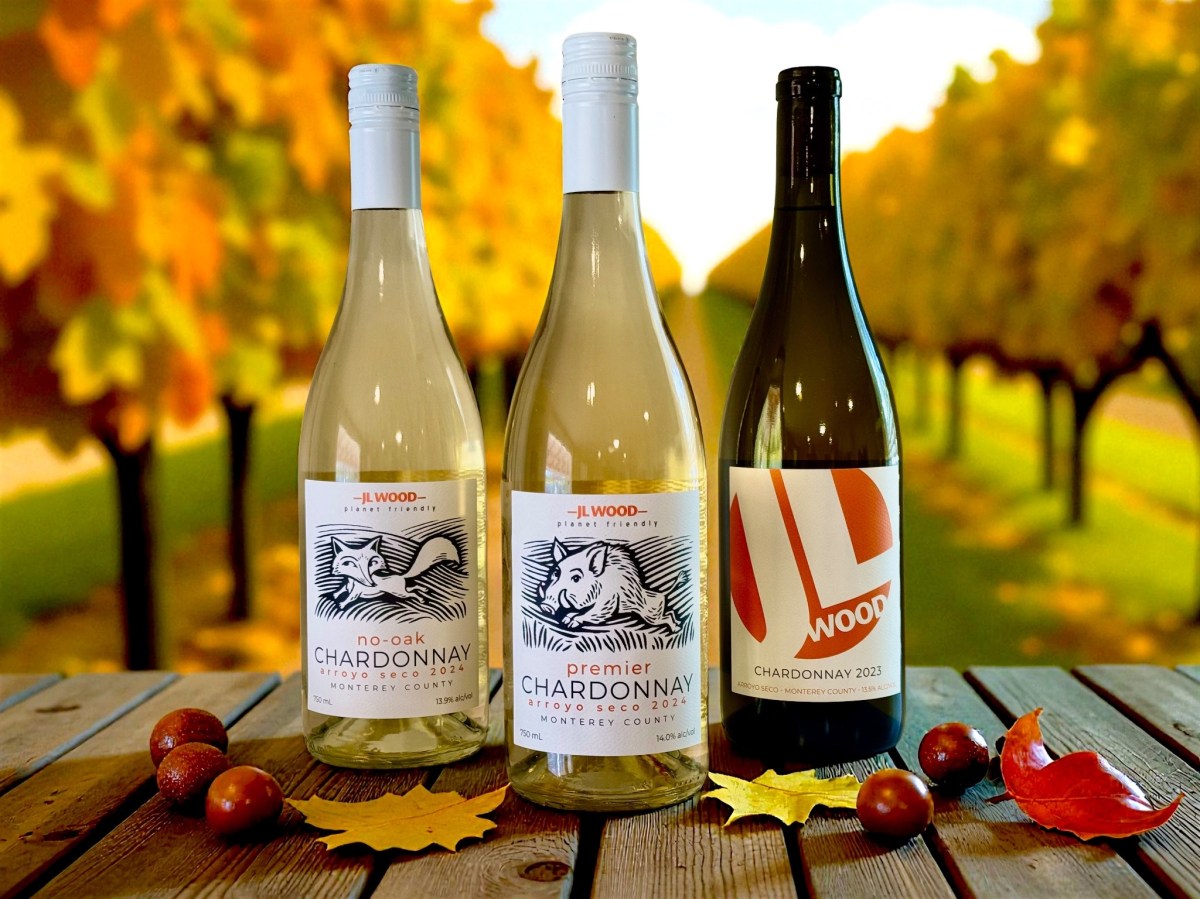
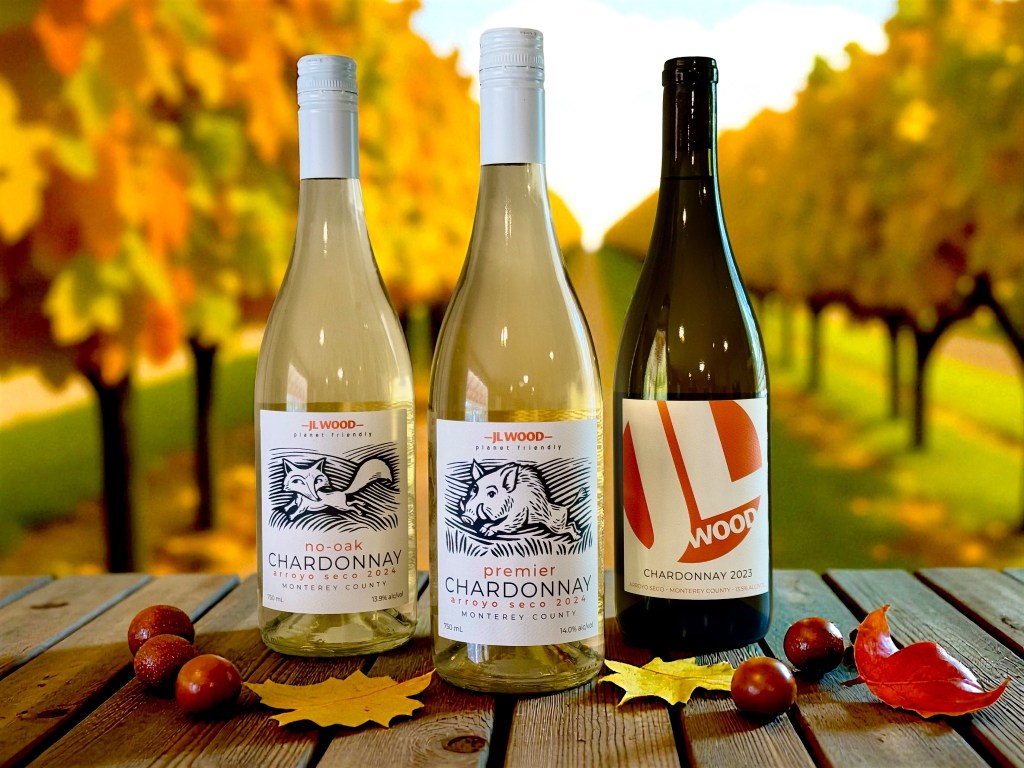
But Chardonnay in different styles from the same vineyard would support his belief. A week or so ago I reviewed two JLWood Chardonnays and rated both the 2024 No Oak and the 2024 Premier a 90 and 91. Tasted side by side, they were attractive and distinct. My notes:
JL Wood Wine Arroyo Seco (Monterey County), No-Oak Chardonnay 2024 $28
Their “No Oak” was stainless steel fermented and did not undergo malo-lactic fermentation. Pale straw in color, it is all about green apples and fresh cut pears. Medium bodied with a solid feel on the palate, it delivers racy, crisp apple and guava flavors supported by definite acidity. Finishing lively and crisp, with a touch of minerality, it is no wimp at over 13% ABV. An excellent example of cool climate Chardonnay on its own. 90
JL Wood Wine Arroyo Seco (Monterey County), Premier Chardonnay 2024 $32
With winemaking handled by veteran Ed Filice, the “Premier” is lightly oaked and emphasizes zesty fresh fruit and crisp acidity. Pale yellow, it offers green apple, citrus and jasmine aromas and the flavors show a pleasing flintiness along with the fresh fruit. Finishes with mouth-watering acidity, making it a welcome change of pace Chardonnay that pairs well with seafood. 91
The Team
Carol and Paul Morrison both grew up in the Salinas Valley. Paul’s family was in the fresh vegetable business, developed during the 1920s and ‘30s, while Carol’s family were long-term ranchers and farmers in the Arroyo Seco region. It’s also noteworthy that both Paul and Carol graduated from the Business School at UC Berkeley. Later, both attended the Parsons School of Design in New York. Paul later completed the winemaking and wine marketing program for professionals at UC Davis.
So with their farming background, business education and artistic streak, the Morrisons aren’t the typical vineyard owner venturing into winemaking. The Wood vineyard was planted to the Wente clones 4 and 17 back in 1987 by Carol’s father, JL Wood. Acreage has been augmented over the years.
Once they became sole owners, the Morrisons then embarked on a series of changes to improve the quality of the grapes by implementing sustainable farming practices. Today, the vineyards of the JL Wood Ranch are certified as sustainable by the CSWA.
So, why only Chardonnay? The reasons, Paul Morrison says, are numerous. “There are few specialists in Chardonnay in California,” he begins with. Then adds:
“We also believe that a lot of California-produced Chards had winemaking issues that we could correct as a specialist. The heavy-handedness that works in red winemaking can be a liability when working with white wines, especially because Chardonnay specifically is a special challenge given its delicate nature.”
And rather than hiring some rockstar, big ego winemaker, they turned winemaking over to seasoned veteran, Ed Filice. His 40+ year career began working with Dick Peterson at The Monterey Vineyard, which later morphed into Taylor California Cellars. Throughout the years he’s been a key player in the development of several brands such The Wine Spectrum,Seagram’s, Constellation, Courtside Cellars, Tolosa Winery, and Purple Wine.
Ed was co-owner and winemaker of La Filice Winery in Templeton. He offered his take on working with the Wood’s Arroyo Seco grown Chardonnay this way:
“With their Chardonnay, there’s a tremendous opportunity to show what you can do with the varietal. We present Chard that people haven’t seen before. Every Chard is not about the same thing. We taste select specific rows within blocks and harvest according to ripeness, not overripe flavors that boost fruit impressions.”
Today, Ed estimates he’s probably made over a million gallons of Chardonnay. He also recalls back in his early years that Dick Peterson was extremely fond of Chardonnay from Greenfield, part of Arroyo Seco today.
A Nose Dive into Arroyo Seco
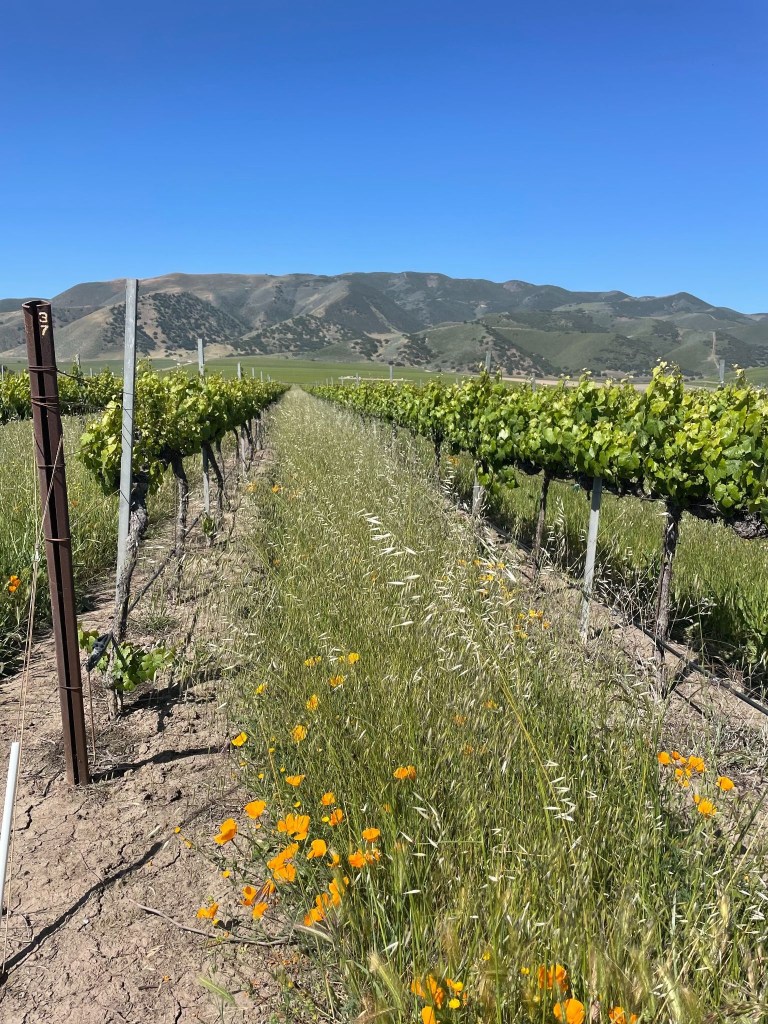
In 1983 Arroyo Seco was one of the first AVAs to win approval. “Arroyo Seco” means dried riverbed, but while a deep dive metaphor seems inappropriate, it is a special place that is one of the few AVAs that can be clearly defined.
For more about the AVA, here’s a concise description found at wentevineyards.com
“The Arroyo Seco AVA offers something truly special. Its proximity to the Pacific Ocean means that foggy mornings and steady afternoon winds create a long, gentle growing season—ideal for varieties like Chardonnay, Pinot Noir, Riesling, and Gewürztraminer. The soils here are gravelly and well-draining, often flecked with large river stones affectionately called “Greenfield Potatoes.” These rocky soils, combined with pure mountain runoff from the Santa Lucia range, encourage vines to dig deep and yield fruit with exceptional flavor, structure, and natural acidity.”
Compared to other AVAs, it is small with about 8,000 acres of vineyards planted today. Chardonnay accounts for over half. Filice emphasizes the well-drained soils as “the deciding factor in attaining consistent ripening of the site.”
Neighbors
One who recognized the area’s potential was Doug Meador who established Ventana Vineyards in 1978. It was eventually planted to over 300 acres of several varieties. Some 130 acres consisted of Chardonnay and by the mid-1990s, several well-known wineries soon were offering a Ventana Vineyard Chardonnay. Meador loved to experiment and paved the way for others. He was one of the first to work with Sauvignon Musque, a special clone of Sauvignon Blanc. The vineyard is now owned by Joyce Winery.
Another innovative winery is now celebrating its 50th anniversary, the family owned J. Lohr. In my mind it is one of the most savvy wine marketing wineries, balancing quality and innovation over its rich history. This past January, J. Lohr Vineyards released a new wine, “Paperwhite No-Oak” Chardonnay. The 2023 sold out within 3 months, and the 2024 is now on the market at $14 a bottle. Grown in the Arroyo Seco, it is all stainless steel fermented with no malo-lactic.
It joined three other Chardonnays in the J Lohr portfolio, all from the Arroyo Seco AVA: the Riverstone Estate, J. Lohr Arroyo Vista Chardonnay and the J. Lohr “October Night” Chardonnay. The latter is picked in a single fall evening and is made from the distinctive “Musque” clone of Chardonnay. Here’s how Rich Cook described the 2024 at WRO:
“A mouthful of tropical fruit freshness awaits you in this glass of Chardonnay, and that’s not all – mouthwatering acidity carries those bright flavors across the palate and into a crisp finish that leaves spiced apple and pear impressions. This bottling has seen a dialing back of oak exposure for a few vintages, as the winemaking team has opted to showcase the fruit source in a more unfettered way. A can’t-miss offering at a more than fair price, as usual.” 95 Rich Cook
One of my favorite go-to Chardonnays is J. Lohr Estates’ Riverstone Chardonnay. It takes its name from the large alluvial stones scattered throughout the soils of J. Lohr’s vineyards in the Arroyo Seco appellation. J. Lohr Founder Jerry Lohr first began planting Chardonnay in the region in 1972. The Riverstone Chardonnay will be the first J. Lohr wine to bear the California Certified Sustainable seal.
With regard to wine history, the Wente Family goes back even further and has always been associated with Chardonnay. Wine young-uns and influencers may not know that the first California wine to be labeled Chardonnay was Wente’s 1936. Incidentally, it was labeled “Pinot Chardonnay,” but that’s another story.
In addition to its Riva Ranch and Livermore Valley bottlings, Wente is currently offering a no-oak Chardonnay under the family’s Smith Bench Vineyard brand. The latter wine is from Arroyo Seco as is the Wente Riva Ranch, two Chardonnays in dramatically different styles.
Last year, a 2021 Chardonnay from Arroyo Seco made by Dawn Galante under her “Dawn’s Dream” label impressed me with a similar vibrancy and zippy acidity. My comment ended on this note:
“It is solid and compact on the palate, delivering vibrant ripe pear and lemon-tinged flavors wrapped in light oak. There is a lengthy mouth-watering finish. This is the most impressive Chardonnay from the Arroyo Seco AVA.”
In recent vintages, several other wineries have contributed to the Arroyo Seco success story. Like the Morrisons, Dan Lee of Morgan Winery originally was a Chardonnay specialist. He went on to explore many AVAs but never lost sight of the Arroyo Seco. Today, Morgan now offers a stunning Sauvignon Blanc and Grenache Rose, both highly rated by Rich Cook at WRO.
Rich ended his review of the Sauvignon blanc with this:”The fruit takes control on the palate, with zippy acidity driving the finish, when sweet lemongrass joins in. A unique take on Sauvignon Blanc.” Working with the Reva Ranch Vineyards, Bernadus has also earned high marks for its “snappy” Sauvignon Blanc.
Anyone looking for vibrant, zippy and mouth-watering whites should also consider Arroyo Seco Albarino. Morgan’s 2024 is an attention-getting, terrific rendition. Joyce Winery proves that’s no fluke with its attractive 2024 Albarino and a 2025 from Cedar Lake. The winery is in Soledad and there’s a tasting room in Carmel. For more info, see joycewineco.com
Back to Isabella Gold
So with evidence from Wente, Ventana, J Lohr, Morgan and others, the Arroyo Seco AVA does seem to be a magnet for winemakers daring to be different.
In these difficult times as everyone tries to re-ignite the wine business, maybe daring to be different and unconventional is the best way to go.
And, in my humble opinion, Chardonnay, the most widely planted and most popular white wine, definitely needs to be re-booted.
If it takes a sweet Chardonnay to attract new wine drinkers and to show the diversity of styles, I’m all in.

