
How Some Wine Clubs Are Rated Best

Whenever someone reviews the best places to buy wines online, the focus is slanted toward subscription box types. Though my preference is for e-commerce sites that aren’t pushing memberships, they are a major part of this fascinating online world. 

And one name that seems to be at the top of almost every review published is www.winc.com.  Formerly known as Club W, it is as an e-commerce website  founded in 2012 by Xander Oxman and Geoff McFarlane because of “a shared belief that wine should be more accessible: simpler to get and easier to enjoy. “ 

Bravo, I’m all for that!

They joined forces with winemaker and sommelier Brian Smith to build a personalized wine club that has quickly grown into Winc—”a California-based winery offering an online membership experience.” 

A winery? That’s unusual.

It started out as a wine of the month club and then took off. I’ve read in Forbes they now sell around 200,000 cases a year. 

They claim their wines are featured at select retailers and restaurants nationwide.

Unable to verify this on http://www.winesearcher.com  but must be true.

Smith has a license to make wines and though I didn’t know you needed one, let’s go with the fact he has made wines at real wineries and some winc wines are bottled at a licensed winemaking premise in California.

Many of winc’s California wines are from the Central Coast, primarily Santa Barbara and Paso Robles.

Great: these are two of  my favorite regions.

Moving on. “The 150 unique wines we bottle each year range from simple blends to obscure, single vineyard fringe projects that span the globe. We feel an obligation to showcase the best that every region, varietal and style has to offer, at the best value possible.”

 “Best” is certainly an admirable goal in just about every endeavor. 

Shipments are once a month. “If you want to skip a month, it’s no problem.”

Initial wine shipments are based on a palate preference test which has such deep questions as how strong do you like your coffee and how do you feel about salt?  

Winc subscriptions begin at $39 a month for three bottles with flat $9 shipping. But Winc offers free shipping on four or more bottles.

Basic Winc bottles start at $13. There are two subscription levels, Featured and Select. At the Featured level, Winc lists wines under $20. At the Select level, Winc offers bottles between $15 and $55.

Well, so far I’ve stuck with the stated positions found on winc’s website. But then at the bottom of the home page, I noticed this:

 ‘Are you an affiliate looking to run the Winc Affiliate Program? Join now!

This got my attention and eventually helped me understand one reason why winc is so highly rated in reviews of subscription type wine clubs. A reviewer, aka an affiliate, any writer or blogger can enjoy the following perks: 

  • Earn up to $18 commission for every new subscription
  • 10% revenue share on gift card, gift box, and shop purchases
  • Variety of updated creative
  • Special coupons and seasonal promotional opportunities
  • Performance and bonus incentives for our partners
  • Opportunity to try Winc on the house!
  • Dedicated Account Management team

In other words,  positive reviews can lead to money, bonuses, and free wine. That might explain the gushy, wet your pants review of winc in Forbes.

A few influencers or reviewers, sorry, affiliates, will fess up in the beginning, as did this one:

“This article includes affiliate links. That means we will be compensated if this Winc review convinces you it is the right wine club for you.”

Not being an affiliate, I can say that $18 for an average quality Rose offered by winc is not much of a deal. Going over the list of wines. I find the prices to be a little steep for what you get.

 A Sonoma Coast Pinot Noir for $31.99, and a Mendocino Carignane also for $31.99 are hardly deals. $47.99 for Santa Rita Syrah is really pushing it.

And with just a little effort, you can certainly find  better prices on Santa Barbara Syrah. That is if you are willing to make an effort.

But other high priced wines like a Grenache from El Dorado are not the usual suspects found on other sites. 

Winc likes to give their wines fancy, made up names like Endgame and Baseline in order to convey exclusivity.  But then again, some are becoming brands like the QTY for Pinot and Grenache. But only available from winc.

One that caught my eye is the 2018 Languedoc Red is named “Cherries & Rainbows” and sells for $22.09. Winc explains it is made by Robert Eden, a winemaker in Minervois I just happen to have met several years ago in Minervois. 

Here’s a problem: a Chateau Maris Minervois from Eden’s own winery is selling on wine.com for $15.99. Cheaper, authentic, and probably a better wine. But that Eden is part of the winc program is a good thing.

The higher priced wines do come with some interesting background which is better than the nutty hype and point scores splashed all over other sites.

Against its competition like firstleaf, naked wines, and tastingroom, it is on a par with nakedwines. 

Winc’s choices are a little more unusual, more exciting but its prices are no special deals.

And though it should be clear: I am not an affiliate!!


In the Pink

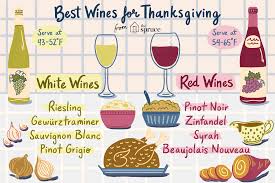
Worry no more about which wines to serve with your turkey, ham, or

whatever tasty food you offer this holiday season. We have a plan.

But you have to be willing to think out of the box. Not the Bota box or taking the easy way out by going with cheap Champagne, French Beaujolais or just plunking a red and white on the table and standing back. The last one was my old approach.

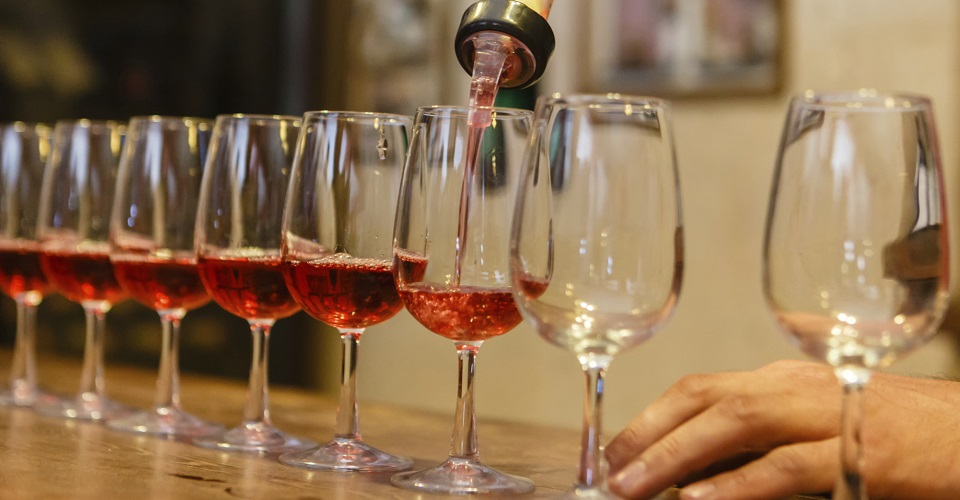
The new way, the perfect solution for this annual wine dilemma at Thanksgiving and other holiday celebrations, is Rose. You heard me …that neither red nor white wine.

But not White Zinfandel or any old cheap, sweet-ish Rose, but dry, full throttle Roses made from Grenache and its Rhone siblings, Mourvedre, Syrah, and Cinsault.

This Epiphany came to me when checking out several wines from Epiphany,  Fess Parker’s brand for Grenache Rose and a bevy of other Rhones. Earlier that week, three other Rose wines completely changed my thinking about Rose as a pleasant light, summertime sipper, sometimes silly and sweetish wine. 

First was a stunning Grenache Rose from Sarah’s Vineyard, followed by Bonny Doon’s Vin Gris de Cigare, and then the Patelin Rose from Tablas Creek. Each came across as full flavored with lively fruit, touches of floral and spice with good acid balance, leading to a palate cleansing finish.

Yes, persistent and versatile enough to present itself as the best wine for family gatherings when the big bird was on the table.

Here’s a little background that might help you see the potential of these pink or salmon-pink wines. Provence and Bandol are the two French regions known for distinctive Roses. Bandol, best represented by Domaine Tempier, is made from Mourvedre. Roses from Provence vary widely but the star brand is Domaine Ott. It offers several dry roses but all rely heavily on Grenache, Syrah and Mourvedre. I have to break it to you that both standard bearers are expensive.

While so many other Rose wines are light with varying levels of sweetness, my favorite Grenache Roses listed below have depth and complexity. Lacking both, most Pinot Noir Roses won’t hold up to the challenge of the typical holiday fare. 

Best of all, these Grenache based Roses won’t break the budget as most are well below $20 a bottle. Check the winery website or an e-commerce site for the best deal. I found both the Bonny Doon and Sobon Estate Roses nicely priced on www.wine.com.

But look at the Rose section on the other e-commerce sites reviewed on my website, www.robywine.com. Also see The New Pink Wine,  the definitive book on the subject by Ann and Larry Walker.

Ten Wines to Change Your Thinking of Rose

2018 Sobon Estate Rose, Amador County $9.99

2018 Bonny Doon Vineyards Vin Gris de Cigare, Central Coast $13.99

2018 Chateau Routas Coteaux Varois $14.99

2017 Sarah’s Vineyard Grenache Rose, Santa Clara, $17.00

2018 Quady North GSM Rose, Rogue Valley $18.00

2018 Margerum Riviera Rose, Santa Barbara, $18.99

2018 Stolpman Vineyards Rose, Santa Barbara $18.99

2018 P’Tit Paysan Rose, Central Coast $18.99

2018 Tablas Creek Patelin Rose, Paso Robles,  $24.99

2018 Curren Vineyards Grenache Rose, Santa Barbara, $28.00

Re-Visiting An Icon: Randall Grahm

When I recently caught up with Randall Grahm, the man who created Bonny Doon Vineyard and led the charge for Rhone wines back in the late 1980s, he was focused on the changing wine market. 

The main topic was the new style of Bonny Doon’s white Le Cigare Blanc and red Le Cigare Volant, his flagship Rhone-based wines for over 30 years.  Both wines were inspired by Chateauneuf-du-Pape and other wines from the Southern Rhone Valley.

“Wine drinkers today are fickle. They don’t want eloquent style wines, they want blockbusters. They don’t want wines that need long explanations.”

Whatever the reason may be, the fact is both newly re-designed wines are excellent and, better yet, super deals.

And as he later added, “I still want to make wines that matter. Wines that are originals, not copies.”

So here are my reviews. (Spoiler alert: these wines are definitely originals.)

The 2018 Bonny Doon Le Cigare Blanc combines Grenache Blanc with a newcomer, Vermentino. Not a well-known grape here, the latter, says Randall,”contributes good acidity and a salty tang to the blend.

The 2018 Bonny Doon Le Cigare Volant brings together Grenache, Cinsault, and Syrah.

And it is a gorgeous red with berry fruit and a rich, smooth texture.

Using Cinsault rather than, say Mourvedre, creates a “more youthful, more approachable style.”

Best News: Both are priced at $20 a bottle, before any discounts. 

Before the day was over, we tasted another dozen wines during a visit to the Bonny Doon tasting room in Davenport. That’s a tiny coastal town about 10 miles north of Santa Cruz.

Neither flashy nor funky, the tasting room is set up for drop-ins and winery club members. 

So, if you are adventurous, love to try new wines, and are looking for a club that has it all, then consider joining. Members get 20% off the current featured club wines when signing up.   www.bonnydoonvineyard.com

(And, full disclosure, I’m independent, not one of those influencers, reviewers, or bogus bloggers getting paid somehow to solicit new subscribers.)

Now let’s take a closer look at some of the exciting, unusual Bonny Doon wines.

First up, a 2018 Picpoul from the cool-climate Arroyo Seco region. Picpoul? It is an old, minor white grape in France and is known for being lively and a little brisk. The name literally translates as “lip stinger.”   This wine is bright and delicious. Price: $18.

A few days later when I was visiting Sarah’s Vineyard,  the owner proudly poured his version of Picpoul. So, something is going on with the lip stinger!

Back to Bonny Doon:

2018 Vin Gris de Cigare which is an interesting variation of a Rose. Dry and wonderfully spicy and fruit filled, it has great palate presence, rich texture and slightly creamy. Randall credits extra batonnage, lees stirring as the reason behind the 2018’s texture. Mostly Grenache and Grenache Blanc. $18. But as low as $13.99 at http://www.wine.com

The 2016 Vin Gris de Cigare Is again lively but with a delightfully long finish. Floral with peach.plum fruit, this is not your grandpa’s white Zinfandel! This would be an excellent Thanksgiving wine. $18.

So too would the next unusual wine:

2018 Bonny Doon Cinsault  Grown in Lodi, this is a refreshing, medium-bodied drink now red. Cinsault is often used to produce Rose wines, This is serious red. $42.

2018 Bonny Doon Grenache which is now grown in Monterey. Again, lots of ripe attractive youthful fruit in a medium bodied package. Not wood aged at all. $20. Also versatile enough for holiday fare.

Syrah, of course, is the best known Rhone grape and Bonny Doon now zeros in on cool-climate sites for this challenging grape. 

We tried 2 Syrah from 2013, the Central Coast and the Bien Nacido Vineyard in Santa Barbara. 

Both are deep, dark, rich and fascinating.

The Bien Nacido Syrah came across as slightly more complex, more layered as it changed in the glass. A wonderful wine for $25, a special price.

Randall Grahm was one of the first winemakers to use screw caps for all his wines. I think he began around 2000, 2001 when it was considered risky.

So it comes as no big surprise that in addition to the 50 or more wines offered in the tasting room, he also has wines in cans. The can brand is “La Bulle-Moose.”We’ll leave the story behind that name for another time.

Today’s Best Deals for Pinot Noir Lovers

My 5 Top Pinot Noir Picks

Offered by www.wine.com

Cherry picking through the lengthy list, these 5 are absolute deals:

2016 Artesa Estate Carneros $29.99

2016 Sarah’s Vineyard, Santa Cruz Mountains, $29.99

2016 Rex Hill Willamette Valley, Oregon $27.99

2017 Hahn Winery Santa Lucia Highlands $20.99

2017 Schug Sonoma Coast $19.99

All offered at 30-35% off actual retail

My belief is that a wine must sell for at least 20% below the real cost to make shopping online worthwhile.

And as a bonus, these 5 represent a super tasting opportunity showcasing 5 distinct regions.

Full disclosure:  

I have absolutely no agreement or arrangement or affiliation with http://www.wine.com or any other website mentioned  in this blog or on my own website: http://www.robywine.com


Introducing Vinosity


Happy to say I’ve joined the team of writers for a new online wine magazine, “Vinosity.”

When asked, I didn’t hesitate, odd for somewhat usually over-thinking everything.

So what is Vinosity?  

Well, first, it is part of a book publishing website named “L’Academie du Vin Library” which Is based in the UK. 

Secondly, behind both is Steven Spurrier, the British writer who I got to know  when we both had columns in Decanter Magazine.  Mine ran for 15 years or so; his continues to this day.

Wine drinkers under 40 likely never heard of him.

Those over 40 should know him as the wine merchant who came up with that crazy idea of having French wine experts compare  big-named French wines against some California Cabernets and Chardonnay as part of the Bicentennial in 1976.

That event is known as the “Judgment of Paris.” Google it!

Will the Library and Vinosity prove to be Spurrier 2.0, another shock wave to change the way people think of wine?

Probably not…then again, who knows.

The major premise laid out in a recent interview is this:

“The books that taught me about wine were as much about places and people as they were about the wines themselves, and those were the stories that stuck in my mind.” 

People and places, not points, prices and  hype.

Stories, not lengthy tasting notes.

And Spurrier notes there definitely is an audience today among those who want to learn more about the pleasures of wine:

“More people are taking up the serious study of wine than ever before, especially in the US and Asia. The WSET alone has more than 100,000 students worldwide in any one year, and there are record numbers of people studying for their Master of Wine/Master Sommelier exams.”

So to make it clear that these programs are more forward-looking than retro, he

explains a little more about Vinosity:

“Vinosity – which is a kind of ‘From Our Own Correspondent’ for wine lovers  – is really close to my heart. Every month we get people who really know what they’re talking about to report in from around the world on what’s uppermost in their minds. Anything from sustainability, to quotas, to the emergence of a new grape variety.

Many of these people are friends of mine, and have absolutely no agenda other than to tell it like it is, so to speak. But we’re also hoping that Vinosity will become a platform for a new generation of wine writing talent,…”

To this veteran wine writer, a platform for a new generation is a pretty cool concept. We need to get people talking about wine again as part of a shared community of wine thinkers, not ratings-lovers and label drinkers.

Read the full interview at:

http://www.the-buyer.net/people/steven-spurrier-on-celebrating-wine-literature-with-academie-du-vin-library/

The New #1 Wine Website

Wines Til Sold Out or wtso.com was one of the first and has made so many recent improvements that it has broken away from the pack and has emerged as a leader in this fast-paced, competitive world of online wine selling.

Over its 13 year history, Wtso.com has experienced a few ups and downs, and I have been critical at times.

But as one of the oldest wine websites, it just may be the #1 place to buy wines online today.

It has matured and is now more than a flash sale.

Here are 3 top deals featured this week that won me over:

2016 Torii Mor Pinot Noir Reserve Selection, Willamette Valley, $14.99

with free shipping on 4.

2016 La Croix Saint-Christophe, St. Emilion, $19.99

2016 Faite Pinot Noir Paraiso Springs, Santa Lucia Highlands $14.99

These two Pinots are excellent values from super producers and vintages.

Tasted side by side, they display the best features of each appellation.

But the Torii Mor Pinot is an absolute killer deal!

The Grand Cru St. Emilion which is Merlot and Cabernet Franc is one of my favs in an extra-special vintage. Oh yeah, famed consultant Michell Rolland also blessed it. Did I mention the price is 70% below retail?

Also, fyi–the 2016 Encantado Cabernet Sauvignon, Oakville offered by wtso.com at $24.99 is made by Pine Ridge which sells an Oakville Cab for $100 a pop.

Learn more at http://www.winereviewonline.com  and click on my columns

Biggest Wine Myths Found Online

MythBusters Takes on Web Wine Sellers

Rid yourself of these top 5 myths about wine and become a Savvy online wine shopper

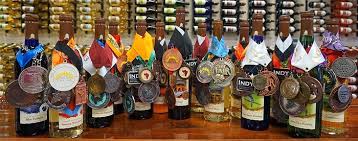
1.A Gold (orwhatever) Medal Winning wine is Special 

Hard fact: It is not unusual for 75%-90% of wines entered into a competition to walk away with a medal. There are far too many wine competitions that are organized into for too many categories. Keep in mind that in general an Award Winning wine is most likely to be solid, of average quality. In other words, no big deal.

Barefoot wins tons of medals! Firstleaf.com relies heavily of medal winning promotions, but others are guilty.

2. Made by a “100 Point Winemaker”

Okay, at some point in his/her career, a wine made by the winemaker was rated 100 points, often referred to as “a perfect wine.”  The vineyard and the winery also deserve considerable credit, but rarely do. What’s misleading logic here is, for example, me saying I’m a perfect golfer because I onced scored a hole in one. Or you got 100% on your driving test, so you are a perfect driver ready for the Indy 500. www.vivino.com loves to undercover a wine made by a 100 point winemaker.

3. A Cult Wine, Cult Winery

Cult wine is now so overused that it basically indicates a high priced, often overpriced wine that some reviewers went ape over many years ago. If it also happens to be discounted heavily, it aint no cult. www.wineExpress.com overdoes this one.

4. From a Legendary Vintage, a Vintage of the Century

Now that some smart ass critics think rating vintages on a 100 point scale demonstrates their talent and superior knowledge, let’s take the wind out of this

quickly. In a given vintage, wines are made by humans, and some are better winemakers than others. Thus, quality varies from winery to winery in a given vintage. Also, the vintage usually stretches out over 8-10 weeks, so these overall ratings are unrelaible for all wines made in a given year.

Good wines have been made in poor vintages, and mediocre wines are made in vintages rated 95 to 100 points by some know-it-all. The vintage date has nothing to tell you about the quality of what’s inside the bottle. Used by too many sites to list the guilty.

5. Priced below retail, average retail, best web price or market price

This is tricky to explain. But as an example, nakedwines.com offers a Columbia Valley Cabernet for $12.99, well below the market price of $27.33. Such a deal, but the problem is this wine is an exclusive with this site, not sold anywhere else.

So the market price means little, being an estimate or a guess or a made up price. Discounts are unreliable when the wine is custom made, a special label, or an exclusive.

And this is true of so many wines offered by subscription box approaches.


Introducing An Exciting New Wine Site


www.lastcase.com

This relatively new site appeared on my radar screen about 6 months ago. Turns out while also based in the town of Napa, it is unrelated to similar sounding sites, lastbottle.com and firstbottle.com.

I’ve been following it closely and it now deserves your attention.

Why I like  http://www.lastcase.com 

Professional and unpretentious format: no gimmicky taste profiles, no hype, no silly descriptions, no subscription box mentality.

Ratings are reliable: Chris Sawyer is a real sommelier with genuine credentials

Real wines from real wineries: No custom-made, private label rip-offs.

Serious searching is evident in the selection (curating) of many, small, hard to find wines: Good example is the “One” Cabernet Franc from Knight’s Valley, only 3 barrels made.

A few other points:

While the offerings are limited in number, the wines are not your usual suspects. In fact, some of my favorite CA brands are included such as Robert Craig, Madrigal, MacPhail, and Walt. Also, some wines from Biale, Clos du Val, Mira, and Miner Family have recently been highlighted.

Secondly, discounts are attractive, especially for the daily deals. You can pay close to full fare for the likes of Opus One and Jordan.

But most wines are discounted.

Thirdly, shipping costs are reasonable. Typically the fee is $6 for a flat shipping rate. Or, shipping is free on order of $120 or more.

Here are 4 stellar examples, all at 30%-50% below retail:

2016 Robert Hall Cabernet Sauvignon, Artisan Collection, Paso Robles,  $24.99

2016 Foris Winery Estate Pinot Noir, Rogue Valley, $13.99

2013 Madrigal Vineyards Cabernet Sauvignon, Napa Valley, $29.99

2017 MacPhail, Pinot Noir, “The Flyer,” Sonoma Coast, $34.95


Exploring the Most Diverse Wine Region

Oregon’s Most Diverse Wine Region: The Rogue Valley, Part 1, Updated and expanded in March 2024

Unlike the Willamette Valley, the Rogue Valley makes such a wide variety of wines that it defies easy generalizations. Though small by comparison with just in excess of 5,000 acres planted, the Rogue Valley grows 70 different wine varieties. Yes, from Albarino to Zinfandel. Acreage is expanding and so is the number of wineries, now well over 100. 

It is not unusual for a Rogue Valley winery, most of which are small and family owned, to cultivate over a dozen varieties and offer a dozen or more wines. But why is this diversity of any interest to normal wine consumers?  Well, being a normal enough person, as I began exploring Rogue Valley wines, my skeptical voice kept saying the stale “Jack of all trades, master of none” refrain. 

But after visiting dozens of wineries and evaluating many wines, I’ve concluded the rewards are numerous. Other than the obvious one of having more choices, you can discover varietal wines like Tannat or Vermentino at one winery, top-notch Roussanne and Cabernet Franc at another, and Tempranillo blended with Malbec, an unusual duo at several. You can also find a Mourvedre and Montepulciano and a Carmenere.  

Also, it struck me that because most of the wineries offer such a wide range of wines, visiting the area to buy direct or joining one of the clubs can be like one stop shopping.

The Background: Preparing for the Journey

Taking its name from the Rogue River, the Rogue Valley was approved as an AVA in 1991 which makes it relatively new in wine years. It is the southernmost growing wine region of Oregon. It is also large in size being 70 miles wide by 60 miles long. The AVA runs from Ashland in the southeast through the north and south sides of Medford and stretches to Grants Pass in the west. Today. What makes this diversity possible is that vineyards are planted at different elevations with different aspects and soils which lead to a wide range of opportunities.

While most of  today’s wineries started after 2000, the Rogue Valley is actually Oregon’s oldest wine region, with first vineyards planted in the 1850s. And it is home to the State’s first operating winery opened in 1873. Because most of today’s vineyards were developed after 2000, many wines, Rhones, Spanish, or Italian, are likely made from relatively new vines farmed with the latest techniques. Typically, vineyards are densely planted and organically grown with “sustainable” a common theme.

 But since consumers naturally like to have reliable information and advice, the question of what is the Rogue Valley’s signature wine needs to be addressed. On my first few visits, I thought the star was Syrah, but then I tasted a stunning Grenache from 2-Hawk (now Padigan), a beautiful Viognier from Quady North, Cabernet Franc from several wineries, and more recently Tempranillo from Peter William Vineyard and others. And then there are creative blends such as Tempranillo and Syrah. 

Getting Acquainted, One Winery at a Time

If you are unable to visit, then the best introduction to Rogue Valley and its wines is a virtual tour of the leading wineries. Your tour guide accepts tips, of course.

Our first five stops are in the Applegate Valley located on the west which was established in 2000 as a sub-region within the Rogue. With over 700 acres under vine, the Applegate Valley “has a warm-summer Mediterranean climate, like much of coastal California. However, it has four very distinct seasons, a relatively short growing season, and fog is not a factor. Winter is cold, with occasional snow. That allows the vines to go into full hibernation. Half of the area’s annual 20-30” of precipitation arrives in winter.”

Quady North

Established in 2004, Quady North has 15 acres under vine and grows 12 different varieties. Most are Rhone grapes, but it also farms Cabernet and Cabernet Franc. It recently relocated its facility and tasting room  to the Applegate Valley. Owner Herb Quady is from the California winemaking family, Quady Vineyards, best known for its dessert wines. With Quady North, he is focusing on the Rhones, especially Syrah, and special blends. Keep an eye out for his Cabernet Franc named La Battalla and his Viognier. The 2021 “La Battalla” typifies the hands on approach as the winemaker co-ferments Cab Franc with 15% whole cluster Malbec in open top fermentors using native yeasts. Old school maybe, small batch definitely and absolutely  fascinating wines. The single vineyard Syrahs lead the way.

Troon Vineyard

Tucked away in the Applegate Valley a few miles away from Quady North, Troon is the real deal when it comes to farming. It is a Demeter Biodynamic® Regenerative Organic CertifiedTM Farm which is populated by bees, sheep, and chickens. Among its recent successes, Its 2020 Tannat is a big, multi-layered Tannat with balance and refined tannins, unlike what typically comes our way from South America. It was co-fermented with 24% Malbec and 75%  was aged in neutral French oak for 18 months.. Dark in color, it is brimming with ripe plum, and raspberry aromas with background notes of baking spices.  On the palate, there’s good concentration in a polished, medium-bodied package. It remains vibrant right through the lingering finish. Impressive and enjoyable now and over the next several years. 

Also keep an eye out for the Amphora Amber which is made from Vermentino, a variety Troon has explored for years and used in a wide range of wines, this one is their version of an orange wine. You have to try the Tannat, but my recent favorite is the 2022 Siskiyou Syrah, beautiful and nuanced.

Schmidt Family

 On its 40 acre estate vineyards, Schmidt Family Vineyards in Applegate Valley grows 14 varieties, and produces 6,700 cases a year. It also makes 25 different wines in a given year.

The tasting sits in the middle of beautiful gardens with picnic tables inviting visitors to linger and relax. Many come for the food, especially the pizzas. As for the wines, I like the Albarino Reserve and also the Viognier. As is true of so many wineries, it has a hit or miss track record with Viognier. But it hit the bullseye in recent vintages. The 2021  exudes the orange blossom, honeysuckle aromatics that show Viognier at its unblended, unoaked best. Medium full on the palate, it is rich and smooth in texture with a delightful floral and citrus-edged finish. It is downright refreshing. A versatile summer white!

 Plaisance Ranch Applegate Valley 

A real working ranch with 157 acres devoted to certified organic vineyards and to grassy pastures feeding beef cattle. Most of the land is devoted to pastures.  Now run by third generation farmers, Suzi and Joe Ginet, Plaisance is located in a remote corner of the Applegate Valley.  They literally do everything by hand from grafting new vines to bottling the wine. About two dozen wines are made from the family vineyards, each in small quantities. But after tasting through the roster on a sunny afternoon, I came away amazed at the consistent quality. Their Carmenere is a solid version with excellent varietal character and no excesses. It is deep in color and offers aromas of black plum, cocoa powder  and pomegranate in a medium bodied, well balanced package. One of the best I’ve tasted not made in South America. The plum flavors are vibrant and the tannins are gentle. Their Sauvignon Blanc is also very attractive. 

Red Lily Vineyards

 Dedicated to Spanish varieties, Red Lily Vineyards has emphasized Tempranillo since it started out in 2008 when vines were established along benchlands of the Applegate River.   Winemaker/owner Rachael Martin tells us her “newest vineyard site planted to Tempranillo “has a predominantly northern aspect on a varying slope surrounding a knoll, and sits at an average elevation of 1500 feet.” And another vineyard site “has a predominantly western aspect  that rises to an elevation of 1630 feet.” She makes Tempranillo in three styles, including a Rose. A rare Verdejo is another of her specialities. The site is beautiful and picnicking along the river is especially peaceful. The picnic is complete with my favorite, the Tempranillo Rose.

Cowhorn Vineyards, Applegate Valley

With biodynamic and Demeter approved farming, Cowhorn has attracted some well-deserved media attention for its Rhone wines. Only home grown grapes are used and vines are densely planted at 2,600 vines per acre.  A little pricey for the area, but good to high quality. Of those tasted, the 2015 Sentience (100% Syrah) was loaded with fruit and peppery notes and lovely rich texture. The  ”Sprial 36”, the flagship white Rhone blend, is delicate, beautifully textured and sells for $28

As you can see in this first part we have discovered excellent rhone wines led by Syrah and Viognier, as well as Tempranillo, Malbec, Albarino, Tannat, Carmenere and the list goes on. 

Stay tuned…there’s much more ahead for us to go Rogue.

Going Rogue on the Wine Tasting Trail


“Pinch me, pinch me! I must be dreaming.”

A reasonable estimate is that I’ve visited hundreds of wineries over my career. Often with an appointment; most often as a drop in.

I am also compelled to disclose that my favorite play is A Midsummer Night’s Dream. 

You see I may have been under the influence of Puck during a recent visit to a wine country. So if you don’t believe any of what follows, maybe we need to get the Puck out of the conversation.

My first stop also had a good restaurant and superb valley views. Enjoying a small plate of delicious mushrooms, I sample 3 Pinot Noirs, all good with different personalities. Make that really good. Wandering inside the tasting room, I’m offered a bright, lovely Chardonnay, followed by a magnificent Pinot Noir from 7 clones, and then end with a stunning Cornas-tasting Syrah.

Turns out the well-informed tasting room guy was the owner. “Only in your dreams” you are probably saying.

Or, maybe you are curious about those mushrooms.

Next stop, a few miles away, A small winery focusing on Spanish varieties. Wait! Spanish. I definitely must be dreaming. We start with the 2017 Verdejo…bright and lively with crisp citrus flavors. Who in their right mind would make a Verdejo?

Well, it was followed by a Rose, mostly Tempranillo with Grenache and Graciano blended. In a word,”Lovely.” Next were two Tempranillos, the first with 19% Cabernet and the second, 100% Tempranillo. Well, both were excellent, beautifully made versions, one to drink now, the other to age.

After some polite chit-chat, we figure out the woman talking about the wines is the winemaker, the woman pouring, her sister. They are the owners. 

The tasting fee was waived.

Third winery was a distance away but on the other end of the pretty valley. A valley with vineyards on steep hillsides and a year-round river. Not knowing what to expect, my eyes immediately go to the manicured grounds and picnic area set up for concerts and /or weddings. We walked through the brilliant flower garden which is adjacent to the herb garden. Inside, the tasting room doubles as a restaurant. The outdoor tasting bar overlooks the picnic area and vistas. Families are picnicing; kids are playing.

We begin with a spicy, minerally Pinot Gris followed by a Viognier, ripe, rich, and powerful. Next up is a blend of 75% Viognier with 25% Chardonnay, which is more subtle, more complex, more complete. The wine is named “Amuse” and although when in a waking state I’m suspicious of wines with cutesy names, I’m in love. (Damn you, Puck!)

This dream was sure to end with a glass of 2014 Barbera plunked down before me. Nobody ever thinks of a sturdy, plummy, herbal, Barbera with definite acidity today. Unless it is complementing my last piece of pizza.

 Perfect match!

Better yet, a 2016 50-50 blend of Syrah and Cabernet was so appealing with a touch of leather with black cherry fruit and great structure, that I decided to buy a few bottles before I depart. 

That’s the big clue.

Now you too must suspect this has to be a dream because when would a wine writer ever buy a wine?

Or was it? 

The wine-cup is the little silver well,
Where truth, if truth there be, doth dwell.