Reviving San Francisco’s Wine Scene: A Fresh Perspective

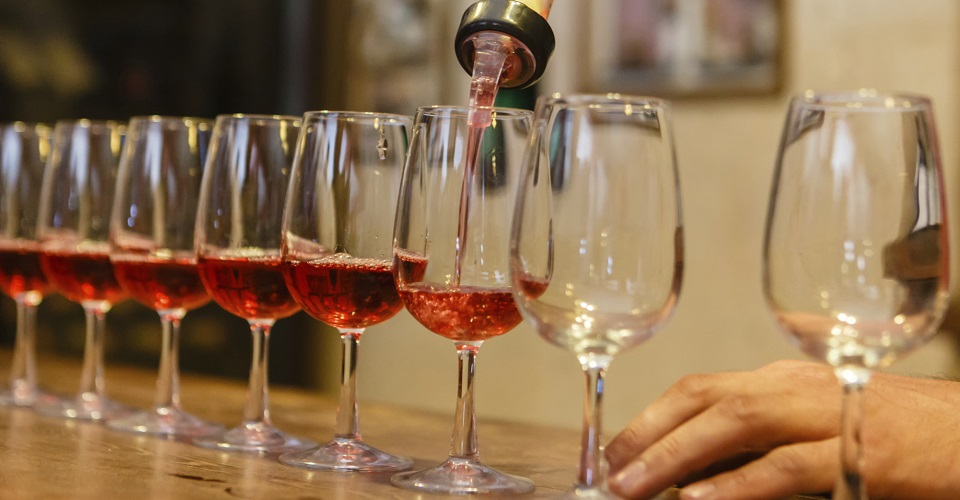
San Francisco, contrary to negative rumors, is thriving with a vibrant wine scene. From lively restaurants like Golden Sardine and Cafe Meuse to the elegant Sprezzatura, the city showcases a diverse array of wines and experiences, signifying a strong rebound as venues embrace celebration and community once again.

While the news media thrives on bad news, I’m happy to report that rumors of the death of San Francisco are greatly exaggerated. After enjoying a week getting reacquainted with my favorite city and old haunts, I was amazed to witness how things have improved since my visit two years ago. Nay sayers might cast a doubt because this was during early December when people were just beginning to get into the holiday spirit. 

But every section of the city, from Union Square, the Financial District to North Beach and outer areas was alive.

When lines start forming an hour before my favorite seafood restaurant opens on a Monday, when tourists are in line for the hop on, hop off buses at Union Square, and when Pink Martini plays to a sold out crowd, San Fran is definitely on the rebound. 

So inbound and outbound traffic is still a mess and parking is, well, forget it. That was true before covid. Only now there are Waymo taxis everywhere.  Way too many Waymos?

As for wine, which is how I  check the pulse of a city, San Francisco has historically been the heart of California wine and often in the forefront of trends. The wine biz has also been mired in negative news with declining consumption and vineyard abandonment and removal. So if the San Francisco wine scene is not happening when the city itself is on the rebound, then that’s truly bad news.

 My assignment was clear: check out the wine scene in San Francisco. Visiting a wine bar and/or a restaurant known for its wines each day during my visit, I was amazed to see how the wine scene was back to its upbeat rhythm and wine bars and restaurants were again celebrating wine. 

While artisan beers are now quite visible, wine remains top priority. Even the Ferry Plaza Wine Merchant, a local icon, has a makeshift blackboard saying:  “Beer Merchant.” I saddled up to the bar there, and selected a South African Syrah by the glass, while my neighbors had a beer. But the list of wines by the glass is impressive, and there was plenty of buzz in the wine section.The Ferry Plaza Wine Merchant, I’m happy to report, is still holding wine classes and events, so this was a good place to start.

Fish, Wine and Poetry

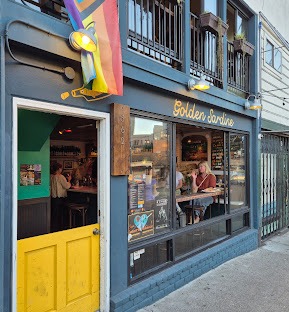
What do sardines, poetry and wines have in common? Believe it or not but an exciting and very odd wine bar new to the scene is  named “Golden Sardine.” Located in North Beach, not far from City Lights bookstore made famous as home to Ferlinghetti and other poets, the Golden Sardine offers 50 wines by the glass and stocks a few hundred bottles for sale. Rieslings and wines from Germany and Austria lead the way, but California, France and Italy are well-represented. 

Yes, the place is tiny and both floors joined by a creaky, narrow stairway make you feel crammed in  like a …sardine? The wine selections are eclectic and only a few are recognizable brands like Mayacamas Vineyards and Arnot-Roberts. But the opportunity here is to select a wine by the glass and try something new. Prices start at $9 a glass, and the pour is generous. A Negrette from Fronton was one of the best, but the Montepulciano d’ Abruzzo was the real deal for $9 and merited a second glass.

Golden Sardine is a wine bar and shop, but it also emphasizes that it is in a “poetry bookshop.”  There’s no reference here to the “wine is bottled poetry” line by Robert Louis Stevenson. But the wine selection seems to favor names with a poetic touch. There’s the “In Love with a Memory” Sauvignon Blanc, the “You’re Lucky You’re So Cute” Zinfandel, and a “Flurries on the Riverbank” Oregon Grenache to cite just a few. 

Golden Sardine is starting its third year in 2026, so it is the real deal inviting you to stop by for a glass of vino or to attend one of its poetry readings on First Fridays. We didn’t check out the sardines but the cheeses were also excellent.

Cozy, charming, classic

Remember “Cheers” Where Everybody Knows Your Name?  

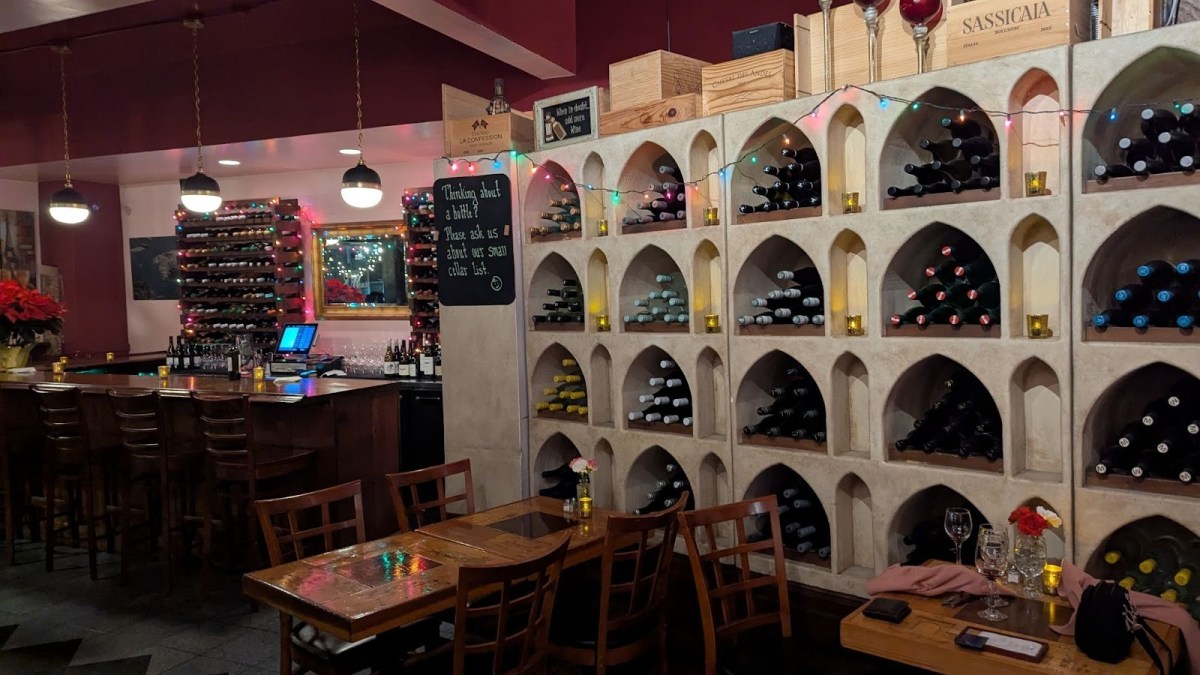
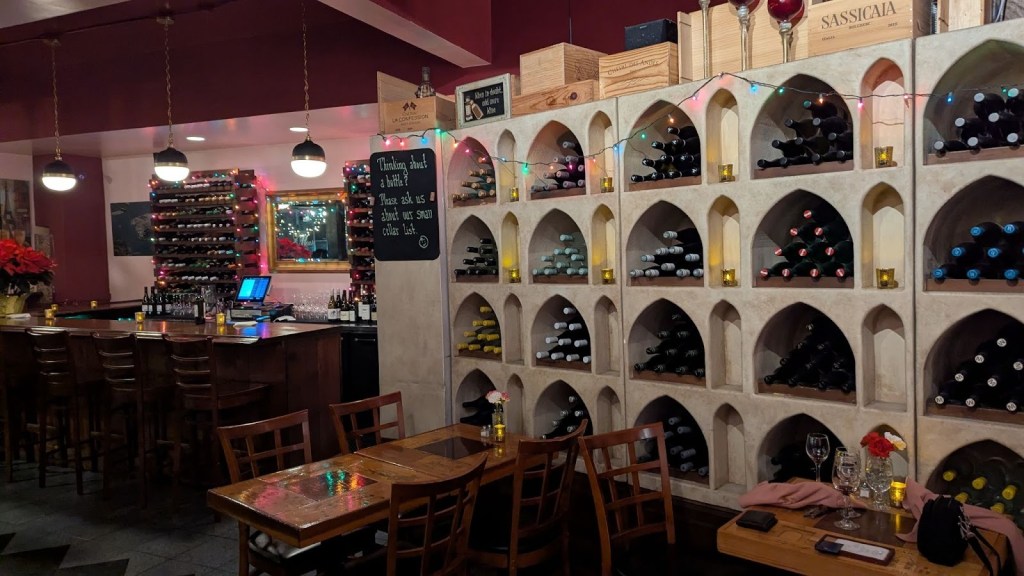
Cafe Meuse, a wine bar on the corner of a well-trafficked Nob Hill neighborhood was another big hit and brought back memories of “Cheers.”  No sardines here, but the setting is romantic, quiet, and classic. It was opened in 2006 by Erik Meuse who set it up with hand made tables and a custom made bar. There’s even a wine rack with the wine bottles actually lying on their sides. 

With over 30 wines offered by the glass, Cafe Meuse is unusual in the way it also encourages visitors to sample wines. 

We arrived early, and there were several young people enjoying a glass of wine and conversation at the bar. For $20, you can choose 3 wines to sample, and for $25, you can select 4 and can mix whites and reds if you want to. When the wines we selected were brought to the table, the pours were at least 3 ounces, actually closer to 4. Allen, our young server, said a few words, kept it simple but showed he is passionate about wine. A transplant from Austin, Texas, he doesn’t hide his slight accept but loves learning and talking about wine. 

Cafe Meuse wines by the glass are a mix of established brands and tiny newcomers to the scene. A Napa Valley Sauvignon Blanc from Cultivar was new and exciting. Another standout was the Cabernet Sauvignon from Woodside Vineyards, a Santa Cruz Mountain pioneer. Imports were well-represented by a Petra Unger Gruner-Veltliner.  

Also offering a full menu, Cafe Meuse gets rave reviews for its food. We enjoyed  two small plates and the charcuterie plate, all excellent.

The day after visiting Cafe Meuse I began planning to return. It is definitely inviting, as a neighborhood bar should be.

High End, Extensive List, Understated Elegance

Sprezzatura, located in the Financial District, is a busy luncheon restaurant that turns into a classy, high-end restaurant and wine bar after 4:00. “Barsprez” is how locals refer to it and the wine bar features a wide range of Italian wines. East Coast readers may be familiar with its sister restaurant and bar in Manhattan. 

Bar Sprezzatura is a partnership with notable mixologist Carlo Splendorini and TableOne Hospitality. Danny Mastropierro is credited with assembling the wine list. He is a sommelier who rose to fame in San Francisco restaurant circles with the Mina Group. The extensive list covers the diverse regions of Italy, with special emphasis on the coastal regions. 

Close to 20 wines are offered by the glass, but the full  list here is worth studying. Arranged by Italian regions, the wine list begins with over a dozen Spumante offerings which set the stage. Heavy in wines from Piedmont and Tuscany, Barsprez lists over 20 Nebbiolo wines as well as 20 Sangiovese-based wines. But there are wines from Puglia, Sicily, Sardinia. Abruzza, and Umbria. 

While lengthy wine lists are not unusual and often are linked with snobby service, our experience can be defined in one word: “memorable.”  As soon as we arrived, the staff made us feel comfortable and we were not hurried in any way. Fortunately, we had made a reservation and it wasn’t long after being seated that the place began to fill up. Still, the vibe was chill. 

“Chill” came to mind but I later discovered the appropriate word is “Sprezzatura.” As Gemini explained:

 “Sprezzatura is a quintessentially Italian concept meaning studied nonchalance or the art of making something difficult look effortless, concealing all art and labor to appear natural, graceful, and unstudied, often seen in fashion, art, and behavior. It’s about performing complex tasks with such ease that it seems effortless, embodying confidence and understated elegance without arrogance.”

Our dining experience, especially the wine service, was precisely that, something never before encountered in a fancy restaurant. Hunter Harris was the sommelier who worked the room, checked in with every table and still found time to talk about the wines we were served. The house wines by the glass are all Italian of course, and will set you back $8.  Other wines by the glass hover around $20 but that’s for a 5-ounce pour.  An excellent Vermentino from Sardinia was a pleasant surprise at $18.

At this wine bar, the wines share top spot with the cuisine. And the first and main course dishes are authentic, beautifully presented, and delicious.

The takeaway from our experience here was all about the service, both the wine and the food service. To us this was like a therapy session to get over having had a bad experience with poor  and inattentive service. We have had a few of those recently, but who hasn’t.

So there you have it: a totally unscientific survey of the San Francisco wine scene.  By luck we happened upon three totally different wine bars. 

Holiday Wine Sales: Budget-Friendly Tips for Shoppers

Now with the crazy days of holiday shopping hype coming at us from every direction, the major online wine retailers and wine merchants are also doing their best to get our attention. 

Although these Prime, Cyber, Black Friday and what have you holiday sales are now an annual event, lots of circumstances have changed over the last 2 years. People in general are much more focused on soaring prices of eggs and gasoline, or whatever their reference point may be. 

The phrase “sticking to a budget” is now heard in so many circles.

Because wine sales have trailed off over the last 2 years or so, these holiday sales will be closely watched. As of now, wine prices haven’t spiraled because tariffs haven’t made an impact on prices. 

The fact is that there is a glut or over-supply of wines and we have seen the number of wine producers entering the discount world increase as many once solid wineries feel the need to reduce prices to move inventory.

Wine is different from eggs and gas because it is a discretionary product, meaning not vital or necessary. Well, to all but a few of us. If there has been a lesson those in the wine biz should have learned over the last two years as wine sales dipped, it is that non-snobby wine lovers are really no different than other consumers and now realize a need to be extra careful about sticking to a  wine budget. That often means having a target maximum price or price point when buying wine. 

What’s Going on in Online Wine Sales

When previewing t several of the Black Friday deals, I can’t help but notice the many luxury or cult wines that are over $100 a bottle are now being offered at deep discounts. Online seller winespies.com offered the 2020 Caymus Special Selection at $147 ($225 regular price), vivino.com announced a culty Chardonnay for $34.99, regular price $90, while lastbottle.com featured a Pouilly-Fuise for $34, regularly $100.  Another site had the 2018 Beringer Reserve Cabernet at $87.50, roughly 50% off. Earlier this week there was a “sale” of the 2022 Joseph Phelps Insignia, which retails for $350-$400 at $195 a bottle. 

Don’t know about you, but to me even these discounted prices still are not budget-friendly. High ratings and non-stop hype are behind so many of these exorbitant prices.  Some might argue that many wines priced in the 3 digit range are on allocation or enjoy a cult following. Then one wonders why some are offered online to begin with and often at deep discounts. We’ll probably never get a consistent explanation, but that shouldn’t stop us from shopping the sales.

Insider Tips for Savvy Wine Shoppers

One great website to find truly fine and reasonably priced wines is wtso.com  What stood out to me is that its Black Friday sales on November 28-29 has an end of the year Clearance Sale. While it continues with its daily flash sale, wtso has many attractive, highly rated wines in its clearance sale. With a few bottles priced at $11.99, the list is heavy in Italian wines but also has something for every wine drinker. At $19.99 a bottle, you can buy the 2024 Calculated Risk Cabernet, the 2021 Havens Cellars Red Blend, and the 2022 Left Coast Cellars Willamette Valley Pinot Noir. An Old Vine Lodi Zinfandel topped the list of the $11.99  specials.

Wine Access is another website that has dozens of great wines for the budget minded Black Friday shopper. At wineaccess.com  the sale works by knocking an extra 20% off their already discounted prices. For example the 2022 Zinfandel from Marietta Cellars is listed for $25, but with the added discount sells for $20 a bottle.THe extra discount is applied at check out.

 Those wines that stood out to me before the discounts are the Three Wine Company Old Vine Field Blend ($28), Meeker 2022 Grenache ($22), 2023 Lang & Reed Cabernet Franc ($29), 2022 La Vigne Paso Robles Merlot ($21) and a San Luis Obispo Chardonnay from Oceano Vineyards( $18). Others are the Pinot Noir and Chardonnay from Oregon’s Solena Estate. And if you like wines from Australia, Argentina, and France, wineaccess.com has something for you at Black Friday prices.

Another site pushing its Black Friday sales also with a large inventory is wineexpress.com A few caught my attention, especially the J. Dusi Cabernet “The Don” from Paso at $22.49. J. Dusi is a favorite of mine. Also, there’s the Rutherford Ranch Chardonnay for $13.47 and a Reverdy 2021 Cotes du Rhone for $7.47. 

The California Wine Club, one of the oldest, has announced its Black Friday 50% off sale. The sale will continue through Sunday. At $12.50 the 2022 Armida Zinfandel from Dry Creek and the Eden Rift Sauvignon Blanc, also at $12.50 are excellent deals. The full list is worth checking out at cawineclub.com 

When the Dust Settles

These holiday sales will likely be extended way beyond the holidays, but they will end. Most of these are flash sales, daily deals or one-time only sales which not everyone is comfortable with because of the need to act quickly.

Budget-Friendly Paso Robles Wines Under $25

With the crazy days of holiday shopping hype coming at us from every direction, all the major online wine retailers and wine merchants are also doing their best to get our attention. If there has been a lesson learned over the last two years as wine sales dipped, it is that wine lovers are really no different than other consumers and now realize they need to be extra careful about sticking to a budget. 

 When word got out that the average price of a Napa Valley wine was $108 a bottle, normal people probably explored alternatives. If you count yourself among the budget minded, normal people then let me share my latest wine shopping discovery. Though I’ve been following it for years, Paso Robles has emerged as a leader when it comes to quality for the price.

Paso Robles remains one of the most energized and dynamic wine regions even in these difficult times. At least it is to me. Paso Robles came alive back in 1998 when the Rhone Rangers began holding their annual event there which was followed up in 2010 by the annual Garigists wine festival. Though once just a lonely way station midway between San Francisco and LA, Paso has also come on strong as a tourist destination. And here in 2025 there’s lots of excitement in the hotel and culinary scenes.

 With so many possible story angles staring at me, one that caught my eye during a recent trip to the SoCal Coast was the way so many Paso Robles wines are beginning to dominate wine lists and special deals in wine shops. We’re talking high end restaurants, sommelier-managed wine lists.

Que Pasa Paso?

Why? Beyond quality and availability, the one pattern that emerged is that the trend setting wineries in Paso know how to hit today’s magic price point. When looking back over my recent tasting notes, it was amazing to see so many of my Paso favorites selling for around $25 a bottle or less. My gut feeling is that today’s savvy wine shoppers see $25 as the top price that fits their budget. Maybe $29.99 if a wine strikes them as exceptional. 

The Paso Players

The Paso wineries I see as major players in this trend are a mix of well-established names like Ancient Peaks and J. Lohr and newcomers. A few others belong to major marketing companies, and many are your Mom & Pop family folks. Most of the wines are red which is no big surprise. Overall, when you visit the Tin City wineries or many others, the energy level and enthusiasm is reminiscent of Napa before 2000. Paso has become a magnet for creative maverick winemakers and outliers. Just recently Napa’s Tank Garage Winery joined the Paso scene. Check it out and you’ll get my point.

As for wines, Paso was noted early on for Petite Sirah, Zinfandel and the Rhones, and these are all included in the price point $25 club. But Cabernets, Bordeaux blends and other creative blends are well-represented and seem to be replacing Napa wines on many wine lists and also in the minds of many wine lovers.

So now that we’ve plugged in the destination on our map, “let’s go” to the top Paso wines hovering around the  $25 price point. 

First Stop: Petite Sirah and Zinfandel

Peachy Canyon Paso Robles (California) Petite Sirah 2021 $20

Best known for its bold Zinfandels, Peachy Canyon also has a good track record for Petites in a rich but supple style. Deep dark in color, this 2021 offers an aroma of sweet black fruit and fig along with some dried herbs. It turns plush and smooth on the palate driven by a solid core of blackberry flavors and light oak. It finishes long and seamless. With its lovely silky texture and subtle oak notes, it is well-knit and ready to drink now.  90

Brady Vineyards Paso Robles Petite Sirah 2021  $20

 After honing his winemaking skills in Texas, Don Brady went West to work for Robert Hall in Paso Robles. In 2006 he acquired a 24 acre vineyard and began focusing on Paso red wines.

If you like Paso Petite, Brady checks all of the boxes. His 2021 was aged in French oak for 18 months. Dark in color, it has that  intense, ripe blackberry aroma with some black pepper that sets the varietal apart. Full-bodied with concentrated flavors of blackberries, boysenberries and some vanilla bean, it is tight and concentrated on the palate with light tannin and oak.  More powerful than nuanced, but fairly well-mannered, it could benefit from a little cellaring to soften. But with decanting, it would serve you well as a complement to most smoked meats and, to me, especially with osso buco. Also, a good value. 90

The Big, Red Monster Lot #2 Paso Robles, Zinfandel $20

Yes, here’s a Paso red wine that boasts about being big. Now owned by War Room Cellars based in San Luis Obispo, this brand began in 2005 as a partnership between winemakers Bob Pepi (formerly of Robert Pepi winery) and Jeff Booth (formerly of Conn Creek). The brand was relaunched in 2019 and aimed at a market that loves big and powerful wines. Promoted as a “savage beast,” this Lot #2 is Zinfandel blended with Petite Sirah and Tannat. After an extended maceration “for bigger extraction,” it was aged in French and American oak, 20% new. While definitely big, ripe and juicy, it offers an attractive aroma of blackberry and pepper with some spiciness. On the palate it is round but ultra soft and has enough fruitiness to keep the tannin and alcohol at bay. 91

Next, let’s move on to Syrah

McPrice Myers Central Coast (California) Right Hand Man Syrah 2023 $ 20

Headquartered in Paso Robles, this winery enjoyed a cult-like following for its red wines. They usually are given unusual names like “High on the Hog” and “Right Hand Man.”  Blending Central Coast fruit, winemaker Mac Myers crafts this well-rendered Syrah that offers depth and approachability at a very attractive price.  Aged 10 months in neutral oak, it has a lovely aroma of ripe plum with secondary fragrances of pepper, spice and leather. Nothing overdone or funky here, this Syrah is rich and smooth on the palate delivering savory flavors of fresh berries, plums and spice. The tannins are soft and add roundness to the texture. Syrah lovers should keep a bottle of this “Right Hand Man” close at hand. Wine lovers should check out this winery. 92

Ancient Peaks Winery Paso Robles, Santa Margarita Ranch Renegade 2020 $26

With its “Renegade” blend, Ancient Peaks has been successful in working with Paso Syrah to come up with an attractive drink now red.  I like the way it tones down the gamey, meaty side of Syrah but still emphasizes its fruit. In 2020 the final blend was 67% Syrah, 27% Petit Verdot and 5% Malbec.  The individual components are cold soaked and after fermentation they are aged for 20 months in French and American oak, 20% new.  Dark in color, the wine shows a pleasing mix of Syrah’s dark fruit along with subtle fresh berries. It continues with this combination and adds some coffee and oak toast and spice in the flavors. Nicely structured with modest tannins, it finishes with simple fruit and good length. Excellent all-purpose red. 90

Turning to The Main Event: Cabernets

 Daou Vineyards Cabernet Sauvignon Paso Robles 2021 $25

This dark, ripe and juicy Cabernet is made for those who like it plump and chunky. The aroma of dark, ripe fruit with hints of anise and dried herbs sets you up for a big, rich mouthfilling wine with light toasty oak and tannins providing structure. With some airing the flavors open to reveal nuances of black tea and berry fruit before the youthful tannins are picked up to carry this to its rugged, sturdy finish.This full-bodied Cab is a blend of 83% Cabernet with 9% Petite Verdot and a splash of Merlot and it was aged for 10 months in 50% new French oak. It is a lot of wine for the money. 91

Groundwork Wine Co. Paso Robles (California) Cabernet Sauvignon, 2023 $23

Groundwork Wine is a new line of wines from Curt Schalchin of Sans Liege which is noted for its high-end Rhone blends. With Groundwork, he focuses on good value varietal wines from Paso Robles and this 2023 Cabernet confirms that Paso Robles is the real deal for great value Cabs. This 2023 is made from three vineyards within Paso, and the wine, blended with 12% Petit Verdot, was aged in neutral oak for 18 months. Bottled unfined and unfiltered, it delivers plenty of ripe black fruit with hints of black pepper and bay leaf. With light tannin, it is firmly structured and has an aftertaste of black cherry and spice. Enjoy now through 2028.  92

The Fableist Wine Co. Paso Robles (Central Coast) “373” Cabernet Sauvignon 2022 $25

Andrew Jones, winemaker for Field Recordings and Curt Schalchlin, owner of Sans Liege combine their talents for the Fableist collection of wines. The names are based on Aesop’s Fables, and apparently, judging from the label, fable #373 is about ants and bugs. Or whatever! Moving on to the wine, in the 2022 vintage the fruit was picked earlier than usual due to the heat wave. Fermented in tanks and aged in American oak barrels, 10% new, the final blend was 85% Cabernet filled out by Merlot, Malbec, Petit Verdot and Petite Sirah. Once poured, this wine shows fresh blackberry and currant aromas and flavors with youthful tannin poking through. With aeration, it slowly opens and adds a little spice and cedar to accompany the  juicy dark fruits. Needs time to settle down and should be decanted.  A good value for a Paso Cab. 90

Maddalena Paso Robles Estate Reserve Cabernet Sauvignon  2021 $24.

Part of the Riboli family’s expanding portfolio, Maddalena offers white wines from Monterey and reds from the estate vineyards in Paso Robles. Blended with 5% Petit Verdot and 5% Cabernet Franc, this Cabernet was partially aged (45%) in small oak. It is all about ultra ripe black fruit such as black cherry and plum in aroma and flavor. Medium full bodied, it comes across as plush on the palate with plenty of tannin and oak spice. It finishes on a slight tannic note.

Overall this is an attractive fruit-forward Cabernet for current drinking.  89

Paso D’Oro Wines Paso Robles Cabernet Sauvignon 2023 $23

Paso D’Oro is a relatively new brand created by the Terlato family which owns prime properties like Chimney Rock, Rutherford Hill, Sanford among others. This 2023 was sourced from 4 AVAs within Paso, and the wine was aged in neutral oak and blended with 24% Petite Sirah. Deep and dark in the glass,  it opens quickly with attractive black fruit with accents of clove and spice. Quite full bodied with rich flavors supported by velvety tannins. Smooth finish. With loads of terrific ripe fruit, pleasing texture, and some complexity, this is a great choice for current enjoyment.  91

Tooth & Nail Wine Co. Paso Robles, Cabernet Sauvignon 2020 $26

This is an old review, but it is from the winery that ignited my interest in Paso Cabernets.This vintage was presented in a unique bottle that requires a detailed background explanation and an APP to download.  But the wine inside is first-rate and a wonderful example of Paso Cabernet. Saying it “reinvented the wine label,” the winery created an augmented reality label that with the app will sing to you. Literally sing, honest. From its deep purple color to its rich, ripe aromatics, this wine sings on its own. Initial aromas of chocolate and spice give way to ripe blackberry and oak spice. It is big-bodied with a smooth unctuous texture. The flavors remain focused on ripe black fruit with dusty oak tannin in the background. The finish is long with good acidity keeping it balanced throughout. The current vintage is 2022 and sells for $28. 

Quest Austin Hope Winemaker, Paso Robles Cabernet Franc 2023 $23

The “Quest”  label is the Hope family’s long-term  commitment to Paso Cabernet Franc, and prior vintages contained some % of Cab Sauvignon. This is the first vintage made entirely from Cab Franc. The majority of the fruit sourced for the 2023 Quest Cabernet Franc was from the Creston District, Future vintages will also incorporate fruit from the Highlands District and Adelaida District.  You don’t need a SOMM course to recognize this is Cab Franc. The aroma is a textbook combination of plums, dried herbs and tobacco leaf. Medium bodied and solid, it is lively with plum and licorice flavors. Some briary tannins give a little push to the finish. Sort of like a footballer’s “tush push.”  A red to enjoy with grilled meats and rich pastas. 90

J Lohr Wines Paso Robles Los Osos Merlot 2022  $15

This Merlot is hard to beat at this price. J.Lohr’s Merlot is planted in the relatively cool El Pomar District. Blended with a big splash of Malbec (10%) and a dash of Cabernet Franc (5%), this 2022 was aged for 12 months in American oak. In an approachable and lively style, it opens with an aroma of fresh plums and light spice. Medium bodied and balanced, it offers plum and cherry flavors in a smooth package. Not flashy, just easy to enjoy.

WHITES

Sans Liege Wines Central Coast Cotes du Coast 2023 $20

Based in Paso Robles, winemaker Curt Schalchlin is a noted Rhone wine specialist. But as evidenced by his artsy labels and unconventional wine descriptions, he does things differently. Sourcing from some of the best known vineyards in Santa Barbara and elsewhere, he assembled this blend of 36% Viognier, 32% Marsanne, 17% Clairette, 11% Roussanne, and 4% Grenache Blanc. All but the Grenache are barrel fermented by native yeasts and lees aged in French oak. But the wine is, surprisingly given its composition, a smooth, subtle and lively ready to drink white. It immediately gets your attention with fresh peach, lemon and honeysuckle aromas. Medium bodied, nicely textured and vibrant, it offers stone fruit flavors and has a long finish that is neither bitter nor acidic. Charming and fun to drink and nicely priced to boot.

92

Ancient Peaks Winery Paso Robles Santa Margarita Ranch Sauvignon Blanc 2023 $18 

Made from the coolest blocks within the family’s estate vineyard, this 2023 also benefited from the relatively cool growing season. It is pale straw in color and shows plenty of vibrant fruit such as melon and pear along with light ginger and flintiness. Medium bodied, it continues with flavors of melon and lemongrass. In the crisp but lengthy finish, I pick up subtle hints of ginger and  apple. Aged for 6 months in stainless, it makes a good case for unoaked Sauvignon Blanc and pairs well with a wide range of entrees. 91

One Stone Cellars Central Coast Rose of Pinot Noir 2024 $18

One Stone is a brand created by Ancient Peaks Winery in Paso to support mentoring programs for women venturing into the wine business. The label’s image projects moving mountains one stone at a time. From the estate vineyard in Paso and others in the Central Coast, this Rose is made 100% from Pinot Noir that was grown and harvested solely for Rose production. Aged 4 months in stainless steel, it is a big friendly wine that is all about fresh strawberry and juicy watermelon aromas and flavors. Smooth and round on the palate, it finishes with a touch of acidity to sustain its lively personality. 90

Wait, There’s More

The wines mentioned so far are good examples of the great deals from Paso Robles, but they are just a solid beginning. 

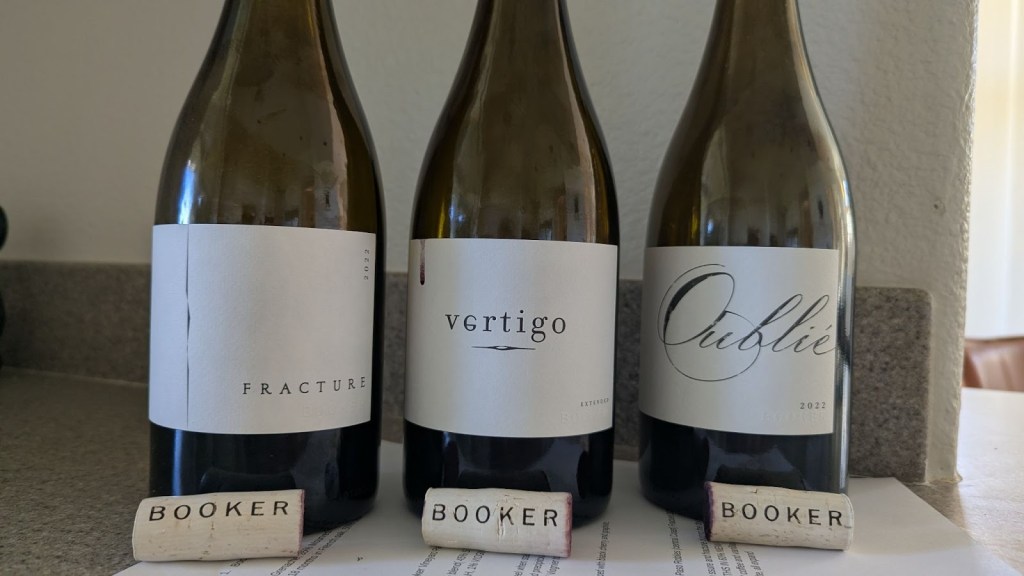
The Harvey & Harriet label, associated with Booker Vineyards, offers an attractive Red Blend from Paso and a White Blend from San Luis Obispo. Both are priced below $25.

Another wine to check out is named Big, Bold Red. It is a blend of 50% Merlot, 30% Cabernet Sauvignon, 20% Syrah. 

Highlands 41 is a new brand from the Riboli Family. Among the first to hit the market is its 2017 “Darkness,” Estate Reserve selling for $15.00  

So, that’s for now. Many of the reviews you see here are available at www.winereviewonline.com 

Go to the sight, and specify Paso Robles to see a lot more reviews of good value wines.

Making Wine Fun Again

Wine is fun.  Fun is learning about new wines and new wine regions, discovering a great wine and food combination, and sharing tasting experiences with others. We recently formed a wine tasting group which my wife innocently began describing as WTF, meaning wine tasting friends.

Many friends both in and outside the group have been wondering WTF is going on with all the bad news about the wine business. There is a worldwide downturn in the wine market. Sales are in a nosedive, including winery direct sales. Vineyards are being removed, and in the 2025 harvest, many vineyards in France and the West Coast were not harvested. The wine news is all so negative and for many in the business it has to be depressing for sure.

Unfortunately, the way most people in the wine biz are dealing with the downturn is to play the blame game. Gen-Zers, Millennials, fancy cocktails, anti-alcohol messages, inflation, stagnation, tariffs…the list goes on. All of this finger pointing does not change the fact that wine consumption is on a serious downward path. 

Rather than looking for excuses and blaming outsiders, maybe the wine industry should look inward. 

 Looking Inward

In an open letter to his wine industry colleagues, Oded Shakked of Longboard Vineyards does just that and begins with this plea:

“Can we please stop blaming Millennials for not drinking enough wine?” He then says: “Millennials aren’t dumb” and goes on to make a case in some detail. His main point, one I agree with 100% is this:

“Maybe they don’t need a somm-certification; maybe they just need wine that doesn’t come with a lecture and a superiority complex.”  

He concludes: Millennials aren’t killing wine. They’re killing the nonsense around it and they are not buying the “exclusivity” BS we have been selling for years.” You can read his entire letter on his Facebook page and on linkedin.

Now for the message that really resonated with me. Oded adds: “ Here’s a wild idea: maybe wine should go back to being enjoyable.” 

 Making Wine Fun Again

What a crazy idea which also happens to be another one I totally agree with. The reasons behind the downturn in wine sales are complicated for sure. Expanding on Oded’s thoughts, I think the perception of wine as a luxury item promoted by the corporate thinkers was a mistake. Restaurants happily went along with that and upped the price to often absurd levels, led by wine by the glass prices. $25 for a glass of Rombauer Chardonnay? No thanks, I’ll have a martini.

So how can wineries make wine fun again? Obviously, by getting off the high-minded exclusivity message and offering wines at reasonable prices. And then keep it simple by pushing the having fun message in marketing and promoting. 

Face the Music and Dance

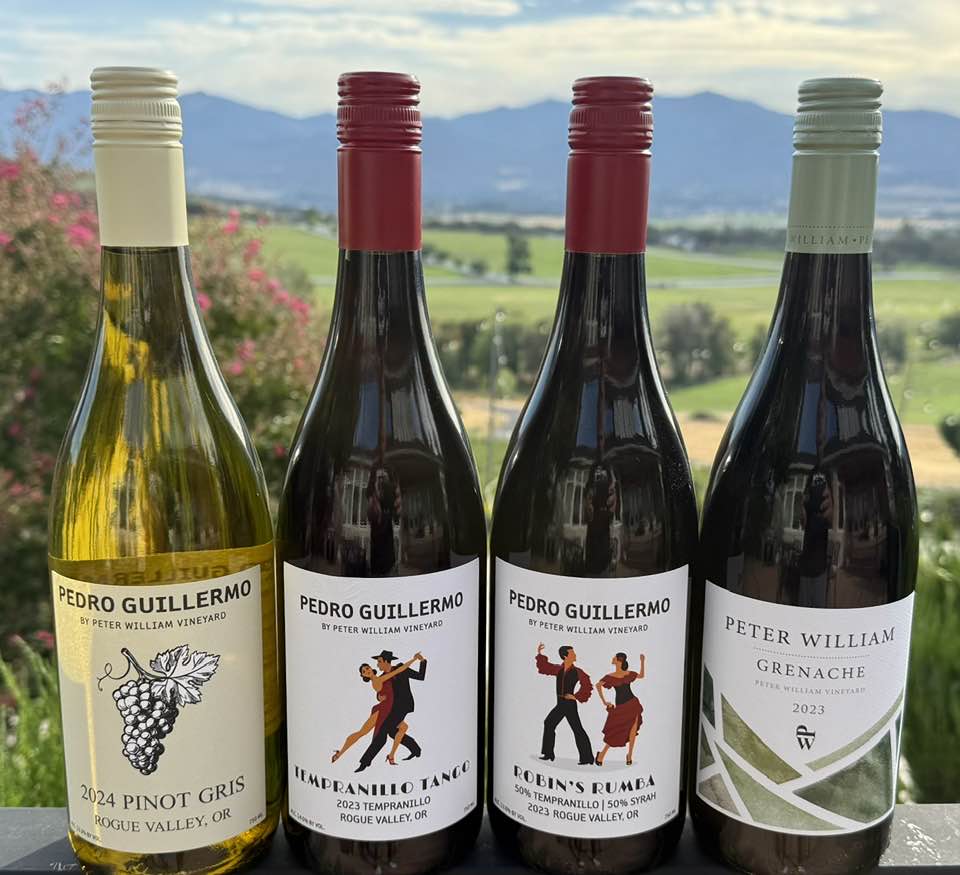
Exhibit A for me is a small winery that is expanding its “value line” of wines that focus on dancing:

Pedro Guillermo by Peter William “Syrah-Cha-Cha” Rogue Valley (Oregon) Syrah 2023 $19.50

This Cha-Cha wine joins the dance group kicked off by the “Tempranillo Tango.” The dance troupe includes “Robin’s Rumba.” All three wines are priced the same and convey the message that wine is fun and to be shared.  It is a healthy message that needs to be re-affirmed. Thanks to Dr. Peter Adesman and his wife, Dr. Robin Miller, who is the inspiration behind these wines. That fun message comes through loud and clear with their dance-inspired line of wines.

As for the Cha-Cha wine, it is delicious. Made from the estate vineyard and blended with a splash of Tempranillo, it is an approachable Syrah, ready to be enjoyed now. The color is dark and the dark fruit and spicy aroma emerges quickly with a little swirling. It is smooth and plush on the palate with lively flavors and good balance.  Yes, “swirling” is a hard word to avoid using here and good balance is key to success for both a wine and a dancer. 90

 Pedro Guillermo by Peter William Rogue Valley (Oregon) Sauvignon Blanc 2024 $15

Though it doesn’t have a dance theme, this Sauvignon Blanc glides nicely across the palate. 

With a little swirling, the aroma offers up citrus, green apple and a hint of grassiness. It is smooth and round on the palate and delivers plenty of ripe melon and apple flavors. Overall, this offers genuine Sauvignon Blanc character at an appealing price point. 88

Under the Peter William label, the winery offers a range of Rhone wines that are excellent values.

Peter William Vineyard Rogue Valley (Oregon) GSM 2023 $30

This is an attractive, vibrant GSM ready to be enjoyed now. Made from 37% Grenache, 42% Syrah, and 21% Mourvedre, it was aged 20 months in neutral french oak. The three components work seamlessly together as a team with the Grenache contributing raspberry and cherry aromatics, the Syrah adding depth and light pepper and spicy flavors, and the Mourvedre holding it all together while adding an earthy note. With soft tannins in the background, the lengthy finish is all about vibrant, delicious fruit.

91

Peter William Vineyard Rogue Valley (Oregon) Daisy Creek Vineyard Viognier 2024 $30

Another successful Viognier from the Daisy Creek Vineyard that captures all of the good things about Viognier and none of its excesses. This 2024 was fermented in neutral oak and aged on the lees for 4 months, and the lovely aroma combines lychee, honeysuckle with a hint of ginger. 

Rich and smooth on the palate, the flavors charm you with their youthful melon and spice accents. The finish is crisp and mouthwatering.

92

A Wake-Up Call for Wine Shoppers!

Wait. Are any wine drinkers actually shopping these days or did Amazon train us all to stay home and let others think for us? Then there was Covid  and now there’s Doordash delivering wines in some states. And subscription wine clubs are happy to deliver a box of unknown wines to your door. Oh well!

As 2025 winds down and the wine market faces a serious oversupply of wines, there’s never been a better time to shop around.  Sure, the online retailers hustling wines at WTSO.com, lastbottle.com and the rest of the gang are now offering a wider range of wines. On November 11th, winelibrary.com is set to offer a variety of wines at the $11.11 a bottle price point. By then Trader Joe’s and Costco will surely have come up with some deals for the holidays.

But the most exciting sale this week is at Grocery Outlet which has about 500 stores across the country. Yes stores, as in places you drive to, check out the shelves, load up a cart, and pay at the registers. Sounds old fashioned to many of you, but  most of us who love a wine bargain can adjust to it.

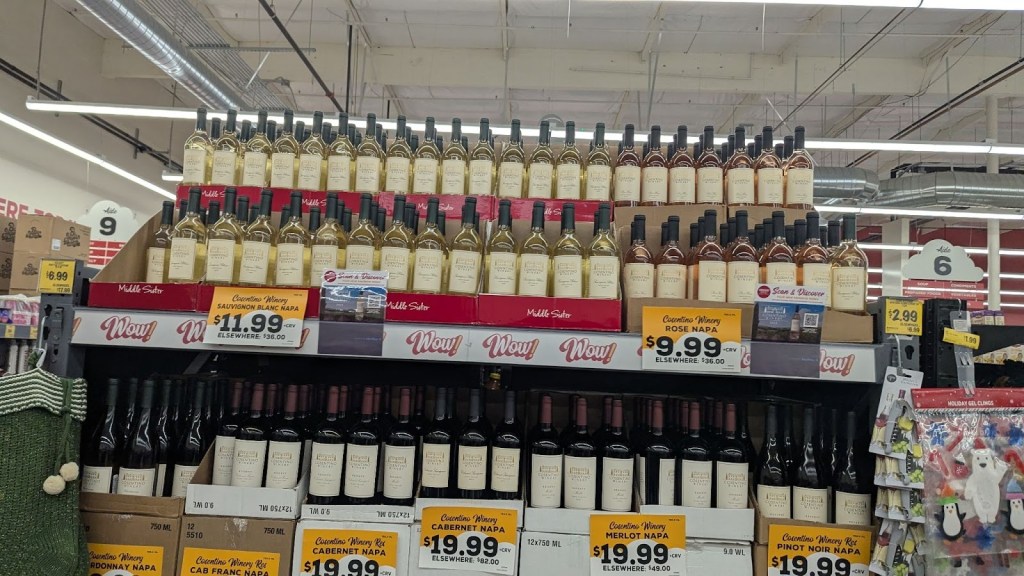
Yesterday, in a Grocery Outlet in Southern California, the shelves were practically falling over into the aisles. Piled high were wines from Cosentino, reds and whites. The 2023 Cosentino Sauvignon Blanc was excellent and sells for $11.99 a bottle. The winery’s website says that wine retails for $30 but is “out of stock.”  But Grocery Outlet has it along with Cosentino’s Merlot, Cabernet Sauvignon, Rose and others.  It also has the Reserve Cabernet Sauvignon for $19.99 which you can buy direct from the winery for …$82.

Cosentino Vineyards developed a following for its Zinfandel,Merlot,  Cabernet Franc and Sangiovese, but founder, Mitch Cosentino, sold the winery and is no longer involved. It is now part of the Foley Family portfolio, but the overall quality is still better than that of other once-famous brands now  under corporate owners.

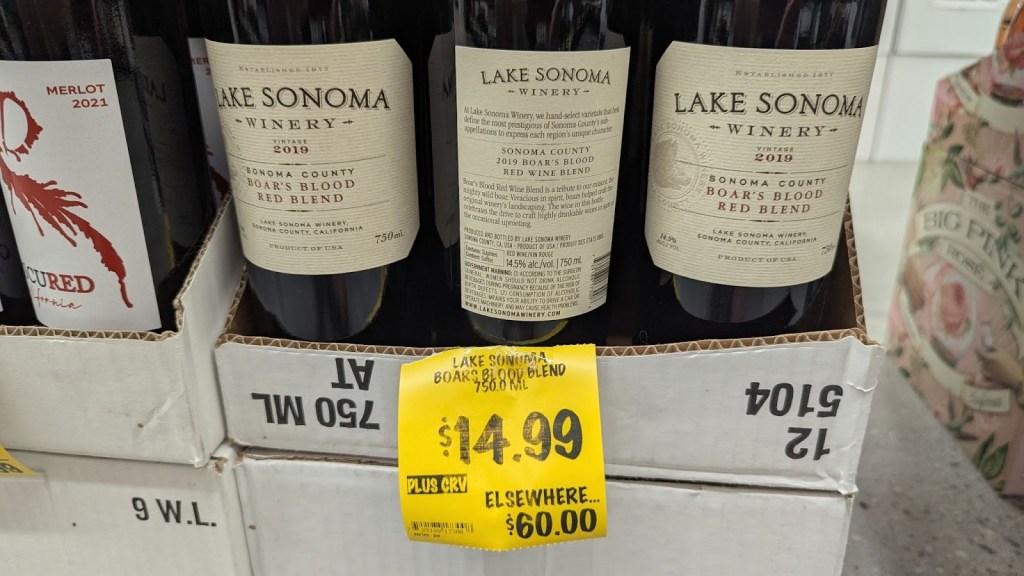
Back to my recent shopping adventure, Pinot Noir lovers should check their local Grocery Outlet to see if it stocks the 2021 Diora Pinot Noir from Monterey County. If you prefer Cabernet blends, then the 2019 Red Blend made by Lake Sonoma Vineyards is quite attractive. A few stores carry Napa Cabernet from Monticello Vineyards.

Yes, the offerings vary from store to store with Grocery Outlet. When it comes to bargain priced Bordeaux wines, I find Grocery Outlet is on a par with Trader Joe’s.  Decent, everyday wines from Firestone and Sebastiani are sold at many Grocery Outlets. 

Also, the end of the year is a good time to shop for Rose wines because wines from the most recent  vintage are about to hit the market. Right now, Bonny Doon 2023 Rose, the Central Coast bottling, not the Vin Gris, is a safe bet.

A Unique Take on A Wine Club

Excellent wines, low prices, no-nonsense

Looking for “A wine club with “NO commitments, NO fees, NO cards on file, NO limited selections!”? Or how about a winery dedicated to offering you the “Best bang for your buck”? Well, I happened upon a winery that meets both of these requirements. My introduction to the winery was through its press release challenging other wineries to match its record of having every wine produced rated 90 points or higher.

Challenging other wineries was a clever and unprecedented way to get attention, and it obviously worked for me. But the emphasis on a wine club open to anyone and wines pitched for value was also attention-getting. Here was one winery flying way under the radar, my kind of winery. 

But a wine club anyone can join is really not a club, is it?  Could this be some kind of come on trying to unload mediocre wine, or the real deal?

Peirano Estate Vineyards is the winery and, as I learned through conversations and tastings, is the real deal. It also does things differently, goes against the grain and does so without swagger. Better yet, it  tries to make the wine experience uncomplicated yet fun. A small  winery with no hype about icons, no rockstar winemakers, no strict allocations and waiting lists, and no luxury priced wines?

Located in Lodi, Peirano Estate is family owned and it may be one of the oldest with vineyards established in 1885. The family’s history takes you through the ups and downs of farmers before, during and after Prohibition. Check it out at: www.peirano.com

The family farm now covers 300 acres and is in the hands of the fourth generation, Lance Randolph.  He’s the guy behind the tractor, behind the wines and behind this novel wine club.

A Vineyard Guy

Lance Randolph is said to have been driving tractors up and down the vineyard at the age of six. In 1992, he ventured into winemaking, a transition made easy by being very familiar with the family vineyards. Today the Peirano vineyards are planted to Cabernet Sauvignon, Merlot, Chardonnay, Sauvignon Blanc, Syrah, Viognier, and Petite Sirah. It also “has perhaps the largest single block of old, head-trained, natural rooted Zinfandel left in the state of California.”  Lance adds, “Rather than destroy these beautiful old Lodi Zinfandel vines to make way for larger yielding, more economically advantageous vines, we have decided to harvest the meager 2 tons per acre production.”

With his viticultural background, that was not an impulsive decision. Lance has explored various training and harvesting methods and the winery’s website explains his vineyard management trials and applications in great detail.  For example: “In the 1990s, Lance was one of the first to implement the Geneva Double Curtain system. This system, rather than using one cordon wire connecting the vines through the center, as done with the bilateral cordon system of the 1960s, splits the vine into two and uses two cordon wires spaced three feet apart. This method is highly advantageous for the estate Cabernet Sauvignon and Merlot grapes.”  Some of the Cabernet Sauvignon is 50 years old, but the Merlot acreage is newer, planted to six clones.

Anyway, after reading the very detailed background, the one point that sticks out to me is that having gone through numerous possibilities of vineyard management, he now prefers to hand harvest all varieties. That is unusual in Lodi or anywhere today.

An Uncomplicated Business Plan

To continue the theme of going against the grain or the norm, when it comes to selling Peirano wines, the winery favors one price fits all. Whether they be white or red, varietals or blends, barrel aged or not, all 15 wines are priced at $16 a bottle. Not only is that unusual, but the winery offers a mix and match case deal  at 50% off, or $8 bucks a bottle. Shipping is a flat rate of $48. So add $4 and the bottle price is still a reasonable $12.

Why $16?

“We chose $16 per bottle because it reflects our goal of offering exceptional quality at an accessible price. Every bottle of our wine comes from estate-grown fruit—grapes we’ve farmed on our family’s Lodi vineyards for generations. The $16 price point allows us to maintain our hands-on approach in the vineyard and winery, using traditional techniques and sustainable practices, while still keeping our wines affordable enough for everyday enjoyment. It’s a balance between honoring the craftsmanship and heritage behind each bottle and ensuring our wines remain approachable to a wide range of wine lovers.”

So no surprise, the wine club is open to anyone, but how did this come about?  Lance explains:

“I started the mix & match case offer over a decade ago when I realized that all tasting rooms were using a subscription model/wine club scenario. Call me old fashioned but I hate being forced to leave my credit card on file and be told what wine I had to try because the winery was trying to “unload” it on me! So I struggled for a long time to find a unique solution that eliminates all the wine club demands. It all came to our customer needs – they want to pick and choose what they want and get those “great” wine club discounts without all of the wine club requirements. Thus – our “family plan” was born and we actively say ‘ditch the wine club experience and try our novel approach to experiencing wine!’

Welcome to the “No Wine Club Zone”  

Many people enter the”Zone” through the tasting room in Lodi. Visitors can select wines from all 15 or 16 wines available at the time. To sample five, the fee is…$10. 

Most Peirano wines offered today are reds, either blends or varietals. Among the whites, the blended “Sea Enchantress” reviewed earlier is my favorite. The Chardonnay will appeal to those preferring the ripe apple and  buttery style a la Rombauer. 

The red wines range in style from simple and approachable to big, bold and cellar-worthy. The Six Clone Merlot stood out as the best red for everyday enjoyment, and the Malbec is also noteworthy in a drink-now style. With the currently available blends, you sense that the winemaker is using a splash of old vine Zin or old vine Cabernet as his not too secret sauces. 

The first wine I tasted that contained some old vine Zin was the Red “Sea Enchantress.” Here’s my note:

Peirano Estate Vineyards, “The Sea Enchantress” Red Lodi (California) The Artist Series 2020 $16

 So in this wine they combine Petite Sirah, Old Vine Zinfandel, Tempranillo and Syrah. Then it was aged in a combination of French and American oak, 15% new. The result? Well, it is not an in your face, power-packed fruit bomb. Dark in color, it has a beautiful aroma of black olive, licorice, with some blackberry and light oak toast. The ripe flavors offer lots of plum and light cinnamon supported by gentle tannins. Made in a big and approachable style, this is an absolute steal at this price. 92

After that initial encounter,  little encouragement was needed for me to explore more Peirano wines. Of the several red blends reviewed here, the differences between one and another were not dramatic. But they are different, and fun to taste. 

The family apparently has some fun with naming their wines. There’s “Immortal Zin” and “The Other,” along with “Sea Enchantress” and “Illusion,” both labels based on paintings by Alexis Randolph, representing the fifth generation. The 3 components for “The Other”  Red are listed as”This,That, and The Other.”  The back label adds the wine is “Sin-sually delicious.”

 The following notes highlight two of my favs. But for reviews on many others:, go to winereviewonline.com

Peirano Estate Vineyards Lodi (California) Old Vine ”Immortal Zin”  2022 $16

Hand harvested from 120 year old, head prune vines, this is an amazing wine to taste. The deep, dark color and concentrated flavors are expected, but the pleasure here is in the ultra-smooth, velvety texture. Blackberry and strawberry are the central themes, but there’s a floral element that elevates the aroma. Some spice and juicy ripe fruit flavors along with an earthy background continue well into the juicy finish. There’s so much going on you aren’t aware that the wine is 15.5% in alcohol. 93

Peirano Estate Vineyards The Heritage Collection, Lodi (California) Cabernet Sauvignon 2022 $16

From 50 year old vines, this wine was fermented by 3 methods: static, cold soak and rotary fermentation. It was also given extended maceration time and oak aged for one year. It opens gradually to reveal an aroma of ripe plum and graphite along with a slight floral and spice touch. Medium full bodied with concentrated black fruit flavors, it comes across the palate as soft and smooth. With integrated tannins, this is one to enjoy over the next few years.The style is big and juicy with good Cabernet aromatics and flavors presented on a solid framework. 92

Exploring the Past, Present and Future of Turkish Wines

Wine lovers with an unquenchable thirst for wine knowledge should check out a new book. It is all about the past, present and future of Turkish wines. If you are a serious student of wine, this book will fill a big gap in your wine odyssey.

As Emmie, the author explains: “The exciting ride Turkish vignerons embarked on in the 1990s is continuing with passion.” And as we also learn in Turkish Wines: “The story of Turkish wine is still unfolding, and chapters are yet to be written.” 

Several years ago, as I stood with glass in hand, a small group of visitors to the historic Guglielmo Winery in Morgan Hill were listening attentively to the origins and history of the Grignolino grape variety.  Not only was the information conveyed with ease, and the tone struck was natural, not intimidating, and it was obvious the person behind the tasting room bar loved wine. 

That was my first encounter with Emmie. While we talked later about Petite Sirah and other wines, I soon learned that Mehtap Emmie Turan was born and raised in Turkey.  

Answering questions from winery visitors is not easy but it was the first step in her personal wine odyssey. After enrolling in numerous wine classes focusing on the wines of the world, and also traveling extensively throughout the wine world, she returned to her homeland to further her education. 

Despite a history of winemaking going back 8,000 years, Turkey has been overlooked or cast aside by today’s wine journalist. Combining her passion for wine with her pride of country, Emmie set about to correct that.

Focused on “The Past, Present and Future, “ this book opens with a deep dive into the ancient history of grape growing and winemaking, guides you through the ups and downs of Turkish wines, especially over the last century, and leads you up to the still unfolding story of its wines today. But it is not only wine focused. No, this book is loaded with personal experiences, candid observations, and often returns to shine the spotlight on people, places, politics and religion. 

With each major section, Emmie adopts the tone that best conveys the subject at hand. Only a scholarly tone can succeed in presenting the various possibilities of the birthplace of wine. When talking about the interaction between politics and religion that takes you up to and through the Ottoman Empire, well, that needs the neutral voice of a historian. There’s no sugar-coating when she addresses the past and present roadblocks, whether they be from politics, economics, or religion. For Turkish wine, it has been indeed a “tough row to hoe.”

Moving on to the resurgence of wine from the 1980s to the present, Emmie comfortably switches to the voice of the knowledgeable wine educator and wine lover. Sometimes she simply asks a question such as should Turkey’s major regions carve out AOCs like the French. Her breakdown of the different wine regions along with the profiles of the grape varieties, indigenous as well as international, will likely be part of a standard wine curriculum in the not too distant future.

Exploring Turkey’s primary wine regions is the heart of the book. As Emmie verbally escorts readers from one region to another, each section is full of first hand information about the wineries, the varieties grown there, and her personal travel notes to maximize a visit along each region’s wine routes. This part of the book comes across as your personal guide, recalling that naturally comfortable voice I overheard back at the tasting room in Morgan Hill. 

I read her book in bits and pieces because there is so much to digest and so much to think about after each section. She opens topics up for discussion in her comments about charting a course, global opportunities, wine tourism, and niche marketing. Even her asides are thought provoking. Make sure to read her views on women in the wine business. 

Finally, the beautiful photographs throughout this book leave no doubt that Turkey’s fascinating history, current wines and timeless beauty should be better known to all wine lovers.  

And yes, I learned a lot from this book and was honored, when my friend Emmie asked me to write the Foreword.

Available at Amazon, but also direct from Mission View Press. Price is $36.99 with free shipping.

contact the author at missionviewpress@gmail.com

Payment by PayPal missionviewpress@gmail.com, Zelle missionviewpress

Cool Wines for Warm Days

Wine enjoyment changes with the seasons, always has, always will. At least for normal, non-snobby people, who know better than to pop open a red Bordeaux, expensive burgundy or oak-driven Chardonnay when the temperature is over 90F. Sorry, but put aside your bottles of Petrus, The Prisoner or Rombauer Chardonnay for another day, thanks.

When the first heat spell arrived in mid-June, my mind, set on auto-pilot, immediately thought of a good dry rose. Provence and Tavel are associated with French Rose wines, and many West Coast producers have raised  the bar high with Roses of Pinot Noir. 

But if you like a little more flavor in a Rose that is also chillable and can carry over to be paired with your favorite summer dish, Grenache Rose is my fav choice for 2025. Here are a few examples of nicely-flavored, smooth as silk, and fun to enjoy this summer.

Peter William Vineyard Rogue Valley (Oregon) Grenache Rose 2024 $24

As Roses increase in popularity the trend is toward drier and more substantial flavor, but you never know until you taste the wine. Here’s a Rose that takes dry Rose to another quality level.  The appealing color is more coral than pink, and the aroma offers lovely fresh strawberries with a hint of spice. On the palate, this wine sets itself apart from the pack with its rich, round body and ultra-smooth texture. The finish is long with berry-ish flavors and just enough acidity to balance things off and makes you start thinking of food to enjoy it with. 92

Terre Rouge Vin Gris D’Amador Sierra Foothills (California) 2022 $32

The “Vin Gris” name along with the striking salmon-coral color suggest this is a Rose out of the ordinary. The juice was fermented in French barrels normally used for white wines. Made from 52% Grenache and 42% Mourvedre, it is quite rich but also vibrant from start to finish. Strawberry, fresh cut flowers, and a hint of orange rind aromas reward swirling, and the wine is round on the palate with lots of juicy watermelon and yellow peach flavors. Good balancing acidity keeps it fresh, suggesting you can enjoy this all summer long by the glass or with seafood all year round.  94

Verdad Wines Grenache Rose San Luis Obispo, Reeves Vineyard  2023 $20

This beauty is made from the organically farmed Reeves Vineyard in Edna Valley. It comes across as a lively, lovely rosé  with aromas and flavors of crushed raspberries and  citrus. On the palate it is ultra-smooth with persistent flavors that have you thinking of enjoying it with  summer salads and grilled chicken. 92

Mathilde Chapoutier, Côtes de Provence 2023 $12

 Mathilde wines are imported by Michael Mondavi Family.  This 2023 release brings together Grenache and Syrah with a drop or two of Cinsault and Rolle.  After being night harvested and cold fermented, the wine is aged in stainless for 5 months.  Pale pink, it offers a pleasing, delicate aroma of watermelon with a floral note.  Light and vibrant on the palate, it pleases with its direct, gentle flavors. I’ve seen it priced below $8 at many Grocery Outlet Stores.      

Domaine de Triennes, Mediterranée IGT (Provence, France) Rosé 2024 ($18)

This Rosé, a blend of Cinsault, Syrah, Grenache, and Merlot, is everything you would expect from Provence and more. Light salmon in color, with an aroma of fresh strawberries and watermelon, it is lively and refreshing on the plate with lush berry flavors. Not a lightweight, but simply a delicious Rosé with enough richness to enjoy with lunch or by the pool.

Long Walk Vineyard, Rogue Valley (Oregon) 2022 $23

 With Rosé wines being so trendy and Rosés now being made from just about every red grape available, it was refreshing to encounter a Rosé from a red grape that’s ideally suited for a Rosé:  Cinsault.  Popular in Southern France, Cinsault is light in color and low in tannin and remains the backbone for many Provence Rosés.  From vines planted in 2002, this is an attractive pink-copper color and offers an aromatic mix of just-picked strawberries, rose petals and summer flowers. Medium-bodied and vibrant, it is balanced and has just enough acidity to bring it to a delicate finish. 92

Julia’s Dazzle, Columbia Valley (Washington) Pinot Gris Rosé 2023 $20

 This Rosé is full of surprises starting with the fact that it is made from Pinot Gris. Then you look at its unusual onion skin color and move on to its pretty aroma of berries with a rose petal note.  In the mouth, it is soft with refined and lively berry flavors. Creamy in texture, it has just enough acidity to make you beg for a second glass. 92

But if you are among those who prefer red wines, there are plenty of choices out there to enjoy over the long summertime. Even the barbecue crowd can still confidently open a red wine, so you don’t need to change your diet, just change where you look.

Changing your attitude is also important, so you have to first think about red wines that can be chilled. Yes, it is okay to chill a red. You can also add an icecube which may shock some people, but remember, if you paid for the wine, you can do anything you want to do with it. 

It’s best to avoid wines that are high in tannins, or oak as well as those high in alcohol. The reason is that chilling will tone down or mute the fruitiness of a red, leaving a dull aroma and dried out tannic flavor.  

G.D. Vajra, Langhe Nebbiolo DOC (Piedmont, Italy) 2023 $25

Anyone looking for red wines to enjoy over the summer should seriously consider Nebbiolo. Vajra, a pioneer of sustainable and organic farming in Piedmont, offers an excellent example of a Nebbiolo that can be slightly chilled and still be a perfect complement to summertime fare. Light garnet in color with an aroma of berries, fresh roses, and a light note of tar, this wine is refreshing and nicely balanced. The flavors are a juicy mix of cherry, raspberry, and a touch of spice, complemented by light  tannins and good  acidity. Fun to drink and versatile.

91

Delfino Farms Edio Estate Grown Grenache, El Dorado 2023 $42

Grenache is typically rich in flavors and low in tannins, so smooth it often is. El Dorado is home to many wineries making excellent Grenache. Delfino is one of my favs. In 2023, the wine was 100% Grenache, whereas previous vintages were blended with Syrah. Aged for 10 months in neutral French oak and bottled unfined and unfiltered, this is an excellent example of pure, vibrant, mountain grown Grenache. The color is a lively red, and the aroma is all about cranberry and cherry with light spice accents. Medium-bodied, sleek and structured, it has fresh flavors of cherry and plum, with a slight tannic edge in the finish. The acidity lengthens the finish and leaves you thinking of serving it with light cheese or summer fare. 92

Troon Vineyard Druid’s Red, Applegate Valley 2023 $22

Troon is all about biodynamic and sustainability and delicious wines like this red. 

Druid’s Red  is a fun, all-purpose red wine. Made from 30% Syrah, 27% Grenache, 20% Cinsault, 19% Mourvèdre, and 4% Carignane, it offers fresh plum and raspberry aromas backed up by hints of dried herbs. Gentle and smooth on the palate with ultra soft tannins, it continues the lively plum and berry theme with subtle accents of earth and tobacco for added interest. The winery suggests it be served chilled, and it is a great pizza and picnic red to enjoy all summer.

Starfield Cinsault El Dorado $32

 Starfield and several neighbors in El Dorado are giving Cinsault, a popular grape for rose wines, a fresh look on its own.  From its 31 acre vineyard, Starfield produces several Rhône-style wines as well as others in its “Mountain Mediterraneans” program. In its 2019 Cinsault, freshly picked strawberry and cranberry juice dominate the expansive aromas in this medium light-bodied red.  Without any noticeable tannin, it really turns on the charm as its lively flavors expand across the midpalate with fresh berry and spice and red fruit that all persist well into the aftertaste.  More than a summer sipper, this is a versatile food companion.  And delicious.      

La Quercia Montepulciano d’Abruzzo DOC( Italy)  Riserva 2020 $22

From a vineyard organically farmed since the late ‘60s, winemaker Antonio Lamona aged this wine for a year in Slavonian oak. It has a deep, dark color and then you encounter an aroma that is absolutely enchanting. It opens with plums and blackberries along with anise and a light floral fragrance. Juicy and packed with flavors that are vibrant and youthful, it has light tannins that give it some bite in the finish. The flavors continue the emphasis on plum, cherry and earthiness with a fleshy mouthfeel. The slightly tannic finish makes this a great choice for the BBQ crowd.  This is a lot of wine for the price! 92

So there you are! Bring it on summer!!

A Year in the Vineyard

A Year in the Vineyard

Sophie Menin and Bob Chaplin

Published by Cultureshock, 2024

Foreword by Hugh Johnson

This book is all about the cycle of the vine. It is divided into five sections:  dormancy, budburst, 100 hundred summer nights, harvest, and preparing for rest. Through its magnificent photos and insightful commentary, it also “documents the ongoing evolution of viticulture.” 

Sophie Menin notes in the Introduction that the book is not trying to catalogue every vineyard activity or feature every wine region in the world, but instead, she explains: ”we capture gestures, steps in a dance with the natural world” as winegrowers, vignerons “search for practical solutions to changing conditions.”

When the book arrived, my first thought was “wow, this is one heavy book.” But to be fair, I then went carefully through it, stopping at each photo, reading the sidebars, and when finished, the word “heavy” came back to mind. “Heavy” as the hippies used it back in the day meant powerful and significant, something that really grabs your attention. Nowadays with the TikTok crowd, this book would be  “heavy on meaning.” So let’s just go with thought-provoking. 

A Year in the Vineyard should be made available to every student in every wine class today. Whether referenced in an introduction to wine, or a certified wine course, this book will help put everything back into perspective. It captures the reason why we enjoy, study, and share wine.  Unlike hearing someone lecture about the importance of pruning and crop size in the Spring or the burning of cuttings in Europe after the harvest, you can see for yourself and practically experience them through these superb photos.

My favorite scene, the one that gets you thinking, is on p 80-81. In it, there’s a woman in the vineyards, likely a worker, but maybe the owner, she’s surrounded by vines with full clusters but is looking up at the dark ominous clouds heading her way. We’ll never know if it rained, hailed, or passed over. 

Another one depicts 10 workers bending over in the vineyards of Champagne Roederer as they prune and thin the shoots which will have an impact on the harvest months later.

Cultivating vines, as this book shows, also involves many aspects of nature. Butterflies are important, so are horses in ploughing some vineyards, and then roses are often grown to warn growers of possible diseases. And, yes, bats can be employed to discourage hunting moths from ruining the clusters. In some regions birds have to be discouraged by netting. Then there are some healthy, helpful pigs working the vineyards of Bairrada, Portugal.

 What makes this book so compelling is that the photos come from different sources, so there’s  different perspectives along the way. A number are from Bob Chaplin and Sophie, a few from Jon Wyand, and others from independent photographers as well as from wine producers. 

And the vineyard scenes are also eclectic, ranging all over the wine map. No favorites or pay back here! 

This book will answer lots of questions.

The book is of course available from Amazon. 

Better yet, signed copies are available at: 

Discover the Hidden Gems of Fort Ross Vineyard

People living on the edge, the bet it all risk takers, and even those simply taking the less traveled road are exceptions in today’s wine world. Because they don’t follow conventional wisdom or marketing trends, these outliers can be exciting to follow. And when they succeed, they can come up with brilliant wines. But by going against the grain they risk going unnoticed, flying way under the radar of wine writers, somms, and influencers. 

Well, this writer was lucky to have been directed to one of those wineries by a good friend, and after tasting through the wines, I’m going to blow through the cloud cover and shine the spotlight on a great discovery: Fort Ross Vineyard.

In 1988, when phylloxera was beginning to take its toll in the North Coast wine regions, Lester and Linda Schwartz purchased a large slice of rugged land on a steep coastal ridge above the Pacific Ocean near the historic Russian settlement of Fort Ross. In 1994 they established Fort Ross Vineyard and made their first wine in 2000.

First, the Vineyard Story

 South African natives who had immigrated to the San Francisco Bay Area in the 1970s, they appreciated  fine wine and food and were convinced the site was suitable for growing wine grapes. Located 5 miles north of Jenner, their land is literally along the Coast of Sonoma. As an AVA, the “Sonoma Coast” extends inland and includes parts of Carneros, Russian River Valley  and the so-called Petaluma Gap. The land they were considering turning into a vineyard, however, would be the closest in California to the Pacific Ocean.

So, to review, 1988 was not the best of times for venturing into winemaking and the site sitting above and less than a mile in from the Ocean had not yet been explored.  There were many risks but the elevations of these potential vineyards range dramatically from 1,200 to 1,700 feet, or just above the coastal fog.

In 1991 Lester ordered two dozen dormant rootstocks, and when the initial plantings proved successful, the couple expanded their experiment, planting a test vineyard with 16 varieties, three trellis systems, assorted clones and several rootstocks. 

When all of the extensive trials were evaluated, they developed a vineyard  which now consists of four varieties: Chardonnay, Pinot Noir, Chenin Blanc and Pinotage.  No surprise with the first two; Sonoma Coast Chardonnay and Pinot Noir were made famous by the likes of Marcassin, Flowers, Hirsch, and Peter Michael  But their vineyards are hidden away inland, not along the riskier coast.  

And although both Chenin Blanc and Pinotage are popular in South Africa, no one else, except  native South Africans, would even think about planting them in California. Chenin Blanc had fallen out of favor by 1991 and there was nowhere you could obtain Pinotage vines. 

Not a problem for them. They sourced Pinotage budwood from two of the finest sites in South Africa, and became the first independent growers to import grapevine cuttings from there through the Foundation Plant Services that operates alongside the U.C. Davis School of Viticulture and Enology. 

Then when they laid out their vineyard, they didn’t take the easy way of uniformity. Instead, the Fort Ross Seaview Vineyard comprises 32 vineyard blocks over 53 planted acres, with each block varying in size from approximately one-half to two acres each.  Having 32 blocks is not the easy way to plant, to tend, and to harvest for sure. 

But each block is based upon a carefully selected clone and rootstock for the variety. The vineyard is planted with heritage clones and field selections, which generally produce low yields with small bunches and berries that deliver very distinct wines.  

  • Pinot Noir – Calera, Pommard, Swan, Dijon clones 115 and 777
  • Chardonnay – Old Hyde, Wente, 
  • Pinotage – Proprietary clones MM1, MM3 from South African budwood

Now for the Wines

Fort Ross Vineyard Seaview Sonoma Coast Pinotage 2019 $62

If you’re unfamiliar with Pinotage, here’s a great place to start. Created by crossing Pinot Noir with Cinsault, Pinotage led the way to the revival of winemaking in South Africa. At the time, Cinsault was associated with Hermitage which explains the “tage” in the name. This rendition from Fort Ross is a stunning example.  

After the fruit was hand harvested in early October of 2019, winemaker Jeff Pisoni aged the wine for 12 months in 20% new French oak and bottled it unfined and unfiltered. In the glass this wine is quite dark in color with an intriguing aroma that leans slightly toward the earthy Rhone side with berry fruit, green tea and cassis. On the palate it is vibrant and energized with black plum, spice and tea leaf flavors that are supported by velvety tannins. Finishes with good length, suggesting this would reward lengthy cellaring. Not to sound corny, but it does capture the earthiness of a Rhone and the velvety smooth texture of a Pinot. Who knew?  360 cases made 94

Fort Ross Vineyard  Fort Ross-Seaview Sonoma Coast, Chenin Blanc 2023 $44

Popular decades ago and made in a slightly sweet style, Chenin Blanc rarely gets anyone’s attention these days and few people know that it can yield an excellent dry wine.  Cool climate Chenin Blanc is rare in California with most acreage now in warm sites. In its third vintage of estate grown Chenin Blanc, Fort Ross came up with an extraordinary rendition. It  brings together concentration, energy, complexity in a seamless package. 

In the glass it is light yellow with a healthy green tint and the Initial assertive aroma asserts itself in a combination of lemon meringue and fresh pear. With airing, the aroma takes on some ginger spice and melon. On the palate it is medium bodied with concentrated flavors of lemon and stone fruits. From start to finish it is solidly structured and remains lively on the palate. With its crisp acidity, the flavors continue to a crisp finish with background notes of honeysuckle and bosc pear fruit. Unquestionably one of the finest Chenins in my experience, the wine was made by Jeff Pisoni who aged 80% of the wine in neutral French oak for seven months and bottled it unfiltered. 100 cases made. 95

And Now Bring On the Clones

Fort Ross Vineyard Stagecoach Road Fort Ross-Seaview Sonoma Coast Pinot Noir 2022 $80

This pitch perfect Pinot is from two clones (Calera and Pommard) planted on steep hillsides overlooking the Pacific Ocean. Early spring rains during flowering reduced the crop in 2022 and at the harvest the berries were unusually small. That comes across once the wine is poured and the color is a deep garnet. Initial scents of cranberry and plum with anise are a bit reticent, but with airing and swirling, black cherry, tea and toasty oak scents emerge. 

Smooth and silky on the palate, it offers concentrated flavors of cherry and earthy, forest floor that are bright and charming with very light tannins. Youthful and balanced, it was showing even greater harmony a day later, indicating a long future lies ahead. But can be enjoyed whenever the mood hits.  230 cases.  94

Fort Ross Vineyard The Terraces Fort Ross-Seaview Sonoma Coast Pinot Noir 2022 $80

Pinot lovers should make room in their cellars for this one. From a low yielding vintage, this Pinot was made from a vineyard block planted entirely to the Calera clone, and the wine was aged for 11 months in French oak, 40% new. Known for its small berries, high acidity and solid frame, the Calera clone is often a key component in multi-clone Pinots. 

Once poured, this ‘22  gets your attention with its lovely ripe plum and raspberry aroma, and the palate impression also makes it stand out with its bright cherry flavors along with definite oak spice and youthful acidity. Concentrated with some tannic grip, this one is for the cellar and, with aging, it should be outstanding. 250 cases made 94-95

For the Final Touch: Chardonnay

Not surprisingly, the Fort Ross Chardonnay is not your Rombauer’s  buttery, oaky, commercial stuff.  To begin with, the  clones planted are the Went and Hyde  field selections, seldom seen these days. Grown in the coastal, breezy climate, the vines in 2022 yielded a small crop.

But once poured, the ‘22 Chardonnay announces its individuality with its unusual yellow color. Then the aroma is fresh and vibrant with lovely apple, and lemon as it expands.

On the palate the apple and stone fruit flavors are concentrated and sustained right through a long finish. It also is one of the very few Chardonnays that will reward cellaring which became apparent when it showed great complexity 24 hours after being opened.

So there you have it. 

Go to http://www.fortrossvineyard.com to get on their mailing list. 

You can purchase new releases at a 10% discount and don’t have to be club members.

Also, they now have a line of wines called Sea Slopes to supply top restaurants and wine shops in select markets around the country.

Sea Slopes wines are made by the same winemaker using the estate vineyards.