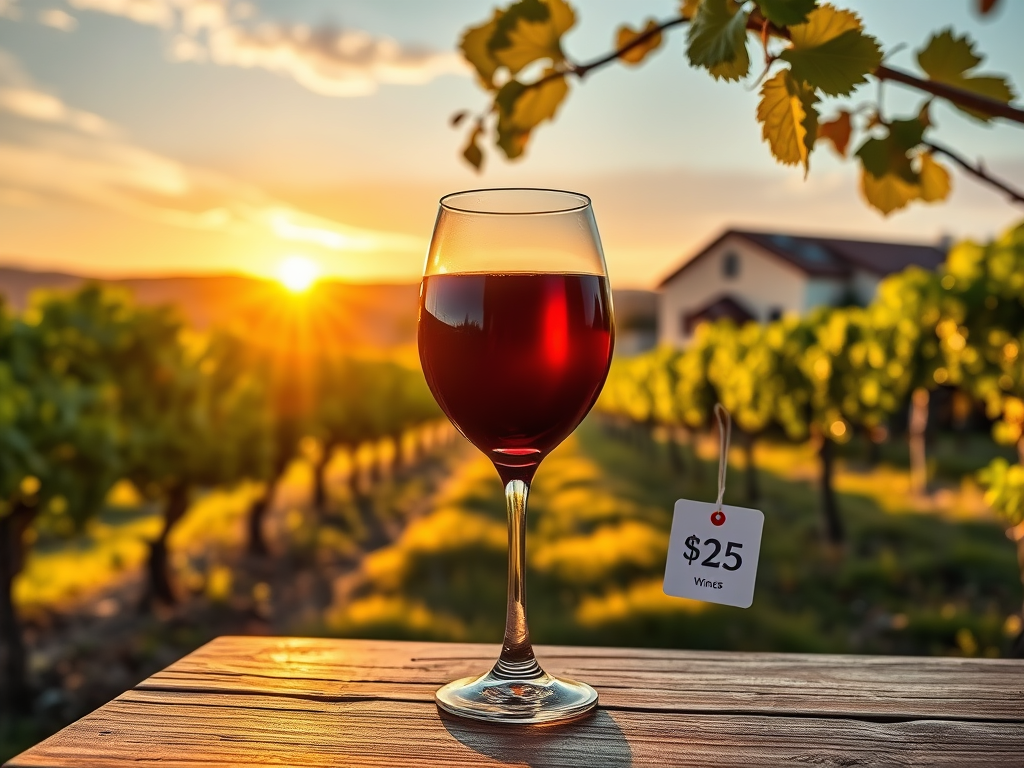
Budget-Friendly Paso Robles Wines Under $25

With the crazy days of holiday shopping hype coming at us from every direction, all the major online wine retailers and wine merchants are also doing their best to get our attention. If there has been a lesson learned over the last two years as wine sales dipped, it is that wine lovers are really no different than other consumers and now realize they need to be extra careful about sticking to a budget. 

 When word got out that the average price of a Napa Valley wine was $108 a bottle, normal people probably explored alternatives. If you count yourself among the budget minded, normal people then let me share my latest wine shopping discovery. Though I’ve been following it for years, Paso Robles has emerged as a leader when it comes to quality for the price.

Paso Robles remains one of the most energized and dynamic wine regions even in these difficult times. At least it is to me. Paso Robles came alive back in 1998 when the Rhone Rangers began holding their annual event there which was followed up in 2010 by the annual Garigists wine festival. Though once just a lonely way station midway between San Francisco and LA, Paso has also come on strong as a tourist destination. And here in 2025 there’s lots of excitement in the hotel and culinary scenes.

 With so many possible story angles staring at me, one that caught my eye during a recent trip to the SoCal Coast was the way so many Paso Robles wines are beginning to dominate wine lists and special deals in wine shops. We’re talking high end restaurants, sommelier-managed wine lists.

Que Pasa Paso?

Why? Beyond quality and availability, the one pattern that emerged is that the trend setting wineries in Paso know how to hit today’s magic price point. When looking back over my recent tasting notes, it was amazing to see so many of my Paso favorites selling for around $25 a bottle or less. My gut feeling is that today’s savvy wine shoppers see $25 as the top price that fits their budget. Maybe $29.99 if a wine strikes them as exceptional. 

The Paso Players

The Paso wineries I see as major players in this trend are a mix of well-established names like Ancient Peaks and J. Lohr and newcomers. A few others belong to major marketing companies, and many are your Mom & Pop family folks. Most of the wines are red which is no big surprise. Overall, when you visit the Tin City wineries or many others, the energy level and enthusiasm is reminiscent of Napa before 2000. Paso has become a magnet for creative maverick winemakers and outliers. Just recently Napa’s Tank Garage Winery joined the Paso scene. Check it out and you’ll get my point.

As for wines, Paso was noted early on for Petite Sirah, Zinfandel and the Rhones, and these are all included in the price point $25 club. But Cabernets, Bordeaux blends and other creative blends are well-represented and seem to be replacing Napa wines on many wine lists and also in the minds of many wine lovers.

So now that we’ve plugged in the destination on our map, “let’s go” to the top Paso wines hovering around the  $25 price point. 

First Stop: Petite Sirah and Zinfandel

Peachy Canyon Paso Robles (California) Petite Sirah 2021 $20

Best known for its bold Zinfandels, Peachy Canyon also has a good track record for Petites in a rich but supple style. Deep dark in color, this 2021 offers an aroma of sweet black fruit and fig along with some dried herbs. It turns plush and smooth on the palate driven by a solid core of blackberry flavors and light oak. It finishes long and seamless. With its lovely silky texture and subtle oak notes, it is well-knit and ready to drink now.  90

Brady Vineyards Paso Robles Petite Sirah 2021  $20

 After honing his winemaking skills in Texas, Don Brady went West to work for Robert Hall in Paso Robles. In 2006 he acquired a 24 acre vineyard and began focusing on Paso red wines.

If you like Paso Petite, Brady checks all of the boxes. His 2021 was aged in French oak for 18 months. Dark in color, it has that  intense, ripe blackberry aroma with some black pepper that sets the varietal apart. Full-bodied with concentrated flavors of blackberries, boysenberries and some vanilla bean, it is tight and concentrated on the palate with light tannin and oak.  More powerful than nuanced, but fairly well-mannered, it could benefit from a little cellaring to soften. But with decanting, it would serve you well as a complement to most smoked meats and, to me, especially with osso buco. Also, a good value. 90

The Big, Red Monster Lot #2 Paso Robles, Zinfandel $20

Yes, here’s a Paso red wine that boasts about being big. Now owned by War Room Cellars based in San Luis Obispo, this brand began in 2005 as a partnership between winemakers Bob Pepi (formerly of Robert Pepi winery) and Jeff Booth (formerly of Conn Creek). The brand was relaunched in 2019 and aimed at a market that loves big and powerful wines. Promoted as a “savage beast,” this Lot #2 is Zinfandel blended with Petite Sirah and Tannat. After an extended maceration “for bigger extraction,” it was aged in French and American oak, 20% new. While definitely big, ripe and juicy, it offers an attractive aroma of blackberry and pepper with some spiciness. On the palate it is round but ultra soft and has enough fruitiness to keep the tannin and alcohol at bay. 91

Next, let’s move on to Syrah

McPrice Myers Central Coast (California) Right Hand Man Syrah 2023 $ 20

Headquartered in Paso Robles, this winery enjoyed a cult-like following for its red wines. They usually are given unusual names like “High on the Hog” and “Right Hand Man.”  Blending Central Coast fruit, winemaker Mac Myers crafts this well-rendered Syrah that offers depth and approachability at a very attractive price.  Aged 10 months in neutral oak, it has a lovely aroma of ripe plum with secondary fragrances of pepper, spice and leather. Nothing overdone or funky here, this Syrah is rich and smooth on the palate delivering savory flavors of fresh berries, plums and spice. The tannins are soft and add roundness to the texture. Syrah lovers should keep a bottle of this “Right Hand Man” close at hand. Wine lovers should check out this winery. 92

Ancient Peaks Winery Paso Robles, Santa Margarita Ranch Renegade 2020 $26

With its “Renegade” blend, Ancient Peaks has been successful in working with Paso Syrah to come up with an attractive drink now red.  I like the way it tones down the gamey, meaty side of Syrah but still emphasizes its fruit. In 2020 the final blend was 67% Syrah, 27% Petit Verdot and 5% Malbec.  The individual components are cold soaked and after fermentation they are aged for 20 months in French and American oak, 20% new.  Dark in color, the wine shows a pleasing mix of Syrah’s dark fruit along with subtle fresh berries. It continues with this combination and adds some coffee and oak toast and spice in the flavors. Nicely structured with modest tannins, it finishes with simple fruit and good length. Excellent all-purpose red. 90

Turning to The Main Event: Cabernets

 Daou Vineyards Cabernet Sauvignon Paso Robles 2021 $25

This dark, ripe and juicy Cabernet is made for those who like it plump and chunky. The aroma of dark, ripe fruit with hints of anise and dried herbs sets you up for a big, rich mouthfilling wine with light toasty oak and tannins providing structure. With some airing the flavors open to reveal nuances of black tea and berry fruit before the youthful tannins are picked up to carry this to its rugged, sturdy finish.This full-bodied Cab is a blend of 83% Cabernet with 9% Petite Verdot and a splash of Merlot and it was aged for 10 months in 50% new French oak. It is a lot of wine for the money. 91

Groundwork Wine Co. Paso Robles (California) Cabernet Sauvignon, 2023 $23

Groundwork Wine is a new line of wines from Curt Schalchin of Sans Liege which is noted for its high-end Rhone blends. With Groundwork, he focuses on good value varietal wines from Paso Robles and this 2023 Cabernet confirms that Paso Robles is the real deal for great value Cabs. This 2023 is made from three vineyards within Paso, and the wine, blended with 12% Petit Verdot, was aged in neutral oak for 18 months. Bottled unfined and unfiltered, it delivers plenty of ripe black fruit with hints of black pepper and bay leaf. With light tannin, it is firmly structured and has an aftertaste of black cherry and spice. Enjoy now through 2028.  92

The Fableist Wine Co. Paso Robles (Central Coast) “373” Cabernet Sauvignon 2022 $25

Andrew Jones, winemaker for Field Recordings and Curt Schalchlin, owner of Sans Liege combine their talents for the Fableist collection of wines. The names are based on Aesop’s Fables, and apparently, judging from the label, fable #373 is about ants and bugs. Or whatever! Moving on to the wine, in the 2022 vintage the fruit was picked earlier than usual due to the heat wave. Fermented in tanks and aged in American oak barrels, 10% new, the final blend was 85% Cabernet filled out by Merlot, Malbec, Petit Verdot and Petite Sirah. Once poured, this wine shows fresh blackberry and currant aromas and flavors with youthful tannin poking through. With aeration, it slowly opens and adds a little spice and cedar to accompany the  juicy dark fruits. Needs time to settle down and should be decanted.  A good value for a Paso Cab. 90

Maddalena Paso Robles Estate Reserve Cabernet Sauvignon  2021 $24.

Part of the Riboli family’s expanding portfolio, Maddalena offers white wines from Monterey and reds from the estate vineyards in Paso Robles. Blended with 5% Petit Verdot and 5% Cabernet Franc, this Cabernet was partially aged (45%) in small oak. It is all about ultra ripe black fruit such as black cherry and plum in aroma and flavor. Medium full bodied, it comes across as plush on the palate with plenty of tannin and oak spice. It finishes on a slight tannic note.

Overall this is an attractive fruit-forward Cabernet for current drinking.  89

Paso D’Oro Wines Paso Robles Cabernet Sauvignon 2023 $23

Paso D’Oro is a relatively new brand created by the Terlato family which owns prime properties like Chimney Rock, Rutherford Hill, Sanford among others. This 2023 was sourced from 4 AVAs within Paso, and the wine was aged in neutral oak and blended with 24% Petite Sirah. Deep and dark in the glass,  it opens quickly with attractive black fruit with accents of clove and spice. Quite full bodied with rich flavors supported by velvety tannins. Smooth finish. With loads of terrific ripe fruit, pleasing texture, and some complexity, this is a great choice for current enjoyment.  91

Tooth & Nail Wine Co. Paso Robles, Cabernet Sauvignon 2020 $26

This is an old review, but it is from the winery that ignited my interest in Paso Cabernets.This vintage was presented in a unique bottle that requires a detailed background explanation and an APP to download.  But the wine inside is first-rate and a wonderful example of Paso Cabernet. Saying it “reinvented the wine label,” the winery created an augmented reality label that with the app will sing to you. Literally sing, honest. From its deep purple color to its rich, ripe aromatics, this wine sings on its own. Initial aromas of chocolate and spice give way to ripe blackberry and oak spice. It is big-bodied with a smooth unctuous texture. The flavors remain focused on ripe black fruit with dusty oak tannin in the background. The finish is long with good acidity keeping it balanced throughout. The current vintage is 2022 and sells for $28. 

Quest Austin Hope Winemaker, Paso Robles Cabernet Franc 2023 $23

The “Quest”  label is the Hope family’s long-term  commitment to Paso Cabernet Franc, and prior vintages contained some % of Cab Sauvignon. This is the first vintage made entirely from Cab Franc. The majority of the fruit sourced for the 2023 Quest Cabernet Franc was from the Creston District, Future vintages will also incorporate fruit from the Highlands District and Adelaida District.  You don’t need a SOMM course to recognize this is Cab Franc. The aroma is a textbook combination of plums, dried herbs and tobacco leaf. Medium bodied and solid, it is lively with plum and licorice flavors. Some briary tannins give a little push to the finish. Sort of like a footballer’s “tush push.”  A red to enjoy with grilled meats and rich pastas. 90

J Lohr Wines Paso Robles Los Osos Merlot 2022  $15

This Merlot is hard to beat at this price. J.Lohr’s Merlot is planted in the relatively cool El Pomar District. Blended with a big splash of Malbec (10%) and a dash of Cabernet Franc (5%), this 2022 was aged for 12 months in American oak. In an approachable and lively style, it opens with an aroma of fresh plums and light spice. Medium bodied and balanced, it offers plum and cherry flavors in a smooth package. Not flashy, just easy to enjoy.

WHITES

Sans Liege Wines Central Coast Cotes du Coast 2023 $20

Based in Paso Robles, winemaker Curt Schalchlin is a noted Rhone wine specialist. But as evidenced by his artsy labels and unconventional wine descriptions, he does things differently. Sourcing from some of the best known vineyards in Santa Barbara and elsewhere, he assembled this blend of 36% Viognier, 32% Marsanne, 17% Clairette, 11% Roussanne, and 4% Grenache Blanc. All but the Grenache are barrel fermented by native yeasts and lees aged in French oak. But the wine is, surprisingly given its composition, a smooth, subtle and lively ready to drink white. It immediately gets your attention with fresh peach, lemon and honeysuckle aromas. Medium bodied, nicely textured and vibrant, it offers stone fruit flavors and has a long finish that is neither bitter nor acidic. Charming and fun to drink and nicely priced to boot.

92

Ancient Peaks Winery Paso Robles Santa Margarita Ranch Sauvignon Blanc 2023 $18 

Made from the coolest blocks within the family’s estate vineyard, this 2023 also benefited from the relatively cool growing season. It is pale straw in color and shows plenty of vibrant fruit such as melon and pear along with light ginger and flintiness. Medium bodied, it continues with flavors of melon and lemongrass. In the crisp but lengthy finish, I pick up subtle hints of ginger and  apple. Aged for 6 months in stainless, it makes a good case for unoaked Sauvignon Blanc and pairs well with a wide range of entrees. 91

One Stone Cellars Central Coast Rose of Pinot Noir 2024 $18

One Stone is a brand created by Ancient Peaks Winery in Paso to support mentoring programs for women venturing into the wine business. The label’s image projects moving mountains one stone at a time. From the estate vineyard in Paso and others in the Central Coast, this Rose is made 100% from Pinot Noir that was grown and harvested solely for Rose production. Aged 4 months in stainless steel, it is a big friendly wine that is all about fresh strawberry and juicy watermelon aromas and flavors. Smooth and round on the palate, it finishes with a touch of acidity to sustain its lively personality. 90

Wait, There’s More

The wines mentioned so far are good examples of the great deals from Paso Robles, but they are just a solid beginning. 

The Harvey & Harriet label, associated with Booker Vineyards, offers an attractive Red Blend from Paso and a White Blend from San Luis Obispo. Both are priced below $25.

Another wine to check out is named Big, Bold Red. It is a blend of 50% Merlot, 30% Cabernet Sauvignon, 20% Syrah. 

Highlands 41 is a new brand from the Riboli Family. Among the first to hit the market is its 2017 “Darkness,” Estate Reserve selling for $15.00  

So, that’s for now. Many of the reviews you see here are available at www.winereviewonline.com 

Go to the sight, and specify Paso Robles to see a lot more reviews of good value wines.

Discover the Hidden Gems of Fort Ross Vineyard

People living on the edge, the bet it all risk takers, and even those simply taking the less traveled road are exceptions in today’s wine world. Because they don’t follow conventional wisdom or marketing trends, these outliers can be exciting to follow. And when they succeed, they can come up with brilliant wines. But by going against the grain they risk going unnoticed, flying way under the radar of wine writers, somms, and influencers. 

Well, this writer was lucky to have been directed to one of those wineries by a good friend, and after tasting through the wines, I’m going to blow through the cloud cover and shine the spotlight on a great discovery: Fort Ross Vineyard.

In 1988, when phylloxera was beginning to take its toll in the North Coast wine regions, Lester and Linda Schwartz purchased a large slice of rugged land on a steep coastal ridge above the Pacific Ocean near the historic Russian settlement of Fort Ross. In 1994 they established Fort Ross Vineyard and made their first wine in 2000.

First, the Vineyard Story

 South African natives who had immigrated to the San Francisco Bay Area in the 1970s, they appreciated  fine wine and food and were convinced the site was suitable for growing wine grapes. Located 5 miles north of Jenner, their land is literally along the Coast of Sonoma. As an AVA, the “Sonoma Coast” extends inland and includes parts of Carneros, Russian River Valley  and the so-called Petaluma Gap. The land they were considering turning into a vineyard, however, would be the closest in California to the Pacific Ocean.

So, to review, 1988 was not the best of times for venturing into winemaking and the site sitting above and less than a mile in from the Ocean had not yet been explored.  There were many risks but the elevations of these potential vineyards range dramatically from 1,200 to 1,700 feet, or just above the coastal fog.

In 1991 Lester ordered two dozen dormant rootstocks, and when the initial plantings proved successful, the couple expanded their experiment, planting a test vineyard with 16 varieties, three trellis systems, assorted clones and several rootstocks. 

When all of the extensive trials were evaluated, they developed a vineyard  which now consists of four varieties: Chardonnay, Pinot Noir, Chenin Blanc and Pinotage.  No surprise with the first two; Sonoma Coast Chardonnay and Pinot Noir were made famous by the likes of Marcassin, Flowers, Hirsch, and Peter Michael  But their vineyards are hidden away inland, not along the riskier coast.  

And although both Chenin Blanc and Pinotage are popular in South Africa, no one else, except  native South Africans, would even think about planting them in California. Chenin Blanc had fallen out of favor by 1991 and there was nowhere you could obtain Pinotage vines. 

Not a problem for them. They sourced Pinotage budwood from two of the finest sites in South Africa, and became the first independent growers to import grapevine cuttings from there through the Foundation Plant Services that operates alongside the U.C. Davis School of Viticulture and Enology. 

Then when they laid out their vineyard, they didn’t take the easy way of uniformity. Instead, the Fort Ross Seaview Vineyard comprises 32 vineyard blocks over 53 planted acres, with each block varying in size from approximately one-half to two acres each.  Having 32 blocks is not the easy way to plant, to tend, and to harvest for sure. 

But each block is based upon a carefully selected clone and rootstock for the variety. The vineyard is planted with heritage clones and field selections, which generally produce low yields with small bunches and berries that deliver very distinct wines.  

  • Pinot Noir – Calera, Pommard, Swan, Dijon clones 115 and 777
  • Chardonnay – Old Hyde, Wente, 
  • Pinotage – Proprietary clones MM1, MM3 from South African budwood

Now for the Wines

Fort Ross Vineyard Seaview Sonoma Coast Pinotage 2019 $62

If you’re unfamiliar with Pinotage, here’s a great place to start. Created by crossing Pinot Noir with Cinsault, Pinotage led the way to the revival of winemaking in South Africa. At the time, Cinsault was associated with Hermitage which explains the “tage” in the name. This rendition from Fort Ross is a stunning example.  

After the fruit was hand harvested in early October of 2019, winemaker Jeff Pisoni aged the wine for 12 months in 20% new French oak and bottled it unfined and unfiltered. In the glass this wine is quite dark in color with an intriguing aroma that leans slightly toward the earthy Rhone side with berry fruit, green tea and cassis. On the palate it is vibrant and energized with black plum, spice and tea leaf flavors that are supported by velvety tannins. Finishes with good length, suggesting this would reward lengthy cellaring. Not to sound corny, but it does capture the earthiness of a Rhone and the velvety smooth texture of a Pinot. Who knew?  360 cases made 94

Fort Ross Vineyard  Fort Ross-Seaview Sonoma Coast, Chenin Blanc 2023 $44

Popular decades ago and made in a slightly sweet style, Chenin Blanc rarely gets anyone’s attention these days and few people know that it can yield an excellent dry wine.  Cool climate Chenin Blanc is rare in California with most acreage now in warm sites. In its third vintage of estate grown Chenin Blanc, Fort Ross came up with an extraordinary rendition. It  brings together concentration, energy, complexity in a seamless package. 

In the glass it is light yellow with a healthy green tint and the Initial assertive aroma asserts itself in a combination of lemon meringue and fresh pear. With airing, the aroma takes on some ginger spice and melon. On the palate it is medium bodied with concentrated flavors of lemon and stone fruits. From start to finish it is solidly structured and remains lively on the palate. With its crisp acidity, the flavors continue to a crisp finish with background notes of honeysuckle and bosc pear fruit. Unquestionably one of the finest Chenins in my experience, the wine was made by Jeff Pisoni who aged 80% of the wine in neutral French oak for seven months and bottled it unfiltered. 100 cases made. 95

And Now Bring On the Clones

Fort Ross Vineyard Stagecoach Road Fort Ross-Seaview Sonoma Coast Pinot Noir 2022 $80

This pitch perfect Pinot is from two clones (Calera and Pommard) planted on steep hillsides overlooking the Pacific Ocean. Early spring rains during flowering reduced the crop in 2022 and at the harvest the berries were unusually small. That comes across once the wine is poured and the color is a deep garnet. Initial scents of cranberry and plum with anise are a bit reticent, but with airing and swirling, black cherry, tea and toasty oak scents emerge. 

Smooth and silky on the palate, it offers concentrated flavors of cherry and earthy, forest floor that are bright and charming with very light tannins. Youthful and balanced, it was showing even greater harmony a day later, indicating a long future lies ahead. But can be enjoyed whenever the mood hits.  230 cases.  94

Fort Ross Vineyard The Terraces Fort Ross-Seaview Sonoma Coast Pinot Noir 2022 $80

Pinot lovers should make room in their cellars for this one. From a low yielding vintage, this Pinot was made from a vineyard block planted entirely to the Calera clone, and the wine was aged for 11 months in French oak, 40% new. Known for its small berries, high acidity and solid frame, the Calera clone is often a key component in multi-clone Pinots. 

Once poured, this ‘22  gets your attention with its lovely ripe plum and raspberry aroma, and the palate impression also makes it stand out with its bright cherry flavors along with definite oak spice and youthful acidity. Concentrated with some tannic grip, this one is for the cellar and, with aging, it should be outstanding. 250 cases made 94-95

For the Final Touch: Chardonnay

Not surprisingly, the Fort Ross Chardonnay is not your Rombauer’s  buttery, oaky, commercial stuff.  To begin with, the  clones planted are the Went and Hyde  field selections, seldom seen these days. Grown in the coastal, breezy climate, the vines in 2022 yielded a small crop.

But once poured, the ‘22 Chardonnay announces its individuality with its unusual yellow color. Then the aroma is fresh and vibrant with lovely apple, and lemon as it expands.

On the palate the apple and stone fruit flavors are concentrated and sustained right through a long finish. It also is one of the very few Chardonnays that will reward cellaring which became apparent when it showed great complexity 24 hours after being opened.

So there you have it. 

Go to http://www.fortrossvineyard.com to get on their mailing list. 

You can purchase new releases at a 10% discount and don’t have to be club members.

Also, they now have a line of wines called Sea Slopes to supply top restaurants and wine shops in select markets around the country.

Sea Slopes wines are made by the same winemaker using the estate vineyards.

Going On and On About Roussanne

Roussanne is a white wine that is full of promise. It is a challenge to grow, but winemakers and vineyard owners are on a sharp learning curve.

Here are two textbook examples:

Truchard Vineyards Carneros, Napa Valley Estate Bottled Roussanne 2023 $30
One of the first to make a Roussanne in California, Truchard planted 3 acres back in 1998. Over the years the Truchards have learned how to deal with the variety’s many challenges. In 2023, they harvested Roussanne in early November, and fermented the juice in French oak barrels (20% new). As the wine aged on the lees for 6 months, it was frequently stirred and went through a partial malolactic fermentation. Showing some green in its light yellow color, the wine opens up and is both vibrant and full flavored.  Nectarine and apricot fruit aromatics lead the way and pick up subtle jasmine and a touch of oak with swirling.  Medium full-bodied, the wine is smooth and continues with flavors of peach, apricot and citrus which are delivered with a hint of minerality and firming acidity. Layered and balanced, it is solid now and should peak in 3-4 years.  94

Peter William Vineyard Rogue Valley (Oregon) Roussanne 2024 $28.50 Roussanne Is a challenge to grow, and the winery made a few viticultural changes in its estate vineyard. In 2024 those changes paid off and resulted in a vibrant, textured wine. Harvested in mid-october at a relatively low Brix of 22.8, this Roussanne was barrel fermented and aged for 5 months in neutral French oak. Straw colored, it offers an attractive aroma of white peach with hints of ginger and jasmine for added intrigue. Medium-bodied and smooth in texture, the wine remains vibrant with rich flavors of peach and some honeyed notes. The finish is long and lively with some of that ginger spice showing up in the aftertaste. 93

If you love hearing about winemakers who think out of the box, well then read on. Founded by Sue Tipton, Acquiesce Winery & Vineyards is a white wine specialist in Lodi. You heard right, Lodi white wines only. The story goes that when vacationing in the Rhone Valley, she tasted a white Châteauneuf-du-Pape and that changed everything. Not long afterwards, she researched the white varieties, discovered Tablas Creek and its nursery, and, well, uprooted her Zinfandel vineyard and went full on white rhones. At Acquiesce today she offers wines made from Picpoul Blanc, Grenache Blanc, Roussanne, Viognier, Bourboulenc, and Clairette Blanche as well as several blends.

She was the first in California to plant the Bourboulenc variety and has not backed down when dealing with the white Rhone problem child, Roussanne.  But to those winemakers who love a challenge, it can be rewarding.

Acquiesce Winery & Vineyards Mokelumne River, Lodi Roussanne 2022 $41

The 2022 Acquiesce Roussanne is a perfect example of the multi-faceted white. Harvested in late august from the estate’s 2 acres, this Roussanne  is incredible in many ways. It keeps changing in the glass as it airs, and in the final analysis, is nuanced and balanced. The medium yellow color has a youthful green edge. The initial aroma of peach and jasmine takes on a hint of honeysuckle and tea.  On the palate it is medium full-bodied, soft and smooth in texture, and the flavors of peach and green tea also have a mineral, chalky back taste. There’s just enough acidity to add to the finish which still has a fresh fruit and chalky aftertaste. Entirely stainless steel fermented and lees aged, it can be matched with your favorite white wine main course.  94 points

Roussanne is known to improve with cellaring, so this 2022 will be fascinating to try again in a few years.

And here is proof positive that it ages well indeed:

Domaine de la Terre Rouge Sierra Foothills (California) Roussanne 2005 

From the winery’s cellar courtesy of Bill Easton. The color here is medium yellow but with some lively green glints. Don’t let the “old” look mislead you because this wine is still very much alive. The aroma is a combination of nectarine and candlewax with some citrus and green tea subtleties. Concentrated with layers and layers of flavors, the wine offers a silky smooth, creamy texture through bottle aging. Ii has developed some pear and honey flavors and a touch of almond but it is all seamless and harmonious at this stage. Finishes long and lively. What a treat to experience how well Roussanne responds to cellaring. It held up well when tasted a day later. Amazing wine.


Also, see my  other reviews of  Roussannes at http://www.winereviewonline.com

Marietta Cellars: Wines for Sharing

If you are shopping for excellent wines at reasonable prices, then forget about those made by celebrities, cult wines, and wines made by 100 point rockstar winemakers. Let them all be legends in their own minds, and seek out wines made by real people.

I recently rediscovered one of my favorite examples of a family owned winery making excellent, affordable wines. Here’s how the winemaker summarizes things:

“It feels right to make the best wine possible and to sell it at a fair price. Our instincts tell us that being honest, being consistent, working hard, and thinking outside the box is more important than anything else in business.” 

The California winery is Marietta Cellars, founded in 1978 by Chris Bilbro and now in the hands of Scot, his winemaker son. While the original winery in Sonoma County was a rented cow barn, they now own 300 acres in Mendocino and Sonoma. And  if you like old vine wines from Syrah and Grenache, well the Bilbros are your kind of people. They have some of the best vineyards farmed organically.

Since Day #1, Marietta Cellars produced affordable wines, starting with blended red wines based on Zinfandel. Their benchmark Old Vine Red was first made in 1982. “Affordable” and “blended” are not exactly popular search tags in today’s wine world. Then add that the production is not tiny and the wines are not allocated to a select few, and voila?  Marietta wines are available direct from the winery, online, and yes, even in wine shops.

Go to www. mariettacellars.com  You can also find 8 Marietta Cellars’ wines today at www.wine.com 

Here are my recent reviews on two of those wines:

Marietta Cellars California OVR Old Vine Rose 2023 $19

Here’s an absolutely lovely Rose to enjoy year round. The Bilbro family has long specialized in old vine wine, and Scot Bilbro has been the winemaker since 2012. Chris Bilbro, his dad, founded Marietta back in 1978. This 2023 Rose is made from 50% Syrah, 25% Grenache, and 25% Grenache Gris, with all of the fruit from the estate’s organically grown McDowell Valley vineyards established well over 100 years ago.  With its inviting coral-pink color and its lively peach and melon aroma, the wine charms you and seals the deal with its juicy peach and pomegranate flavors which come with  a hint of spice. Nicely textured, it remains lively on the palate and finishes on a crisp note. 93 points 

2021 Marietta Cellars “Christo,”  Estate Grown, North Coast  $20.00

“Christo” refers to the family nickname for Chris Bilbro, veteran Sonoma winemaker. A Rhone blend (68% Syrah, 20% Grenache, 18% Petite Sirah, & 4% Viognier), this is a powerful, full bodied red. Aged for 18 months in neutral oak, this blend offers a solid core of ripe fruit and is built on a solid foundation. The aroma is fantastic. It opens to reveal background notes of spice, ripe plums and earthy, forest floor. Some subtle floral hints of violets and lavender emerge with aeration. On the palate, black pepper pokes through in the intense, rich berry flavors. The lengthy finish has a pleasant touch of juicy blackberry fruit and light tannin.  Taken altogether, this wine has it all. It is a whole lot of wine for the money and should age well. 94 points

So why isn’t Marietta Cellars better known?

Well, I’ll let the Bilbros offer a reason: “We are hands-on and busy year-round.”

Sales Alert!

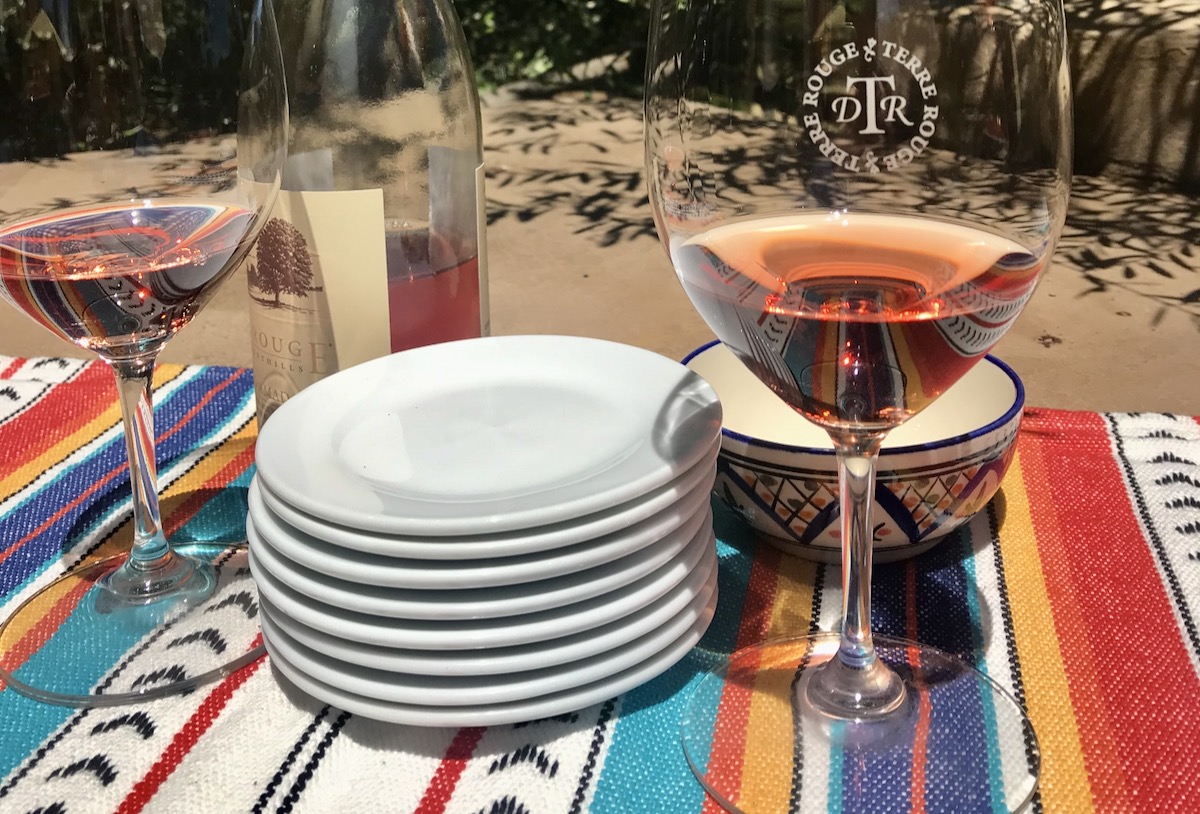
Terre Rouge Wines

On Thursday, August 22, Bill Easton with Terre RougeWines will begin a major sale:

Mediterranean Madness Sale 2024

Starts Thursday, August 22nd Online

Watch for our email Thursday morning with all the details!

So my best advice is get on the mailing list.  

sales@terrerougewines.com

And here are my recent reviews to whet your appetite:

2011 Domaine de la Terre Rouge, Sierra Foothills (California) Roussanne Monarch Mine Vineyard              

 Following whole cluster pressing, the juice was barrel fermented and the wine aged on the lees. Beginning with its deep golden color, this wine was a unique experience.  Rich and deeply concentrated with great viscosity, it delivers ripe pear flavors with some floral notes.  This vintage is maturing nicely, but still has plenty of life ahead of it.  As for a rating, how about rare and wonderful.     97 points Norm Roby 

WINES FROM THE CELLAR2005 Domaine de la Terre Rouge, Sierra Foothills (California) Roussanne  ($75): From the winery’s cellar courtesy of Bill Easton.  The color here is medium yellow but with some lively green glints.  You really have to suspend your instincts about an “old” looking white because this wine is still very much alive.  The intense aroma is a combination of nectarine and candle wax with some citrus and green tea subtleties.  Concentrated with layers and layers of flavors, the wine offers a silky smooth, creamy texture from bottle aging.  It has developed nuances of pear and honey flavors and a touch of almond but it is all seamless and harmonious at this stage.  Finishes long and lively.  What a treat to experience how well Roussanne responds to cellaring.  It held up well when tasted again a day later.  Amazing wine.     98 points Norm Roby
Going Rogue, Part 2: The People Behind the Label

Why would any normal person start a winery these days? Well, let’s go rogue and find out.

Oregon just nudged ahead of Washington State and is now home to over 1,000 wineries, second only to California. The last I heard California  had over 4000 wineries. New wineries are opening up each week and the Rogue Valley is attracting more than its fair share of newbies.

But why now?

The oft quoted reason is “the pursuit of a dream and the lifestyle.”  That was voiced during the boom decades of the 70s and 80s in California and still reverberates in this decade along the entire West Coast.  

Who are these wine dreamers? In the US, unlike in traditional wine countries, most winery start-up founders are career changers (doctors, lawyers, high-tech) but a few are from a farming background and a few are out and out science nerds. Yes, there are wineries started by celebrities of some kind with too much money and too big of an ego. And then there’s the epiphany story. 

When you peek behind the label to see who the owners are among the rising stars, you once again encounter the Rogue Valley’s diversity. 

Goldback Wines: Watch out for Lightning

Speaking of an epiphany, Goldback is a good place to start our second tour of the Rogue Valley. Named after a fern indigenous to Southern Oregon, this authentic, small lot artisan winery was launched in 2016 by winemaker/owner Andy Meyer. He caught the wine bug as a college student looking for a summer job.  “I answered a craigslist ad for a tasting room job for the summer, which just happened to be for Cristom Vineyards.  Within 15 minutes of driving up the driveway for the interview, a lightning bolt struck. I knew that working in wine was what I wanted to do for the rest of my life.”

 After the lightning strike his resume expanded to include working harvests at William Selyem and Hirsch Vineyards in Sonoma, Felton Road in New Zealand, Mark Ryan in Washington, and Cape Mentelle in South Africa. From these experiences as well as his time as a restaurant wine director, he favors a minimalist approach to winemaking and aims to preserve natural acidity in whites and tannin integration in his reds. 

As for his own wines, the red Cuvee is the winery’s version of a Cotes du Rhone, drink now red. A blend of  58% Syrah and 42% Grenache, it offers plenty of bright raspberry fruit in its aroma and has a pleasing soft entry to deliver berry and cherry flavors.

Goldback’s Syrah is a blockbuster that showcases Syrah’s full throttle concentration and purity and is all about the grape and the site.  In recent vintages, Meyer sought out the nearby Meadowlark Vineyard with its granite soils and sustainable farming. But the site is also very windy which forces the vines to shut down frequently and contribute to a long growing season. Similar, says Meyer, to the effect of the Mistral in the Rhone. The resulting wine is dark purple and loaded with ripe plum and a floral, wild thyme character. Medium full, it is concentrated with dense, ripe black fruit flavors and some black pepper. Plush and seamless, it will benefit from a couple of years of bottle aging. But could age for a decade or more. 

From the oldest block of Grenache from the neighboring Jaxon Vineyard,Goldback’s  Grenache is a selection of the winemaker’s favorites. Those selected stood out for being “Pinot Noir-ish”and the wine is indeed not your typical Grenache. A long cold soak and a 22 day fermentation with some whole clusters, the wine was aged 18 months in neutral French oak. The nose offers up loads of vibrant, cherry, strawberry fruit that carry over into the smooth flavors. There’s a touch of earthiness in the nicely textured finish. In 2020, Goldback continued experimenting and bottled one barrel of Grenache that was 100% whole cluster, carbonic maceration.

Did I mention the remarkable Chenin Blanc? 

www.goldbackwines.com

Is There a Doctor in the Winery?

A beautiful hillside vineyard overlooking the Rogue Valley in Southern Oregon was planted by Dr. Peter William Adesman. Along with being a full-time practicing physician, he has been an avid wine collector and educator since the 1970s, and long dreamed of producing his own wines. He notes: ”In 2007, my wife, Dr. Robin Miller, and I moved to a property in the Rogue Valley where we could plant a 10-acre vineyard. That is how Peter William Vineyard was born. Our first commercial vintage was 2016.”

Peter, only call him “Doctor” if you are his patient, is dynamic, enthusiastic and has an encyclopedic wine knowledge based on tasting and traveling. For his winery,  Syrah is offered in several styles. Of the 4 Syrahs made by this winery in 2018, one labeled Candives is 100% Syrah made from the estate vineyard and aged entirely in French oak, 50% new. To distinguish it from the others, the winery went with the “Candives” name, said to be an alternate name for Syrah used in the tiny village of Chavanay in the Northern Rhone Valley. As fine as the other 2018s are, this is so dark, dense, and dramatic that the special name is certainly merited. Ultra smooth and seamless, it is beautiful now but will also bring rewards with cellaring. 94 points.

Another small batch Peter William Syrah is made from estate grown grapes which are vinified by winemaker Eric Weisinger who is the “W” referenced on the label. The end result is a compact, powerful expression of Syrah that may be one of the best values around these days. It is pure ripe Syrah beginning with its dark color and earthy, leathery, black pepper aromatics. 

Then there’s an exciting blend  from Peter William aptly named “Extravagance.” It may be going on elsewhere, but Southern Oregon sure seems to be a hotbed of creative winemaking energy leading to fascinating blends and unusual wines.  A 50-50 blend of Tempranillo and Syrah, Extravagance is aged for 21 months in French oak and bottled unfined and unfiltered. This intriguing blend turns out to be delicious red wine with both depth and charm. It comes across as ripe, plush Syrah built on a Tempranillo framework.

Check out the club possibilities at

www.peterwilliamvineyard.com

Padigan

3rd Generation Grower/Farmer

In 2023, the 2-Hawk Winery was rebranded Padigan, the name taken from a soil type. This 24 acre vineyard is owned by Ross Allen, a third generation farmer from the San Joaquin Valley. 

Both before and after the name change, Malbec was a major success along with the winery’s Syrah and Viognier. With the release of its 2019 wines, the winery began hitting full stride. 2019 was an exceptionally long, coolish growing season, and  the winery’s estate grown Malbec was not harvested until mid to late October.  The juice was wild yeast fermented, blended with 10% Cabernet Sauvignon and aged for 28 months in oak. 21% new, 61% neutral. Intensely dark, this Malbec is concentrated and needs some aeration to strut its stuff  Overall, an exciting, multi-layered Malbec.

Then there’s Padigan’s Viognier. It takes a grower who knows every vine on the estate to know the best time to harvest Viognier. Ross works closely with winemaker Kiley Evans who explains:

“The trick with Viognier is getting it ripe beyond the bitter almond finish that can be a nuisance in the wine, but not so ripe that it is overly alcoholic/hot and I’ve seen that progression happen in as little as 2-3 days.”

Padigan’s 2021 is a lovely expression of Viognier. Big and round on the palate, it remains lively with good citrus fruit along with crunchy melon flavors. The texture is heavenly and the wine brings it home with a long lasting finish with a subtle zing to it. This could serve as a benchmark Viognier that’s neither over the top in ripeness and alcohol nor one that relies on oak. Native yeast fermented, It was aged sur lies for 11 months in 35% new French oak and later rested on  the lees in stainless for 6 months. It seems likely to become even more complex with aging for 3 to 5 years

http://www.padigan.com 

Dancin Vineyards: Viticulture Students

DAN and CINdy Marka met while studying viticulture at UC Davis. To them, wine is all about sites, clones, soils and aspect. Both must have been super students because their vineyard is beautiful and impeccably maintained. 

Dancin is also one of a handful of Rogue Valley wineries making a Pinot Noir, but Dan Marka explains,

“ Our site was created for Pinot Noir and Chardonnay with its north, northeast facing aspect, 1800 foot average elevation and shade occurring beginning at 5:45pm (depending on the Block) throughout the growing season. We are finding that we can produce delicious Pinot Noir with great flavors and balance at alcohol levels in the mid to upper 12’s to the very low 13’s. Our wide diurnal swings allow for flavors and ripeness to occur during the day with acids retained during the overnight hours. We can see daytime highs to overnight lows vary by 40 degrees!” 

And he adds that the same Pinot Noir clones ripen later at his site than they do in McMinnville or Dundee.

As a specialist, Dancin is an exception where it is more common to grow a dozen or more varieties within an estate. But, digging a little deeper, you discover the winery’s roster offers lots of exciting choices.  Dancin makes 4 distinct Chardonnays, 4 Pinots from different blocks or different clones. It also makes Syrah, Sangiovese and Barbera. If you enjoy Barbera, Dancin’s won’t disappoint.

www.dancin.com

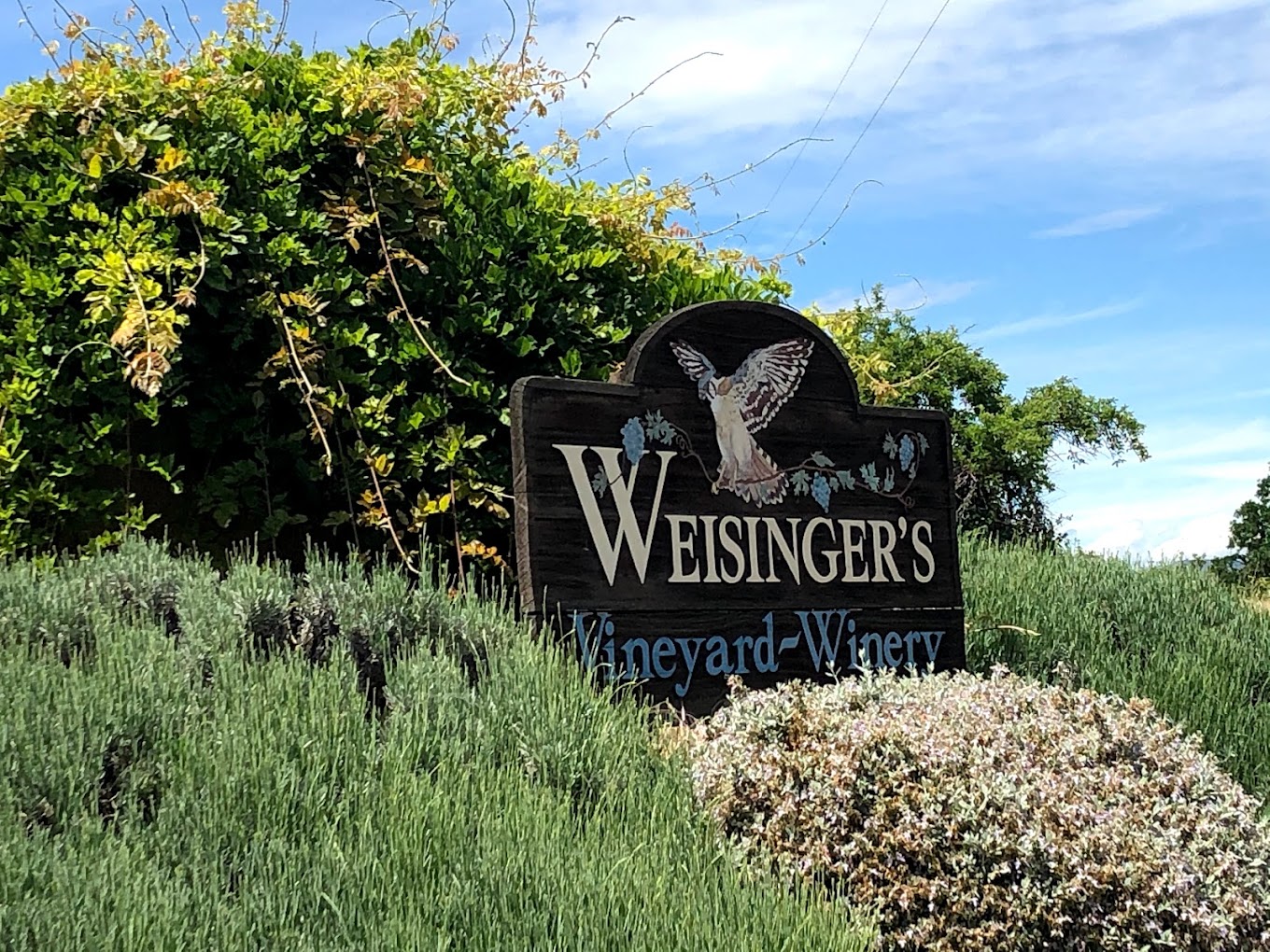
Weisinger Family Winery: 2nd generation wine grower

Tempranillo Estate, Rogue Valley

The Weisinger Family, on the eastern edge in Ashland is said to specialize in Tempranillo along with, Rhone and Bordeaux varietals.. Quite diverse for a 3,000 case annual output.

Acreage planted to Tempranillo has steadily increased in Southern Oregon over the last decade. Located just outside of Ashland, Weisinger was founded in 1988, making it one of the oldest in Southern Oregon. After assuming the winemaker’s role, Eric Weisinger began grafting over the original Gewurztraminer vines to Tempranillo. Adjacent to the winery, the Tempranillo occupies a steep, high elevation (2235 feet) northeast facing site. The Weisinger Family, on the eastern edge in Ashland is said to specialize in Tempranillo, Pinot Noir, Rhone and Bordeaux varietals, as well as proprietary blends. Quite diverse for a 3,000 case annual output.

My first experience with Weisinger was with the wines from 2018. 2018 was an ideal long, slow growing season with the Tempranillo picked in the first week of October. After being cold soaked and fermented for 20 days by native yeasts, the wine was barrel aged for 17 months in 30% new American oak. It offers lovely bright cherry fruit with hints of black tea and spice in a solid, medium weight package. The black cherry and spice theme continues in the deep flavors with subtle oak toast and firm, integrated tannins coming into play.  Beautifully structured and focused throughout, it should drink well over the next 5-7  years. Not surprisingly,  Weisinger’s Tempranillos have won many awards. I’ve scored them 93 and 94 in two recent vintages.

Weisinger Family Winery Roussanne, Fortmiller Vineyard, Rogue Valley, Oregon, 2019 

Normally part of a Rhone blend, Roussanne as a stand alone varietal is one that seems to challenge winemakers. After experimenting earlier with Roussanne, in 2018 Weisinger resumed its efforts after discovering the north-facing Fortmiller Vineyard in 2018. In 2019, Weisinger harvested the Roussanne at a low 22.4 Brix to preserve acidity and after whole cluster pressing the winery barrel fermented the wine using native and commercial yeasts. The lees were stirred throughout the long fermentation. The result is a wine that showcases floral and lemony aromas, and the flavors are bright with citrus and honeysuckle notes. The leesy texture adds complexity and length to this delicate, lively and pretty wine.

http://www.weisingers.com

Belle Fiore Winery: Scientists

Belle Fiore is the closest thing to a Napa-ish winery with its rather elaborate tasting room and chateau-like facility. It has a busy restaurant and is even a mini art gallery. But it is also serious about its wines made from its 31 acre estate vineyard surrounding the winery. The roster consists of the usual varieties  such as Merlot and Syrah but then you get to the “others,” especially the Italians. Here you’ll find a Montepulciano (my fav), a Barbera, Teroldego, Fiano,  and a rare Caprettone grape.  These are all possible because the owners have identified what they call “16 micro-blocks” based upon soil types and elevation.  Owner Edward Kerwin is a clinical research scientist and his wife Karen has an M.A in genetic counseling. Together they launched Belle Fiore in 2007. 

Long Walk Vineyard: A Dream Retreat from Silicon Valley

Located in the hills above Ashland, Long Walk is a newly developed vineyard and historic 35 acre orchard owned by Kathy and Tom O’Leary, Silicon Valley techies. After a prolonged search, they settled on this cool, south facing site to pursue their dream to make Rhone inspired wines. The 11-acre vineyard is planted primarily to Rhone varieties.  But they also like Zinfandel so there’s a smattering of Zin. “Field Notes” is  their version of a GSM Rhone blend. Made from 40% Grenache, 30% Mourvedre, 10% Syrah and a splash of Carignane, it is medium dark in color and unfolds quickly in the glass. The nose starts out with pretty plum fruit along with a hint of leather and game but the bright black fruit character prevails. The flavors add some herbs and cherry and are presented in a round body with gentle, dusty tannins poking through. Pleasantly subtle and charming overall, it is one to enjoy over the next several years. Kudos for the light touch. 

With Rose wines being so trendy and Roses now being made from just about every red grape available,  it was an eye opener to encounter Long Walk’s rose from a red grape that’s ideal for a Rose: Cinsault. Popular in Southern France, Cinsault is light in color and low in tannin and  remains the backbone for many Provence Roses. From vines planted in 2002, this winery’s Rose is an attractive pink-copper color and offers an aromatic mix of  just picked strawberries, rose petals and summer flowers.  Medium bodied and vibrant, it is balanced and has just enough acidity to bring it to a delicate finish. 

As for the Long Walk Zinfandel, it too is impressive. 

www.longwalkvineyard.com

Talent Cellars “Nuf Said Red” 

This new family run winery is based in the small town of Talent, near Medford. The label is a replica used by the family when the land was a pear orchard. Winemaker Matt Newbry and his wife Janéa, attribute the Inspiration Behind Talent Cellars to the very soil their family has been farming In Talent, Oregon since the 1920’s.

Sourced from two nearby vineyards, the 2017 Nuf Said is a blend of 75% Cabernet Sauvignon with 13% Petit Verdot and 12% Grenache. It was aged 22 months in French and American oak (50% new). It is medium bodied and vibrant with bright berry fruit and graphite and cedar in the aroma, yet it sweeps across the palate with juicy, ripe fruit and a hint of vanilla from the oak.  Beautifully balanced, it finishes with light, ultra smooth tannins. Production was 250 cases.

And with that, I too say “nuf said.”

Exploring the Rhones Less Traveled

Having long been intrigued by Rhone wines, I regularly check out theTablas Creek Vineyards blog. A recent post mentioning the availability of Terret Noir and Bourboulenc stopped me in my tracks. Of all the varieties permitted to grow in Chateauneuf-du-Pape these two were total mysteries to me.

Never one to pass up an opportunity to try a new wine and maybe learn something along the way, I reached out to Jason Hass.  As always, he was helpful and informative and kindly made it possible for me to taste these two new Tablas Creek wines. 

 In wildly different ways, both the Bourboulenc and the Terret Noir were exciting new experiences. That set me off on a mission to explore other lesser known Rhone varieties, those usually dismissed or ignored as blenders, to see what they might offer as varietal wines.

But first, here are my notes on those two amazing wines that had me saddling up for this journey:

Tablas Creek Vineyard Adelaida Hills District Paso Robles Bourboulenc 2022 $40

From 2/3rd of an acre, this is the winery’s 4th Bourboulenc and it is wonderfully unusual. Medium straw in color, it offers an intriguing aromatic mix of orange rind, apricot and lychee nut. Surprisingly rich and round on the palate, it combines orange and citrus flavors with a hint of stone fruit. The texture is rich, and then it finishes with a rush of lemony flavors and bright acidity. All of this is to be enjoyed in a refreshing wine with only 12% alcohol. To summarize: lovely aromas, terrific texture, mouthwatering flavors and youthful acidity holding it together. A great food wine. What’s not to like?  94

Tablas Creek Vineyard Adelaida Hills District Paso Robles Terret Noir 2021 $40

Originally from the Languedoc, Terret Noir has seldom been made on its own, most often blended with Grenache or its fellow family members,Terret Gris and Terret Blanche. Tablas Creek bottled 70 cases in 2021 and offers it at the winery.  Once poured, it has an unusual light red color that sets it apart from most red wines. The aroma is also strikingly unusual, neither berry-ish nor overtly fruity, it offers a pretty floral nose of roses and orange blossom. While light medium bodied at best, it delivers refreshing flavors reminiscent of red currants that are sustained and persistent. Gentle, fresh and lively in the finish, it is all together pleasant and refreshing. It is a fun party or aperitif style red. Fun is good, right? 92

My takeaway after trying these two unusual wines was a suspicion that there probably are other lesser-known Rhone blending varieties that might be worthwhile looking into. And sure enough, by continuing along the Rhone road less traveled, I encountered four other Rhone varieties that also have much to offer as stand alone wines and, best of all, these four are being made by several key California winemakers, a few original Rhone Rangers and some new, younger folks dedicated to Rhone wines.

The four wines are two whites, Marsanne and Roussanne and two reds, Cinsaut and Counoise. Grenache Gris was on my list, but not many are available. Picpoul wines are enjoying a well-deserved surge, but are not as unusual as are Roussanne and Marsanne.

 Marsanne is hardly a newcomer since Bob Lindquist who founded Qupe, made California’s first back in 1987. But it is still usually downplayed as part of a blend with Viognier or Roussanne. And while there are many attractive blends now coming from Australia and Santa Barbera, on its own, Marsanne is still not that common. 

And from what I’ve experienced at this early stage, I can only wonder why. Marsanne is, afterall, the white grape of Hermitage fame. The 2022 Marsanne from Starfield Vineyards in El Dorado is a fantastic, complex and stunning version and it was a great wine to begin the journey. 

Starfield Vineyards El Dorado Marsanne 2022 $34

Aged for 6 months in neutral French oak, this Marsanne is attractive now but has all it needs to age long and well. On the nose it comes across with ripe peach and nectarine fruitiness with citrus as well. Then on the palate which is plush and round, it has vibrant flavors of orange rind

and cloves with minerality as well. Solid and well-integrated, it continues the ripe peach, apricot theme in its lengthy finish. Overall, it is concentrated but so lively it invites a second glass. 165 cases made. 94

After that re-introduction to Marsanne, I reached out to Bob Lindquist who sold Qupe in 2018 but has never stopped making Marsanne. As he explains,”Marsanne and Roussanne are near and dear to me, and I continue to make both of them under my Lindquist Family label.”  He adds, “In 1986 I got Marsanne budwood from Randall Grahm and grafted over some own-rooted Cabernet vines at a small vineyard just outside of Los Olivos called the Ibarra-Young Vineyard.”

Marsanne ages well, Lindquist noted, and his vintages from the early 90s are still showing well he added. As for style, he explains:” I make Marsanne in a lighter, fresher style, all in neutral barrels and bottled after about 8-9 months.”

“Lighter” it may be, but his current release is most attractive:

Lindquist Family Vineyard Edna Valley, Sawyer Lindquist Vineyard Marsanne 2020 $38

All of the fruit is grown in this the Demeter certified biodynamic vineyard.  Yellow with green tint, this wine is medium bodied with lots of youthful character. Aromatically, it combines nectarine and white peach fruit along with some almond and lemony accents. Smooth and refreshing on the palate, it has good acidity for a balanced impression and concludes with lively fruit and a crisp finish. 92

At the end of our conversation, Lindquist added this zinger:”I think Roussanne makes the more important and complex wine…I make mine very much in the same style as Chardonnay.”  

 It turns out Roussanne is a favorite of many other winemakers. Bill Easton of Terre Rouge who makes exquisite Syrah and Viognier chimes in with this: “Roussanne is the most serious white Rhône grape. It reaches its apex with age – slow oxidation.. But it is not easy to grow.” The team at Truchard in Napa simply say “it is a challenge.” And then John Alban the unchallenged champion of Viognier adds this: “There are legions of whites that one can make for all kinds of commercial reasons, even if the resulting wines are less than compelling, but Roussanne is for people you love.”

After tasting the latest from Terre Rouge and Lindquist, I can understand the appeal. Easton offers a perfect summary of what a newcomer will encounter:  “American palates are not accustomed to classic Roussanne characteristics: Straw golden color; with exquisite quince, honey-nut, and beeswax aromas.”  To that I’d add exotic pineapple fragrances, rich viscosity, and depth unique among white wines. It is definitely a white on steroids. The Terre Rouge Roussanne is given several extra years of bottle aging before being released to the market.

The name “Roussanne” relates to the French word for russet which explains the wine’s dark color. In the early phase of the Rhone Ranger period, what was thought to be Roussanne turned out to be Viognier. The true Roussanne was eventually introduced by Tablas Creek, so most of the current plantings began in the late 1990s. 

There’s one major exception: Terre Rouge. Its Roussanne clone is unique, originating from a Chave family parcel on the hill at Hermitage. It is the real deal and you can get a good feel for what Roussanne is capable of if you are fortunate, as I was, to taste the 2011 Terre Rouge and the 2021 Lindquist Family. See the tasting notes at the end. 

Cinsaut is another Rhone that was misidentified and that’s one likely reason why it was long overlooked. It turns out that in Lodi the Bechthold Vineyard which was planted in 1886 is actually the oldest Cinsaut vineyard in the world. Until 2003 when UC Davis proved by DNA testing that it was Cinsaut, the grape was believed to be Black Malvoisie. And it was sold to home winemakers.

Often spelled Cinsault, the grape is used these days to produce Roses or in blends. It is well-represented in South Africa likely due to its parenting role in Pinotage. It was not planted at Tablas Creek until  2017, and for now the winery suggests “it will be a useful blending partner to higher-alcohol, more tannic red grapes, and it makes for delicious lighter reds on its own.”  

Thanks to Holly’s Hill Vineyard in El Dorado, my most recent encounter with a varietal Cinsaut is highly memorable and is a delicious red. Here is my note:

Holly’s Hill Vineyard El Dorado Cinsaut 2020

Based on its color and the initial sniff, my instinct says this could be a Cotes du Rhone Villages. A real good one. But then after the initial taste, it comes across with subtle, but charming flavors that don’t match anything in my experience. Though Cinsaut is classified as a lightweight, this is no such thing. Its bright, fresh cranberry aroma mingles with spices and black tea, and the flavors are full of fresh picked dark cherries and an earthy, leathery back note.  Balanced, with light tannin it finishes on a slightly tart note along with lingering berries. Lovely! 93

Starfield Vineyards, also based in the Sierra Foothills, impressed me earlier with its 2019 Cinsaut. It turns out one of Randall Grahm’s most recent obsessions is with Cinsaut, so he had lots to say when approached.

“But let me tell you why I’m so enamored of Cinsault…. By restricting yields aggressively – via water restriction, bunch and cluster thinning – one can actually produce a very elegant wine of heady fragrance and beautiful color.  For me, this is the classical  (you will forgive the expression) conundrum of how to produce an elegant, complex, let’s call it “continental” wine in a warm and dry Mediterranean climate.”

While Cinsaut seems to be gaining in traction as a Rose and as a red wine in South Africa, that leaves Counoise as the ultimate, unwanted red grape on the Chateauneuf-du-Pape team. It ripens late in the season which makes it unappealing in Southern France. Only 60 acres are planted in California today. 

 But like the last player drafted in pro football, it too could become the next star. Tablas Creek has 6 acres and bottles it as a single varietal from time to time.  Fess Parker offers an excellent Counoise under its Epiphany label which impressed me a few years back. Others now on my radar are the new Counoise from Frick in Dry Creek Valley, Adelaida from Paso Robles and the 2019 Prie Cellars in Lodi. 

 However, in my most recent experience,  Counoise was well-represented by Holly’s Hill and that winery seems ready for stardom based on its 2020. As winemakers Carrie and Josh Bendick explain, when their various new wines were tasted every January, the Counoise lot always stood out. Eventually, the winery converted some Syrah to Counoise. It is difficult to grow, though, they add, because it ripens unevenly and you always have to focus on its color. 

Holly’s Hill Vineyard El Dorado Counoise 2020

Excellent, deep color with an aroma of raspberries, lovely baking spices and floral notes. On the palate it offers vibrant flavors of spices and berries. The subtle floral component adds intrigue and there’s plenty of crisp acidity keeping it nicely woven together. Tannins are light and smooth. And the finish is fresh and long with spices such as cinnamon and clove. 

It is reminiscent of a Moulin-A-Vent in weight and direct appeal but it offers more layers as a result of the floral note and baking spices. 94

As I begin wrapping this journey up, it hits me that this Counoise like the other three wines is a food-friendly wine. Both the new and older Roussanne reviewed here were definitely serious food wines.

Lindquist Family Vineyards Santa Maria Valley Bien Nacido Hillside Roussanne 2021 

From 5 acres on a west facing hillside,planted to the Tablas Creek clone between 1997-2000, Lindquist has made Roussanne from this block since 2000. It is aged on the lees in one year-old barrels for a year and then in neutral oak for 6 months. Bottled unfined and unfiltered, it is light yellow and with aeration, opens up to show pineapple, beeswax, and honey aromas with some oak. Big, generous palate, silky texture with deep flavors of ripe apples, hazelnuts and honey.

A little leesy, creamy texture and a long aftertaste of lemon curd and oak toast. 94

Domaine de la Terre Rouge Sierra Foothills  Monarch Mine Vineyard Roussanne 2011

In 2011, the crop ran into mildew problems and the yield was down by 80%. Following whole cluster pressing, the juice was barrel fermented and the wine aged on the lees. Beginning with its deep golden color, this wine was a unique experience. Rich and deeply concentrated with great viscosity, it delivers ripe pear flavors with some floral notes. Maturing nicely, but still has plenty of life ahead of it. As for a rating, how about rare and wonderful.

All of the wineries singled out here sell their wines direct, so for those wanting to jump aboard and continue the journey into the unknown Rhones, here are the contacts:

www.starfieldvineyards.com

www.hollyshill.com

www.lindquistfamilywines.com

www.terrerougewines.com

So that’s it. Oh, hold on, just got a late breaking news alert from Tablas Creek about another variety:

“Vaccarèse. There are just over 10 acres planted in Chateauneuf, just a little more than that elsewhere in France, and none, until we brought in ours, elsewhere in the world. But we believe it shows great potential, with lovely dark color and floral and herbal aromatics. It’s been so good that it’s already playing a significant role in the Esprit de Tablas.”

Well, now that sounds worth exploring on another trip!

End of February Wine Sale

Get ready to cherry pick a big wine sale featuring 150 wines at 40-50% price reductions

And $5 case shipping. 

Highlights: 150 wines up for sale

The website: vintagewineestates.com 

On Tuesday the 28th, Vintage Wine Estates will offer 150 wines from its portfolio of wineries. 

The collection ranges from top notch wineries like Owen Roe, Qupe, Kunde, Laetitia, Clos Pegase and several others that are fully functional real wineries.

And, yes, the portfolio includes your basic supermarket brands like cherry pie and layer cake.

VWE as the company likes to be called, has so far encouraged many of its wineries to function as they always have.

It added a new brand “Bar Dog” that may appeal to some of you.

And I do like to fun/pun it created with the brand, “If You See Kay.” 

Here are the wineries to look for in this sale:

Owen Roe Cabernet Sauvignon, Cabernet Franc and other reds from Red Willow Vineyard

Tamarack  Firehouse Red for $12

Qupe Grenache $18

Laetitia Pinot Noir

Kunde Zinfandel

B.R. Cohn Chardonnay, Cabernet

Delectus Napa Valley

Can’t  find anything you like? Well then, just If You See Kay it!

50  Years in Pursuit of a Dream

A 50th Anniversary is a big deal not only for couples and businesses but also for California wineries. Throughout 2021, neither fires, pandemics nor earthquakes prevented two dozen wineries from celebrating their 50th harvest. While those special events were low key by necessity, celebrations can now be more festive this year and next.

As I sip its delicious 2021 Fume Blanc, Dry Creek Vineyards, a member of the Class of 1972, was the first to remind me it has good reason to recognize the accomplishments of Dave Stare and his family.

Milestones tend to be ignored or pushed into the background when the current issues are major ones like smoke taint, climate change and pandemics. Nevertheless, the class of 1972 brought us many exciting new wineries and the class of 1973 was ever bigger. Fifty years pale when compared to Old World wine history, but what happened in 1972 and ‘73  signaled the beginning of the small winery proliferation which dramatically changed California wine.

A look back at these early start-ups, to use the current term, helps us better understand California wine. And why starting a winery is so wrapped up in the California dream even today. It began in Napa and spilled over into Sonoma and Mendocino in the 70s and continued to Santa Barbara, Paso Robles, and the Sierra Foothills during the1980s and 90s. 

Yes, I’m aware there were pre-1972 small wineries like Stony Hill, Mayacamas, Hanzell, Heitz and Martin Ray, but from 72 on, the newcomers were more numerous and shared one thing in common.

Members of the class of  72 and 73 were for the most part outsiders making life-altering career choices. In one of those “road not taken moments,” they decided to take the plunge, pursue their dream, to follow their bliss as a result of a whim, an epiphany or maybe after too much fine wine the night before. 

And these newbies in the early 70s opened the door widely for others with no wine heritage. My random survey of those two years reveals many founders were doctors, lawyers, and engineers.  But the backgrounds vary widely to include bankers, teachers, wine merchants, airline pilots and artists. One was a geologist; another a private investigator. A few, like Jack and Mary Novak of Spottswoode, simply wanted to retire to a rural retreat.

The Anniversary Gang & Where They Came From

Burgess Cellars: Retired airline pilot

Chateau Montelena: Jim Barrett, lawyer  

Carneros Creek Vineyards: wine retailer

Cakebread Cellars: photographer & auto repair

Diamond Creek: pharmaceutical salesman

Franciscan: Justin Meyer, defrocked Christian Brother 

Joseph Phelps Vineyard: Building contractor/developer

Rutherford Hill : lawyers and grape growers

Silver Oak: Ray Duncan, contractor from Colorado

Stag’s Leap Wine Cellars: Political Science professor from Chicago 

Stags’ Leap Winery: Restaurant owner, property developer

Stonegate Winery: Teacher

Trefethen Vineyards: Executive from Kaiser Industries

Jordan Vineyards: Oil explorer from Colorado

Dry Creek Vineyards: MIT grad, civil engineer

Hoffman Mountain Ranch—Stanley Hoffman, medical doctor

Montevina Vineyards: Banker

Edmeades Vineyards: Cardiologist from Pasadena

Enz Vineyards: engineer

Lazy Creek Vineyards: restaurant worker

Of course, some had deep pockets, the cliched “Rich Americans.”  The old saying was that “If you want to make a million in the wine biz, you have to start with 2 million.” Sure there were people like Tom Jordan, the wealthy Colorado oil executive, who built a replica of a French chateau in 1973, but there were also many more like Hans Kobler, a San Francisco maitre d’ who bought an old barn in Anderson Valley in 1973 and commuted while developing  Lazy Creek Vineyards in Mendocino.

The who is one part of the story, but the why, the motive for changing careers, is also telling.  The two primary figures in the Judgment of Paris were both newbies. Chateau Montelena’s founder, Jim Barrett, was a Los Angeles based real estate lawyer. With an expanded business and staff, he was seeking a retreat, a getaway from LaLa land. Warren Winiarski of Stags Leap said he had an epiphany over a glass of wine.  Winiarski, the University of Chicago professor, was drawn to the rural lifestyle and in 1964 packed up his family and drove the station wagon to Napa.

Barrett got a good deal on a historic dilapidated chateau. Winiarski studied wine and once in Napa, was hired to perform basic tasks like cleaning tanks and barrels and doing lab analysis at Souverain Cellars. During an interview with Lee Stewart, Souverain’s founder, he mentioned he had hired both Warren and Mike Grich to work in his lab. And, neither when they began, he noted, knew how to titrate acidity.

But they help define the two pathways to fulfilling the dream. Those with money, build a chateau or remodel an ancient one and hire people.Those who don’t have the bucks, , start from the bottom, gain cellar experience and/or take classes.

Jack Cakebread is a favorite example of the “anyone can” own a winery. Assigned as a semi-professional photographer to illustrate Napa wineries for a book, he fell in love with the lifestyle. Meeting an owner, on a lark he said, “if you ever want to sell.”  They did, and Jack then used his $2500 photography commission as a down payment on the land for Cakebread Cellars. For the first several years, he kept his day job running the family’s auto repair shop in Oakland.

Whatever career the startups abandoned in the 70s, the common denominator was a lack of winemaking tradition. Caymus Vineyards and Raymond Vineyards were exceptions, started by people who knew how to prune a vine and drive a tractor. Clos du Val had a French winemaking connection, and two of Freemark Abby’s partners owned vineyards. 

Neither Normal nor Logical

The upside for the others is without being tradition-bound, anything goes. Lacking preconceptions they can think out of the box.  Winiarski bet the farm on a sub-region called Stags Leap. MIT grad, Dave Stare of Dry Creek Vineyards converted a prune orchard to focus on Fume Blanc.  Rich Sanford returned from a Naval stint in Viet Nam, studied Santa Barbara’s unusual geography, borrowed money to plant one acre and is now commonly referred to as the “Godfather of Central Coast Pinot Noir.”  A pharmaceutical wholesaler from Los Angeles, Al Brounstein of Diamond Creek Vineyards made not one, but 4 vineyard-specific Cabernets from his mountain vineyards. None of these focuses could be defined as normal.

This free 70s spirit of going against the grain carries over into today’s wine scene. While no denying that California wine production is dominated by the top 3 or 4 wine companies/corporations, over 80% of today’s  4,775 wineries make under 5,000 cases annually and 95% of Napa’s wineries are family owned.

And career-changers still lead the way.  Napa’s ultra high tech Palmaz Vineyard was founded in 1997 by Dr. Julio Palmaz from Argentina who among other things developed the balloon-expanding coronary stent. Yes, “the” stent.

Don’t know what it is about photographers, but Aperture Cellars in Alexander Valley, recently bursting on the scene, was founded by Andy Katz, a famous photographer. 

But not all bring such fame and fortune. Typifying the other side is Jeff Fadness of La Vie Dansante in Gilroy. He’s had several careers, speaks several languages and after leaving the corporate world to take a year off wrote: “To be clear, I never meant to own a winery, swore I wouldn’t in fact – that would be stupid.” But as it happens somehow by 2015, “Suddenly, against all odds, I own a winery.” And, he makes excellent wines, especially Rhones.

Since 2015, 100 or more new wineries have started up each year led by career changers reinventing themselves. 

Raising a Toast

So to those members of the class of 1972 who went against all odds and are organizing their 50th anniversary events, I think it’s time for the rest of us to remember what got them into the wine world, to think about their achievements, and of course to raise a glass in their honor.

 Dry Creek Vineyards and founder Dave Stare are my favorite examples of this can-do spirit. 

Why would a graduate of MIT and a devout sailor raised on the East Coast be drawn to the unknown Sonoma County region, the Dry Creek Valley and focus on Fume Blanc, still not widely known in 1972? 

He also has a degree in Business, so none of this makes sense. 

Once when visiting Chile in 1993, my wife. Ginny,  and I had ventured way south to a tiny resort town. There we bumped into a young honeymooning couple, both in a D.C.  law school. After a brief exchange and a second Pisco Sour, they said their dream was to make a lot of money as lawyers, then quit and start a winery in Napa. And it wasn’t just the Pisco talking! 

Yes, it is nuts! While most young people in France or Italy want nothing to do with the family vineyard, it was and remains a part of the California dreaming attitude. The winery dream is often a shared dream, a couple turning their backs on the material world and enjoying a Folie a Deux. 

A shared fantasy; that was one of the best names ever for a Napa Winery. And the owners of Folie A Deux,  the Dizmangs, Eva and Larry, were both shrinks who lived the dream for about 20 years, then gladly sold the winery in 1995.  But they did it! They lived the Dream.

Special Spring Sales Alert

A truly exciting winery is having a sale now until this Sunday.

You can buy wines at prices that are normally “members only” so you can first select some exciting wines to sample. And then also through these wines, consider joining the club.

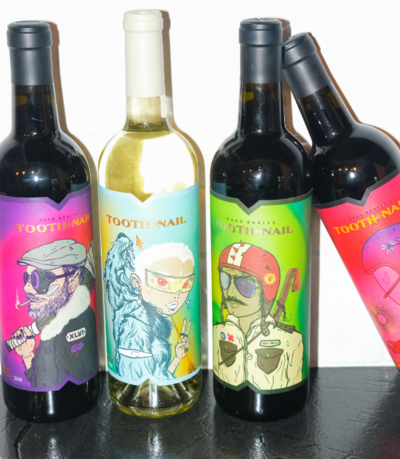
And THE winery is: Tooth & Nail Winery

www.toothandnailwine.com

Based in Paso Robles, this oddly named winery offers several types of wines under 4 different brand names:

Tooth & Nail: Creative, unconventional wines with unusual names and stunning labels. For example, “The Fragrant Snare” brings together Chardonnay, Albarino, and Viognier.

Amor Fati: Syrah, Grenache, Pinot Noir and Chardonnay, all from cool climates.

For me, these 4 were love at first taste. All scored 92 points or higher. See reviews at 

http://www.winereviewonline.com

 Stasis: Pinot Noir from Santa Maria and a Viognier. Both excellent.

Destinata: Drink now, no fanfare Chenin Blanc, Riesling, and Syrah. All good. All fun. Especially the drink-now style Syrah. The dry Riesling and Chenin will surprise you.

Bundles: special packages at 20% off prices. 

There’s a Pure Bliss” bundle and a” Once in A Lifetime” bundle you should check out.

BTW: the labels are so artsy, so creative, and so collectible!

You can see my wine reviews at winereviewonline.com and better understand my enthusiasm.

Who’s Behind these Wines?

Rob Murray is the owner. After making Rabble Wine a raving success, he sold it to start Tooth & Nail. With Rabble, he was the first to use augmented reality technology in wine labeling, thereby injecting a sense of movement and play onto a bottle of wine. When it comes to label artwork and design, he is far ahead of everyone.

Winemaker Jeremy Leffert’s motto is: “Pour now. Live for today.” He has a degree in Environmental Science and later studied at Cal Poly. At Tooth & Nail, Jeremy leans toward the philosophical and is ever alert to avoid “the dominance of the winemaker’s hand.” With that in mind, he views himself as a shepherd as much as a maker.

Wait! A winemaker without a BIG ego? Not puffed up about high scores, not an icon or living legend? Just a highly skilled professional.

As a wine club, Tooth & Nail not only meets but nails it by exceeding my 4 very demanding standards:

1.High quality wines

2. Wide variety of wines, unusual wines, and wines at all price points

3. Membership has real value, VIP, being part of cutting edge thinking, something trending

4. Fun

Well, the “fun” requirement eliminates about 90% of all winery wine clubs, the snobby places with way over the top prices.

Also those wineries where members feel pressure to buy or else get dropped. And those with the weekend traffic and the crowds? 

So  hello Paso Robles, the home to high quality wineries owned by crazy, gifted, fun loving, creative, enthusiastic and, well, nice people.

And one more major thing, this winery is within reach of TinCity, home to dozens of other wineries, a few artisan breweries, and a food vendor or two. Yes, part of a wine destination!!