Holiday Wine Sales: Budget-Friendly Tips for Shoppers

Now with the crazy days of holiday shopping hype coming at us from every direction, the major online wine retailers and wine merchants are also doing their best to get our attention. 

Although these Prime, Cyber, Black Friday and what have you holiday sales are now an annual event, lots of circumstances have changed over the last 2 years. People in general are much more focused on soaring prices of eggs and gasoline, or whatever their reference point may be. 

The phrase “sticking to a budget” is now heard in so many circles.

Because wine sales have trailed off over the last 2 years or so, these holiday sales will be closely watched. As of now, wine prices haven’t spiraled because tariffs haven’t made an impact on prices. 

The fact is that there is a glut or over-supply of wines and we have seen the number of wine producers entering the discount world increase as many once solid wineries feel the need to reduce prices to move inventory.

Wine is different from eggs and gas because it is a discretionary product, meaning not vital or necessary. Well, to all but a few of us. If there has been a lesson those in the wine biz should have learned over the last two years as wine sales dipped, it is that non-snobby wine lovers are really no different than other consumers and now realize a need to be extra careful about sticking to a  wine budget. That often means having a target maximum price or price point when buying wine. 

What’s Going on in Online Wine Sales

When previewing t several of the Black Friday deals, I can’t help but notice the many luxury or cult wines that are over $100 a bottle are now being offered at deep discounts. Online seller winespies.com offered the 2020 Caymus Special Selection at $147 ($225 regular price), vivino.com announced a culty Chardonnay for $34.99, regular price $90, while lastbottle.com featured a Pouilly-Fuise for $34, regularly $100.  Another site had the 2018 Beringer Reserve Cabernet at $87.50, roughly 50% off. Earlier this week there was a “sale” of the 2022 Joseph Phelps Insignia, which retails for $350-$400 at $195 a bottle. 

Don’t know about you, but to me even these discounted prices still are not budget-friendly. High ratings and non-stop hype are behind so many of these exorbitant prices.  Some might argue that many wines priced in the 3 digit range are on allocation or enjoy a cult following. Then one wonders why some are offered online to begin with and often at deep discounts. We’ll probably never get a consistent explanation, but that shouldn’t stop us from shopping the sales.

Insider Tips for Savvy Wine Shoppers

One great website to find truly fine and reasonably priced wines is wtso.com  What stood out to me is that its Black Friday sales on November 28-29 has an end of the year Clearance Sale. While it continues with its daily flash sale, wtso has many attractive, highly rated wines in its clearance sale. With a few bottles priced at $11.99, the list is heavy in Italian wines but also has something for every wine drinker. At $19.99 a bottle, you can buy the 2024 Calculated Risk Cabernet, the 2021 Havens Cellars Red Blend, and the 2022 Left Coast Cellars Willamette Valley Pinot Noir. An Old Vine Lodi Zinfandel topped the list of the $11.99  specials.

Wine Access is another website that has dozens of great wines for the budget minded Black Friday shopper. At wineaccess.com  the sale works by knocking an extra 20% off their already discounted prices. For example the 2022 Zinfandel from Marietta Cellars is listed for $25, but with the added discount sells for $20 a bottle.THe extra discount is applied at check out.

 Those wines that stood out to me before the discounts are the Three Wine Company Old Vine Field Blend ($28), Meeker 2022 Grenache ($22), 2023 Lang & Reed Cabernet Franc ($29), 2022 La Vigne Paso Robles Merlot ($21) and a San Luis Obispo Chardonnay from Oceano Vineyards( $18). Others are the Pinot Noir and Chardonnay from Oregon’s Solena Estate. And if you like wines from Australia, Argentina, and France, wineaccess.com has something for you at Black Friday prices.

Another site pushing its Black Friday sales also with a large inventory is wineexpress.com A few caught my attention, especially the J. Dusi Cabernet “The Don” from Paso at $22.49. J. Dusi is a favorite of mine. Also, there’s the Rutherford Ranch Chardonnay for $13.47 and a Reverdy 2021 Cotes du Rhone for $7.47. 

The California Wine Club, one of the oldest, has announced its Black Friday 50% off sale. The sale will continue through Sunday. At $12.50 the 2022 Armida Zinfandel from Dry Creek and the Eden Rift Sauvignon Blanc, also at $12.50 are excellent deals. The full list is worth checking out at cawineclub.com 

When the Dust Settles

These holiday sales will likely be extended way beyond the holidays, but they will end. Most of these are flash sales, daily deals or one-time only sales which not everyone is comfortable with because of the need to act quickly.

A Wake-Up Call for Wine Shoppers!

Wait. Are any wine drinkers actually shopping these days or did Amazon train us all to stay home and let others think for us? Then there was Covid  and now there’s Doordash delivering wines in some states. And subscription wine clubs are happy to deliver a box of unknown wines to your door. Oh well!

As 2025 winds down and the wine market faces a serious oversupply of wines, there’s never been a better time to shop around.  Sure, the online retailers hustling wines at WTSO.com, lastbottle.com and the rest of the gang are now offering a wider range of wines. On November 11th, winelibrary.com is set to offer a variety of wines at the $11.11 a bottle price point. By then Trader Joe’s and Costco will surely have come up with some deals for the holidays.

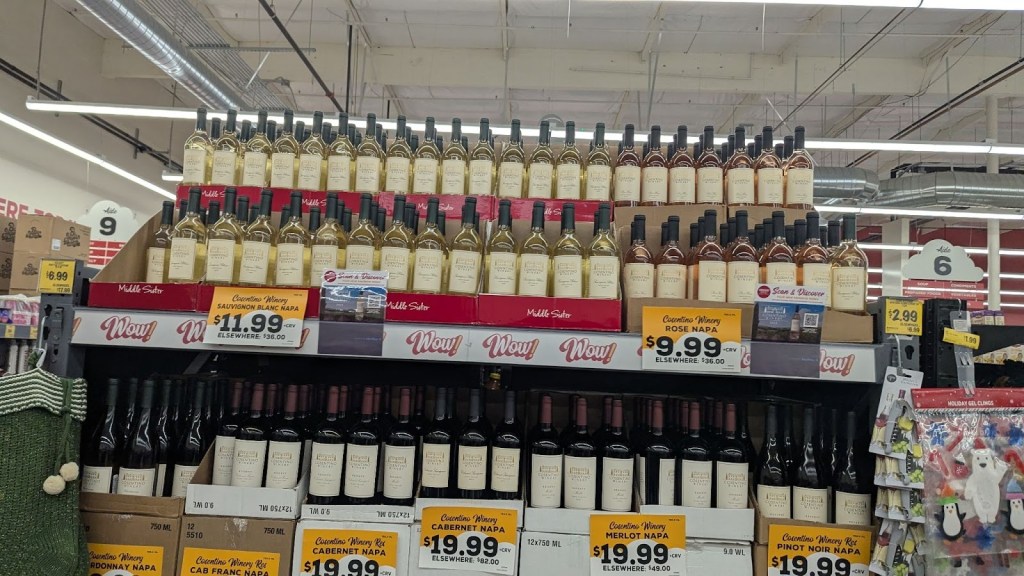
But the most exciting sale this week is at Grocery Outlet which has about 500 stores across the country. Yes stores, as in places you drive to, check out the shelves, load up a cart, and pay at the registers. Sounds old fashioned to many of you, but  most of us who love a wine bargain can adjust to it.

Yesterday, in a Grocery Outlet in Southern California, the shelves were practically falling over into the aisles. Piled high were wines from Cosentino, reds and whites. The 2023 Cosentino Sauvignon Blanc was excellent and sells for $11.99 a bottle. The winery’s website says that wine retails for $30 but is “out of stock.”  But Grocery Outlet has it along with Cosentino’s Merlot, Cabernet Sauvignon, Rose and others.  It also has the Reserve Cabernet Sauvignon for $19.99 which you can buy direct from the winery for …$82.

Cosentino Vineyards developed a following for its Zinfandel,Merlot,  Cabernet Franc and Sangiovese, but founder, Mitch Cosentino, sold the winery and is no longer involved. It is now part of the Foley Family portfolio, but the overall quality is still better than that of other once-famous brands now  under corporate owners.

Back to my recent shopping adventure, Pinot Noir lovers should check their local Grocery Outlet to see if it stocks the 2021 Diora Pinot Noir from Monterey County. If you prefer Cabernet blends, then the 2019 Red Blend made by Lake Sonoma Vineyards is quite attractive. A few stores carry Napa Cabernet from Monticello Vineyards.

Yes, the offerings vary from store to store with Grocery Outlet. When it comes to bargain priced Bordeaux wines, I find Grocery Outlet is on a par with Trader Joe’s.  Decent, everyday wines from Firestone and Sebastiani are sold at many Grocery Outlets. 

Also, the end of the year is a good time to shop for Rose wines because wines from the most recent  vintage are about to hit the market. Right now, Bonny Doon 2023 Rose, the Central Coast bottling, not the Vin Gris, is a safe bet.

Is Grenache the New Pinot Noir?

Is Grenache, aka Grenache Noir, the next Pinot Noir?  That’s not as far-fetched as it may seem at first glance since the Grenache name has become highly visible with the growing popularity of Grenache Rose. But no, I don’t think there will be a follow up to “Sideways” with Miles dumping a bucket of Pinot and singing the praise of Grenache.

However, it has come a long way and Randall Grahm puts things in proper perspective when saying, “I never thought I’d see it but Grenache definitely seems to be having a moment.”

While Grenache is not about to replace Pinot Noir, I can’t count the times a recent conversation or comment about Grenache was somehow linked to Pinot Noir. Bill Easton of Terre Rouge Vineyards sees it as “sort of a warmer climate Pinot Noir. Delicate; less tannic; tends to be more complex when blended with a bit of Mourvèdre and Syrah” while Mike McCay of McCayCellars calls it “Lodi’s Pinot Noir.”

In El Dorado, Cedarville’s Jonathan Lachs told me “I introduce our Grenache as our middleweight wine, similar to a Pinot Noir, though equally regal, with less oak dependance and a tremendous sense of place.” 

I’ll return to a comment from Randall: “As someone far wittier than I once said, “Grenache is the grape that Pinot Noir drinkers are in fact looking for.”  My slight reformulation of that is:  “For my entire career I’ve been trying to make Burgundy in California.  It just took me a while to realize that the most successful “Burgundy” in California is not likely to be made from Pinot Noir.”

After several more winemakers emphasized the grape’s Pinot Noir like delicacy and sensitivity to site, that was enough for me to put on my deep diving gear and check out what’s going on with Grenache in California. 

A Little Background

The first step took me back to 1989 when the Rhone Rangers were making news and being the cover story of The Wine Spectator. That was also the year of Randall Grahm and Bonny Doon’s first vintage Grenache named “Clos de Gilroy.” There were only a few winemakers who viewed it positively and were aware of the importance of Grenache in Châteauneuf du Pape. The most  passionate voice was that of John Alban who admits today that “Grenache has been our unwavering obsession.”  From his first vintage onward, he says he  was “determined to figure out how to grow and produce a California Grenache that people might just respect.”  

He went on to clarify his position: “When I spoke of establishing respect for Grenache, it was breaking the paradigm and silly notion of noble varieties: nobility is in the wine, not in the variety.  I wanted to make a Grenache that people viewed as delicious and cellar worthy.”

Like many of his fellow Rangers, Alban knew Chateau Rayas was a rare Chateauneuf-du-Pape that was predominantly Grenache. Unlike them, he went to France and apprenticed in the cellars of Rayas. In a recent conversation, he explained what he and others were up against when he returned:  “The prevailing notion was that California Grenache was limp in color, texture, structure, and appeal. I have referred to these wines as ‘pinky dink picnic wines.’ These warm climate, deep soiled plantings pre-dated sincere efforts for a quality wine by many decades.” Starting out way back then, he adds, “you naturally have a consumer base that is imprinted with the perception and experience of Grenache as mass produced plonk.”

Unlike the other Rhone varieties, Grenache was not unknown. It just had a bad reputation. In the mid 1970s, there were 20,000 acres planted in California.  In 1990, there were still plenty planted, some 13,000 acres, but all but 1% was in the warm Central Valley. Overproduction was the main problem. Jason Hass of Tablas Creek recalls that when his dad, Robert Hass, was considering starting a winery in California, there was “a photo my dad sent me of him holding a Grenache cluster he’d found in the Central Valley. It was the size of a basketball and probably weighed 20 pounds!” 

Moving Inland

Today’s total acreage approaches 5,000 and the majority is in the Central Coast, not the hot Central Valley.The good news is that over half of the current acreage has been planted since 2000, and much of the newer vineyards were in Santa Barbara, San Luis Obispo, and  Paso Robles. On a smaller scale, but no less important, were new plantings of Grenache in the Amador and El Dorado counties since 2000.

As a silver lining,California’s  phylloxera epidemic in the 1990s opened the door for exploring clones, emphasizing matching rootstocks to clones and better farming practices: all of which eventually helped resuscitate Grenache. In 1989 Tablas Creek began importing cuttings from Beaucastel, and John Alban was focusing on clones from Rayas. With a new emphasis on sustainable farming and organic practices, he and others went to work on controlling Grenache. He adds, “My effort started from the ground up: careful selections of the variety that had demonstrated the ability to make profound wine, rootstocks that would limit vigor, and vineyard sites that had the potential for greatness.”

Leaving the question of greatness aside for now, Grenache has certainly come a long way and has responded especially well to today’s sustainable and or biodynamic farming approaches. Selecting vineyard sites is part of the story, and I discovered there are two opposing camps: the high elevation advocates and the cool-climate school.

Mountain High

 I was surprised to find Grenache thriving alongside Zinfandel in the Sierra Foothills. So I asked around and Nolan Jones of Lava Cap has this to say when asked how it compares to Zinfandel:

“Grenache is considerably easier to grow and manage both in the vineyard and in the cellar. We rarely see problems with mold or mildew in our Grenache, whereas Zinfandel requires significantly more attention to prevent these issues. The ripening process also differs, with Zinfandel often needing 2-3 passes in a block due to unevenness. Grenache, on the other hand, ripens uniformly. Grenache also demonstrates good resilience to both heat and rain, unlike Zinfandel, which tends to raisin in heat and mold in rain.”

Lava Cap, family owned since 1986, has been making Grenache since 2000. Founded by a geologist, the family established vineyards at elevations high above the valley and coastal fog belt, ranging from 2,400f-2,700ft. The more I looked into the success of Grenache today, high elevation sites are one of the keys.  Basically, Jones explains, “the elevation and the resulting cool air, play a key role in limiting elevated temperatures during extreme heat spikes.” 

In recent years, Argentinian Malbec has dominated the link between elevation and wine quality, but now Grenache is adding a voice. When talking about it as a “mountain wine,” Jones explains, by that “I mean the fruit is fresh and vibrant as opposed to bulky and heavy, the acid is bright, and phenolics show a firm structure that is unique to high elevation sites.”  

Not far away is Cedarville Vineyards and its organically farmed estate at 2,500 feet in the Fair Play and El Dorado AVA. Delfino Farm’s Estate Grenache sits on granite soils at the 2,800 ft level. Also in El Dorado County, Madrona which also makes an excellent Grenache is situated at 3,000 feet in the El Dorado County Appellation. Madroña consists of three family-owned vineyards, and its 2019 Grenache, reviewed earlier, is a real bell-ringer.

In Amador County, Bill Easton of Terre Rouge has been making wines from Grenache since 1985. For his top of the line L’Autre he sources fruit from The Duarte-Georgetown Vineyard, located at 2,500 feet near the town of the same name. Another of my favorite discoveries is Weisinger Winery in Southern Oregon whose attractive Grenache is from the Avra Vineyard, elevation 2221 feet.

Cool Climate Grenache

However exciting those Mountain grown Grenache may be, the major hub of activity is the Central Coast where winemakers in Santa Barbara are promoting cool climate Grenache. Ironically, it was at the Hitching Post Restaurant in Santa Barbara where Miles in Sideways cursed Merlot and started the big push for Pinot Noir. 

In describing its 2023 Santa Barbara Grenache, Stolpman Vineyards, one of my favorite wineries, offers this tidy summary: “Light hued, cool climate Grenache has proven itself as one of the most compelling success stories out of Santa Barbara County.  When we nail the harvest date, the Grenache varietal naturally gives a ripe, fleshy red-fruit profile while retaining bright verve and balance.” And the Santa Barbara Winery adds this overview:: Grenache grown in cooler climates tends to develop spicier components than in warmer climes, …Cool climate Grenache has a long hang time for flavor development.”

When Bob Lindquist, an original Rhone Ranger, made his first Grenache at Qupe in 2001, he sourced the grapes from the  Purisima Mountain Vyd in Ballard Canyon. He is now making Grenache from the Reeves Vineyard in the San Luis Obispo Coast AVA under his own label. Here’s his take: “Cool climate Grenache is quite different from most of the great Grenache wines of the world, which are normally grown in warm climates such as: Châteauneuf du Pape; Priorat; Barossa or even Paso Robles.  This Grenache is grown in an area where Pinot Noir and Chardonnay dominate and excel.  The unique climate and geography of this part of the Central Coast allow Grenache to ripen fully, 4-6 weeks after Pinot Noir ripens! 

A few years ago I was blown away by the 2018 Amor Fati Grenache from Santa Maria Valley in Santa Barbara. It was so lively and complex that it remains one of my highest rated wines. At the time it seemed odd that the Tooth & Nail winery in Paso had developed the cool-climate Murmur Vineyard for Grenache. Now, nothing surprises me about Grenache.

News from Paso

As for Paso Robles, Tablas Creek Vineyards is a major part of the Grenache story. From its vineyards in the Adelaida District planted to the Beaucastel clones, many wineries have obtained cuttings from its nursery, and the winery now cultivates 18 acres of Grenache. When asked for his thoughts on Grenache today, Jason Hass said, “As for Grenache, yes, we find it versatile and rewarding. It’s relatively vigorous, productive, and easy to grow. It’s great as a lead player in a blend, as a supporting player, and (most years) as a varietal wine. It has fruit, spice, and acid.”

Anyone interested in Grenache and all Rhone grapes should subscribe to the Tablas Creek blog. There you’ll find a detailed history of all the varieties. If you really want to go deep, a recent post evaluated  20 different blocks of Grenache made by Tablas Creek in the 2024 vintage. 

Also, as part of its single vineyard line, Tablas Creek recently added a Grenache from

the Hook Vineyard, part of the Hahn property in the Santa Lucia Highlands, in Monterey County. The cool, coastal-influenced 122-acre vineyard includes 21 acres of Grenache Noir from Tablas Creek clones. “The climate, quite different from Paso Robles and on the coolest edge of where Grenache will ripen, leads to very long hang times, dark colors, and thick skins, making this 100% Grenache a fun contrast to our higher-toned expression of the grape.”

Yes, there are new and fun Grenache wines to explore. My conversation with Jason ended on this note: I also love that it’s a great rosé grape and (I think) a lovely grape to make a chillable red from. That gives growers flexibility to respond to a changing marketplace. And of course there’s the white variant Grenache Blanc, which has proven to be a superstar here in California.”

Of the many other wineries making Grenache in Paso, I was intrigued by the way Calcareous Vineyard introduced its 2023 Grenache with these words: Grenache has found a home in Paso Robles as not only a key contributor to our Rhone blends but as a standout single varietal as well. Known for its elegant texture, lively fresh fruit, and great balance, our Grenache is easily one of our best food pairing wines.”

Yes indeed, from Paso we hear Grenache is “a chillable red” and “one of the best food pairing wines.”

For anyone considering jumping on the Grenache bandwagon, one winery, A Tribute to Grace, is a Grenache specialist.  No kidding.  At its tasting room in Los Alamos, it offers nine different Grenache bottlings.

 And now for the last word, I yield to Paul Bush of Madrona, “Approachable in nature for sipping on the deck, but serious enough for the table. This is Grenache!” 

 Wines that reinforce the notion that Grenache offers a wide range of styles.

Delfino Farms Edio Vineyards El Dorado Grenache 2023 $40

Delfino’s high elevation vineyard was planted primarily to the Alban clone of Grenache. In 2023, the wine was 100% Grenache, whereas previous vintages were blended with Syrah. Aged for 10 months in neutral French oak and bottles unfined and unfiltered, this is a super example of pure vibrant, mountain grown Grenache. The color is a lively red, and the aroma is all about cranberry and cherry with light spices. Medium bodied, sleek and structured, it has fresh flavors of cherry and plum, with a slight tannic edge in the finish. The acidity lengthens the finish and leaves you thinking of serving it with light cheese or summer fare. 92

Lava Cap Winery El Dorado AVA, Sierra Foothills (California) Grenache 2023 $32

Deep red in color, it immediately offers an effusive aroma of baking spices with cranberry and light floral. The palate is smooth with vibrant flavors of black fruit, mostly plum and hint of dried herbs. Finishes with light, gentle tannin and a lingering note of plum. It was aged for 9 months in neutral French oak. Overall, it showcases youthful fruit and spice and you’d never know when tasting it that the alcohol is 14%. Drink now but will hold up well over time.  450 cases made. 93

 Lindquist Family Wines San Luis Obispo Coast, Reeves Vineyard  Grenache 2022  $45

From the cool-climate SLO region, this Grenache is blended with 20% Syrah. Each variety is fermented separately and aged for 11 months in oak. Then, once combined, the wine ages an additional 5 months. Dark in color, it has an aroma of black cherry and cranberry with plenty of spice. Solid and concentrated in flavors, it remains vibrant on the palate with a hint of herbs. Savory overall, it can be slightly chilled without losing its core appeal. As attractive as it is now, it will age with grace for another 5 years, probably longer. 94

 Terre Rouge Grenache “L’Autre”, Sierra Foothills 2016 $35

(78% Grenache, 15% Mourvèdre & 7% Syrah)

L’Autre means “the other one, “ it is now the winery’s top Rhône varietal blend. From the 2016 vintage, this confirms that Grenache based wines do indeed develop with cellaring. The Grenache is from Duarte-Georgetown Vineyard located at 2,500 feet and the budwood is from Chateau Rayas, Beaucastel, and Remelluri in Rioja. The wine opens immediately and is full of ripe plum, light spice and herbs on the nose. On the palate, it is amazingly rich and round yet elegant with black fruit flavors and just a hint of gaminess. Finishing soft with a velvety texture, it is so inviting to drink now but has the balance to continue to please over the next several years. 

The winery says it “is a dead ringer for a top Gigondas,” and that is an understatement.  95

Discover the Hidden Gems of Fort Ross Vineyard

People living on the edge, the bet it all risk takers, and even those simply taking the less traveled road are exceptions in today’s wine world. Because they don’t follow conventional wisdom or marketing trends, these outliers can be exciting to follow. And when they succeed, they can come up with brilliant wines. But by going against the grain they risk going unnoticed, flying way under the radar of wine writers, somms, and influencers. 

Well, this writer was lucky to have been directed to one of those wineries by a good friend, and after tasting through the wines, I’m going to blow through the cloud cover and shine the spotlight on a great discovery: Fort Ross Vineyard.

In 1988, when phylloxera was beginning to take its toll in the North Coast wine regions, Lester and Linda Schwartz purchased a large slice of rugged land on a steep coastal ridge above the Pacific Ocean near the historic Russian settlement of Fort Ross. In 1994 they established Fort Ross Vineyard and made their first wine in 2000.

First, the Vineyard Story

 South African natives who had immigrated to the San Francisco Bay Area in the 1970s, they appreciated  fine wine and food and were convinced the site was suitable for growing wine grapes. Located 5 miles north of Jenner, their land is literally along the Coast of Sonoma. As an AVA, the “Sonoma Coast” extends inland and includes parts of Carneros, Russian River Valley  and the so-called Petaluma Gap. The land they were considering turning into a vineyard, however, would be the closest in California to the Pacific Ocean.

So, to review, 1988 was not the best of times for venturing into winemaking and the site sitting above and less than a mile in from the Ocean had not yet been explored.  There were many risks but the elevations of these potential vineyards range dramatically from 1,200 to 1,700 feet, or just above the coastal fog.

In 1991 Lester ordered two dozen dormant rootstocks, and when the initial plantings proved successful, the couple expanded their experiment, planting a test vineyard with 16 varieties, three trellis systems, assorted clones and several rootstocks. 

When all of the extensive trials were evaluated, they developed a vineyard  which now consists of four varieties: Chardonnay, Pinot Noir, Chenin Blanc and Pinotage.  No surprise with the first two; Sonoma Coast Chardonnay and Pinot Noir were made famous by the likes of Marcassin, Flowers, Hirsch, and Peter Michael  But their vineyards are hidden away inland, not along the riskier coast.  

And although both Chenin Blanc and Pinotage are popular in South Africa, no one else, except  native South Africans, would even think about planting them in California. Chenin Blanc had fallen out of favor by 1991 and there was nowhere you could obtain Pinotage vines. 

Not a problem for them. They sourced Pinotage budwood from two of the finest sites in South Africa, and became the first independent growers to import grapevine cuttings from there through the Foundation Plant Services that operates alongside the U.C. Davis School of Viticulture and Enology. 

Then when they laid out their vineyard, they didn’t take the easy way of uniformity. Instead, the Fort Ross Seaview Vineyard comprises 32 vineyard blocks over 53 planted acres, with each block varying in size from approximately one-half to two acres each.  Having 32 blocks is not the easy way to plant, to tend, and to harvest for sure. 

But each block is based upon a carefully selected clone and rootstock for the variety. The vineyard is planted with heritage clones and field selections, which generally produce low yields with small bunches and berries that deliver very distinct wines.  

  • Pinot Noir – Calera, Pommard, Swan, Dijon clones 115 and 777
  • Chardonnay – Old Hyde, Wente, 
  • Pinotage – Proprietary clones MM1, MM3 from South African budwood

Now for the Wines

Fort Ross Vineyard Seaview Sonoma Coast Pinotage 2019 $62

If you’re unfamiliar with Pinotage, here’s a great place to start. Created by crossing Pinot Noir with Cinsault, Pinotage led the way to the revival of winemaking in South Africa. At the time, Cinsault was associated with Hermitage which explains the “tage” in the name. This rendition from Fort Ross is a stunning example.  

After the fruit was hand harvested in early October of 2019, winemaker Jeff Pisoni aged the wine for 12 months in 20% new French oak and bottled it unfined and unfiltered. In the glass this wine is quite dark in color with an intriguing aroma that leans slightly toward the earthy Rhone side with berry fruit, green tea and cassis. On the palate it is vibrant and energized with black plum, spice and tea leaf flavors that are supported by velvety tannins. Finishes with good length, suggesting this would reward lengthy cellaring. Not to sound corny, but it does capture the earthiness of a Rhone and the velvety smooth texture of a Pinot. Who knew?  360 cases made 94

Fort Ross Vineyard  Fort Ross-Seaview Sonoma Coast, Chenin Blanc 2023 $44

Popular decades ago and made in a slightly sweet style, Chenin Blanc rarely gets anyone’s attention these days and few people know that it can yield an excellent dry wine.  Cool climate Chenin Blanc is rare in California with most acreage now in warm sites. In its third vintage of estate grown Chenin Blanc, Fort Ross came up with an extraordinary rendition. It  brings together concentration, energy, complexity in a seamless package. 

In the glass it is light yellow with a healthy green tint and the Initial assertive aroma asserts itself in a combination of lemon meringue and fresh pear. With airing, the aroma takes on some ginger spice and melon. On the palate it is medium bodied with concentrated flavors of lemon and stone fruits. From start to finish it is solidly structured and remains lively on the palate. With its crisp acidity, the flavors continue to a crisp finish with background notes of honeysuckle and bosc pear fruit. Unquestionably one of the finest Chenins in my experience, the wine was made by Jeff Pisoni who aged 80% of the wine in neutral French oak for seven months and bottled it unfiltered. 100 cases made. 95

And Now Bring On the Clones

Fort Ross Vineyard Stagecoach Road Fort Ross-Seaview Sonoma Coast Pinot Noir 2022 $80

This pitch perfect Pinot is from two clones (Calera and Pommard) planted on steep hillsides overlooking the Pacific Ocean. Early spring rains during flowering reduced the crop in 2022 and at the harvest the berries were unusually small. That comes across once the wine is poured and the color is a deep garnet. Initial scents of cranberry and plum with anise are a bit reticent, but with airing and swirling, black cherry, tea and toasty oak scents emerge. 

Smooth and silky on the palate, it offers concentrated flavors of cherry and earthy, forest floor that are bright and charming with very light tannins. Youthful and balanced, it was showing even greater harmony a day later, indicating a long future lies ahead. But can be enjoyed whenever the mood hits.  230 cases.  94

Fort Ross Vineyard The Terraces Fort Ross-Seaview Sonoma Coast Pinot Noir 2022 $80

Pinot lovers should make room in their cellars for this one. From a low yielding vintage, this Pinot was made from a vineyard block planted entirely to the Calera clone, and the wine was aged for 11 months in French oak, 40% new. Known for its small berries, high acidity and solid frame, the Calera clone is often a key component in multi-clone Pinots. 

Once poured, this ‘22  gets your attention with its lovely ripe plum and raspberry aroma, and the palate impression also makes it stand out with its bright cherry flavors along with definite oak spice and youthful acidity. Concentrated with some tannic grip, this one is for the cellar and, with aging, it should be outstanding. 250 cases made 94-95

For the Final Touch: Chardonnay

Not surprisingly, the Fort Ross Chardonnay is not your Rombauer’s  buttery, oaky, commercial stuff.  To begin with, the  clones planted are the Went and Hyde  field selections, seldom seen these days. Grown in the coastal, breezy climate, the vines in 2022 yielded a small crop.

But once poured, the ‘22 Chardonnay announces its individuality with its unusual yellow color. Then the aroma is fresh and vibrant with lovely apple, and lemon as it expands.

On the palate the apple and stone fruit flavors are concentrated and sustained right through a long finish. It also is one of the very few Chardonnays that will reward cellaring which became apparent when it showed great complexity 24 hours after being opened.

So there you have it. 

Go to http://www.fortrossvineyard.com to get on their mailing list. 

You can purchase new releases at a 10% discount and don’t have to be club members.

Also, they now have a line of wines called Sea Slopes to supply top restaurants and wine shops in select markets around the country.

Sea Slopes wines are made by the same winemaker using the estate vineyards.

Going Rogue, Part 2: The People Behind the Label

Why would any normal person start a winery these days? Well, let’s go rogue and find out.

Oregon just nudged ahead of Washington State and is now home to over 1,000 wineries, second only to California. The last I heard California  had over 4000 wineries. New wineries are opening up each week and the Rogue Valley is attracting more than its fair share of newbies.

But why now?

The oft quoted reason is “the pursuit of a dream and the lifestyle.”  That was voiced during the boom decades of the 70s and 80s in California and still reverberates in this decade along the entire West Coast.  

Who are these wine dreamers? In the US, unlike in traditional wine countries, most winery start-up founders are career changers (doctors, lawyers, high-tech) but a few are from a farming background and a few are out and out science nerds. Yes, there are wineries started by celebrities of some kind with too much money and too big of an ego. And then there’s the epiphany story. 

When you peek behind the label to see who the owners are among the rising stars, you once again encounter the Rogue Valley’s diversity. 

Goldback Wines: Watch out for Lightning

Speaking of an epiphany, Goldback is a good place to start our second tour of the Rogue Valley. Named after a fern indigenous to Southern Oregon, this authentic, small lot artisan winery was launched in 2016 by winemaker/owner Andy Meyer. He caught the wine bug as a college student looking for a summer job.  “I answered a craigslist ad for a tasting room job for the summer, which just happened to be for Cristom Vineyards.  Within 15 minutes of driving up the driveway for the interview, a lightning bolt struck. I knew that working in wine was what I wanted to do for the rest of my life.”

 After the lightning strike his resume expanded to include working harvests at William Selyem and Hirsch Vineyards in Sonoma, Felton Road in New Zealand, Mark Ryan in Washington, and Cape Mentelle in South Africa. From these experiences as well as his time as a restaurant wine director, he favors a minimalist approach to winemaking and aims to preserve natural acidity in whites and tannin integration in his reds. 

As for his own wines, the red Cuvee is the winery’s version of a Cotes du Rhone, drink now red. A blend of  58% Syrah and 42% Grenache, it offers plenty of bright raspberry fruit in its aroma and has a pleasing soft entry to deliver berry and cherry flavors.

Goldback’s Syrah is a blockbuster that showcases Syrah’s full throttle concentration and purity and is all about the grape and the site.  In recent vintages, Meyer sought out the nearby Meadowlark Vineyard with its granite soils and sustainable farming. But the site is also very windy which forces the vines to shut down frequently and contribute to a long growing season. Similar, says Meyer, to the effect of the Mistral in the Rhone. The resulting wine is dark purple and loaded with ripe plum and a floral, wild thyme character. Medium full, it is concentrated with dense, ripe black fruit flavors and some black pepper. Plush and seamless, it will benefit from a couple of years of bottle aging. But could age for a decade or more. 

From the oldest block of Grenache from the neighboring Jaxon Vineyard,Goldback’s  Grenache is a selection of the winemaker’s favorites. Those selected stood out for being “Pinot Noir-ish”and the wine is indeed not your typical Grenache. A long cold soak and a 22 day fermentation with some whole clusters, the wine was aged 18 months in neutral French oak. The nose offers up loads of vibrant, cherry, strawberry fruit that carry over into the smooth flavors. There’s a touch of earthiness in the nicely textured finish. In 2020, Goldback continued experimenting and bottled one barrel of Grenache that was 100% whole cluster, carbonic maceration.

Did I mention the remarkable Chenin Blanc? 

www.goldbackwines.com

Is There a Doctor in the Winery?

A beautiful hillside vineyard overlooking the Rogue Valley in Southern Oregon was planted by Dr. Peter William Adesman. Along with being a full-time practicing physician, he has been an avid wine collector and educator since the 1970s, and long dreamed of producing his own wines. He notes: ”In 2007, my wife, Dr. Robin Miller, and I moved to a property in the Rogue Valley where we could plant a 10-acre vineyard. That is how Peter William Vineyard was born. Our first commercial vintage was 2016.”

Peter, only call him “Doctor” if you are his patient, is dynamic, enthusiastic and has an encyclopedic wine knowledge based on tasting and traveling. For his winery,  Syrah is offered in several styles. Of the 4 Syrahs made by this winery in 2018, one labeled Candives is 100% Syrah made from the estate vineyard and aged entirely in French oak, 50% new. To distinguish it from the others, the winery went with the “Candives” name, said to be an alternate name for Syrah used in the tiny village of Chavanay in the Northern Rhone Valley. As fine as the other 2018s are, this is so dark, dense, and dramatic that the special name is certainly merited. Ultra smooth and seamless, it is beautiful now but will also bring rewards with cellaring. 94 points.

Another small batch Peter William Syrah is made from estate grown grapes which are vinified by winemaker Eric Weisinger who is the “W” referenced on the label. The end result is a compact, powerful expression of Syrah that may be one of the best values around these days. It is pure ripe Syrah beginning with its dark color and earthy, leathery, black pepper aromatics. 

Then there’s an exciting blend  from Peter William aptly named “Extravagance.” It may be going on elsewhere, but Southern Oregon sure seems to be a hotbed of creative winemaking energy leading to fascinating blends and unusual wines.  A 50-50 blend of Tempranillo and Syrah, Extravagance is aged for 21 months in French oak and bottled unfined and unfiltered. This intriguing blend turns out to be delicious red wine with both depth and charm. It comes across as ripe, plush Syrah built on a Tempranillo framework.

Check out the club possibilities at

www.peterwilliamvineyard.com

Padigan

3rd Generation Grower/Farmer

In 2023, the 2-Hawk Winery was rebranded Padigan, the name taken from a soil type. This 24 acre vineyard is owned by Ross Allen, a third generation farmer from the San Joaquin Valley. 

Both before and after the name change, Malbec was a major success along with the winery’s Syrah and Viognier. With the release of its 2019 wines, the winery began hitting full stride. 2019 was an exceptionally long, coolish growing season, and  the winery’s estate grown Malbec was not harvested until mid to late October.  The juice was wild yeast fermented, blended with 10% Cabernet Sauvignon and aged for 28 months in oak. 21% new, 61% neutral. Intensely dark, this Malbec is concentrated and needs some aeration to strut its stuff  Overall, an exciting, multi-layered Malbec.

Then there’s Padigan’s Viognier. It takes a grower who knows every vine on the estate to know the best time to harvest Viognier. Ross works closely with winemaker Kiley Evans who explains:

“The trick with Viognier is getting it ripe beyond the bitter almond finish that can be a nuisance in the wine, but not so ripe that it is overly alcoholic/hot and I’ve seen that progression happen in as little as 2-3 days.”

Padigan’s 2021 is a lovely expression of Viognier. Big and round on the palate, it remains lively with good citrus fruit along with crunchy melon flavors. The texture is heavenly and the wine brings it home with a long lasting finish with a subtle zing to it. This could serve as a benchmark Viognier that’s neither over the top in ripeness and alcohol nor one that relies on oak. Native yeast fermented, It was aged sur lies for 11 months in 35% new French oak and later rested on  the lees in stainless for 6 months. It seems likely to become even more complex with aging for 3 to 5 years

http://www.padigan.com 

Dancin Vineyards: Viticulture Students

DAN and CINdy Marka met while studying viticulture at UC Davis. To them, wine is all about sites, clones, soils and aspect. Both must have been super students because their vineyard is beautiful and impeccably maintained. 

Dancin is also one of a handful of Rogue Valley wineries making a Pinot Noir, but Dan Marka explains,

“ Our site was created for Pinot Noir and Chardonnay with its north, northeast facing aspect, 1800 foot average elevation and shade occurring beginning at 5:45pm (depending on the Block) throughout the growing season. We are finding that we can produce delicious Pinot Noir with great flavors and balance at alcohol levels in the mid to upper 12’s to the very low 13’s. Our wide diurnal swings allow for flavors and ripeness to occur during the day with acids retained during the overnight hours. We can see daytime highs to overnight lows vary by 40 degrees!” 

And he adds that the same Pinot Noir clones ripen later at his site than they do in McMinnville or Dundee.

As a specialist, Dancin is an exception where it is more common to grow a dozen or more varieties within an estate. But, digging a little deeper, you discover the winery’s roster offers lots of exciting choices.  Dancin makes 4 distinct Chardonnays, 4 Pinots from different blocks or different clones. It also makes Syrah, Sangiovese and Barbera. If you enjoy Barbera, Dancin’s won’t disappoint.

www.dancin.com

Weisinger Family Winery: 2nd generation wine grower

Tempranillo Estate, Rogue Valley

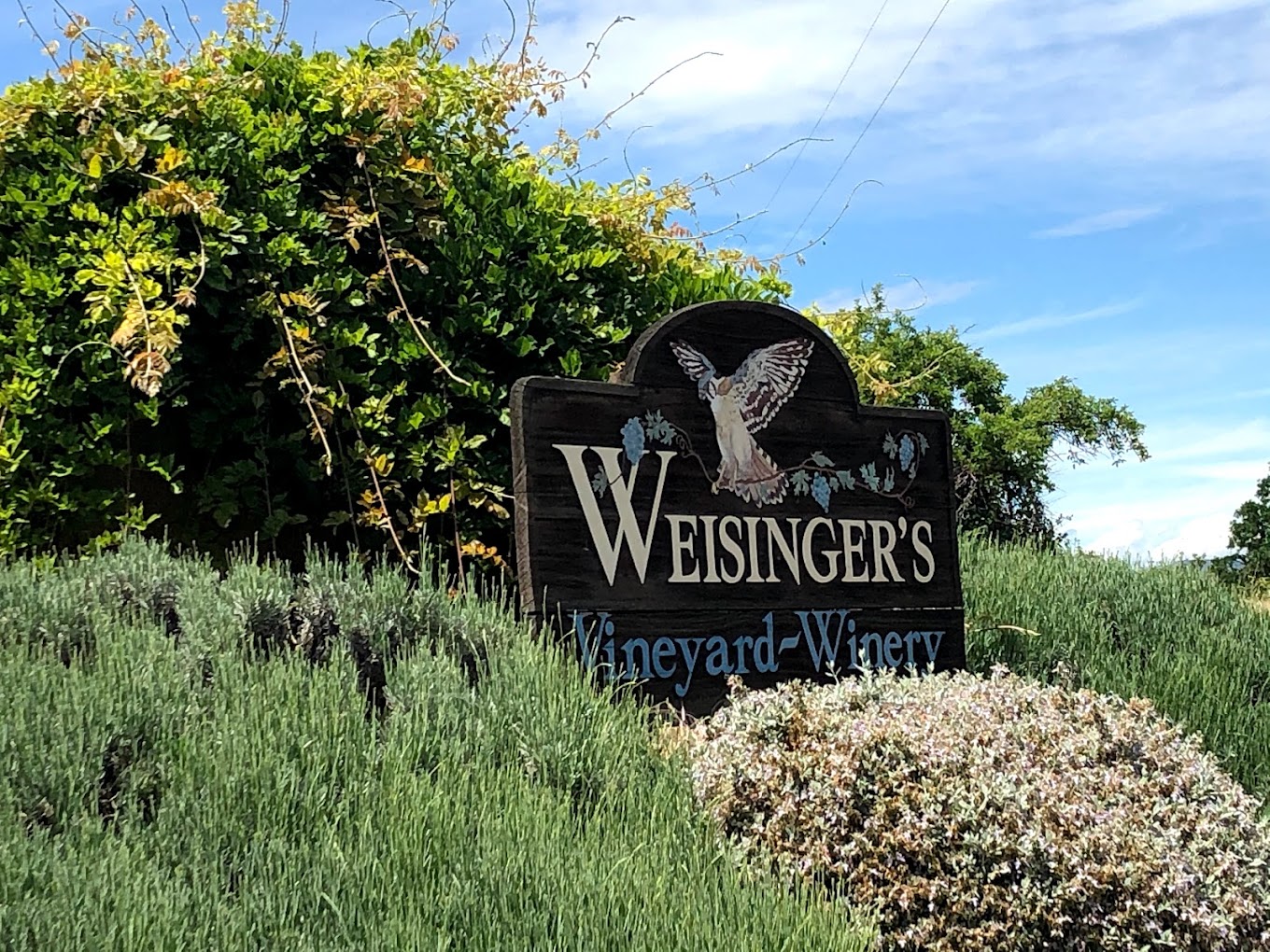
The Weisinger Family, on the eastern edge in Ashland is said to specialize in Tempranillo along with, Rhone and Bordeaux varietals.. Quite diverse for a 3,000 case annual output.

Acreage planted to Tempranillo has steadily increased in Southern Oregon over the last decade. Located just outside of Ashland, Weisinger was founded in 1988, making it one of the oldest in Southern Oregon. After assuming the winemaker’s role, Eric Weisinger began grafting over the original Gewurztraminer vines to Tempranillo. Adjacent to the winery, the Tempranillo occupies a steep, high elevation (2235 feet) northeast facing site. The Weisinger Family, on the eastern edge in Ashland is said to specialize in Tempranillo, Pinot Noir, Rhone and Bordeaux varietals, as well as proprietary blends. Quite diverse for a 3,000 case annual output.

My first experience with Weisinger was with the wines from 2018. 2018 was an ideal long, slow growing season with the Tempranillo picked in the first week of October. After being cold soaked and fermented for 20 days by native yeasts, the wine was barrel aged for 17 months in 30% new American oak. It offers lovely bright cherry fruit with hints of black tea and spice in a solid, medium weight package. The black cherry and spice theme continues in the deep flavors with subtle oak toast and firm, integrated tannins coming into play.  Beautifully structured and focused throughout, it should drink well over the next 5-7  years. Not surprisingly,  Weisinger’s Tempranillos have won many awards. I’ve scored them 93 and 94 in two recent vintages.

Weisinger Family Winery Roussanne, Fortmiller Vineyard, Rogue Valley, Oregon, 2019 

Normally part of a Rhone blend, Roussanne as a stand alone varietal is one that seems to challenge winemakers. After experimenting earlier with Roussanne, in 2018 Weisinger resumed its efforts after discovering the north-facing Fortmiller Vineyard in 2018. In 2019, Weisinger harvested the Roussanne at a low 22.4 Brix to preserve acidity and after whole cluster pressing the winery barrel fermented the wine using native and commercial yeasts. The lees were stirred throughout the long fermentation. The result is a wine that showcases floral and lemony aromas, and the flavors are bright with citrus and honeysuckle notes. The leesy texture adds complexity and length to this delicate, lively and pretty wine.

http://www.weisingers.com

Belle Fiore Winery: Scientists

Belle Fiore is the closest thing to a Napa-ish winery with its rather elaborate tasting room and chateau-like facility. It has a busy restaurant and is even a mini art gallery. But it is also serious about its wines made from its 31 acre estate vineyard surrounding the winery. The roster consists of the usual varieties  such as Merlot and Syrah but then you get to the “others,” especially the Italians. Here you’ll find a Montepulciano (my fav), a Barbera, Teroldego, Fiano,  and a rare Caprettone grape.  These are all possible because the owners have identified what they call “16 micro-blocks” based upon soil types and elevation.  Owner Edward Kerwin is a clinical research scientist and his wife Karen has an M.A in genetic counseling. Together they launched Belle Fiore in 2007. 

Long Walk Vineyard: A Dream Retreat from Silicon Valley

Located in the hills above Ashland, Long Walk is a newly developed vineyard and historic 35 acre orchard owned by Kathy and Tom O’Leary, Silicon Valley techies. After a prolonged search, they settled on this cool, south facing site to pursue their dream to make Rhone inspired wines. The 11-acre vineyard is planted primarily to Rhone varieties.  But they also like Zinfandel so there’s a smattering of Zin. “Field Notes” is  their version of a GSM Rhone blend. Made from 40% Grenache, 30% Mourvedre, 10% Syrah and a splash of Carignane, it is medium dark in color and unfolds quickly in the glass. The nose starts out with pretty plum fruit along with a hint of leather and game but the bright black fruit character prevails. The flavors add some herbs and cherry and are presented in a round body with gentle, dusty tannins poking through. Pleasantly subtle and charming overall, it is one to enjoy over the next several years. Kudos for the light touch. 

With Rose wines being so trendy and Roses now being made from just about every red grape available,  it was an eye opener to encounter Long Walk’s rose from a red grape that’s ideal for a Rose: Cinsault. Popular in Southern France, Cinsault is light in color and low in tannin and  remains the backbone for many Provence Roses. From vines planted in 2002, this winery’s Rose is an attractive pink-copper color and offers an aromatic mix of  just picked strawberries, rose petals and summer flowers.  Medium bodied and vibrant, it is balanced and has just enough acidity to bring it to a delicate finish. 

As for the Long Walk Zinfandel, it too is impressive. 

www.longwalkvineyard.com

Talent Cellars “Nuf Said Red” 

This new family run winery is based in the small town of Talent, near Medford. The label is a replica used by the family when the land was a pear orchard. Winemaker Matt Newbry and his wife Janéa, attribute the Inspiration Behind Talent Cellars to the very soil their family has been farming In Talent, Oregon since the 1920’s.

Sourced from two nearby vineyards, the 2017 Nuf Said is a blend of 75% Cabernet Sauvignon with 13% Petit Verdot and 12% Grenache. It was aged 22 months in French and American oak (50% new). It is medium bodied and vibrant with bright berry fruit and graphite and cedar in the aroma, yet it sweeps across the palate with juicy, ripe fruit and a hint of vanilla from the oak.  Beautifully balanced, it finishes with light, ultra smooth tannins. Production was 250 cases.

And with that, I too say “nuf said.”

Joe Dobbes: Veteran Winemaker Journeys Back to His Roots

Check out http://www.iterumwines.com for wine club info

And for my reviews: winereviewonline.com

At the Oregon Wine Experience’s awards ceremony last August, when accepting the Best of Show White Wine award for a 2021 Chardonnay, Blakeslee Vineyard’s owner first thanked everyone and then casually noted, “I didn’t make the wine. Joe Dobbes did.” That caught everyone’s attention. Joe who?  

Oh, that Joe. The veteran winemaker who also excels as a brand builder. The one behind “Wines by Joe,” a best selling brand found on many supermarket shelves which he developed simultaneously with his high-end Dobbes Family Estate Wines. He later added ”Jovino” as a label for Willamette Valley Pinot Noir and Pinot Gris produced exclusively for restaurateurs. And later created a custom bottling facility in Dundee where he made wines for a dozen or more other wineries. Yes, that Joe.

After adding canned wines under the “Joe to Go” name, he guided his wine company on an upward course and it grew to become the third largest in Oregon by sales. As of  2018, he explained, “We owned 214 acres of vineyard and benefited from the work of more than 30 full-time, dedicated employees, as well as dozens of part-time and seasonal.” That success caught the attention of investors and in that year Bacchus Capital Management acquired 50% interest in 2018.

I met Joe and his wife, Patricia at that awards ceremony. After chatting briefly, he handed me his card which read “Founder, Proprietor & Winemaker” of Iterum Wines. “Iterum” roughly translates as “once more, afresh” and again, as in starting over again. 

A brand from him with no mention of “Joe” in the name is by itself newsworthy.  A few days later I began firing questions his way and I learned  that  to him “Iterum is all about getting back to my roots and being highly focused.” He is doing what he always wanted to do: getting dirty in the vineyards and focusing on high-end wines. 

There’s also a circle on the label to convey that Dobbes has come full circle with Iterum Wines and is back to where he began. 

His father was an amateur winemaker, and he grew up on the family’s large farm which included a vineyard planted in the early 1980s. In the mid-1980s, Dobbes apprenticed at Wiengut Erbhof Tesch, in the German Nahe region and in Burgundy first with Christope Roumier of Domaine G. Roumier and then with Dominique Lafon of Domaine des Comtes Lafon. Returning to Oregon, he worked with Elk Cove Vineyards, Ken Wright Cellars and others before becoming head winemaker at Willamette Valley Vineyards from 1996 to 2001. 

In 2002, he noted, “I started Wine By Joe with a small amount of money in my back pocket, a lot of experience and passion, and a sufficient ignorance of what I was up against.” 

Starting over in 2019, Joe, it is fair to assume, not only had much more money in his back pocket but also an impressive resume to show as a winemaker for 34 or so vintages. Also, along the way he worked with numerous vineyards within Oregon for both his own brands and for others. But he didn’t rush to start anew. When asked about his options then, he explained:

“I essentially took a two year winemaking sabbatical after the 2016 vintage and 34 overall vintages.  It was refreshing in a lot of ways, and allowed me to really think about who, and what I wanted to be in my next winemaking act.  I had started Dundee Mobile Bottlers in 2017; however, I never intended to give up on making wine. In 2018 we bought our 21 acre dream estate from which I had made wine from in previous years for previous owners, as well as for Dobbes Family Estate. I never intended to give up on making wine. It was only a matter of when. The when for Iterum Wines ended up being the 2019 vintage.”

The “dream estate”  is the Orchard House Estate located near Salem, the 21-acre Eola-Amity Hills property contained a vineyard started by Greg Cost. The first six acres of Pinot Noir were planted in 2000, followed by Chardonnay and Sauvignon Blanc plantings in 2016 and 2021. The vineyard now totals 11.98 acres. It was a “dream” for him because, he adds, “I made wine for the Cost family for several years starting in 2005, so I had a strong connection and understanding of the site. I then leased the vineyard through 2012 for Dobbes Family Estate.”

He bought it in 2018, and it came with clones 114 and 115 of Pinot Noir and clones 76 and 548 of Chardonnay.

With Dobbes Family, he was making 8 different Pinot Noirs, often from single vineyards, and now with Iterum, he has added a new twist to single vineyard bottlings: single clone wines from single vineyards. Part of that dream he mentioned about his vineyard was that for Chardonnay, “the two clones that I would have planted were 76 and 548, which was crazy,” Dobbes says. 

I threw out the question of how he ranked the various clones and his thoughts on the market for single clone Pinot and Chardonnay.

“When I think about all the years of working with many different clones, I would have to say that one of my favorite wines I have produced, and continue to produce from a particular vineyard is made from two of the original heritage clones that were planted here in Oregon – Pommard and Wadenswil. Every clone that I work with from any particular vineyard is always fermented separately. I will have enough fruit of each of these clones this year to bottle the clones separately.”

 And he continues, “My Orchard House Vineyard estate presents a wonderful opportunity to compare the red fruited 115 Pinot Noir to the blue fruited 114.  The single clone bottlings from the same vineyard source produced by the same hand off of the same land, is the ultimate opportunity to geek out. Our customers absolutely love this.”

On the subject of geeky opportunities, I noted that Joe was the first in Oregon to make a Viognier and a Grenache Blanc. More recently, he has joined with a small band of winemakers intent on making a case for Sauvignon Blanc. He is on record calling Sauvignon Blanc “a world class wine for Willamette Valley.”  So what’s behind that remark?

“Yes, indeed I have been quoted stating that I believe Sauvignon Blanc can be a world-class 

 wine from Oregon just as we are known for Chardonnay and Pinot Noir. Sauvignon Blanc ranges from being low acid, low fruit and herbaceous to crisp, zesty and fresh and then of course there is Sancerre. 

I love the character in the richness of Sancerre and also appreciate the fresh zestiness of New Zealand. My first Sauvignon Blanc produced from the 2021 vintage under the Iterum brand was made with the advanced intention of a style that is a combination of both regions, but of course is and reflects Oregon.”

Iterum is indeed a fresh start for Joe. That first estate Sauvignon Blanc has yet to be released. But the winery is marketing a 2021 Sauvignon Blanc from the Oak Grove Vineyard, a vineyard he first worked with in 1989.  This Sauvignon is part of an “Old Friends” Collection of wines from vineyards he has worked with over the years. Currently, there are 4 different Pinots under this moniker.

But to return to single clone wines, he does not see them necessarily as a trend-setter because, he explains, “The single clonal bottlings from the same vineyard source is not something that everybody is able to do, and they also present additional sales work, so I think this is why you don’t see this very often.”

So what does he hope to accomplish and add to his resume through Iterum’s wines? 

“I think at this time it is difficult to be completely unique or a first in the industry. However, I will refer back to my goals, and objectives for Sauvignon Blanc, by helping the cause for Sauvignon Blanc from Oregon. My goals and objectives for Iterum are to produce world class, stylistic, delicious and highly regarded wines to the point where the brand is eventually considered to be the equivalent of a three star Michelin restaurant rating.”

Well, based on tasting the inaugural Sauvignon Blanc, Chardonnay and the two single clone Pinot Noirs, I would say he is off to a great new beginning.