Holiday Wine Sales: Budget-Friendly Tips for Shoppers

Now with the crazy days of holiday shopping hype coming at us from every direction, the major online wine retailers and wine merchants are also doing their best to get our attention. 

Although these Prime, Cyber, Black Friday and what have you holiday sales are now an annual event, lots of circumstances have changed over the last 2 years. People in general are much more focused on soaring prices of eggs and gasoline, or whatever their reference point may be. 

The phrase “sticking to a budget” is now heard in so many circles.

Because wine sales have trailed off over the last 2 years or so, these holiday sales will be closely watched. As of now, wine prices haven’t spiraled because tariffs haven’t made an impact on prices. 

The fact is that there is a glut or over-supply of wines and we have seen the number of wine producers entering the discount world increase as many once solid wineries feel the need to reduce prices to move inventory.

Wine is different from eggs and gas because it is a discretionary product, meaning not vital or necessary. Well, to all but a few of us. If there has been a lesson those in the wine biz should have learned over the last two years as wine sales dipped, it is that non-snobby wine lovers are really no different than other consumers and now realize a need to be extra careful about sticking to a  wine budget. That often means having a target maximum price or price point when buying wine. 

What’s Going on in Online Wine Sales

When previewing t several of the Black Friday deals, I can’t help but notice the many luxury or cult wines that are over $100 a bottle are now being offered at deep discounts. Online seller winespies.com offered the 2020 Caymus Special Selection at $147 ($225 regular price), vivino.com announced a culty Chardonnay for $34.99, regular price $90, while lastbottle.com featured a Pouilly-Fuise for $34, regularly $100.  Another site had the 2018 Beringer Reserve Cabernet at $87.50, roughly 50% off. Earlier this week there was a “sale” of the 2022 Joseph Phelps Insignia, which retails for $350-$400 at $195 a bottle. 

Don’t know about you, but to me even these discounted prices still are not budget-friendly. High ratings and non-stop hype are behind so many of these exorbitant prices.  Some might argue that many wines priced in the 3 digit range are on allocation or enjoy a cult following. Then one wonders why some are offered online to begin with and often at deep discounts. We’ll probably never get a consistent explanation, but that shouldn’t stop us from shopping the sales.

Insider Tips for Savvy Wine Shoppers

One great website to find truly fine and reasonably priced wines is wtso.com  What stood out to me is that its Black Friday sales on November 28-29 has an end of the year Clearance Sale. While it continues with its daily flash sale, wtso has many attractive, highly rated wines in its clearance sale. With a few bottles priced at $11.99, the list is heavy in Italian wines but also has something for every wine drinker. At $19.99 a bottle, you can buy the 2024 Calculated Risk Cabernet, the 2021 Havens Cellars Red Blend, and the 2022 Left Coast Cellars Willamette Valley Pinot Noir. An Old Vine Lodi Zinfandel topped the list of the $11.99  specials.

Wine Access is another website that has dozens of great wines for the budget minded Black Friday shopper. At wineaccess.com  the sale works by knocking an extra 20% off their already discounted prices. For example the 2022 Zinfandel from Marietta Cellars is listed for $25, but with the added discount sells for $20 a bottle.THe extra discount is applied at check out.

 Those wines that stood out to me before the discounts are the Three Wine Company Old Vine Field Blend ($28), Meeker 2022 Grenache ($22), 2023 Lang & Reed Cabernet Franc ($29), 2022 La Vigne Paso Robles Merlot ($21) and a San Luis Obispo Chardonnay from Oceano Vineyards( $18). Others are the Pinot Noir and Chardonnay from Oregon’s Solena Estate. And if you like wines from Australia, Argentina, and France, wineaccess.com has something for you at Black Friday prices.

Another site pushing its Black Friday sales also with a large inventory is wineexpress.com A few caught my attention, especially the J. Dusi Cabernet “The Don” from Paso at $22.49. J. Dusi is a favorite of mine. Also, there’s the Rutherford Ranch Chardonnay for $13.47 and a Reverdy 2021 Cotes du Rhone for $7.47. 

The California Wine Club, one of the oldest, has announced its Black Friday 50% off sale. The sale will continue through Sunday. At $12.50 the 2022 Armida Zinfandel from Dry Creek and the Eden Rift Sauvignon Blanc, also at $12.50 are excellent deals. The full list is worth checking out at cawineclub.com 

When the Dust Settles

These holiday sales will likely be extended way beyond the holidays, but they will end. Most of these are flash sales, daily deals or one-time only sales which not everyone is comfortable with because of the need to act quickly.

Discover the Hidden Gems of Fort Ross Vineyard

People living on the edge, the bet it all risk takers, and even those simply taking the less traveled road are exceptions in today’s wine world. Because they don’t follow conventional wisdom or marketing trends, these outliers can be exciting to follow. And when they succeed, they can come up with brilliant wines. But by going against the grain they risk going unnoticed, flying way under the radar of wine writers, somms, and influencers. 

Well, this writer was lucky to have been directed to one of those wineries by a good friend, and after tasting through the wines, I’m going to blow through the cloud cover and shine the spotlight on a great discovery: Fort Ross Vineyard.

In 1988, when phylloxera was beginning to take its toll in the North Coast wine regions, Lester and Linda Schwartz purchased a large slice of rugged land on a steep coastal ridge above the Pacific Ocean near the historic Russian settlement of Fort Ross. In 1994 they established Fort Ross Vineyard and made their first wine in 2000.

First, the Vineyard Story

 South African natives who had immigrated to the San Francisco Bay Area in the 1970s, they appreciated  fine wine and food and were convinced the site was suitable for growing wine grapes. Located 5 miles north of Jenner, their land is literally along the Coast of Sonoma. As an AVA, the “Sonoma Coast” extends inland and includes parts of Carneros, Russian River Valley  and the so-called Petaluma Gap. The land they were considering turning into a vineyard, however, would be the closest in California to the Pacific Ocean.

So, to review, 1988 was not the best of times for venturing into winemaking and the site sitting above and less than a mile in from the Ocean had not yet been explored.  There were many risks but the elevations of these potential vineyards range dramatically from 1,200 to 1,700 feet, or just above the coastal fog.

In 1991 Lester ordered two dozen dormant rootstocks, and when the initial plantings proved successful, the couple expanded their experiment, planting a test vineyard with 16 varieties, three trellis systems, assorted clones and several rootstocks. 

When all of the extensive trials were evaluated, they developed a vineyard  which now consists of four varieties: Chardonnay, Pinot Noir, Chenin Blanc and Pinotage.  No surprise with the first two; Sonoma Coast Chardonnay and Pinot Noir were made famous by the likes of Marcassin, Flowers, Hirsch, and Peter Michael  But their vineyards are hidden away inland, not along the riskier coast.  

And although both Chenin Blanc and Pinotage are popular in South Africa, no one else, except  native South Africans, would even think about planting them in California. Chenin Blanc had fallen out of favor by 1991 and there was nowhere you could obtain Pinotage vines. 

Not a problem for them. They sourced Pinotage budwood from two of the finest sites in South Africa, and became the first independent growers to import grapevine cuttings from there through the Foundation Plant Services that operates alongside the U.C. Davis School of Viticulture and Enology. 

Then when they laid out their vineyard, they didn’t take the easy way of uniformity. Instead, the Fort Ross Seaview Vineyard comprises 32 vineyard blocks over 53 planted acres, with each block varying in size from approximately one-half to two acres each.  Having 32 blocks is not the easy way to plant, to tend, and to harvest for sure. 

But each block is based upon a carefully selected clone and rootstock for the variety. The vineyard is planted with heritage clones and field selections, which generally produce low yields with small bunches and berries that deliver very distinct wines.  

  • Pinot Noir – Calera, Pommard, Swan, Dijon clones 115 and 777
  • Chardonnay – Old Hyde, Wente, 
  • Pinotage – Proprietary clones MM1, MM3 from South African budwood

Now for the Wines

Fort Ross Vineyard Seaview Sonoma Coast Pinotage 2019 $62

If you’re unfamiliar with Pinotage, here’s a great place to start. Created by crossing Pinot Noir with Cinsault, Pinotage led the way to the revival of winemaking in South Africa. At the time, Cinsault was associated with Hermitage which explains the “tage” in the name. This rendition from Fort Ross is a stunning example.  

After the fruit was hand harvested in early October of 2019, winemaker Jeff Pisoni aged the wine for 12 months in 20% new French oak and bottled it unfined and unfiltered. In the glass this wine is quite dark in color with an intriguing aroma that leans slightly toward the earthy Rhone side with berry fruit, green tea and cassis. On the palate it is vibrant and energized with black plum, spice and tea leaf flavors that are supported by velvety tannins. Finishes with good length, suggesting this would reward lengthy cellaring. Not to sound corny, but it does capture the earthiness of a Rhone and the velvety smooth texture of a Pinot. Who knew?  360 cases made 94

Fort Ross Vineyard  Fort Ross-Seaview Sonoma Coast, Chenin Blanc 2023 $44

Popular decades ago and made in a slightly sweet style, Chenin Blanc rarely gets anyone’s attention these days and few people know that it can yield an excellent dry wine.  Cool climate Chenin Blanc is rare in California with most acreage now in warm sites. In its third vintage of estate grown Chenin Blanc, Fort Ross came up with an extraordinary rendition. It  brings together concentration, energy, complexity in a seamless package. 

In the glass it is light yellow with a healthy green tint and the Initial assertive aroma asserts itself in a combination of lemon meringue and fresh pear. With airing, the aroma takes on some ginger spice and melon. On the palate it is medium bodied with concentrated flavors of lemon and stone fruits. From start to finish it is solidly structured and remains lively on the palate. With its crisp acidity, the flavors continue to a crisp finish with background notes of honeysuckle and bosc pear fruit. Unquestionably one of the finest Chenins in my experience, the wine was made by Jeff Pisoni who aged 80% of the wine in neutral French oak for seven months and bottled it unfiltered. 100 cases made. 95

And Now Bring On the Clones

Fort Ross Vineyard Stagecoach Road Fort Ross-Seaview Sonoma Coast Pinot Noir 2022 $80

This pitch perfect Pinot is from two clones (Calera and Pommard) planted on steep hillsides overlooking the Pacific Ocean. Early spring rains during flowering reduced the crop in 2022 and at the harvest the berries were unusually small. That comes across once the wine is poured and the color is a deep garnet. Initial scents of cranberry and plum with anise are a bit reticent, but with airing and swirling, black cherry, tea and toasty oak scents emerge. 

Smooth and silky on the palate, it offers concentrated flavors of cherry and earthy, forest floor that are bright and charming with very light tannins. Youthful and balanced, it was showing even greater harmony a day later, indicating a long future lies ahead. But can be enjoyed whenever the mood hits.  230 cases.  94

Fort Ross Vineyard The Terraces Fort Ross-Seaview Sonoma Coast Pinot Noir 2022 $80

Pinot lovers should make room in their cellars for this one. From a low yielding vintage, this Pinot was made from a vineyard block planted entirely to the Calera clone, and the wine was aged for 11 months in French oak, 40% new. Known for its small berries, high acidity and solid frame, the Calera clone is often a key component in multi-clone Pinots. 

Once poured, this ‘22  gets your attention with its lovely ripe plum and raspberry aroma, and the palate impression also makes it stand out with its bright cherry flavors along with definite oak spice and youthful acidity. Concentrated with some tannic grip, this one is for the cellar and, with aging, it should be outstanding. 250 cases made 94-95

For the Final Touch: Chardonnay

Not surprisingly, the Fort Ross Chardonnay is not your Rombauer’s  buttery, oaky, commercial stuff.  To begin with, the  clones planted are the Went and Hyde  field selections, seldom seen these days. Grown in the coastal, breezy climate, the vines in 2022 yielded a small crop.

But once poured, the ‘22 Chardonnay announces its individuality with its unusual yellow color. Then the aroma is fresh and vibrant with lovely apple, and lemon as it expands.

On the palate the apple and stone fruit flavors are concentrated and sustained right through a long finish. It also is one of the very few Chardonnays that will reward cellaring which became apparent when it showed great complexity 24 hours after being opened.

So there you have it. 

Go to http://www.fortrossvineyard.com to get on their mailing list. 

You can purchase new releases at a 10% discount and don’t have to be club members.

Also, they now have a line of wines called Sea Slopes to supply top restaurants and wine shops in select markets around the country.

Sea Slopes wines are made by the same winemaker using the estate vineyards.

The Mad Crush: An Insider’s View

If you are looking for a gift for the special wine drinker in your life, here’s a suggestion that is a sure bet to please, and it is NOT a wine.

The Mad Crush, a new edition written by Sean Weir is highly recommended for those who are into wine or remotely curious but also for anyone out there dreaming about starting a winery.  Available on Amazon ($14.95) this new edition is beautifully written by someone who knows his wine but more importantly, knows how to engage and entertain the reader. 

It is an easy read, but also hard to put down.

On one level, it is the story of Bill Greenough, who “left a successful business world in favor of moving to a remote canyon, digging out an abandoned old vineyard, and making wine off the grid.” The vineyard was established in 1880, abandoned after Prohibition, and Greenough began the process of restoring that vineyard in 1974. Today, the original 3-acre block of head pruned Zinfandel is still producing. Located in what’s known as the Edna Valley today, It is the oldest in San Luis Obispo County. Greenough added 6 acres of Zin in the 1970s and 80s.

The winery is now in the hands of  the second generation and still focusing on Zinfandel.

On another level, the book is also the story of this old vineyard established about 150 years ago which was tended to by several generations who like Greenough become full time stewards of the vines and the land. Along the way the book gives life to many of the cliches tossed around in the wine world. Among them are winemakers being caretakers of the land or stewards as many now like to say, along with communicating with the vines. Stuff like this is made believable through Weir’s first hand experiences and poignant observations.

What held my attention from the first page is the feeling the book is also about the author as he comes to understand the commitment needed to succeed in tending vines and making wines. And as the process unfolds, it may all sound romantic but you sense he comes to realize that pursuing the dream of becoming a winemaker, a dream so many people have shared, is not for everybody. 

Weir grew up in the wine country. He worked in the cellars of Kenwood Vineyard and saw first hand how the partners worked hard to make a go of it.  In 1992 as a student at Cal Poly in San Luis Obispo, he worked one summer as a cellar rat with Greenough as he revived the old vineyard. 

In 1995, out of the blue, Greenough contacts him to work the harvest. That included monitoring the vines as they matured, cleaning the winery, and  preparing for the harvest, crush, and fermentations. That experience, he explains, “is what ultimately drove him to write the book.” As the story unfolds, readers learn a lot about vines, making wines, cleaning, and dealing with the weather, equipment, and the workers during the harvest and crush. It is an inside look at the nitty-gritty, the dusty, dirty boots side of winemaking, not to forget the long hours.

When you go to Amazon for the book, there’s a plot summary. This is a revised edition and includes an afterword and a section called “Prunings,” consisting of some tidbits and stories that didn’t fit the main story.

As for the author, when asked about his winemaking experience after 1995, Sean notes:  “That was my third and final crush. That was enough for me. I caught the winemaking bug, but it wasn’t terminal.”

Sales Alert!

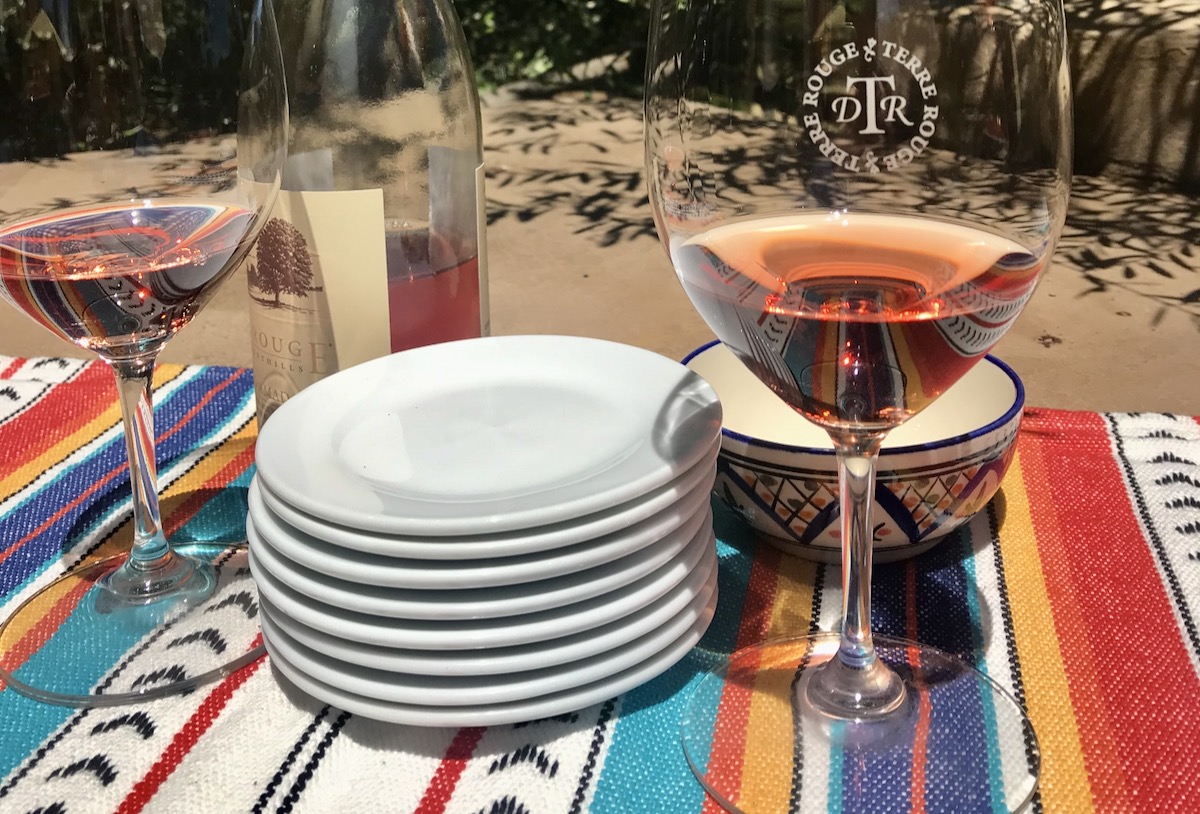
Terre Rouge Wines

On Thursday, August 22, Bill Easton with Terre RougeWines will begin a major sale:

Mediterranean Madness Sale 2024

Starts Thursday, August 22nd Online

Watch for our email Thursday morning with all the details!

So my best advice is get on the mailing list.  

sales@terrerougewines.com

And here are my recent reviews to whet your appetite:

2011 Domaine de la Terre Rouge, Sierra Foothills (California) Roussanne Monarch Mine Vineyard              

 Following whole cluster pressing, the juice was barrel fermented and the wine aged on the lees. Beginning with its deep golden color, this wine was a unique experience.  Rich and deeply concentrated with great viscosity, it delivers ripe pear flavors with some floral notes.  This vintage is maturing nicely, but still has plenty of life ahead of it.  As for a rating, how about rare and wonderful.     97 points Norm Roby 

WINES FROM THE CELLAR2005 Domaine de la Terre Rouge, Sierra Foothills (California) Roussanne  ($75): From the winery’s cellar courtesy of Bill Easton.  The color here is medium yellow but with some lively green glints.  You really have to suspend your instincts about an “old” looking white because this wine is still very much alive.  The intense aroma is a combination of nectarine and candle wax with some citrus and green tea subtleties.  Concentrated with layers and layers of flavors, the wine offers a silky smooth, creamy texture from bottle aging.  It has developed nuances of pear and honey flavors and a touch of almond but it is all seamless and harmonious at this stage.  Finishes long and lively.  What a treat to experience how well Roussanne responds to cellaring.  It held up well when tasted again a day later.  Amazing wine.     98 points Norm Roby
Savvy Wine Shoppers: Start Your Engines

Exciting online wine deals and steals are really happening.  They are not the typical, over-hyped discounted wines that have been offered over the last year or two.  It strikes me as a new beginning, a fresh start to Spring. 

The real deal door began to swing open around April 1st and by the day of the eclipse, it was no illusion, no April Fool’s prank.

 And the wines that signaled this change  were excellent, time-proven Cabernets, Pinot Noirs,  Chardonnays, a few imports and, well, many others. What was different was the appearance of so many authentic wines from real producers instead of made up private labels and brands. And often, new vintages, newly released wines, not leftovers.

Before getting to the reasons behind this development, let me lists those deals offered online  that caught my attention:

2021 Peju Cabernet Sauvignon, Napa Valley, regularly $70, offered at $26 

2021 Daou Reserve Cabernet Sauvignon, Paso Robles $65 to $39.99

2018 Whitehall Lane Estate Cabernet, Napa Valley $90 to $59

2020 Beringer Vineyards Knights Valley Reserve Cabernet Sauvignon $32 to $23.99

2019 Handley Cellars Anderson Valley Pinot Noir, $37 to $19.

2018 Ketcham Estate Pinot Noir, Russian River Valley $45 to $19.95

2022 Long Meadow Ranch Rose of Pinot Noir, Anderson Valley $32 to $12

2022 Caymus Vineyards, California Cabernet Sauvignon, $75 to $49

These are top names and the reason the last two are cited is to reinforce the fact that new vintages, not old stuff getting dusty in warehouses, are showing up as real deals! That’s a spanking brand new release from Caymus and I’ve not seen any Peju wine so deeply discounted until now. Clos du Val just released its new Cabernet Sauvignon vintage to an online retailer at 20%, not enough to make my list but good support for the trend.

Just now winespies.com announced a 30% off deal on an absolutely great California Chardonnay, one of the top 3-4 made and never ever discounted, until now. It is the 2021 Wayfarer ‘The Estate’ Fort Ross-Seaview Chardonnay 30% off. 

Then I’m seeing a few unknowns and  newbies to the Napa Cabernet scene resorting to the online discounters to help their launch. The garigiste.com site announced the sale of  Rockmere Estate Cabernet Sauvignon Napa Valley from 2018 for $59.71 a bottle, with the winery price being $95.

So why now, you ask? Well, it has to do with supply and demand. Over the last several months, business stories have focused on the global surplus of wine, and here at home, both Napa and Washington State wine folks are trying to deal with the present surplus of wine and the need to start removing vineyards in big numbers for future stability. Talk about pulling up vines let’s you know this is not a blip.

Meanwhile, retailers are staring at big inventories in their stores and warehouses. I’ve noticed much more exciting offerings from vivino.com so far in 2024. This online site works directly with retailer partners across the country. Sales are slow in brick & mortar places across the country.

Who’s to blame? Well, the easy way out is to point fingers (the middle one?) at the Gen Zers.

Apparently, recent surveys indicate a lack of interest in wine. That’s a demographic representing 18% of the population and it is more interested in energy boosting drinks. Is “Liquid Death” an energy drink? Just asking. 

The brains behind Drizly analyzed the alcohol beverage market and came up with this conclusion: “When it comes to trying new bev alc brands, Drizly’s 2023 Consumer Trend Report found that pricing was the top factor that influences Gen Z “

The  high price of wine is a big deal these days. Recent surveys show that the average bottle price of a Napa Valley Cabernet is $108. An article in The Wall Street Journal  surveyed restaurants and came up with the belief that $25 is the new restaurant normal for a glass of wine. And, yes, the prices for many consumer items are now high. But wine is non-essential, a choice, not on the same level of importance as eggs and fuel. 

Driving the prices of wine up and Gen Zers away is that wine is perceived as a luxury enjoyed by those who equate price with quality. Snobs! Yes, those who buy what others can’t afford and those who associate inexpensive wine as “cheap stuff.” And the big corporations have not helped by their push to create so-called “luxury brands.” 

But right now it is the online wine retailers, the flash sale types, that are driving the discount wine deals.  A report from the Silicon Valley Bank made this observation:

“Wholesalers are full up, as far as they can go,”  which is making them “more picky” in what they buy from wine producers. Wholesalers “are more afraid of being stuck with inventory that they may have to discount.” 

It concluded with a prediction that “flash sales and increased discounts” are likely in the offing in the near future.”

5 Real Deal Dealers

That future is now. Flash sales, meaning limited time offerings are leading the way. For those  interested in checking out the best wine deals offered online, here are my top 5 best sites for non-snobbery, savvy shopping wine drinkers:

www.reversewinesnob.com  This site was finding super wines at great prices before the glut, and so far in 2024 has earned my top spot for its selection of wines from California and the Northwest. It works directly with small, family owned wineries. Begin here.

www.winespies.com  Off to a great month of April with exceptional finds such as the 2020 Caymus California Cabernet and the Wayfarer Chardonnay. Also, super price for a Flying Goat Pinot Noir. Special deals on Lake County Cabernets are frequent.

www.lastbottleswines.com

 Still the best flash sale site, and is keeping up by finding wines never offered before the glut. A great offer for Handley Cellars 2019 Pinot Noir at $19. It also has marathon wine sales, and recently offered dozens of wines as “under $26 deals and steals.”    

www.vivino.com 

These are the people who have a huge database and encourage subscribers to offer reviews, But its main strength is its partnerships with retailers around the country. Here I found the 2020 Beringer Knights Valley Cabernet at 30% off. The new 2022 Caymus “California” Cabernet was first offered by vivino.

http://www.wtso.com

WTSO was one of the first, if not the first site for flash sales. It offers many wines, but I found it is a great resource for imports, especially Spanish and Italian wines. Here are three examples of excellent deals:

2021 Resalte Ribera del Duero Vendimia Seleccionada for $19.99 (50%)

2018 Famiglia Castellani Chianti Classico Riserva  DOCG $14.99

2019 Luca Bosio Barolo  $24.99

Pinot Noir Deal of the Day

Deal of the Day!

Just noticed one of my favorite Pinot Noirs is being offered at an amazing price of $22.

The offer comes from www.wineaccess.com.

Here’s what they have to say:

“Solena Grande Cuvée is the Pinot that led us to rethink the term “quality-to-price ratio” and start saying “quality-to-price disparity” instead. The 2021, from a landmark year, has it all: balance, deep red fruit, cleansing acidity, and a personality that makes it hard to put that cork back in.”

Better yet, here’s my recent review from http://www.winereviewonline.com

Soléna Estate, Willamette Valley (Oregon) Pinot Noir “Grand Cuvée” 2021 ($28):

This may well be today’s best value in Oregon Pinot Noir.  Made from a selection of the family’s vineyards in the Yamhill and McMinnville AVAs, this Cuvee offers a lovely aroma that is at once complex and compelling.  A subtle melange of raspberry, and truffles with hints of earthiness define both the aroma and flavors.  On the palate it is medium bodied with bright raspberry / blackberry flavors that gain in intensity with airing and take you to a big, rich finish.  With light tannins, it can be enjoyed now or cellared a few more years.  It bears repeating: an excellent value.       

94 Norm Roby Mar 21, 2023

End of February Wine Sale

Get ready to cherry pick a big wine sale featuring 150 wines at 40-50% price reductions

And $5 case shipping. 

Highlights: 150 wines up for sale

The website: vintagewineestates.com 

On Tuesday the 28th, Vintage Wine Estates will offer 150 wines from its portfolio of wineries. 

The collection ranges from top notch wineries like Owen Roe, Qupe, Kunde, Laetitia, Clos Pegase and several others that are fully functional real wineries.

And, yes, the portfolio includes your basic supermarket brands like cherry pie and layer cake.

VWE as the company likes to be called, has so far encouraged many of its wineries to function as they always have.

It added a new brand “Bar Dog” that may appeal to some of you.

And I do like to fun/pun it created with the brand, “If You See Kay.” 

Here are the wineries to look for in this sale:

Owen Roe Cabernet Sauvignon, Cabernet Franc and other reds from Red Willow Vineyard

Tamarack  Firehouse Red for $12

Qupe Grenache $18

Laetitia Pinot Noir

Kunde Zinfandel

B.R. Cohn Chardonnay, Cabernet

Delectus Napa Valley

Can’t  find anything you like? Well then, just If You See Kay it!

3 Reasons to Shop Last Bottle

When it comes to rating the top online wine sellers today, the last word is Last Bottle.

I’ve been following it and another two dozen sites for several years now and, yes, I faithfully look at everyone’s daily deals, special offers, clearance sales and whatever else. 

Most sites are hyping the same wines after covid and are so predictable.

But not Last Bottle.

Wine.com is great in many ways, but it doesn’t list many of the small, hidden gems that Last Bottle uncovers.

I also think highly of winespies.com, reversewinesnob.com and wineaccess.com.

Last Bottle, however, is best at 3 key things:

  1. Big, real discounts!! Often over 50%.
  2.  Great selection, ever changing, not the usual fare.
  3.  Exciting, informative, and fun to read website and wine comments.

All of this along with a proven track record and yet there’s no personality behind it, no person by name.

And therefore no ego in evidence. No sommelier or wine expert showing off.

It is all done by teamwork, by wine competence, and by a crazy, noisy, got you by the throat style.

The question remains: who the heck are the people behind Last Bottle? 

I asked that and several other questions and was surprised at the quick and  informative response.

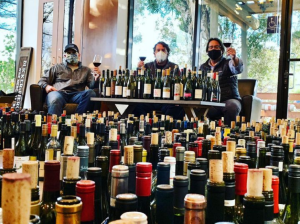
But I still don’t know that much about the people. The best I have is this photo:

What sets their sales approach apart from the others are the unusual and energized wine descriptions. Here’s a typical introduction to a featured Shiraz:

“Quick poll…who’s seen the video where the guy rescues his dog from the headlock of a big ol’ kangaroo and then squares off (you might want to Google it)!? Man, those Aussies are just the best. Speaking of BEST, how about 94 POINTS and THIRTEEN American dollars (that’s 18.60 Aussie dollars, by the by)??!! Mount Langi Ghiran SHIRAZ!!! Pure craziness.”

Or this one about a Barbaresco:

“WOOHOO!!! If you could make Burgundy with nebbiolo, this just might be it. Fine, elegant texture, no heaviness, but STACKED, simply soaring with beautifully fresh and dried roses, red cherry, orange pekoe tea, a dash of allspice and cinnamon, freshly turned earth, and shaved truffles, some toasted hazelnuts…my, oh my! SO GOOD! This will age like a champ, too – so get a few extra to save. We get all contemplative and nostalgic whenever we drink Rivetti. This is complex, thoughtful, fine, focused, and distinctly reaching for a higher level.”

These atypical wine comments keep on coming and may strike some as silly and irreverent, but their descriptions are clever, creative, and so unlike the mechanical writeups encountered elsewhere.  And the wines are top quality.

To learn more about these folks, see my article posted at http://www.winereviewonline.com

Here’s one question I asked that’s sure to tease you:

Q: You say your team tastes 40,000 wines a year, or roughly 800 a week. Really? Is that true or hype?

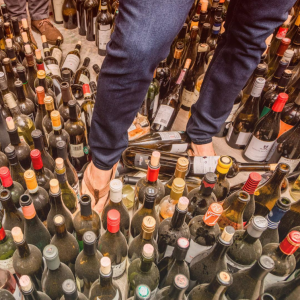
A: This is 100% true. When the tasting bar becomes too packed with bottles we set them on the floor, and have to carve little paths to get through. It can seem ridiculous, but it speaks to our commitment to assessing every wine to find the gems that make it into a daily offer. 

Here they are hard at work: the Chateau Les Feet of wine sellers:

Best Websites for Savvy Wine Shoppers in 2022

Let the Countdown Begin

Now that Spring has arrived and we can look back on all those wild sales from Thanksgiving to St. Patrick’s Day, this an ideal time to review what has happened over the last year in the fast-changing world of online wine sellers. 

It’s also Academy Awards time, with its ongoing chatter and debate about the best of this and that sets the tone for this post. I’ll be shining the spotlight on several wine webites that stood out and performed well over the last year.

As most of you know, I’m not a fan of subscription boxes since you can find better wines at better prices if you do a little research. Nakedwine, Vinesse, and Firstleaf seem to make many people content. But those are not my kind of  wine-loving people.

Much like the selections for best movies, actors, and whatever, selecting the best sites for serious wine shopping also has to be broken down into categories. 

For one stop shopping, the big retail guys like wine.com, wineExpress.com and cinderellawines.com maintained their positions over the last year as reliable and only occasionally exciting. 

Taking our cue from the Oscars, we are spotlighting the best websites in specific categories.

In the Best of “Curated Selection” category, the nomination for the best website for red wines is invino.com. Since the present partners took over in 2019, it is often my go to place for red wines. 

www.invino.com 

“Curated” is overused by so many others, but it applies perfectly to the wines offered at this site. Based in the town of Napa, it lists around 100 wines at any one time. But they reflect excellent choices that are not available elsewhere.  

If you prefer red wines, then this is the site for you. It is particularly good with Napa reds and carries such proven Cabernet wineries as Luna, Von Strasser, and Clark-Claudon. From Bordeaux, it now has very attractive red Graves for around $20 and a lovely 2018 Bordeaux for $9.95. Then there’s the rarely seen red wines from Betz Family, Ken Wright and School House Vineyard. The selections from Argentina, Spain, and Italy are also inviting and unusual.

An exciting list of red blends confirm these guys work hard to offer values, and many good deals are priced below $25 a bottle. A highly rated Dolum Estate Napa Cabernet was offered recently at 60% off and a Sonoma Coast Pinot for $23.95.  

If you buy wines based on ratings, then even here you can look over a collection of 94+ rated wines under $40. Many exciting wines and several are deeply discounted, such as a first rate 2016 Chateauneuf-du-Pape and 2016 Pomerol Château Croix-des-Rouzes. 

While a few other sites have recently offered Frisson Napa Cabernet, invino.com came up with a special deal on Frisson magnums at 50% off and free shipping on orders of 2 or more.

Pros:

Authentic wines, not custom made, private labels

Strengths are in wines from Napa, Spain, France, and Argentina with frequent surprises from other California regions..

No crazy BS write ups about the latest cult wine from icons and  rockstar winemakers

And, best of all, discounts of 50%-60%

 Shipping rates vary but always seem fair and based upon sales price.

Cons:

Not really a negative, but it is somewhat limited by appealing primarily to serious, well-informed, and somewhat adventurous wine lovers.

WALLA WALLA: Recent Notes & Updates

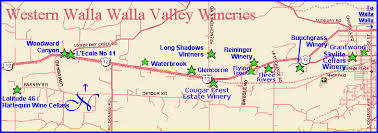
Walla Walla is unusual in many, many ways. First it is a rare AVA falling within two states, Washington and Oregon. About 60% is within Washington. Defined by the Blue Mountains to the southeast, the Palouse to the north, and the Columbia River to the west, Walla Walla is said to be the size of Napa but contains only 3,000 vineyard acres. 

But, for surprise #2,  there now are about 120 wineries calling Walla Walla home. Nothing much happened vineyard-wise after Repeal as the region expanded its orchards and wheat growing. Then In 1974, Gary Figgins planted a small vineyard and by 1978 his Leonetti Cellars was the first new winery. Figgins who was interested in Italian reds like Sangiovese made a 1978 Cabernet that by the early 1980s won so many awards and earned so many high ratings that it was being talked about as a cult wine. Walla Walla had awakened with a bang.

As its reputation spread, Figgins responded to his new found success and high demand by announcing release dates for subsequent vintages. The wines sold out quickly over a weekend in May.

Leonetti’s success, it is fair to say, kick-started Walla Walla as a special wine region which until then was better known for its onions, apples, and wheat. Selling wine to visitors from out of town caught the attention of Marty Clubb, who founded the nearby family winery, L’Ecole No 41 in 1984. Clubb was soon offering his attention-getting Merlot, Semillon and Cabernet on the same day Leonetti scheduled its open house. Not surprising, there were traffic jams caused by wine lovers coming from Portland and Seattle.  Adding to the evolving wine scene, Rick Small who planted a vineyard in the late 70s converted a machine shop into a winery in 1981. His Woodward Canyon Winery was yet another reason to hit the road to Walla Walla.

To be frank, Walla Walla is in the proverbial middle of nowhere. Portland is 250 miles west, Seattle around 275 miles away, and otherwise, nothing but farmlands and magnificent rock formations. The area is beautiful and the town of Walla Walla with its brick buildings is absolutely charming, home to Whitman College and more bike trails than you thought existed.

My first visit to Walla Walla was in 1996 and during that time I was welcomed by the owners of Leonetti, L’Ecole, and Woodward Canyon. Two wineries had tasting rooms downtown, Seven Hills and Canoe Ridge. My hosts were the owners of a new vineyard named Pepper Bridge who were at the time also major apple growers shipping their product worldwide. All three wineries remain family owned and Pepper Bridge, owned by Ginnie and Norm McKibben, is now both a winery and a major grower selling to dozens of  wineries.

But to return to my list of what makes Walla Walla unusual, #3 is the fact that in the little town there are presently 32 winery tasting rooms open to the public and to wine club members. That’s almost a third which is amazing. As I was packing up to leave on the most recent trip, a local stopped to ask what I thought of Walla Walla. After mentioning I first visited years ago, she noted,  “Yes, the wineries saved the town and brought it back to life.”

But what really sets Walla Walla apart from most AVA is that 95% of the grapes grown are red. Cabernet, Merlot and Syrah combine for 70% of the total. On the Oregon side, The Rocks District sub-appellation, approved in 2015 and known for its distinctive gravel, cobblestone soil,  Syrah edges out Cabernet and Merlot is a distant third.

While it is fairly clear that Syrah is the rockstar of The Rocks, Cabernet faces some stiff competition from Merlot and Bordeaux blends as the signature wine of Walla Walla Valley. And Syrah is gaining some steam with new wineries like Valdemar Estate raising the bar. 

From the revisit, I left with the belief that Walla Walla is just gaining momentum and is on track to become a leading voice for many red wines. Currently, there are excellent Cabs and Merlots but it is easy to get excited about the Bordeaux blends, especially those with a good dose of Cabernet Franc. 

5 Best Representatives: All have wine clubs

Northstar Winery “Red Blend,” Walla Walla Valley 2016 $60

Pepper Bridge Winery Merlot, Walla Walla Valley 2018 $55

Amavi Cellars Cabernet Sauvignon, Walla Walla Valley 2018 $36.00

Valdemar Estate Syrah, Walla Walla Valley  2019 $65

Saviah Cellars 2018 Cabernet Franc Walla Walla Valley, 2018 $35

Merlot

L’Ecole No 41 remains a leader with both its regular and Estate Merlot. Northstar has 14 acres planted to Merlot but uses the Columbia Valley AVA.  Northstar’s 2013 Merlot, with 23% Cabernet, is a gorgeous, concentrated berry-infused, lightly oaked version for $41. Northstar’s limited production 2017 Premier Merlot, is as big and beautiful as Merlot gets. Loaded with flavors, It only needs cellaring. The retail price is $100.

Pepper Bridge Winery Merlot, Walla Walla Valley 2018 $55

With 13% Cab Franc, this Merlot made from Seven Hills and the estate vineyard, this is a perfect example of what Walla Walla offers. It displays ripe cherry, raspberry and light herbal aromas with a touch of oak spice. On the palace it is medium-full bodied with ripe fruit, an earthy streak and good acidity to accompany the tannins. Concentrated, textured, and balanced, it begs to be cellared 3-5 years. While owning both Pepper Bridge and Seven Hills Vineyard, the winery produces only 8,000 cases a year. Dozens of wineries buy grapes from Pepper Bridge, including Leonetti which bottles a vineyard designated Cabernet. All Pepper Bridge wines were excellent. One reason why the winery is not better known is that it sells almost all direct to wine club members. But if there were one club I would join , this would be it.

Cabernet Sauvignon

A recent taste of a 2002 Leonetti Cabernet confirmed that this winery remains in the forefront with its signature balance and longevity. Woodward Canyon with its Estate Reserve Cab also remains in top form. The 2016 Northstar Walla Walla Cab ($60) offered beautiful aromas with light tannin and was presented in an attractive elegant style. Offered through its wine club,the 2016 Pepper Bridge Cabernet ($56), blended with the four other Bordeaux grapes, is a classic, ripe, structured version with bright fruit and rich tannin that will drink beautifully for many years.

Amavi Cellars Cabernet Sauvignon, Walla Walla Valley 2018 $36.00

A vintage that was warm in July and threatened by smoke, 2018 turned out to be fine thanks to the ultra-long growing season that is a hallmark of the region. The last Cab was picked in mid-October. Made from 76% Cabernet and equal portions of the usual suspects, it was aged primarily in neutral French oak. With cherry, sweet spices and black currant fruit, it is medium bodied, nicely balanced with hints of anise and dusty tannins. As an estate wine that is sustainably grown, Amavi’s Cabernet has been consistent over recent vintages and is attractively priced. A little over 5,000 cases were made in 2018.

Bordeaux Blends

Here as elsewhere, what to label traditional Bordeaux blends remains a problem. Meritage never caught on as a useful moniker. One of the early proponents of Bordeaux blends in Walla Walla, Reininger which began in 1997 finally decided by the 2017 vintage to label the wine “BDX Red Wine.” A relative newcomer to the scene, Va Piano labeled its attractive blend, “Uniti.”  “Trine” is a name newly adopted for Pepper Bridge’s Bordeaux blend.  “Night Owl” is used by Amaurice Cellars for its red blend.  Oh well, one that stood out was Northstar’s “Red Blend.”

Northstar Winery “Red Blend,” Walla Walla Valley 2016 $60

Northstar’s first vintage was in 1994 and the state-of-the-art winery was built in 2002.

In its earliest years, Northstar was guided by  California’s well-known winemaker, Jed Steele. It is part of the Ste. Michelle portfolio which was recently sold. The 2028 Red Blend is made from 51% Merlot, 47% Cabernet Sauvignon, and 2% Cabernet Franc. The barrel regime consisted of 100% French oak with 38% new barrels for 18 months. It is definitely not shy with wide open aromas of herbs and ripe dark cherries, and is rich and silky smooth on the palate. Beautifully textured, it finishes long with sweet, toasty oak notes. It does throw some sediment, so decanting is recommended.

Another standout Bordeaux blend:

Va Piano Vineyards, Walla Walla Valley “Uniti”, Estate Grown 2018 ($85): 

Born and raised in Walla Walla, winemaker/owner Justin Wylie started Va Piano in 2003.  A year in Florence encouraged the “va piano” name from an Italian proverb that means go slow and take it one step at a time.  For a wide range of red wines led by Cabernet and Syrah, he relies on grapes from his 20-acres in mid-Walla Walla and the high elevation Octave Vineyard on the Oregon side.  A top-of-the line blend, the 2018 Uniti is 30% Cabernet, 30% Cab Franc, 28% Merlot and 12% Malbec.  The winery has a tasting room in Bend.

Syrah

Although I didn’t taste many Syrah on this trip, one caught my attention: 2019 Valdemar Estates from Walla Walla. This new winery is simply amazing! Founded by the 6th generation Bujuda family who also own Bodegas Valdemar in Rioja.  It is both a restaurant, featuring tapas, and a state of the art winery. To date, the investment is said to be well over $10 million. It is run by Jesus Bujuda who attended the University of Washington and fell in love with Walla Walla on a visit. The mantra heard in the tasting room is that “we are here to help put Walla Walla on the international wine map.” An attractive lineup of Rioja wines are also offered in the tasting room and are for sale. The 2012 Conde Valdemar Reserva is delightful for $30 and there’s a selection of older library vintages going back to 1985. As good as the Grenache was, the Walla Walla Syrah was a standout.

Valdemar Estate Syrah, Walla Walla Valley  2019 $65

A little under 200 cases were made, and the fruit was sourced from Stoney Vine Vineyard located south of Walla Walla with its rocky terroir. The Syrah is the old style head-training method for vine management. Blended with 5% Grenache, the wine was aged 16 months in 25% new and 75% 2-year-old, French oak. It’s dark and vibrant, loaded with dark blackberry fruit, anise, and a slight earthy streak. The flavors are ripe and concentrated but are under control with light tannin leading to a balanced finish.

Cabernet Franc:

As another writer finding more to like these days with Cabernet Franc, I was happy to see several wineries offering a varietal version. Saviah’s is a splendid example.

Saviah Cellars, Walla Walla Valley Cabernet Franc 2016 ($35): 

Founded in 2000, Saviah Cellars offers an extremely wide range of limited production wines including the only Barbera from Walla Walla, an attractive Nebbiolo, and this extremely well-made Cabernet Franc.  It was sourced from three vineyards: Watermill Vineyard which is located in The Rocks District, Dugger Creek Vineyard and the Summit View Vineyard.  It is a textbook example of the varietal with aromas of ripe berry, spice, tobacco and anise.  Medium bodied, it has similar flavors with highlights of dried herbs and raspberry fruit.  It has a slightly fleshy palate feel and no rough edges as it finishes long and smooth.