Robert Parker, Jr: The Emperor of Wine As Seen by A Contemporary

In 1976, when my first wine article was published in Vintage Magazine, Robert Parker, Jr. was just getting into wine publishing.  That’s about the only thing we share.

But we were contemporaries, a nice way of saying while he became famous and powerful, I hacked away and tried to make a living. I recall reading something he once wrote that made reference to my early wine articles. He once offered a few snippy comments about a book I co-authored which was published in 1980. And of course, every now and then, I read his newsletters and his books.

For over 30 years, whether I was with The Wine Spectator or with Decanter Magazine, he was sort of omnipresent. If any writer dared criticize him and his reviews, you were usually accused of being jealous. Sour grapes and all that.

Well, now that Parker has officially announced his retirement, I would like to offer my thoughts as a contemporary wine writer who was frequently made aware of his influence and who, honestly, was never envious or jealous.

My mixed feelings about Parker was not so much that he scored wines on a 100 point system, or even that he encouraged a riper, powerful style of wine in Bordeaux and elsewhere. My basic issue is that he crossed a serious line. He went over to the side of the producer early on, and neglected the consumer, the wine lover seeking advice of how to spend his money.

In an ironical way, he enabled producers to increase prices before the consumer could vote in the marketplace.

He did so maybe by lucky accident at first, but stuck to it most of his career. And what sin did he commit? It may seem picky but let me try to explain the way it works.

In some of his very early issues, he reported on the 1982 Bordeaux and went wild over the wines. Nothing wrong with a little enthusiasm, but the key point is that the wines were still in barrels, unfinished and many months away from being bottled and presented to a retailer and eventually to a wine buyer.

As every new, inexperienced wine writer soon learns, the opportunity to try wines out of the barrel is usually fun, often instructive, and ego flattering. So one can imagine the new-to-the scene Parker tasting through the 1982s from barrel and going gaga over them.

When a writer is invited to a winery, chateau, bodega, or a garage to taste wines from a barrel, the winemaker, owner or cellar worker has far more experience at this that you are. Part of winemaking is tasting samples from barrels and keeping notes of the wine, the vintage, and each barrel.

Here’s an inside secret that is also a fact: the same wine can and often does taste differently from barrel to barrel. So at Chateau Mouton Rothschild, Latour or Margaux there may have been over 200 barrels holding wines at each cellar made in 1982.

Want to guess who might know which barrel is tasting the best at a certain time? Known as the maitre de chai, the cellar master is the answer.

That barrel that is the choice du jour for a visiting wine critic is known in the wine trade as the “sweet barrel.” Who can blame anyone for offering it to taste? Later on the contents of that barrel gets tossed into the same blending tank along with the other 199 barrels and, once bottled, becomes a tiny part of the wine of the vintage.

Winemakers  everywhere know these “tricks” of the trade. Helen Turley, still regarded as a goddess, met me one day and drew barrel samples from several of her clients whose wines were at Napa Wine Cellars in Oakville. Not only had she pre-selected the one best barrel for each wine, but she also brought along her favorite special, extra large and perfectly cleaned Riedel wine glass for me to sample each wine. Slick!

The fact remain that no matter how similar the final big batch may be to the sweet barrel, it is not the exact same. It could be quite different. Only one or two defective barrels is needed to make the final wine far less attractive than that sweet barrel.

But most of the time, the final wine, to return to Bordeaux, the master blend of all 200 barrels is not that different, so what’s the harm? It may seem more like a technicality than a sin.

To understand the sin, remember that most wine goes through a three tier marketing system in the US. In Bordeaux, the marketing is ever more complicated as each chateau can offer a percentage to the agent or exporter who then can hold or sell that share to the importer or retailer BEFORE THE WINE IS BOTTLED.

Traditionally, Bordeaux wines are sold to the wine trade in slices, a tranche every few months, and each slice normally carries a different price. Usually higher as time goes by. Typically six months after the harvest the Bordeaux wines are presented to prospective agents at what’s known as En Primeur time. The topic of bottle price is “the” topic. Some chateaux owners wait to see what others are doing price wise.

It is a kind of cat and mouse situation. The top chateaux, the high-priced ones, rarely tip their hand early.

So Parker by rating and publishing his report before a wine is bottled and long before it is ready to be sold is playing right into the profit-minded, sometimes greedy hands of the producer. If his score is high, the bottle price goes up at each tranche. But the wine is still in barrel. Many barrels. And in Bordeaux, at each tranche, prices are adjusted.

At some point, you the consumer can place an order for some of the wines through the importer or, more likely, via your friendly retailer. You are then buying “wine futures,’ but have not personally tasted the wine.  Nor has your trusty wine merchant.

Yes, that is totally nuts! Yes, there have been many disappointments and more than a few scams and scandals. Remember John Fox, the Berkeley wine merchant, who sold futures over and over and ran into problems and jail time with his ponzi scheme?

As for Parker’s original sin, he enabled producers, the chateaux owners, and their middlemen or negociants to hike up the price in advance of the ultimate release of that wine. He also enabled the importer and retailer to promote that wine with his glowing rating and review far in advance of the release date.

Retailers with newsletter to clients and shelf talkers in the store loved this heads up.

This process encouraged wine lovers and collectors to order limited production wine ahead of time from the retailer or importer before it is sold out. Keep in mind although people have put down some serious money, these buyer have not tasted the wine.

It is an act of faith. Faith in Parker, faith that the final bottled wines are as good as he says, faith in believing the wines they paid for will be the same wines delivered to them.

Faith and gullibility are not totally unrelated.

Human nature is such that no person is likely to ever admit being duped, tricked, or slightly misled.

Parker often did the same in California with a new winery. The first vintage of Dominus which has an ownership connection to Petrus, was sampled from barrel before the final blend was composed.

The first Dominus vintage was 1983, and under Moueix direction, Chateau Petrus had become the glamour name, especially after the 1982 earned rave reviews from Parker and most others. Parker wrote that the 82 Petrus “was absolutely celestial from cask” and gave it 100 points in his March, 1985 issue. Key point to note: his rating was based on a cask, or barrel sample, not the final wine.

Like other writers,  I was anticipating the inaugural vintage of Dominus Estate. A year earlier writers had been invited to the official release of the inaugural Opus One.

Then two things happened that were surprising. First, the owners decided to release the 1984 and held the 1983 off the market for a time. Why? Obviously, the 84 was much better, showed better, and was stronger out of the gate. Putting your best foot forward is a cliche for good reason.

The second thing that happened I found unforgivable. The owners/partners decided to provide advance samples of Dominus to Parker and nobody else. He tasted barrel samples either in Napa or in his office and declared Dominus to be the greatest wine since Bacchus or some such wild, over-blown comment.

Writers like me and my colleagues at the Spectator read the rave reviews from Parker before we had an opportunity to check the wine out for ourselves.

Sadly, the rules of the game had changed. I devoted my next Wine Spectator column to the subject and it got some reaction. A few weeks later I bumped into Robin Daniel Lail who owned the Napanook vineyard and she commented on my “testy tone.” That conversation went nowhere; I was pissed, not testy. I still respect Robin; I suspect she was trying to let me know that special early bird privilege was not her doing.

The rules, procedure or protocol…whatever you call it had changed with wine writers. Parker continued tasting and rating wines usually before their release dates and most producers working the high end of the market needed only one score before offering their wine.

By the end of the 90s, writers like me would get samples of many wines with a letter announcing how happy they were to release these wines. And then it would go on to present the rating and tasting notes from Parker. That puts you in a funny position, like should you disagree with the rating, the standard reaction was you must be jealous.

No wonder the Palmeyers and Marcassins of the California wine world wine loved him.  He was the advanced man, the enabler encouraging owners to set prices based on his ratings, not on an open market and not on multiple reviews which happily now exist.

No wonder the Bordeaux chateaux owners invited him to the annual en premier tasting which was once open only to members of the wine trade. That secured his special status as the advance man for many years. By 2000, Roger Voss and many other British writers had complained about the unfairness and from then on, en premier was open to the press by invitation only.

When prices are high, everyone is happy and everyone from producer to retailer benefits from Parker’s early ratings.

Except maybe the average consumer who ended up paying for a wine on the basis of Parker’s advanced hype. I have long maintained he totally overrated the 2003 vintage in Bordeaux, the year of an intense heat wave late in the season. When attending Vin Expo in Bordeaux in June, 2003, I realized it was incredibly hot over that entire week and most of the month. In some of the non-air conditioned rooms, corks were popping out of bottles during the convention.

Again, when I returned to our home in Bordeaux in September, the heat wave continued. It was the earliest harvest since 1883 because of the heat.

Parker went way out on a limb, and most other legit wine critics disagreed with his assessment of 2003. One wine often used as an example of his over-rating was the 2003 Chateau Pavie, a St. Emilion.  Parker placed it in a small group of wines he rated 96-100 points. Jancis Robinson frequently cited this wine as an example of Parker’s over-ratings and misleading his readers.

In  June of 2007, I was hosting two couples who bought a trip to Bordeaux at Winesong auction the previous year. Part of the itinerary arranged by me happened to be a visit to Pavie. The guide offered 3 vintages, one of which, hold on, was the 2003. As they tasted, I said nothing. Then, rather quietly, Bill Shubin, one of the guests and a seasoned wine collector, muttered, “There is something wrong about this wine.” And he thought it was over-ripe, raisined and slightly pruny.

But however you look at it,  Parker changed the wine market. When the initial offering of the 1982 Chateau Petrus was made, the price was $30 a bottle. By 1985, after the big build up and the wine was on retail shelves, the price was over $300 a bottle.

The average price of a 2014 Petrus is around $2,500.

Rating wines that are still in barrel is a practice that didn’t begin or stop with Parker. Many continue doing so in order to get the jump on the competition.

Parker called his guide”The Wine Advocate,” not the consumer advocate.

He helped the wine industry more than the wine consumer.

His books on bargains and values were too little and too late in the game.

He was not the wine consumer’s best friend.
An Amazing Move


Today’s best sale, a moving sale, is almost too good to be true. As a lover of real Sauvignon Blanc, not the watery, sweet stuff, and a fan of genuine Dolcetto, I suggest we all move quickly and take advantage of the move.

Go to www.invino.com

Check out these two 10 buck specials:

2016 Beltane Ranch Sauvignon Blanc, Sonoma Valley, $10

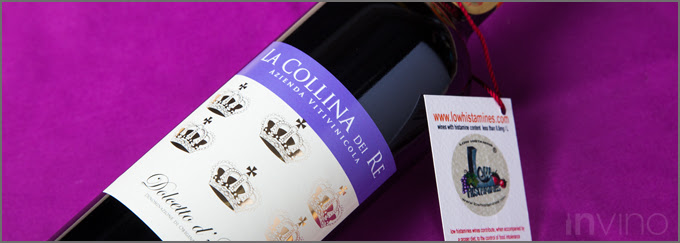
2016 Dolcetto d’Alba, La Collina, $10

Priced 60-67% below retail, they are perfect for picnic or BBQ fare….and whatever.

Great opportunity to see why Dolcetto is so popular in Piedmont.

The 2016 Montepulciano could also be a winner.

What are you waiting for?


First Great Memorial Weekend Wine Deal


The first of many we hope, is a super white wine and a total no-brainer:

2014 Acacia Winery Lake Chardonnay, Carneros  $9.96

Offered by www.garagistewine.com

Acacia’s Winery Lake Chardonnay has been a longtime favorite of those preferring real Chardonnay over the over-oak, manufactured style.  

The story here is that Treasury Wine Estates bought Acacia along with others in 2016. It sold the winery, and now operates Acacia as a brand.

I’m guessing the marketing guys assume this 2014 is getting old and they want to get rid of the inventory.

I’m also guessing they are totally wrong.

This Chardonnay was originally offered in the $30-$35 price range.

It is sad to see a once great name like Acacia heading off into the corporate world.

But, hey, why not take advantage of the corporate thinking and experience what made Acacia famous.

You cant beat the price.

Garagiste.com has been checked out and it is upfront and delivers. It was the first to offer Wind Gap wines at deep discounts.

Stunning Wine from An Unknown Region


Here’s one brilliant selection for the truly open-minded and adventurous wine lover, if there are any left.

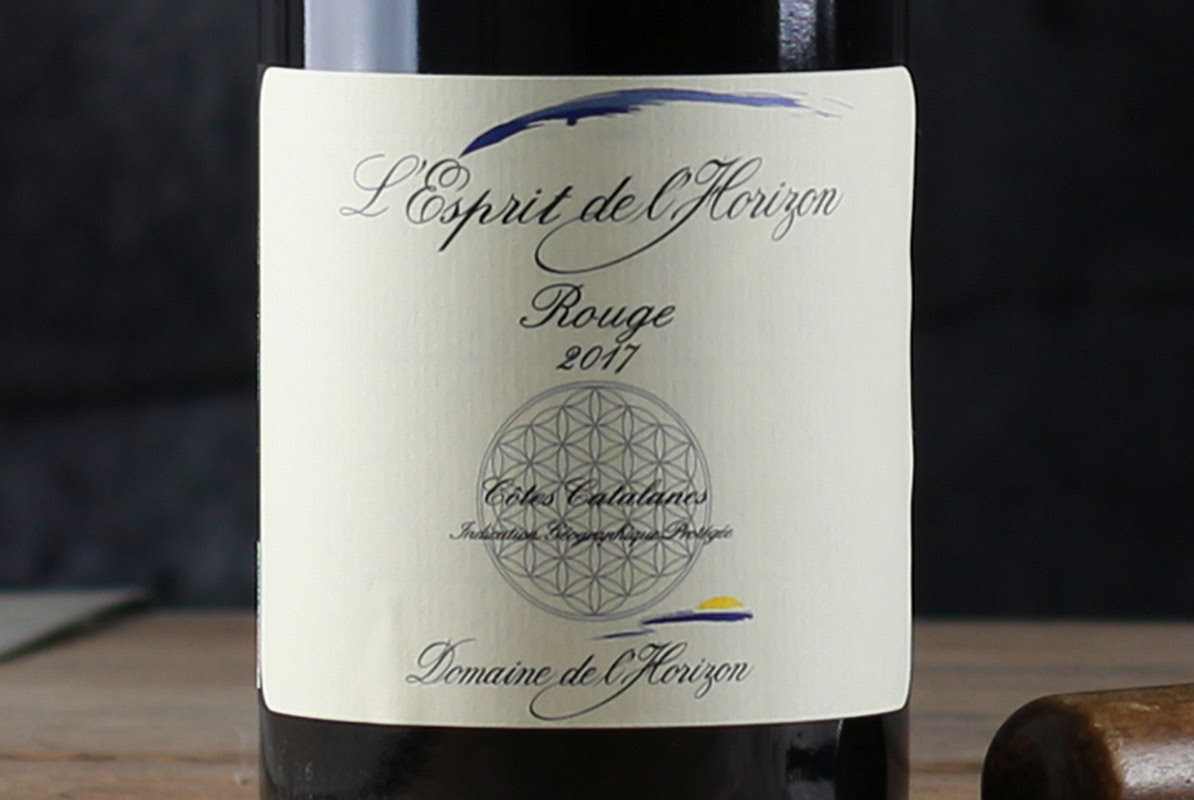
Sommselect.com is offering a super red wine from one of the world’s most under-appreciated wine region, Roussillon in the south of France. The vineyard is close to the Spanish border in a sub-region known as the Côtes Catalanes.

If you are man enough to try something new, here it is:

2017 Domaine de l’Horizon, “L’ESPRIT DE L’HORIZON”

$39 a bottle, free shipping for 4 or more. Limit 12 bottles per order.

By no coincidence, this wine is from Calce, a high elevation special mountainside vineyard area that neighbors the lone superstar, Domaine Gauby.

I visited Gauby several years ago and came away convinced the $100 bottles of wine were actually a deal. And I’m frugal!

And, for those of you who never thought much of the Carignan grape, you will be, as I was, astonished by the depth and complexity of wines made from old Carignan vines grown in this tiny region.

It is 60% Carignan and 40% Syrah which adds flesh and spice to this exciting 2017 red.

This is definitely NOT one of those over-ripe, fruit bombs that are all jam and usually given inflated 90+ scores by bogus Somms.

Best of all, this is a wine of place, one that demonstrates that terroir is a real concept.

And that is what wine is, or should be, all about.

Check it out at http://www.sommselect.com

Unbeatable Springtime Wine Deals

Direct from the winery: Navarro Vineyards

take advantage of three wines perfect for casual sipping this Spring:

2017 Chardonnay, Mendocino, $18 $216 case)

2017 Pinot Noir, Anderson Valley $18 ($216 case)

2018 Pinot Blanc, Mendocino $13.75 ($165 case)

Now the details:

Bottle Prices are for one case, 25% off regular bottle price

Shipping is one cent, yes, only one penny per case!

Why We Like This Deal:

  • Real wines from a real family winery
  • Great shipping price
  • Better than standard discounts
  • Experienced in packaging and shipping wines direct
  • Wines are not available in shops or supermarkets
  • Hard to find this quality of Pinot and Chardonnay for under $20
  • The Pinot Blanc at this price will make you forget about all watery-thin or over-priced Pinot Grigios and mass produced Chardonnays

Check these and other Spring deals at www. NavarroWine.com

Online Wine Shops: The Final Four

Final Four NCAA basketball, Spring Break, and Baseball is Back.

Add Easter weekend, Passover, and we have all kinds of reasons for special sales offers and deals.

We began the season by following 36 candidates, each claiming to have the best deals for members, exclusive offerings of super-duper values, rare wines and great vintages and, of course, the next cult wine.

But we are now down to the 4 teams that have been working the hardest to offer exceptional wines and/or exceptional deals.

www.invino.com

has played extremely well over the last two weeks.

It continues to find new ways to score, locating unusual wines such as the

Vaughn Duffy Pinot and Sauvignon Blanc.

Current exciting offers:

2013 d’Arenberg d’Arry’s Original

Grenache, Shiraz | Australia, $14.99

2017 Sancerre, Laporte, $27.00\

www.sommselect.com

Showing great depth with recent selections of a Hermitage, a Tollot-Beaut Savigny, and a Ribeiro Blanco from Galicia, a ballsy play. Also outstanding  Gigondas but the Bouzy Rouge was odd. Here are examples of an unusual find and a rare culty wine:

2017 Ribeiro Blanco, Galicia $22.00

2016 Coche-Dury’s Meursault “Les Chevalières, $75.00

www.napacabs.com

These folks have truly upped their game recently. A longshot a few months ago, this week it turned heads with several exciting wines. I liked the way it balanced big names and excellent discounts:

2015 Beaulieu Vineyard Private Reserve Cabernet, Napa Valley for $89.99 (regularly $149)

2010 La Colombina Brunello di Montalcino, $29.97

2013 Geyser Peak, Alexander Valley Reserve, $19.97 (60% off)

www.gargistewine.com

Made it into the final four for being so unpredictable but always managing to come up with a surprise play. An excellent Muscadet for under $10 or the 2016 Cos d’Estournel for under $200 may seem unlikely, but this site has them both. I am wildly impressed by the depth of the offerings from the Loire Valley.

Two versatile players:

2018 Bourgueil, Domaine Cotellergie, $16.76

2016 Scott Paul Pinot Noir, Chehelam Mts, $19.71

What about the pre-season favorites and especially www.vivino.com with its 35 millions fans?

That’s a story for another time. 

The Best Online Wine Shop?

So, I have to confess my picks for the Sweet 16 college teams did not fare well. Each one has, alas, gone home.

My game is online wine shopping, and here is my choice for one of the Final Four

http://www.garagistewine.com

garagistewine.com is the most peculiar online retailer I follow. One reason is that its founder Jon Rimmerman who has been offering wines for over 20 years often presents his daily offers late at night.  He is based in Washington State which may explain some things.

He sometimes seems a bit chatty and becomes so excited and enthusiastic that he might belabor a point about a particular wine or region.

He is also insistent about when he will ship your wines and specifies the required temperature and humidity for proper shipping.

But these minor quirks are greatly offset by the pluses.

  • He seeks out wines that are organic, biodynamic and farmed sustainably  
  • He favors small artisan producers and family owned wineries
  • He obtains many wines direct so truly cuts out the middleman
  • He doesn’t use inflated scores from Somms
  • His wines are attractively priced
  • And he is unpredictable, sometimes offering olive oil, nutella, or food items. All high quality.

I enjoy reading his detailed notes because he truly knows his stuff. His background insights about vintages and regions are extremely useful. He is particularly on top of the vintage variations in France’s Burgundy and the Rhone.

He provided a detailed report on 2016 and 2017 based on travels and tastings throughout France and it is spot on. His remarks about 2015 and 2016 Bordeaux are the most reliable in the wine trade.

His analysis of 2016 in Burgundy and of the 2017 Northern Rhone are some of the best I’ve read.

And to this fellow Loire Valley lover, he has the inside track on Loire Valley wines:

“2018 is one of those “pinch me, this can’t possibly be true?” red wine vintages in the Loire. I can’t really compare it to anything else – it has the ripeness of a vintage like 1989 but the freshness of 1996 (another classic year.”

He also looks closely for super wines from Washington, of course but also Oregon. A recent Washington Tempranillo was remarkable.

He often locates super wines under $15 a bottle.

Here are examples of recent offerings:

  • 2018 Bourgueil, Domaine Cotellergie, $16.76
  • 2016 Scott Paul Pinot Noir, Chehelam Mts, $19.71
  • 2014 Rioja Riserva, Burgo Viejo, $13.98
  • 2017 Sancerre, Dezat $19.99
  • 2016 Renvoise “Jasmieres,” dry Loire Valley Chenin Blanc $16.70
  • 2015 Domaine de Cambes, Bordeaux $33.71
  • 2016 Ribbonwood Sauvignon Blanc, Marlborough $7.99

He recently offered a lovely Provence Rose for sale at $9.99.

He found “the best Bordeaux you’ve never heard of” from 2011.

He comes across as frank, as in these recent notes:

“This is fastidiously produced Chardonnay without a smidge of pretense but the stuffing and expression to, well, pummel just about any other example from outside the Burgundian reach under $30. In addition, the impact is from fruit, stone and clarity, not from alcohol, wood or from winemaker strategic manipulation/enhancement.”

Or

“If you think “bargain” wine is devoid of potential pleasure or cannot be in the league of top-drawer entrants, guess again. This wine can easily compete with Sauvignon Blanc at 2-3 times the $ and many of its competitors are not as delicious to drink.”

Sometimes to keep prices low, he suggests buying 6 or 12 bottles or more which may seem like hype and hustle, but I think he is sincere and honest in his emphasis on offering value.

A maximum number of bottles a person may purchase is always listed, ranging from 6 to 60.

Pros:

Wildly eclectic selection not found elsewhere.

Excellent prices

Seeks out biodynamic and other green products.

Cons:

Complicated shipping procedures and delivery dates but only to assure wines arrive in fine condition.

Sommeliers: The Real Meaning of Curated

Revised: December 2024

The word “curated” pops up so often in the online wine retail sphere that whenever I encounter an offer or website that actually demonstrates creativity and skillful selection, I’m thrilled.

For you wordsmiths, the basic definition of the word “curator” goes back to a person who oversees a museum or a library. And before that, it frequently referred to those in charge of lunatics and asylums. Now that’s interesting.

“Curated” nowadays should indicate that a real professional or expert, if you will, actually used their expertise to seek out and select a special product such as a great painting or wine.

But in the online wine world, not all self-appointed curators,  sommeliers, or influencers are tried and true experts. Knowledge and experience are the keys to being an expert.

And lending your name or agreeng to let others use your brand when in fact you aren’t doing much curating is an interesting sidebar.

So In plain speak, some hard working people curate wines by getting off their butts and using  real, first hand experience as in tasting the wines against competitors to find real hidden gems.  

Discovering hidden gems. Now that’s how you become a wine curator.

http://www.sommselect.com is one of the best at it, and some of its wines can be totally off the radar and most are not discounted. It focuses more on imported wines.

Ian Brand whose label appears above is a real sommelier, winemaker and curator. But many of his wine selections are way out there in the world of rare, unique and esoteric curiosities. And relatively expensive. I applaud the fact that he focuses on family owned producers.

It seems the site picks wines that come with a narrative that appeals to those few folks who can afford the wines and who like wines others cant afford because of the status and bragging possibilities. Yes, that’s a definition of a wine snob.

Most sommeliers prefer to deal with imported wines to, among other things, show off their knowledge. And looking for the great bargain of the day is not how they approach wines.

For California wines, so many sites take the easy way out by hyping ordinary wines that won some medal somewhere. Or received a 90 point score or higher.

Listing wines that were rated in the 90s is not curating.  Today, a rating of 90 tells you very little, except the wine is okay. And the only thing that is more useless is for a sommelier to say this, for example, “this $50 wine tastes like a $100 bottle.” This is pure nonesense. Again, not part of curating.

One exception that is “curating” California wine in the good sense of the word is http://www.winespies.com. Many amazing selections that are available for one day only. The commentary is super hyped, but overall the selections are noteworthy.

Another one that has vastly improved its “curated” wine is http://www.wineaccess.com  It has an excellent team of sommeliers doing the searching.

However, for California and Northwest wines, there is one website that in many ways comes across as more like a personal wine shopper with an eye on value. It is reversewinesnob.com run by Jon Thorsen. I’ve watched his website steadily improve in its wines offered. There are three special deals a week, but the pace is a slow version of a flash sale. Most wines are offered in 3 or 4 bottle packs with a reasonable flat-rate shipping.

Before getting into specifics, here’s his basic pitch:

 “Reverse Wine Snob® where wine doesn’t have to be expensive to be good! We’ve been thumbing our nose at overpriced wine since 2011. Want to join us on this journey? Sign up for our 5 Day Free Guide where you’ll learn:

– How to not be intimidated by wine

– Why price has little to do with quality

– How to shop the big retailers”

“If syrupy, sugary sweet Moscato with an ice cube is your thing, go to town. Likewise if it is vintage Châteauneuf-du-Pape.”

What first sparked my interest were some Oregon wines that were my favorites. Over the last few years he has offered Amavi Cabernet from Walla Walla and an impressive list of Pinot Noirs from Ribbon Ridge, Stoller, Lange, King Estate, J. Christopher, and Sass. Topping the list from California are wines from Wrath, Handley Cellars, J. Lohr, Steele Wines, St. Francis, and Pedroncelli. Gard and Desert Wind are two of his “discoveries” from Washington. 

He works hard to find wines that can be offered below $25 a bottle, and he has a system now worked out to deal directly with many wineries. From our recent conversations, he stresses the fact that he prefers authentic wines, not just a label from a large corporation. He is well-aware of private labels since he reviews wines from Costco and Trader Joe’s on a regular basis. While unusual for a retailer to even acknowledge these major outlets, Thorsen has compiled lists of the best wines from each. 

Reversewinesnob is to be applauded for challenging the impulse most people have to equate price to quality. That’s at the core of snobbery. 

It takes a non-SOMM to counter snobbery. 

Naked Wines: A Case for Going Naked, Again

Nakedwines.com wants this one-time angel back, and is putting some heavenly pressure on me. The tempting bait hanging out over my ex-angel head is this: 12 bottles, shipped free for $79.99.

I have a week to decide.

Roman, the Head Angel who wants me back, describes the deal as a case of “Naked Favorites.”  The non-angel price for the case would be $239.99.

If you read my detailed review of nakedwines.com, you know my feelings are, at best, mixed. Medal winning wines are so common these days that promoting “Award Winning” wines doesn’t impress me. And the retail price for non-angels is practically meaningless because these wines are only available through nakedwines.

But this particular “naked favorites” case has me thinking.

One reason is that it offers wines from so many different, out of the ordinary regions, that even if the wines are ordinary, the experience could still be salvaged as educational.

To explain, here are the wines in the case that intrigue me:

Zinfandel from Calaveras. Yes, this is one of the historic regions in the old Gold Mining District. Its reputation today, like that of neighboring Amador County, is solid for Zinfandel.

Petite Sirah from Clarksburg. This wine is the pride of the Delta Region. Lots of old vine Petite Sirah is grown here.The best and widely available is Bogle Vineyards, selling under $10.

Cabernet Sauvignon, Paso Robles. Sure, we all want to explore alternatives to high priced Napa Cabernets. And it is hard to screw up a Paso Cab. So, maybe this could be the one. But is it better than J. Lohr’s Seven Oaks Cab which sells between $10-$14?

Pinot Noir, France. From the southern region, not burgundy. But nevertheless, could be a pleasant surprise. And the winemaker is well-respected. But warm climate Pinot?

Pinot Gris, Hawkes Bay. Another curveball thrown my way. I visited Hawkes Bay during a trip to New Zealand and was wowed by the Sauvignon Blancs and Syrahs. So, hey, this Pinot Gris might also rise above the crowd.

Sauvignon Blanc, South Africa. Another wine well worth exploring. We all know South African Chenin Blancs have lovely, complex flavors.  

Portugal Red Blend. This one is from outside Lisbon, not from the better known Douro Region. Again, a surprise selection, Piqued my vinous curiosity.

Malbec from Argentina. Not, however,  from the Mendoza region, this one is from the cooler Uco Valley which grows my two favorite, and high-end  Malbecs: Zuccardi Q and the Salentein Reserve.

To sum up: this case of favorites is actually more like grape expectations, full of “could be” and “might be fine” wine.

Many winemakers from around the world participate in nakedwines. But the only one familiar to me is Scott Peterson, the person behind the California Cabernet.

I’m conflicted.

And the clock is ticking…

Stay tuned for my answer next week.

Alerting all Pinot Noir Fans: A Truly Great Discovery


Now offered by a website that usually over-hypes, and over rates every wine. But it got this one right!

2017 Eden Rift Pinot Noir, Valiant is on sale for $22.99

The revamped Eden Rift winery is the old Pietra Santa Winery in the Gavilan Range of San Benito County. That’s not too far from Calera.

I credit SF Gate’s Esther Mobley for discovering this winery and writing about the new developments in San Benito several months ago. She is a brilliant wine writer worth following.

The website offering this wine is http://www.vivino.com which typically mentions Robert Parker and then describes the wine in stange language such as: “A World Premiere — Profound Wild Berries and Violets! Legitimately Spectacular!”

And adds, “This Pinot Noir will put you back in your seat. The tension and vibrance is memorable…”

Impressed by the “profound wild berries,” its sommelier on duty rates it 98 points. Lucky guy, he apparently never tastes a wine rated below 95 points.

My Rating: 94 points

My bad: As much as I enjoy berries, can’t remember any as profound.

Sensible facts:

The winery is owned by Christian Pillsbury.

Cory Walker is the winemaker who was assistant winemaker at Calera.

The Eden Rift name draws from Steinbeck’s East of Eden and the fact that the area sits on the San Andreas Fault.

$22.99 is an excellent price, 40% below retail.

See www.vivino.com