Exploring the Past, Present and Future of Turkish Wines

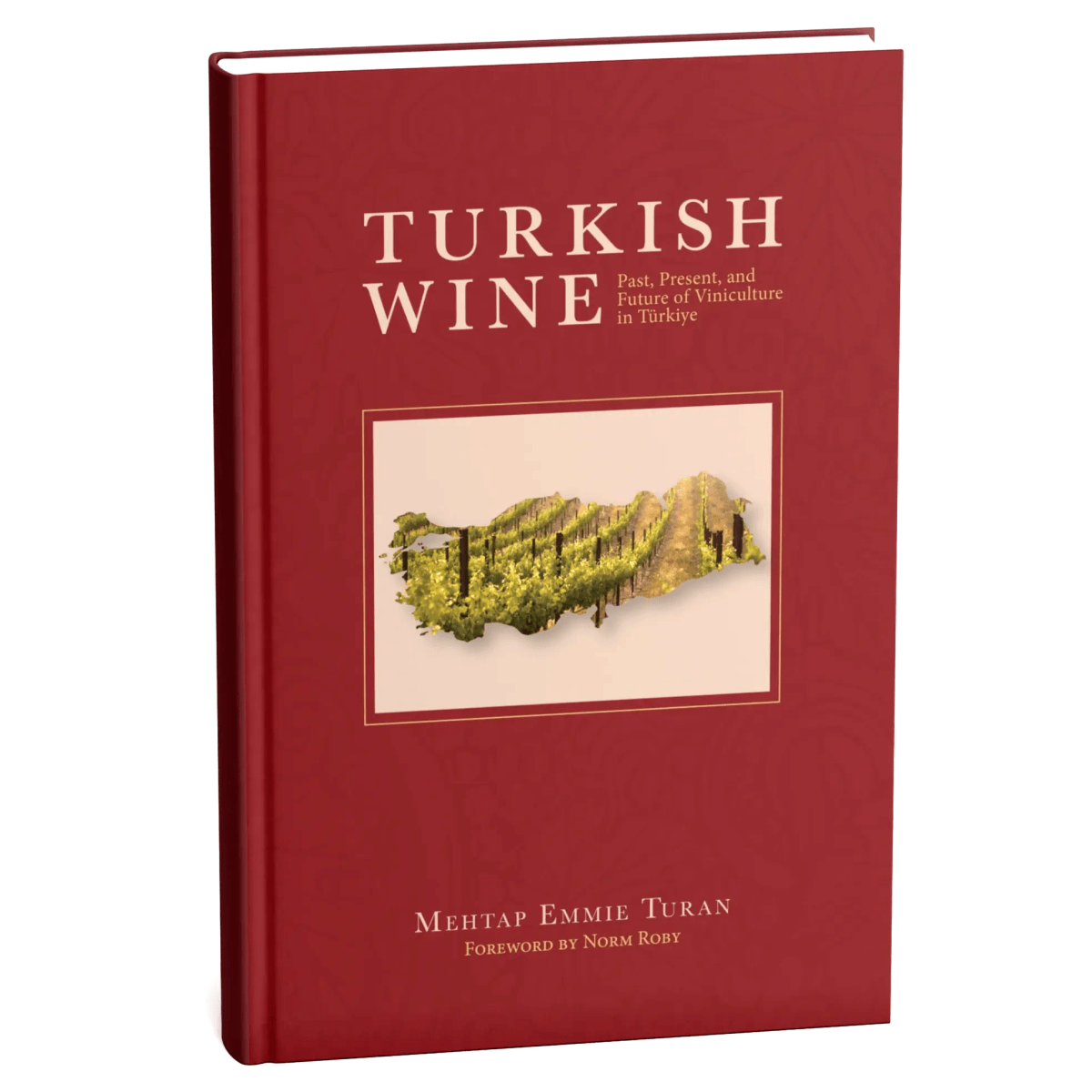
Wine lovers with an unquenchable thirst for wine knowledge should check out a new book. It is all about the past, present and future of Turkish wines. If you are a serious student of wine, this book will fill a big gap in your wine odyssey.

As Emmie, the author explains: “The exciting ride Turkish vignerons embarked on in the 1990s is continuing with passion.” And as we also learn in Turkish Wines: “The story of Turkish wine is still unfolding, and chapters are yet to be written.” 

Several years ago, as I stood with glass in hand, a small group of visitors to the historic Guglielmo Winery in Morgan Hill were listening attentively to the origins and history of the Grignolino grape variety.  Not only was the information conveyed with ease, and the tone struck was natural, not intimidating, and it was obvious the person behind the tasting room bar loved wine. 

That was my first encounter with Emmie. While we talked later about Petite Sirah and other wines, I soon learned that Mehtap Emmie Turan was born and raised in Turkey.  

Answering questions from winery visitors is not easy but it was the first step in her personal wine odyssey. After enrolling in numerous wine classes focusing on the wines of the world, and also traveling extensively throughout the wine world, she returned to her homeland to further her education. 

Despite a history of winemaking going back 8,000 years, Turkey has been overlooked or cast aside by today’s wine journalist. Combining her passion for wine with her pride of country, Emmie set about to correct that.

Focused on “The Past, Present and Future, “ this book opens with a deep dive into the ancient history of grape growing and winemaking, guides you through the ups and downs of Turkish wines, especially over the last century, and leads you up to the still unfolding story of its wines today. But it is not only wine focused. No, this book is loaded with personal experiences, candid observations, and often returns to shine the spotlight on people, places, politics and religion. 

With each major section, Emmie adopts the tone that best conveys the subject at hand. Only a scholarly tone can succeed in presenting the various possibilities of the birthplace of wine. When talking about the interaction between politics and religion that takes you up to and through the Ottoman Empire, well, that needs the neutral voice of a historian. There’s no sugar-coating when she addresses the past and present roadblocks, whether they be from politics, economics, or religion. For Turkish wine, it has been indeed a “tough row to hoe.”

Moving on to the resurgence of wine from the 1980s to the present, Emmie comfortably switches to the voice of the knowledgeable wine educator and wine lover. Sometimes she simply asks a question such as should Turkey’s major regions carve out AOCs like the French. Her breakdown of the different wine regions along with the profiles of the grape varieties, indigenous as well as international, will likely be part of a standard wine curriculum in the not too distant future.

Exploring Turkey’s primary wine regions is the heart of the book. As Emmie verbally escorts readers from one region to another, each section is full of first hand information about the wineries, the varieties grown there, and her personal travel notes to maximize a visit along each region’s wine routes. This part of the book comes across as your personal guide, recalling that naturally comfortable voice I overheard back at the tasting room in Morgan Hill. 

I read her book in bits and pieces because there is so much to digest and so much to think about after each section. She opens topics up for discussion in her comments about charting a course, global opportunities, wine tourism, and niche marketing. Even her asides are thought provoking. Make sure to read her views on women in the wine business. 

Finally, the beautiful photographs throughout this book leave no doubt that Turkey’s fascinating history, current wines and timeless beauty should be better known to all wine lovers.  

And yes, I learned a lot from this book and was honored, when my friend Emmie asked me to write the Foreword.

Available at Amazon, but also direct from Mission View Press. Price is $36.99 with free shipping.

contact the author at missionviewpress@gmail.com

Payment by PayPal missionviewpress@gmail.com, Zelle missionviewpress

Cool Wines for Warm Days

Wine enjoyment changes with the seasons, always has, always will. At least for normal, non-snobby people, who know better than to pop open a red Bordeaux, expensive burgundy or oak-driven Chardonnay when the temperature is over 90F. Sorry, but put aside your bottles of Petrus, The Prisoner or Rombauer Chardonnay for another day, thanks.

When the first heat spell arrived in mid-June, my mind, set on auto-pilot, immediately thought of a good dry rose. Provence and Tavel are associated with French Rose wines, and many West Coast producers have raised  the bar high with Roses of Pinot Noir. 

But if you like a little more flavor in a Rose that is also chillable and can carry over to be paired with your favorite summer dish, Grenache Rose is my fav choice for 2025. Here are a few examples of nicely-flavored, smooth as silk, and fun to enjoy this summer.

Peter William Vineyard Rogue Valley (Oregon) Grenache Rose 2024 $24

As Roses increase in popularity the trend is toward drier and more substantial flavor, but you never know until you taste the wine. Here’s a Rose that takes dry Rose to another quality level.  The appealing color is more coral than pink, and the aroma offers lovely fresh strawberries with a hint of spice. On the palate, this wine sets itself apart from the pack with its rich, round body and ultra-smooth texture. The finish is long with berry-ish flavors and just enough acidity to balance things off and makes you start thinking of food to enjoy it with. 92

Terre Rouge Vin Gris D’Amador Sierra Foothills (California) 2022 $32

The “Vin Gris” name along with the striking salmon-coral color suggest this is a Rose out of the ordinary. The juice was fermented in French barrels normally used for white wines. Made from 52% Grenache and 42% Mourvedre, it is quite rich but also vibrant from start to finish. Strawberry, fresh cut flowers, and a hint of orange rind aromas reward swirling, and the wine is round on the palate with lots of juicy watermelon and yellow peach flavors. Good balancing acidity keeps it fresh, suggesting you can enjoy this all summer long by the glass or with seafood all year round.  94

Verdad Wines Grenache Rose San Luis Obispo, Reeves Vineyard  2023 $20

This beauty is made from the organically farmed Reeves Vineyard in Edna Valley. It comes across as a lively, lovely rosé  with aromas and flavors of crushed raspberries and  citrus. On the palate it is ultra-smooth with persistent flavors that have you thinking of enjoying it with  summer salads and grilled chicken. 92

Mathilde Chapoutier, Côtes de Provence 2023 $12

 Mathilde wines are imported by Michael Mondavi Family.  This 2023 release brings together Grenache and Syrah with a drop or two of Cinsault and Rolle.  After being night harvested and cold fermented, the wine is aged in stainless for 5 months.  Pale pink, it offers a pleasing, delicate aroma of watermelon with a floral note.  Light and vibrant on the palate, it pleases with its direct, gentle flavors. I’ve seen it priced below $8 at many Grocery Outlet Stores.      

Domaine de Triennes, Mediterranée IGT (Provence, France) Rosé 2024 ($18)

This Rosé, a blend of Cinsault, Syrah, Grenache, and Merlot, is everything you would expect from Provence and more. Light salmon in color, with an aroma of fresh strawberries and watermelon, it is lively and refreshing on the plate with lush berry flavors. Not a lightweight, but simply a delicious Rosé with enough richness to enjoy with lunch or by the pool.

Long Walk Vineyard, Rogue Valley (Oregon) 2022 $23

 With Rosé wines being so trendy and Rosés now being made from just about every red grape available, it was refreshing to encounter a Rosé from a red grape that’s ideally suited for a Rosé:  Cinsault.  Popular in Southern France, Cinsault is light in color and low in tannin and remains the backbone for many Provence Rosés.  From vines planted in 2002, this is an attractive pink-copper color and offers an aromatic mix of just-picked strawberries, rose petals and summer flowers. Medium-bodied and vibrant, it is balanced and has just enough acidity to bring it to a delicate finish. 92

Julia’s Dazzle, Columbia Valley (Washington) Pinot Gris Rosé 2023 $20

 This Rosé is full of surprises starting with the fact that it is made from Pinot Gris. Then you look at its unusual onion skin color and move on to its pretty aroma of berries with a rose petal note.  In the mouth, it is soft with refined and lively berry flavors. Creamy in texture, it has just enough acidity to make you beg for a second glass. 92

But if you are among those who prefer red wines, there are plenty of choices out there to enjoy over the long summertime. Even the barbecue crowd can still confidently open a red wine, so you don’t need to change your diet, just change where you look.

Changing your attitude is also important, so you have to first think about red wines that can be chilled. Yes, it is okay to chill a red. You can also add an icecube which may shock some people, but remember, if you paid for the wine, you can do anything you want to do with it. 

It’s best to avoid wines that are high in tannins, or oak as well as those high in alcohol. The reason is that chilling will tone down or mute the fruitiness of a red, leaving a dull aroma and dried out tannic flavor.  

G.D. Vajra, Langhe Nebbiolo DOC (Piedmont, Italy) 2023 $25

Anyone looking for red wines to enjoy over the summer should seriously consider Nebbiolo. Vajra, a pioneer of sustainable and organic farming in Piedmont, offers an excellent example of a Nebbiolo that can be slightly chilled and still be a perfect complement to summertime fare. Light garnet in color with an aroma of berries, fresh roses, and a light note of tar, this wine is refreshing and nicely balanced. The flavors are a juicy mix of cherry, raspberry, and a touch of spice, complemented by light  tannins and good  acidity. Fun to drink and versatile.

91

Delfino Farms Edio Estate Grown Grenache, El Dorado 2023 $42

Grenache is typically rich in flavors and low in tannins, so smooth it often is. El Dorado is home to many wineries making excellent Grenache. Delfino is one of my favs. In 2023, the wine was 100% Grenache, whereas previous vintages were blended with Syrah. Aged for 10 months in neutral French oak and bottled unfined and unfiltered, this is an excellent example of pure, vibrant, mountain grown Grenache. The color is a lively red, and the aroma is all about cranberry and cherry with light spice accents. Medium-bodied, sleek and structured, it has fresh flavors of cherry and plum, with a slight tannic edge in the finish. The acidity lengthens the finish and leaves you thinking of serving it with light cheese or summer fare. 92

Troon Vineyard Druid’s Red, Applegate Valley 2023 $22

Troon is all about biodynamic and sustainability and delicious wines like this red. 

Druid’s Red  is a fun, all-purpose red wine. Made from 30% Syrah, 27% Grenache, 20% Cinsault, 19% Mourvèdre, and 4% Carignane, it offers fresh plum and raspberry aromas backed up by hints of dried herbs. Gentle and smooth on the palate with ultra soft tannins, it continues the lively plum and berry theme with subtle accents of earth and tobacco for added interest. The winery suggests it be served chilled, and it is a great pizza and picnic red to enjoy all summer.

Starfield Cinsault El Dorado $32

 Starfield and several neighbors in El Dorado are giving Cinsault, a popular grape for rose wines, a fresh look on its own.  From its 31 acre vineyard, Starfield produces several Rhône-style wines as well as others in its “Mountain Mediterraneans” program. In its 2019 Cinsault, freshly picked strawberry and cranberry juice dominate the expansive aromas in this medium light-bodied red.  Without any noticeable tannin, it really turns on the charm as its lively flavors expand across the midpalate with fresh berry and spice and red fruit that all persist well into the aftertaste.  More than a summer sipper, this is a versatile food companion.  And delicious.      

La Quercia Montepulciano d’Abruzzo DOC( Italy)  Riserva 2020 $22

From a vineyard organically farmed since the late ‘60s, winemaker Antonio Lamona aged this wine for a year in Slavonian oak. It has a deep, dark color and then you encounter an aroma that is absolutely enchanting. It opens with plums and blackberries along with anise and a light floral fragrance. Juicy and packed with flavors that are vibrant and youthful, it has light tannins that give it some bite in the finish. The flavors continue the emphasis on plum, cherry and earthiness with a fleshy mouthfeel. The slightly tannic finish makes this a great choice for the BBQ crowd.  This is a lot of wine for the price! 92

So there you are! Bring it on summer!!

A Year in the Vineyard

A Year in the Vineyard

Sophie Menin and Bob Chaplin

Published by Cultureshock, 2024

Foreword by Hugh Johnson

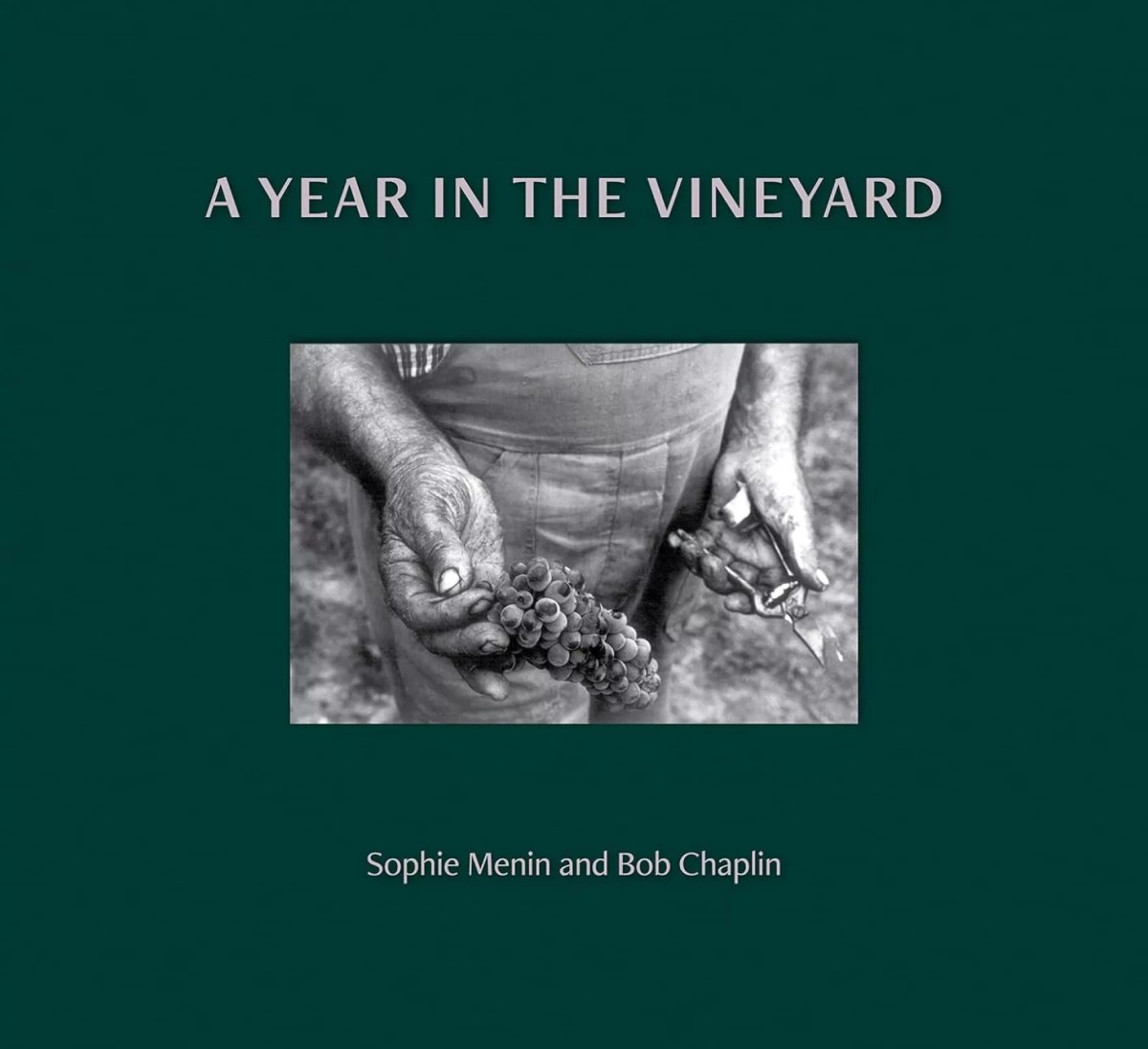
This book is all about the cycle of the vine. It is divided into five sections:  dormancy, budburst, 100 hundred summer nights, harvest, and preparing for rest. Through its magnificent photos and insightful commentary, it also “documents the ongoing evolution of viticulture.” 

Sophie Menin notes in the Introduction that the book is not trying to catalogue every vineyard activity or feature every wine region in the world, but instead, she explains: ”we capture gestures, steps in a dance with the natural world” as winegrowers, vignerons “search for practical solutions to changing conditions.”

When the book arrived, my first thought was “wow, this is one heavy book.” But to be fair, I then went carefully through it, stopping at each photo, reading the sidebars, and when finished, the word “heavy” came back to mind. “Heavy” as the hippies used it back in the day meant powerful and significant, something that really grabs your attention. Nowadays with the TikTok crowd, this book would be  “heavy on meaning.” So let’s just go with thought-provoking. 

A Year in the Vineyard should be made available to every student in every wine class today. Whether referenced in an introduction to wine, or a certified wine course, this book will help put everything back into perspective. It captures the reason why we enjoy, study, and share wine.  Unlike hearing someone lecture about the importance of pruning and crop size in the Spring or the burning of cuttings in Europe after the harvest, you can see for yourself and practically experience them through these superb photos.

My favorite scene, the one that gets you thinking, is on p 80-81. In it, there’s a woman in the vineyards, likely a worker, but maybe the owner, she’s surrounded by vines with full clusters but is looking up at the dark ominous clouds heading her way. We’ll never know if it rained, hailed, or passed over. 

Another one depicts 10 workers bending over in the vineyards of Champagne Roederer as they prune and thin the shoots which will have an impact on the harvest months later.

Cultivating vines, as this book shows, also involves many aspects of nature. Butterflies are important, so are horses in ploughing some vineyards, and then roses are often grown to warn growers of possible diseases. And, yes, bats can be employed to discourage hunting moths from ruining the clusters. In some regions birds have to be discouraged by netting. Then there are some healthy, helpful pigs working the vineyards of Bairrada, Portugal.

 What makes this book so compelling is that the photos come from different sources, so there’s  different perspectives along the way. A number are from Bob Chaplin and Sophie, a few from Jon Wyand, and others from independent photographers as well as from wine producers. 

And the vineyard scenes are also eclectic, ranging all over the wine map. No favorites or pay back here! 

This book will answer lots of questions.

The book is of course available from Amazon. 

Better yet, signed copies are available at: 

Discover the Hidden Gems of Fort Ross Vineyard

People living on the edge, the bet it all risk takers, and even those simply taking the less traveled road are exceptions in today’s wine world. Because they don’t follow conventional wisdom or marketing trends, these outliers can be exciting to follow. And when they succeed, they can come up with brilliant wines. But by going against the grain they risk going unnoticed, flying way under the radar of wine writers, somms, and influencers. 

Well, this writer was lucky to have been directed to one of those wineries by a good friend, and after tasting through the wines, I’m going to blow through the cloud cover and shine the spotlight on a great discovery: Fort Ross Vineyard.

In 1988, when phylloxera was beginning to take its toll in the North Coast wine regions, Lester and Linda Schwartz purchased a large slice of rugged land on a steep coastal ridge above the Pacific Ocean near the historic Russian settlement of Fort Ross. In 1994 they established Fort Ross Vineyard and made their first wine in 2000.

First, the Vineyard Story

 South African natives who had immigrated to the San Francisco Bay Area in the 1970s, they appreciated  fine wine and food and were convinced the site was suitable for growing wine grapes. Located 5 miles north of Jenner, their land is literally along the Coast of Sonoma. As an AVA, the “Sonoma Coast” extends inland and includes parts of Carneros, Russian River Valley  and the so-called Petaluma Gap. The land they were considering turning into a vineyard, however, would be the closest in California to the Pacific Ocean.

So, to review, 1988 was not the best of times for venturing into winemaking and the site sitting above and less than a mile in from the Ocean had not yet been explored.  There were many risks but the elevations of these potential vineyards range dramatically from 1,200 to 1,700 feet, or just above the coastal fog.

In 1991 Lester ordered two dozen dormant rootstocks, and when the initial plantings proved successful, the couple expanded their experiment, planting a test vineyard with 16 varieties, three trellis systems, assorted clones and several rootstocks. 

When all of the extensive trials were evaluated, they developed a vineyard  which now consists of four varieties: Chardonnay, Pinot Noir, Chenin Blanc and Pinotage.  No surprise with the first two; Sonoma Coast Chardonnay and Pinot Noir were made famous by the likes of Marcassin, Flowers, Hirsch, and Peter Michael  But their vineyards are hidden away inland, not along the riskier coast.  

And although both Chenin Blanc and Pinotage are popular in South Africa, no one else, except  native South Africans, would even think about planting them in California. Chenin Blanc had fallen out of favor by 1991 and there was nowhere you could obtain Pinotage vines. 

Not a problem for them. They sourced Pinotage budwood from two of the finest sites in South Africa, and became the first independent growers to import grapevine cuttings from there through the Foundation Plant Services that operates alongside the U.C. Davis School of Viticulture and Enology. 

Then when they laid out their vineyard, they didn’t take the easy way of uniformity. Instead, the Fort Ross Seaview Vineyard comprises 32 vineyard blocks over 53 planted acres, with each block varying in size from approximately one-half to two acres each.  Having 32 blocks is not the easy way to plant, to tend, and to harvest for sure. 

But each block is based upon a carefully selected clone and rootstock for the variety. The vineyard is planted with heritage clones and field selections, which generally produce low yields with small bunches and berries that deliver very distinct wines.  

  • Pinot Noir – Calera, Pommard, Swan, Dijon clones 115 and 777
  • Chardonnay – Old Hyde, Wente, 
  • Pinotage – Proprietary clones MM1, MM3 from South African budwood

Now for the Wines

Fort Ross Vineyard Seaview Sonoma Coast Pinotage 2019 $62

If you’re unfamiliar with Pinotage, here’s a great place to start. Created by crossing Pinot Noir with Cinsault, Pinotage led the way to the revival of winemaking in South Africa. At the time, Cinsault was associated with Hermitage which explains the “tage” in the name. This rendition from Fort Ross is a stunning example.  

After the fruit was hand harvested in early October of 2019, winemaker Jeff Pisoni aged the wine for 12 months in 20% new French oak and bottled it unfined and unfiltered. In the glass this wine is quite dark in color with an intriguing aroma that leans slightly toward the earthy Rhone side with berry fruit, green tea and cassis. On the palate it is vibrant and energized with black plum, spice and tea leaf flavors that are supported by velvety tannins. Finishes with good length, suggesting this would reward lengthy cellaring. Not to sound corny, but it does capture the earthiness of a Rhone and the velvety smooth texture of a Pinot. Who knew?  360 cases made 94

Fort Ross Vineyard  Fort Ross-Seaview Sonoma Coast, Chenin Blanc 2023 $44

Popular decades ago and made in a slightly sweet style, Chenin Blanc rarely gets anyone’s attention these days and few people know that it can yield an excellent dry wine.  Cool climate Chenin Blanc is rare in California with most acreage now in warm sites. In its third vintage of estate grown Chenin Blanc, Fort Ross came up with an extraordinary rendition. It  brings together concentration, energy, complexity in a seamless package. 

In the glass it is light yellow with a healthy green tint and the Initial assertive aroma asserts itself in a combination of lemon meringue and fresh pear. With airing, the aroma takes on some ginger spice and melon. On the palate it is medium bodied with concentrated flavors of lemon and stone fruits. From start to finish it is solidly structured and remains lively on the palate. With its crisp acidity, the flavors continue to a crisp finish with background notes of honeysuckle and bosc pear fruit. Unquestionably one of the finest Chenins in my experience, the wine was made by Jeff Pisoni who aged 80% of the wine in neutral French oak for seven months and bottled it unfiltered. 100 cases made. 95

And Now Bring On the Clones

Fort Ross Vineyard Stagecoach Road Fort Ross-Seaview Sonoma Coast Pinot Noir 2022 $80

This pitch perfect Pinot is from two clones (Calera and Pommard) planted on steep hillsides overlooking the Pacific Ocean. Early spring rains during flowering reduced the crop in 2022 and at the harvest the berries were unusually small. That comes across once the wine is poured and the color is a deep garnet. Initial scents of cranberry and plum with anise are a bit reticent, but with airing and swirling, black cherry, tea and toasty oak scents emerge. 

Smooth and silky on the palate, it offers concentrated flavors of cherry and earthy, forest floor that are bright and charming with very light tannins. Youthful and balanced, it was showing even greater harmony a day later, indicating a long future lies ahead. But can be enjoyed whenever the mood hits.  230 cases.  94

Fort Ross Vineyard The Terraces Fort Ross-Seaview Sonoma Coast Pinot Noir 2022 $80

Pinot lovers should make room in their cellars for this one. From a low yielding vintage, this Pinot was made from a vineyard block planted entirely to the Calera clone, and the wine was aged for 11 months in French oak, 40% new. Known for its small berries, high acidity and solid frame, the Calera clone is often a key component in multi-clone Pinots. 

Once poured, this ‘22  gets your attention with its lovely ripe plum and raspberry aroma, and the palate impression also makes it stand out with its bright cherry flavors along with definite oak spice and youthful acidity. Concentrated with some tannic grip, this one is for the cellar and, with aging, it should be outstanding. 250 cases made 94-95

For the Final Touch: Chardonnay

Not surprisingly, the Fort Ross Chardonnay is not your Rombauer’s  buttery, oaky, commercial stuff.  To begin with, the  clones planted are the Went and Hyde  field selections, seldom seen these days. Grown in the coastal, breezy climate, the vines in 2022 yielded a small crop.

But once poured, the ‘22 Chardonnay announces its individuality with its unusual yellow color. Then the aroma is fresh and vibrant with lovely apple, and lemon as it expands.

On the palate the apple and stone fruit flavors are concentrated and sustained right through a long finish. It also is one of the very few Chardonnays that will reward cellaring which became apparent when it showed great complexity 24 hours after being opened.

So there you have it. 

Go to http://www.fortrossvineyard.com to get on their mailing list. 

You can purchase new releases at a 10% discount and don’t have to be club members.

Also, they now have a line of wines called Sea Slopes to supply top restaurants and wine shops in select markets around the country.

Sea Slopes wines are made by the same winemaker using the estate vineyards.

Tasting Well-Aged Cult Wines 


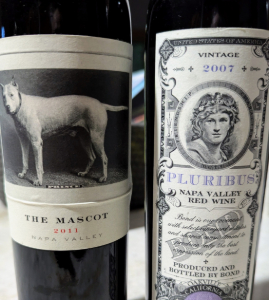
As 2024 was coming to an end, I had an opportunity to taste two aged Napa Valley cult wines.  They were the Bond 2007 Pluribus and the 2011 The Mascot. Both belong to the father of cult wines, Bill Harlan of Harlan Estate. 

Just to make sure I got a good fix on the aging trajectory of these two, the bottles before me were half bottles, 375ml. There’s no argument that wine ages faster in half-bottles, we just don’t know how much faster. Both bottles before me had excellent levels of fill, and the corks were in excellent condition. There was some sediment on both corks. Those signs usually indicate the wines were properly cellared.

Parker’s Wine Advocate rated the 07 Pluribus 98+ and the Spectator gave it a 97.  From Parker’s notes, it was  “A wine of great intensity and full-bodied power yet with a freshness and delineation that are remarkable, this stunning wine should drink well for 25-30 years. Drink: 2010-2040.” 

The Wine Spectator reported: “Wonderful aromatics lead to a rich, layered mix of spicy currant, blackberry, wild berry and currant flavors that are full-bodied, intense, dense and concentrated, slow to reveal pleasing earth, black licorice, graphite and roasted herb. The tannins give the flavors great traction. To be released spring 2011. Best from 2012 through 2024. 566 cases made. “ 

Yes, both publications were reviewing the wine several months before it was released to the public.  That both these guys were given special treatment might explain the use of words like “stunning” and “wonderful” as some sort of indirect payback for advanced review samples. 

To return to the wines, here are my notes for the 07 Pluribus:

Good dark color.  With aeration, the nose was vague and with diligent swirling showed dried prune, a hint of tobacco, and walnut. Overall, it smelled like old wine. The body was smooth and the flavors were gentle. But the wine was going gently into that good night for sure. 

It would not surprise me to hear the Pluribus is now over the hill in a standard bottle. The value given it by wine-searcher is $525. Then again, people who pay that kind of money for a bottle are not likely to ever say they were disappointed if only to protect their ego and reputation.  As for some background, the Bond Pluribus which debuted in 2003  is from a  mountainous 7-acre site in the Spring Mountain District with steep exposures to the north, east and southeast. It comes with a high price and wine pedigree and was sold only to members  on a mailing list.

Among Harlan’s other wine projects is  “The Mascot” which was the brainstorm of his son, Will.  This wine was a Cabernet made from a selection of younger vines from the primary estate vineyards, and The Mascot made its debut in 2008. As I understand it, The Mascot was made from a selection of new vines created by the routine replanting procedure. The concept is similar to the way many of Bordeaux’s famous estates produce wine from young vines and they are known as “second label” wines. 

In 2018, Decanter Magazine reviewed the 2011 The Mascot and the description is interesting. I was intrigued by the last line: “2011 was a relatively cool year, which gives the wine its freshness. The nose is vibrant and seductive, with blackcurrant aromas. Sumptuous and concentrated on the palate, it’s also sustained by firm tannins and sufficient acidity. The finish is robust and long, and although intended to be drunk on release, it will certainly age.”

So seven years after the vintage and after being bottle aged for five years,  The 2011 Mascot seemed to have surprised the Brits, even though they awarded it only 92 points, as capable of further cellaring. The current vintage is priced from $125 a bottle on up, and according to wine-searcher, you can buy the 2011 for the same price at several retailers in the UK.

Of the two wines I tasted, The Mascot was more attractive and in much better condition. Even in a half-bottle, it opened up with airing and displayed a delicate aroma or bouquet of dark fruit and dried herbs. It was soft and harmonious on the palate and had just a touch of velvety tannin left that carried through in the aftertaste. It is 4 years younger and tasted younger. But on its own, it may have been more exciting to taste in 2018. 

The Takeaways

Tasting old wines is an experience that should never be passed up, but often it is not a pleasurable experience. 

Not all wines get better with age is an old saying but even those capable of aging dont always reward long term cellaring. 

With aged wine, it often turned out that each individual bottle ages differently. This I’ve learned over the years: two bottles from the same case in the same cellar  can and often do, taste different. Wine is full of surprises, both pleasant and disappointing.

As for wine reviewers suggesting a wine’s aging capability is a sign of greatness, it is at best a guess. People like Parker and many Somms today pump themselves up believing they have a special gift.  

Maybe they should heed Mark Twain’s view: “It is difficult to make predictions, especially about the future.”

Do you know the way to Vezelay?

Do you know the way to Vezelay? Well, it leads to a great wine discovery in France and I, pumped up like a new WSET level 4 “expert,” was about to invite you to come along in the journey, only to be brought back to reality. As I learned from a little research. My discovery road trip was 40 years too late.  I found that out when I opened a favorite book from my wine library.

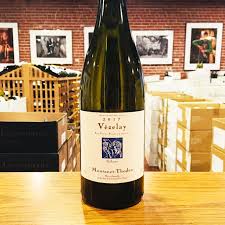
In 1988 in his Adventures of the Wine Route Kermit Lynch described Vezelay as a then “freshly minted AOC capable of producing distinct, world-class Chardonnay.” Just to rub it in a little further, my discovery was a 2022 wine made by Domaine Montanet-Thoden. Kermit’s reference was to Vezelay wine  “especially in the hands of a vigneron as talented as Valentin Montanet.” Same family of winemakers, just different generations.

Well, better late than never, or whatever cliche AI might use. Another point brought home to me when browsing through the Kermit Lynch book is how mechanical, predictable and boring a lot of wine reviews have become these days.  Here’s how Lynch described the Vezelay Chardonnay: “This climate, a clay-and-limestone soil, and stainless-steel vinification are the pillars of Valentin’s Galerne Blanc, a divine rendition of pure, chiseled Chardonnay, bearing notes of orchard fruit, citrus, and oyster shells.” 

a divine rendition of pure, chiseled Chardonnay.

Yep, he described the wine as “a divine rendition of pure, chiseled Chardonnay.” If this has caught your attention, you should try to get hold of the latest edition of  Adventures of the Wine Route which is available from Amazon. 

The writing style is so different from today’s wine ramblings.  It was not only written in a different era in which Lynch was not shackled by the 100 point rating system but it is also written from the point of a view of a wine retailer, a wine merchant. A self-taught wine merchant who approaches visiting wine regions as an “adventure” no less. Not a SOMM, not a WSET holder, not an influencer.

Returning  to Vezelay

And now back to Vezelay and what I learned. It is located south of Chablis and its winemaking goes back for centuries. The medieval village was an important resting place in pilgrimages. And of course, good pilgrims likely enjoyed the local wine. But the vineyards were pretty much wiped out by phylloxera, and it was not until the late 1970s that replanting was underway. 

By 1985, the vineyards were still growing and they were merged into the Burgundy AOC. A few years later they were upgraded to the regional AOC of “Bourgogne-Vezelay.”

Montanet-Thoden, the producer that I “discovered,”  was founded in 2000 by Catherine Montanet of Domaine de La Cadette in collaboration with Tom Thoden. Around that time they planted 6 hectares of Chardonnay and farmed them organically in Vezelay. Largely due to their efforts, Vezelay was granted AOC status in 2017. 

The soils are said to have more clay than Chablis, but they still have a good amount of limestone for their minerality.  Most of the Vezelay vineyards are planted along the higher elevations of the region. Montanet-Thoden Bourgogne Vézelay Blanc Le Galerne is the wine’s full identity, and “Le Galerne” refers to the wind that also helps define this appellation.

In a review posted in winereviewonline.com I gave Domaine Montanet-Thoden Bourgogne Vézelay Blanc Le Galerne 2022 which sells for $39 with a rating of 93. 

Now I realize how impersonal any score is. But I did describe the wine as having oyster shell minerality, and wish I could have come up with “divine, pure chiseled Chardonnay.”  

Checking the Lists of Best Wines of 2024

“The Best Wines of 2024” lists keep coming our way in December as each day another one pops up.  The major publications like The Wine Spectator and the Wine Enthusiast magazines have been offering these Best of the Year lists for decades. Both recently announced their 2024  100 best wines. Though they try to make the announcements dramatic, both The Wine Spectator and the Wine Enthusiasts annual lists have lost whatever drama and sizzle they may once have had.  

No surprise since by now most readers have figured out these lists are either payback for an advertiser or fodder for a PR campaign from the producer. Many of the wines are off the market by year’s end, so the lists are often not useful as buying guides.

 What criteria are used to come up with the typical Best of lists is an interesting subplot. It seems that the major publications ask each reviewer for his or her candidates for best of the year. Scores on the 100 point system are a major consideration, but every so often a wine touted for great value makes the list. But it has to also be rated in the 90-94 point range, of course. I applaud the fact that the Enthusiast also publishes an annual list of great values. 

Listicles

Lists have emerged as a popular format that has taken over the internet over the last decade. “Listicles” have replaced articles in a way. Probably because the number appears in the title or subject line and it sounds newsworthy. More likely, search engines love them. 

Or most likely because a list is easy to compile, while articles need a thesis and require some command of the language to present the argument or position. It wouldn’t surprise me to learn some of these Top 100 lists of wines or of other subjects are done by AI. 

But since listicles, whether compiled by humans or non-humans, have now become a mainstream communications format, I still look them over. One that caught my eye was an end of the year “The Best Argentinian Wines of 2024.”  It appeared at Wine-Searcher, a highly respected and popular website. Like many of my colleagues, I find Argentina to be one of the most dynamic wine countries to follow. The list was based on the 100 point scoring system used by the major reviewers.

As I made my way through the top ten, things got weird. After noting how wonderful Argentina is I read that “prices remain as attractive as ever.” All good. Then the stuff hit the fan. The #1 wine was priced at $245 a bottle, #2 at $226, and, well, the least expensive wine was $128.  Only one white wine made the list, it was a Catena Chardonnay, and the list maker noted, “the White Bones Chardonnay back in 2015 sat at $105, today it comes in at an average of $137. ”  For a Chardonnay from Argentina?

Excuse me, but none of those are attractive prices nor are wines priced at triple digits what Argentina is best known for. Back to Argentina wine #1 in this  wine-searcher list I read, “It’s also extremely attractive pricewise, having gone from $153 in 2020 to today’s price of $246.” 

So that’s what happens when the selection is based on wine ratings from the prime time reviewers. You end up with a list of wines that normal people, non-snobs will never find even if they were fool enough to pay these exorbitant prices.

The Better “Best of Wine” Lists

But for the rest of us, a few “Best of” lists are well worth reading.  James Suckling is much better with the top wines of Argentina. As you go through the list of top 100 wines, you hear about trends and are alerted to new wines to look for. Here’s the method behind the choices: “In curating this year’s Top 100 Wines of Argentina list, we prioritized quality, value for money, each wine’s “wow” factor and general market availability.” 

And as for trend-spotting, Suckling adds this: “Chardonnay may dominate the 14 white wines featured on this list, but rising interest in old-vine semillons and chenin blanc highlights the growing diversity of Argentine whites.”  Suckling’s list also mentions Cabernet Franc, a rising star, and also a Torrontes, the often overlooked wine, made by Susana Balbo.

The “wow factor” is also part of another fascinating list offered by the New York Times list of “Most Memorable” wines of 2024. Compiled by Eric Asimov, the wines are chosen for their quality but also for their impact on the taster and for the reactions they spark. You know, human reactions. And the pleasure wine brings to people. 

Forbes offered several Best of lists. One is “The World’s Best Wine Values of 2024.” Fascinating selections that show a lot of thought went into them.  

Better yet, Forbes asked writer Katie Bell for her “Best Wines of 2024” and she came up with a fabulous list. Her premise, which I thoroughly  support is this: 

“Every year I take note of the wines that moved me, rocked my universe or dazzled me with their quality at an unbelievable price. Long ago I started sharing this list because the best things in life are shared and wine is the ultimate shared experience.” Looking for values and believing that wines are for sharing, now that’s the basis of a great list.

Among the wines she lists are an under the radar Oregon Pinot Noir from Maysara, a white wine from Greece and a Viura from Spain. Oh, and a wine from Argentina: a Malbec from Catena that sells for $20.

And one other list really caught my attention a few days ago. It was posted on Jeb Dunnick’s website. He, of course, offered his top 100 wines, but the list that everyone should read is the Top 50 Best wines of 2024 by R. Drexel. It begins with a Chenin Blanc from  Nalley, a winery new to me and moves along with all kinds of thought-provoking choices and ends up with the #1 wine of the year being a Grenache. A Napa Valley Grenache…totally unexpected but makes me want to get my hands on a bottle.

Discovering a new wine. Now that’s a great way to end a year or celebrate the New Year.

In 2025, Let’s Make Wine Fun Again!

Chablis’ Dirty Little Secret

Chablis may well be one of the most recognizable wine names and also among the most  misunderstood by wine consumers. Some old-timers associate the Chablis name with cheap jug white wine. Then the French don’t help by their obsessive categorization of wine regions. So there are 4 types of Chablis which is a major wine region located in the northeast of France, all made 100% from Chardonnay. 

The four types which are really appellations are: Grand Cru, Premier Cru, Chablis, and Petit Chablis. And the most understood is “Petit Chablis.”  And the most likely of the four to offer super bang for your bucks is…Petit Chablis. So do I have your attention now?

Petit Chablis has nothing to do with being little, but everything to do with place and soils. That’s what most French wine is all about, in case you forgot. While the other categories of Chablis share a type of ancient limestone soil known as Kimmeridgian, Petit Chablis is grown on a more recent type of limestone categorized as Portlandian. 

As vineyards were expanded in Chablis, all of the vineyards on this type of soil were most often on the higher slopes or the beginning of the plateau. In other words, on the outskirts.   A relative newcomer in French wine history,  Petit Chablis became official in 1944.

By today’s standards, the vineyards of Petit Chablis which now represent 20% of all Chablis are not inferior so much as they are not located on that precious ancient limestone soil. And, no surprise, Somms and influencers thrive on babbling about how much they know about the 180 million year old soils. And that rant might lead to terroir, another soil-related subject SOMMS will beat to death.

So back to plain talk and the wine that ignited this conversation.

The wine is: Prieuré Saint-Come Petit Chablis (France)  2021 $25 and I’ve seen it selling for $20. 

It is bright and lively from the get-go with an aroma of fresh cut apple, and a little hint of lemongrass and citrus. The taste is again vibrant with tart apple and a chalky, crisp aftertaste that is a hallmark of Chablis. ALL Chablis.  This Petit has all the right stuff without oak and is moderate in alcohol, so it invites a second glass and is ever so food-friendly.

Fresh, lively, and with no ponderous oak or alcohol, Petit Chablis is worth exploring as a white wine that happens to be made from Chardonnay. In addition to the wine mentioned earlier, here are my 5 suggestions of the leading producers of Petit Chablis.

Domaine Jean-Marc Brocard 

Michel Laroche et Ses Enfants 

Samuel Billaud

Domaine Jolly et Fils

Domaine Roland Lavantureux

The Mad Crush: An Insider’s View

If you are looking for a gift for the special wine drinker in your life, here’s a suggestion that is a sure bet to please, and it is NOT a wine.

The Mad Crush, a new edition written by Sean Weir is highly recommended for those who are into wine or remotely curious but also for anyone out there dreaming about starting a winery.  Available on Amazon ($14.95) this new edition is beautifully written by someone who knows his wine but more importantly, knows how to engage and entertain the reader. 

It is an easy read, but also hard to put down.

On one level, it is the story of Bill Greenough, who “left a successful business world in favor of moving to a remote canyon, digging out an abandoned old vineyard, and making wine off the grid.” The vineyard was established in 1880, abandoned after Prohibition, and Greenough began the process of restoring that vineyard in 1974. Today, the original 3-acre block of head pruned Zinfandel is still producing. Located in what’s known as the Edna Valley today, It is the oldest in San Luis Obispo County. Greenough added 6 acres of Zin in the 1970s and 80s.

The winery is now in the hands of  the second generation and still focusing on Zinfandel.

On another level, the book is also the story of this old vineyard established about 150 years ago which was tended to by several generations who like Greenough become full time stewards of the vines and the land. Along the way the book gives life to many of the cliches tossed around in the wine world. Among them are winemakers being caretakers of the land or stewards as many now like to say, along with communicating with the vines. Stuff like this is made believable through Weir’s first hand experiences and poignant observations.

What held my attention from the first page is the feeling the book is also about the author as he comes to understand the commitment needed to succeed in tending vines and making wines. And as the process unfolds, it may all sound romantic but you sense he comes to realize that pursuing the dream of becoming a winemaker, a dream so many people have shared, is not for everybody. 

Weir grew up in the wine country. He worked in the cellars of Kenwood Vineyard and saw first hand how the partners worked hard to make a go of it.  In 1992 as a student at Cal Poly in San Luis Obispo, he worked one summer as a cellar rat with Greenough as he revived the old vineyard. 

In 1995, out of the blue, Greenough contacts him to work the harvest. That included monitoring the vines as they matured, cleaning the winery, and  preparing for the harvest, crush, and fermentations. That experience, he explains, “is what ultimately drove him to write the book.” As the story unfolds, readers learn a lot about vines, making wines, cleaning, and dealing with the weather, equipment, and the workers during the harvest and crush. It is an inside look at the nitty-gritty, the dusty, dirty boots side of winemaking, not to forget the long hours.

When you go to Amazon for the book, there’s a plot summary. This is a revised edition and includes an afterword and a section called “Prunings,” consisting of some tidbits and stories that didn’t fit the main story.

As for the author, when asked about his winemaking experience after 1995, Sean notes:  “That was my third and final crush. That was enough for me. I caught the winemaking bug, but it wasn’t terminal.”

New Faces and Places: Sauvignon Blanc Rises Again

Sauvignon Blanc has been increasing in popularity and some experts are calling it the next hot wine. While I do believe Sauvignon Blanc deserves to become better known, what fascinates me is the way many of today’s most talented and daring winemakers are working toward a new interpretation. In this new style, it is sort of a marriage between the best of New Zealand Sauvignon and the best features of Lore Valley’s versions such as Sancerre and Pouilly–Fume.

But first, thanks to the boatloads of Sauvignon Blanc coming our way from New Zealand, Sauvignon Blanc is now familiar to most wine drinkers. Some may not like the assertive style of New Zealand with its sharp green, herbal aroma and piercing acidity. But led by the ubiquitous Kim Crawford, Sauvignon Blanc is at least back in the game. So it is not surprising to see more and more Sauvignon Blancs from Chile joined by a few from Argentina, Australia and South Africa being positioned as less expensive and more appealing than under $20 Chardonnays and more flavorful than most supermarket Pinot Grigio.

While I do prefer widely available Sauvignon Blancs over the mass produced Chardonnays and sweet tinged supermarket Pinot Grigios, the most exciting trend is based upon a new style that emphasizes cool climate, site specific Sauvignon Blanc with some degree of what’s called “minerality.”

“Minerality”  is now widely used and  of course overdone, but it is definitely behind the new style of Sauvignon Blanc. Maybe it is just a cool word to use instead of smokey and flinty. That reminds me that Sauvignon Blanc was revived in California decades ago by going with the alternate name of Fume Blanc. But whatever is behind it, this new move toward a distinctive style, neither Kiwi nor Sancerre, is exciting. And the winemakers involved here on the West Coast are creative, risk takers willing to explore. 

The following reviews which have been posted at winereviewonline.com  best convey what I see as happening:

Cadre Wines Edna Valley, San Luis Obispo, “Stone Blossom” Sauvignon Blanc 2021 $22

With most of the fruit harvested from a Paragon Vineyard block planted in 1973, the wine was stainless fermented and aged on the lees. Once poured, this wine changes dramatically in the glass. It changes from flinty and green pea aroma and opens us to reveal secondary aromas of melon and white peach along with a wet stone kind of minerality. It offers plenty of vibrant flavors with mouth-coating texture, and it picks up lovely herbal and chalky nuances before finishing on a long, long crisp aftertaste.

Iterum Wines  ‘Old Friend’ Oak Grove Vineyard, Willamette Valley Sauvignon Blanc 2021 $50

Veteran winemaker Joe Dobbes is focusing on small lot wines from special vineyards under the new Iterum label. This inaugural Sauvignon Blanc is from an old vineyard Dobbes has worked with since 1989. The wine is effusively aromatic and very much in line with top quality Sancerre. It combines chalky, wet stone aromas with lime, grapefruit and fresh cut green apple. But then it performs amazingly on the palate with a rich smooth texture and multi-layered flavors. In the finish it turns on the crisp acidity, lime and lemon peel notes that linger. Beautiful, long aftertaste. Technical details explain it did not undergo M-L, and was fermented 50% in stainless and 50% in Acacia barrels.  It was then aged 7 months before bottling.

Padigan, Rogue Valley (Oregon) Sauvignon Blanc 2023 ($27)

 Sauvignon Blanc from Oregon has been getting lots of media attention recently.  Several wineries in Southern Oregon are key players, including Padigan. This 2023 is its 8th vintage and the 2023 growing season enabled Sauvignon to achieve full ripeness at a relatively low 22.5 brix.  After the wild yeast fermentation, half of the wine was aged “sur lies” for 6 months in neutral oak.  Bright, yellow-green in the glass, the wine quickly showcases lime, melon and flinty aromatics and the flavors add a layer of  juicy ripe mango for added depth. The texture is rich and supple and the finish emphasizes ripe fruit and that flinty nuance.  Probably best to enjoy within the next couple of years.  From the winery estate vineyard.  227 cases produced.   

Matzinger Davies Winery, Columbia Gorge (Oregon) Sauvignon Blanc “Gorgeous-Savvy” 2021 ($25):  Once commonplace, “flinty” is rarely used these days to describe Sauvignon Blanc, but this wine reminded me that flinty can be an accurate descriptor for distinct versions.  This version is made by veteran winemakers who seek out special vineyards.  Anna Matzinger, now a consultant, served as winemaker and general manager for Archery Summit for 14 vintages.  Michael Davies made wines for Rex Hill and A to Z wineries. This Sauvignon is from the Garnier Vineyard on the southern bank of the Columbia River.  Winemaking notes include fermenting and aging in a combination of concrete egg, stainless steel, and cigar-shaped oak barrels.  After primary fermentation, the wine was aged 6 months on light lees.  Light in color, the nose of this wine is seriously flinty and herbaceous.  Medium bodied, it offers flavors of mostly grassy fruit with a leesy texture.  Brisk in the finish with hints of flint and minerality.       

Verdad Wines, Ballard Canyon (Santa Barbara County, California) Sauvignon Blanc Rusack Vineyard 2023 ($35): This is the inaugural Sauvignon Blanc from Louisa Sawyer who sourced the fruit from the Rusack Vineyard which meets her requirements for being certified organic and for an ability to retain good natural acidity.  The Sauvignon vines are also 20 years old.  She fermented the juice entirely in stainless steel to allow the site to shine through.  The aroma is vibrant, with lots of melon fruit along with figs and flinty-chalky hints.  Medium bodied with similar melon flavors, it has a pleasant roundness in the middle palate before the acidity kicks in to bring it to a crisp finish.       

Never heard of Cadre, Iterum, Matzinger Davies, Verdad or Padigan? Well hold on, the parade of new names is just forming.  

Many of these new faces are making these daringly different Sauvignon Blancs from lesser known places such as Edna Valley and Rogue Valley. Add to that regions best known for other wines, specifically Oregon’s Willamette Valley and Santa Barbara and there’s much more awaiting us.

In my next post, we’ll look deeper at this new style of Sauvignon Blanc coming from Oregon.

From there we will move to the Central Coast and focus on the key players and the special vineyards they are working with.