Exploring Guadalupe ValleyWines

5 Takeaways from Guadalupe Valley 

Throughout 2023, numerous stories appeared in national media outlets announcing Mexico’s Guadalupe Valley as “the next Napa Valley.” Or Guadalupe as “Mexico’s Napa Valley.”

In one of those annual reader survey pieces, it finished a close second to Walla Walla. 

Travel articles with a romantic getaway theme or wine country destination focus were common.  A google search for Guadalupe Valley wines will show dozens of travel suggestions, tours tips, tour packages, tour guides and itineraries featuring wineries and culinary recommendations. 

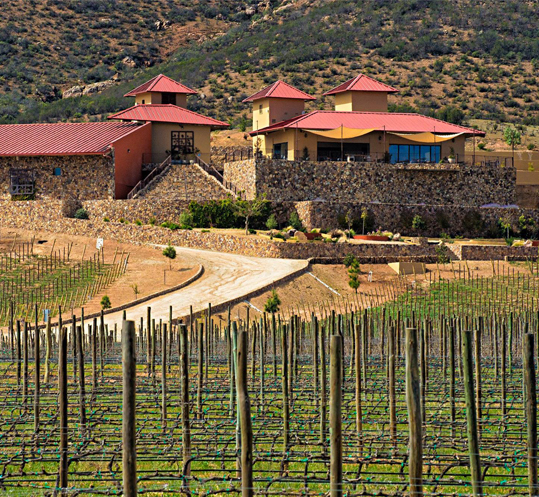
 Located about 60 miles south of the US border, or just over an hour’s drive from San Diego, Guadalupe’s wine route has come alive with new wineries, new resorts, boutique hotels, and trendy restaurants. Wine-related income in Guadalupe Valley hovers around $200 million a year.

No longer flying under the radar, Guadalupe Valley secured international recognition in late 2022 by hosting the 43rd annual World congress of vines. Many of its wines win awards and medals in various annual wine competitions. With only 25 wineries existing before 2005, Guadalupe is now home to 150+ wineries, 100 restaurants, 92 hotels and boutiques, and 12 taco stands. A few sources now say there are over 180 wineries. 

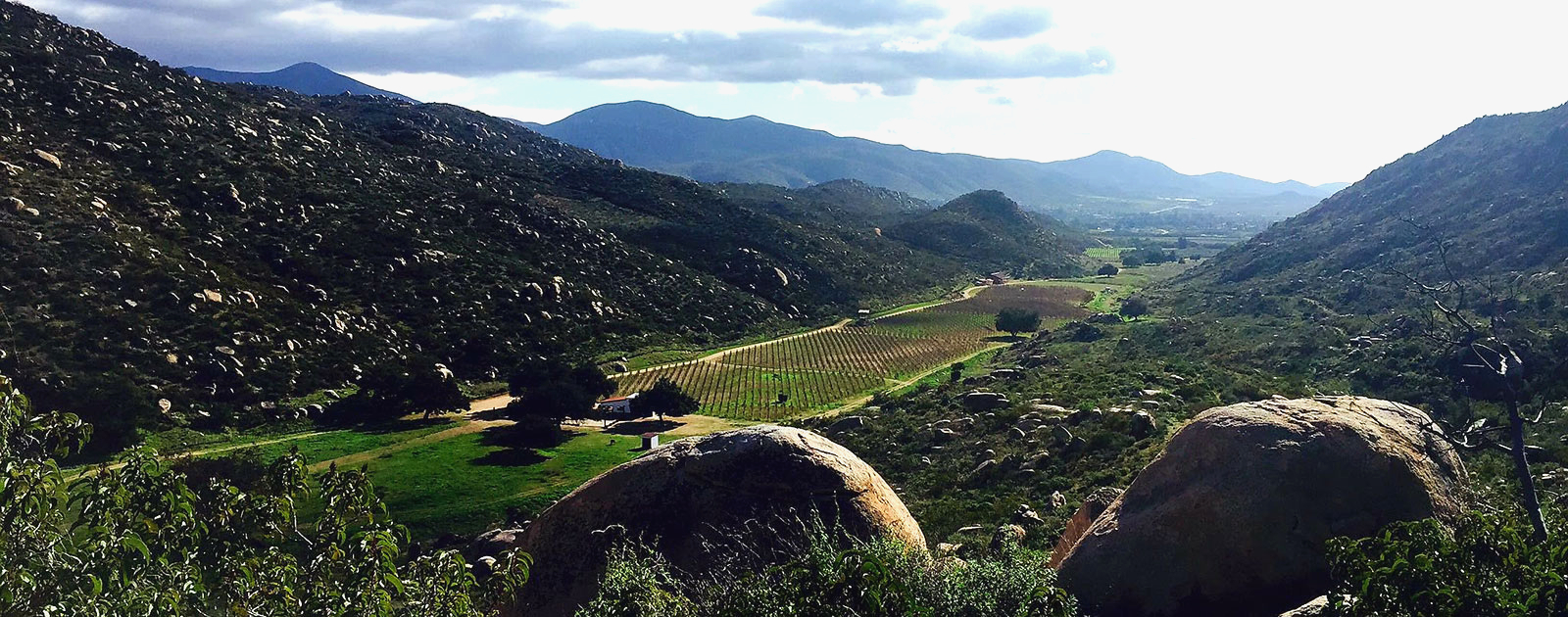
Regarding viticulture, Guadalupe Valley is a real anomaly. Standard logic in all textbooks maintains that wine grapes should only be grown within the 30 to 50 latitude. Guadalupe is located at the 21-22 degree latitude and there are over 10,000 acres planted to a wide range of vinifera varieties. 

Defying logic, the mantra in Guadalupe is that it is all about altitude, not latitude. Located at elevations from 500 to 2000 feet above sea level, most vineyards benefit from cooling breezes from the Pacific on one side and the Sea of Cortez on the other. With wide diurnal swings during the summertime, the climate is basically Mediterranean. Or “best described as Mediterranean” as one winemaker explained because being dry and desert-like, it doesn’t fit into any neat category. 

So after postponing a planned visit due to covid, I finally visited this much talked about wine valley in Northern Baja. Research before the visit entailed reading many of the feature stories and, of course, tasting as many Guadalupe wines that were available during my stay in Cabo San Lucas.

My vinous version of the Baja 1000 began by departing the totally screwed up city of Tijuana in a crappy rental car that barely made it out of town. Later in the day we were welcomed to Guadalupe by rain that challenged the car’s wipers. That’s right, rain in Guadalupe Valley is about as common as rain in the Sahara.

That rain was a great omen or set up for a series of unexpected experiences that followed when visiting wineries, tasting wines, and getting a feel for this most unusual wine region. The rain made the sandy roads to the wineries even more challenging to navigate with deep potholes filled with water along with rocks and a few chickens. But holding on tight to the wheel we visited the region. What follows are takeaways from five wineries that capture the uniqueness of Guadalupe as not only an emerging wine destination but also an exciting wine producing region.  

“This can’t be Nebbiolo,” I tactfully mentioned to the Vinedos Malagon hostess. It was deep garnet, concentrated, with ripe flavors and some tannin. She brought over the bottle and yes it was Nebbiolo. I shouldn’t have been so surprised since the previous wine was Malagon’s Grenache, also unusually rich. She explains that the winery has access to Grenache planted by Russian immigrants in the 1940s. That’s right, the vines are at least 70 years old. And as for Nebbiolo, it was said to be brought into Guadalupe long ago but identity tags were never found to verify its DNA. Well, that was my first visit.

#1 Takeaway: Prepare for Guadalupe wines that aren’t typical and for wines made from odd, old varieties, old vines.

Malagon was founded in 1997 when only a dozen wineries were operating in Guadalupe and very few wine varieties besides Grenache and Nebbiolo were planted. Pedro Domecq opened a winery in 1972 but like many of the distillers who arrived earlier, it favored Palomino and Colombard in the early years. Also in the 1970s Jim Concannon and others from California visited and introduced then popular varieties such as Chenin Blanc, Petite Sirah, Zinfandel, Barbera, Cabernet, Carignane, and the once popular Ruby Cabernet. The latter variety is a key component in Domecq’s XA red and Petite Sirah is one of Cetto’s most popular and attractive wines. 

Today the Valley’s wineries reflect a balance of an international cast of characters and local families. Those established varieties attracted foreign investors such as the Henri Lurton Medoc family. It seems telling that Bodegas Henri Lurton’s flagship wines from Guadalupe are Nebbiolo and Chenin Blanc. 

Next stop was Casa Magoni whose wines I had enjoyed prior to the visit. In the new tasting room, white wines were first offered and they were not the typical blends. Magoni poured a Chardonnay and Fiano blend named “Manaz.” Also, another white brings together Chardonnay and Vermentino which is just as impressive. Among the reds, the Sangiovese-Cabernet is excellent, but the most unusual tasted was labeled Origen 43 which combines Montepulciano, Aglianico, Canaiolo, Sangiovese and Cabernet Sauvignon. All those varieties were established 16 years ago. But, of course, Magoni makes a Nebbiolo which is excellent.

Turns out that Camillo Magoni, who studied Enology and Viticulture degree from the Enologica a Di Alba in Piedmont, Italy was invited by the Cetto winery to work in the cellars. After 40 years he left to establish Casa Magoni where he introduced many Italian varieties as well as others from France. Today with more than 100 different grape varieties on 278 hectares, this is the largest experimental vineyard in Guadalupe and all of Mexico. 

#2 Takeaway

Today with over 100 wine varieties being grown, some of Guadalupe’s finest wines are rare combinations and unique blends. There’s the Red from SantoTomas that is made from 34% Mission, 33% Tempranillo, and 33% Carignan. I love Emerve’s “Isabella” which brings together Chardonnay, Sauvignon Blanc and Viognier in a bright, full bodied style. El Cielo’s 2020 Blanc de Blancs consists of Sauvignon Blanc and Chenin Blanc with a good dose of Palomino and Chardonnay. 

So be prepared to encounter wines with fanciful proprietary names derived from the planets, the stars, children, family pets, nicknames, whatever. 

Moving on, I finally visited a new winery unknown to me but one I drove by several times: Emerve.

Many of the new wineries are locally owned and started by home winemakers or by cellar workers moving on after apprenticing at one of the big wineries. That door opened In 2004-2005 when Hugo D’Acosta who studied at Montpellier, France, and the Agrarian University of Turin, Italy, organized La Escuelita, a school teaching local farmers and families the fundamentals of winemaking and cellar procedures. The school also functions today as a cooperative, providing the necessary equipment to growers and future winemakers to make wine. 

Today, Emerve, which was one of those wineries,  draws from 18 ha and produces around 5,000 cases a year. In addition to a lovely Rose of Cabernet, Emerve is best known for its proprietary blends. “Isabella” brings together Chardonnay, Sauvignon Blanc and Viognier mentioned earlier. There’s a red Bordeaux named “Los Nietos” and another red blend, “Armonia de Tintos,” a blend of Merlot, Cabernet, Syrah and Cabernet Franc. That cuvee was aged for 8 months in a combination of French and Hungarian oak.  It is much more than a simple red. And just for a little variation there’s a 100% Shiraz that’s bottle aged for 5 years before its release.
#3 Takeaway

While the top 3 wineries of Cetto, Santo Thomas, and Bodegas Pedro Domecq produce 80% of wines from Guadalupe Valley, there are 100 or more small family owned businesses offering a wide variety of high quality wines. And the wines are often unique.

Next up in my learning journey, Casta de Vinos

Whether it was sheer luck or fate, my visit to Casta was truly eye opening. Opened in 2010, Casta is an authentic mom & Pop family winery with Sergio Castañeda as owner/winemaker and Claudia, his wife, as director. With an annual output of 4,500 cases, Casta makes 12 wines, 10 red. The 2018 “Domina,” a 100% Merlot exudes charm in an elegant style, and the 2019 “Cirio,” a Cabernet Sauvignon and Mourvedre blend is big with multi- layered flavors. “Casta Tinta, “ a Bordeaux blend, could easily be mistaken for a young Medoc. Another amazing accomplishment, the 2020 Syrah is heavenly and stylishly refined for a young Syrah. I also liked the Petit Verdot. Clearly, the winemaking is top notch and shows a subtle use of small oak and tannin management that makes this one a genuine superstar.

#4 Takeaway

Not only are there many new wineries, Guadalupe is a paradise for anyone who loves to explore and discover previously unknown wineries. Or one that opened the week earlier.

Tuscany also has a strong foothold here thanks to the Paoloni family.  Born in Tuscany, Paolo Paoloni left his post as an Enologist at the Perugia University to manage the Valle Redondo wine company in Aguascalientes, Mexico. After several years with Valle Redondo, Paoloni purchased 38 hectares in the Toros Pintos section of the Valle de Guadalupe. 

If anyone doubts the uniqueness of Guadalupe, well the wines that were presented at the Paoloni/Villa Montefiori winery will erase all doubts.  First came the dramatic 2020 “Ross del Valle” made from 100% Montepulciano with amazing concentration. It is the first mono-Montepulciano from Mexico. Even more exciting was the 2019 Nebbiolo, a dark colored, deeply flavored version, aged for 15 months in French oak. Then the house speciality is Nero d’Avola, and the 2018 aged 12 months in oak is stunning for its depth and layers of flavors.

#5 Takeaway

Located on a steep hillside, Paoloni’s vineyards look beautifully maintained, indicating that grape growing here is as good as anywhere. Overall, the yields work out to be slim by Napa’s standards, estimated as between 1.2 to 2 tons per acre. With little water available, irrigation is not excessive with many vines being dry farmed.

 I heard during my visit  and have also read that farming practices are moving toward sustainability and organic methods.  Carrodilla is said to be the first certified organic and biodynamic vineyard in Mexico. More recently, Santos Brujos which makes a lovely Tempranillo has earned its stars as a certified biodynamic vineyard. 

So, I’ll stop here after noting that despite what you may be thinking, Guadalupe Valley wines are showing up in more and more US markets. That was reinforced a few weeks ago when looking over the shelves of Desert Wine, a small retailer in Palm Desert, there were several Paoloni wines and a few others.  

Thankfully, in 2024 you might not have to travel along those bad dirt roads to explore Guadalupe Valley wines. Check out  the list of wineries available and which states they are sold in at La Competencia Imports in Napa, Same goes for Tozi Imports on the East Coast, Nossa Imports in Arizona and Beso imports in Washington. LMA imports in San Diego specializes in wholesale to restaurants. 

And one more thing about those rough, unpaved roads: don’t expect any improvements soon. Arguing that bad roads attract good tourists and good roads will appeal to the loud, rude, sloppy wine drinkers who will ruin the character of the Valley, a powerful resistance group has been organized to control growth.

In other words, they don’t want Guadalupe to become the “next Napa Valley,”
Best Websites for Savvy Wine Shoppers in 2022

Let the Countdown Begin

Now that Spring has arrived and we can look back on all those wild sales from Thanksgiving to St. Patrick’s Day, this an ideal time to review what has happened over the last year in the fast-changing world of online wine sellers. 

It’s also Academy Awards time, with its ongoing chatter and debate about the best of this and that sets the tone for this post. I’ll be shining the spotlight on several wine webites that stood out and performed well over the last year.

As most of you know, I’m not a fan of subscription boxes since you can find better wines at better prices if you do a little research. Nakedwine, Vinesse, and Firstleaf seem to make many people content. But those are not my kind of  wine-loving people.

Much like the selections for best movies, actors, and whatever, selecting the best sites for serious wine shopping also has to be broken down into categories. 

For one stop shopping, the big retail guys like wine.com, wineExpress.com and cinderellawines.com maintained their positions over the last year as reliable and only occasionally exciting. 

Taking our cue from the Oscars, we are spotlighting the best websites in specific categories.

In the Best of “Curated Selection” category, the nomination for the best website for red wines is invino.com. Since the present partners took over in 2019, it is often my go to place for red wines. 

www.invino.com 

“Curated” is overused by so many others, but it applies perfectly to the wines offered at this site. Based in the town of Napa, it lists around 100 wines at any one time. But they reflect excellent choices that are not available elsewhere.  

If you prefer red wines, then this is the site for you. It is particularly good with Napa reds and carries such proven Cabernet wineries as Luna, Von Strasser, and Clark-Claudon. From Bordeaux, it now has very attractive red Graves for around $20 and a lovely 2018 Bordeaux for $9.95. Then there’s the rarely seen red wines from Betz Family, Ken Wright and School House Vineyard. The selections from Argentina, Spain, and Italy are also inviting and unusual.

An exciting list of red blends confirm these guys work hard to offer values, and many good deals are priced below $25 a bottle. A highly rated Dolum Estate Napa Cabernet was offered recently at 60% off and a Sonoma Coast Pinot for $23.95.  

If you buy wines based on ratings, then even here you can look over a collection of 94+ rated wines under $40. Many exciting wines and several are deeply discounted, such as a first rate 2016 Chateauneuf-du-Pape and 2016 Pomerol Château Croix-des-Rouzes. 

While a few other sites have recently offered Frisson Napa Cabernet, invino.com came up with a special deal on Frisson magnums at 50% off and free shipping on orders of 2 or more.

Pros:

Authentic wines, not custom made, private labels

Strengths are in wines from Napa, Spain, France, and Argentina with frequent surprises from other California regions..

No crazy BS write ups about the latest cult wine from icons and  rockstar winemakers

And, best of all, discounts of 50%-60%

 Shipping rates vary but always seem fair and based upon sales price.

Cons:

Not really a negative, but it is somewhat limited by appealing primarily to serious, well-informed, and somewhat adventurous wine lovers.

Online Wine Shops: The Final Four

Final Four NCAA basketball, Spring Break, and Baseball is Back.

Add Easter weekend, Passover, and we have all kinds of reasons for special sales offers and deals.

We began the season by following 36 candidates, each claiming to have the best deals for members, exclusive offerings of super-duper values, rare wines and great vintages and, of course, the next cult wine.

But we are now down to the 4 teams that have been working the hardest to offer exceptional wines and/or exceptional deals.

www.invino.com

has played extremely well over the last two weeks.

It continues to find new ways to score, locating unusual wines such as the

Vaughn Duffy Pinot and Sauvignon Blanc.

Current exciting offers:

2013 d’Arenberg d’Arry’s Original

Grenache, Shiraz | Australia, $14.99

2017 Sancerre, Laporte, $27.00\

www.sommselect.com

Showing great depth with recent selections of a Hermitage, a Tollot-Beaut Savigny, and a Ribeiro Blanco from Galicia, a ballsy play. Also outstanding  Gigondas but the Bouzy Rouge was odd. Here are examples of an unusual find and a rare culty wine:

2017 Ribeiro Blanco, Galicia $22.00

2016 Coche-Dury’s Meursault “Les Chevalières, $75.00

www.napacabs.com

These folks have truly upped their game recently. A longshot a few months ago, this week it turned heads with several exciting wines. I liked the way it balanced big names and excellent discounts:

2015 Beaulieu Vineyard Private Reserve Cabernet, Napa Valley for $89.99 (regularly $149)

2010 La Colombina Brunello di Montalcino, $29.97

2013 Geyser Peak, Alexander Valley Reserve, $19.97 (60% off)

www.gargistewine.com

Made it into the final four for being so unpredictable but always managing to come up with a surprise play. An excellent Muscadet for under $10 or the 2016 Cos d’Estournel for under $200 may seem unlikely, but this site has them both. I am wildly impressed by the depth of the offerings from the Loire Valley.

Two versatile players:

2018 Bourgueil, Domaine Cotellergie, $16.76

2016 Scott Paul Pinot Noir, Chehelam Mts, $19.71

What about the pre-season favorites and especially www.vivino.com with its 35 millions fans?

That’s a story for another time. 

The Best Online Wine Shop?

So, I have to confess my picks for the Sweet 16 college teams did not fare well. Each one has, alas, gone home.

My game is online wine shopping, and here is my choice for one of the Final Four

http://www.garagistewine.com

garagistewine.com is the most peculiar online retailer I follow. One reason is that its founder Jon Rimmerman who has been offering wines for over 20 years often presents his daily offers late at night.  He is based in Washington State which may explain some things.

He sometimes seems a bit chatty and becomes so excited and enthusiastic that he might belabor a point about a particular wine or region.

He is also insistent about when he will ship your wines and specifies the required temperature and humidity for proper shipping.

But these minor quirks are greatly offset by the pluses.

  • He seeks out wines that are organic, biodynamic and farmed sustainably  
  • He favors small artisan producers and family owned wineries
  • He obtains many wines direct so truly cuts out the middleman
  • He doesn’t use inflated scores from Somms
  • His wines are attractively priced
  • And he is unpredictable, sometimes offering olive oil, nutella, or food items. All high quality.

I enjoy reading his detailed notes because he truly knows his stuff. His background insights about vintages and regions are extremely useful. He is particularly on top of the vintage variations in France’s Burgundy and the Rhone.

He provided a detailed report on 2016 and 2017 based on travels and tastings throughout France and it is spot on. His remarks about 2015 and 2016 Bordeaux are the most reliable in the wine trade.

His analysis of 2016 in Burgundy and of the 2017 Northern Rhone are some of the best I’ve read.

And to this fellow Loire Valley lover, he has the inside track on Loire Valley wines:

“2018 is one of those “pinch me, this can’t possibly be true?” red wine vintages in the Loire. I can’t really compare it to anything else – it has the ripeness of a vintage like 1989 but the freshness of 1996 (another classic year.”

He also looks closely for super wines from Washington, of course but also Oregon. A recent Washington Tempranillo was remarkable.

He often locates super wines under $15 a bottle.

Here are examples of recent offerings:

  • 2018 Bourgueil, Domaine Cotellergie, $16.76
  • 2016 Scott Paul Pinot Noir, Chehelam Mts, $19.71
  • 2014 Rioja Riserva, Burgo Viejo, $13.98
  • 2017 Sancerre, Dezat $19.99
  • 2016 Renvoise “Jasmieres,” dry Loire Valley Chenin Blanc $16.70
  • 2015 Domaine de Cambes, Bordeaux $33.71
  • 2016 Ribbonwood Sauvignon Blanc, Marlborough $7.99

He recently offered a lovely Provence Rose for sale at $9.99.

He found “the best Bordeaux you’ve never heard of” from 2011.

He comes across as frank, as in these recent notes:

“This is fastidiously produced Chardonnay without a smidge of pretense but the stuffing and expression to, well, pummel just about any other example from outside the Burgundian reach under $30. In addition, the impact is from fruit, stone and clarity, not from alcohol, wood or from winemaker strategic manipulation/enhancement.”

Or

“If you think “bargain” wine is devoid of potential pleasure or cannot be in the league of top-drawer entrants, guess again. This wine can easily compete with Sauvignon Blanc at 2-3 times the $ and many of its competitors are not as delicious to drink.”

Sometimes to keep prices low, he suggests buying 6 or 12 bottles or more which may seem like hype and hustle, but I think he is sincere and honest in his emphasis on offering value.

A maximum number of bottles a person may purchase is always listed, ranging from 6 to 60.

Pros:

Wildly eclectic selection not found elsewhere.

Excellent prices

Seeks out biodynamic and other green products.

Cons:

Complicated shipping procedures and delivery dates but only to assure wines arrive in fine condition.

Awesome Wines Under $15

The Wine Enthusiast magazine just released its Top 100 Wines under $15, and I found the list absolutely fascinating.

To its credit, the web page identifies those wines listed that are also sponsors, as in paid advertisers. So all is above board.

But can you trust the people behind the reviews?  

Well, I happen to know several of them quite well. Two in particular are excellent tasters who cannot be compromised: Roger Voss and Jim Gordon.

The wines from Oregon and Washington State mentioned in this list are also chosen by another highly regarded critic.

Voss is the magazine’s expert reviewer of French wines from Bordeaux, Loire Valley, the Southwest as well as the best reviewer of wines from Portugal.

Gordon is the West Coast reviewer who can be trusted for his ratings of wines from Mendocino, Sonoma, and Napa.

Back to the Top 100

The #1 wine was made by Columbia Crest.  No big surprise there.

Its Cabernet, Merlot and Chardonnay make most top values lists.

But the top ranked wine turned out to be the winery’s 2015 Grand Estate Syrah at $12 which is also one of my discoveries.

Sad. Now, everyone will know and it will disappear quickly.

Bargain hunters can check out the entire list at

http://e.winemag.com/219S-154XX-706QMTTT8B/cr.aspx

To me, the following wines are the Other Awesome Deals under $15:

2014 Bogle “Essential Red,” Old Vine, Clarksburg (often sold under $10)

2016 Gnarly Head  Zinfandel, Lodi

2016 San Pedro Reserve Sauvignon Blanc, Chile

2015 Mas des Bressades  Cuvée Tradition Syrah-Grenache (Costières de Nîmes)

2016 Cline Cellars Viognier, North Coast

2015 Château le Payral, Bergerac Rouge

2016 Foris Dry Gewürztraminer Rogue Valley

2014 Hogue Red Columbia Valley

2015 Wines & Winemakers Lua Cheia em Vinhas Velhas Red Douro

2016 Dry Creek Vineyards, Dry Chenin Blanc (Clarksburg)

2016 Domaine des Carteresses, Tavel (a Rose)

Wines for 4th of July Parties

With a week to go before the 4th of July holiday, the web wine retailers are already competing to light up the skies with special deals, massive discounts, blowout sales to end all blowouts, and free shipping incentives. You can be sure the wines chosen for your July 4th celebrations will be made by rockstar winemakers, from the greatest vintage since 1945, and have earned numerous 90+ point ratings.
Yes, there is a lot of hot air. For over a year I’ve been following two dozen leading web wine retailers, and if nothing else, I’ve learned how to cut through the hype, and silly descriptors, the aggressive sales pitches, and those numerical ratings to find the websites that have genuine deals and deliver on time.
If flash sales appeal to your independent side, my favorite is www.lastbottlewines. com which is headquartered in Napa.  Usually, offering only one wine daily, these guys have an unpredictable nature and they love holiday surprises. The discounts are usually deep, as in half-off, but to purchase wines, you have to act quickly. I recently missed out on a super Zinfandel from Lake County offered at $10 a bottle.  This is the go-to super source for Napa and Sonoma wines, especially Cabernet. Shipping is free for 4 bottles or more.
Another excellent website is www.cinderellawine.com which offers two daily deals and gives you a little more time to think things over. Though any connection between Cinderella and wine escapes me, this site has come on strong in recent months. Its best deals are wines from Italy, Spain and Australia. If you prefer Italian, this is the site for you. However, in mid-June it began offering unusual 2 and 3 bottle packages, but unlike others who offered “curated” wines, this site offers creative packages. As an example, a 2012 Chardonnay duo consisted of the Auntsfield Chard from New Zealand and a Franciscan Cuvee Sauvage Chard from Napa’s Carneros ($36.99 the pair). That’s an intriguing side by side comparison. Additionally, once a week its parent company, winelibrary.com, offers subscriber a special deal. These usually fall in the under $20 price point and are often good to excellent deals. Continue reading “Wines for 4th of July Parties”