Holiday Wine Sales: Budget-Friendly Tips for Shoppers

Now with the crazy days of holiday shopping hype coming at us from every direction, the major online wine retailers and wine merchants are also doing their best to get our attention. 

Although these Prime, Cyber, Black Friday and what have you holiday sales are now an annual event, lots of circumstances have changed over the last 2 years. People in general are much more focused on soaring prices of eggs and gasoline, or whatever their reference point may be. 

The phrase “sticking to a budget” is now heard in so many circles.

Because wine sales have trailed off over the last 2 years or so, these holiday sales will be closely watched. As of now, wine prices haven’t spiraled because tariffs haven’t made an impact on prices. 

The fact is that there is a glut or over-supply of wines and we have seen the number of wine producers entering the discount world increase as many once solid wineries feel the need to reduce prices to move inventory.

Wine is different from eggs and gas because it is a discretionary product, meaning not vital or necessary. Well, to all but a few of us. If there has been a lesson those in the wine biz should have learned over the last two years as wine sales dipped, it is that non-snobby wine lovers are really no different than other consumers and now realize a need to be extra careful about sticking to a  wine budget. That often means having a target maximum price or price point when buying wine. 

What’s Going on in Online Wine Sales

When previewing t several of the Black Friday deals, I can’t help but notice the many luxury or cult wines that are over $100 a bottle are now being offered at deep discounts. Online seller winespies.com offered the 2020 Caymus Special Selection at $147 ($225 regular price), vivino.com announced a culty Chardonnay for $34.99, regular price $90, while lastbottle.com featured a Pouilly-Fuise for $34, regularly $100.  Another site had the 2018 Beringer Reserve Cabernet at $87.50, roughly 50% off. Earlier this week there was a “sale” of the 2022 Joseph Phelps Insignia, which retails for $350-$400 at $195 a bottle. 

Don’t know about you, but to me even these discounted prices still are not budget-friendly. High ratings and non-stop hype are behind so many of these exorbitant prices.  Some might argue that many wines priced in the 3 digit range are on allocation or enjoy a cult following. Then one wonders why some are offered online to begin with and often at deep discounts. We’ll probably never get a consistent explanation, but that shouldn’t stop us from shopping the sales.

Insider Tips for Savvy Wine Shoppers

One great website to find truly fine and reasonably priced wines is wtso.com  What stood out to me is that its Black Friday sales on November 28-29 has an end of the year Clearance Sale. While it continues with its daily flash sale, wtso has many attractive, highly rated wines in its clearance sale. With a few bottles priced at $11.99, the list is heavy in Italian wines but also has something for every wine drinker. At $19.99 a bottle, you can buy the 2024 Calculated Risk Cabernet, the 2021 Havens Cellars Red Blend, and the 2022 Left Coast Cellars Willamette Valley Pinot Noir. An Old Vine Lodi Zinfandel topped the list of the $11.99  specials.

Wine Access is another website that has dozens of great wines for the budget minded Black Friday shopper. At wineaccess.com  the sale works by knocking an extra 20% off their already discounted prices. For example the 2022 Zinfandel from Marietta Cellars is listed for $25, but with the added discount sells for $20 a bottle.THe extra discount is applied at check out.

 Those wines that stood out to me before the discounts are the Three Wine Company Old Vine Field Blend ($28), Meeker 2022 Grenache ($22), 2023 Lang & Reed Cabernet Franc ($29), 2022 La Vigne Paso Robles Merlot ($21) and a San Luis Obispo Chardonnay from Oceano Vineyards( $18). Others are the Pinot Noir and Chardonnay from Oregon’s Solena Estate. And if you like wines from Australia, Argentina, and France, wineaccess.com has something for you at Black Friday prices.

Another site pushing its Black Friday sales also with a large inventory is wineexpress.com A few caught my attention, especially the J. Dusi Cabernet “The Don” from Paso at $22.49. J. Dusi is a favorite of mine. Also, there’s the Rutherford Ranch Chardonnay for $13.47 and a Reverdy 2021 Cotes du Rhone for $7.47. 

The California Wine Club, one of the oldest, has announced its Black Friday 50% off sale. The sale will continue through Sunday. At $12.50 the 2022 Armida Zinfandel from Dry Creek and the Eden Rift Sauvignon Blanc, also at $12.50 are excellent deals. The full list is worth checking out at cawineclub.com 

When the Dust Settles

These holiday sales will likely be extended way beyond the holidays, but they will end. Most of these are flash sales, daily deals or one-time only sales which not everyone is comfortable with because of the need to act quickly.

A Wake-Up Call for Wine Shoppers!

Wait. Are any wine drinkers actually shopping these days or did Amazon train us all to stay home and let others think for us? Then there was Covid  and now there’s Doordash delivering wines in some states. And subscription wine clubs are happy to deliver a box of unknown wines to your door. Oh well!

As 2025 winds down and the wine market faces a serious oversupply of wines, there’s never been a better time to shop around.  Sure, the online retailers hustling wines at WTSO.com, lastbottle.com and the rest of the gang are now offering a wider range of wines. On November 11th, winelibrary.com is set to offer a variety of wines at the $11.11 a bottle price point. By then Trader Joe’s and Costco will surely have come up with some deals for the holidays.

But the most exciting sale this week is at Grocery Outlet which has about 500 stores across the country. Yes stores, as in places you drive to, check out the shelves, load up a cart, and pay at the registers. Sounds old fashioned to many of you, but  most of us who love a wine bargain can adjust to it.

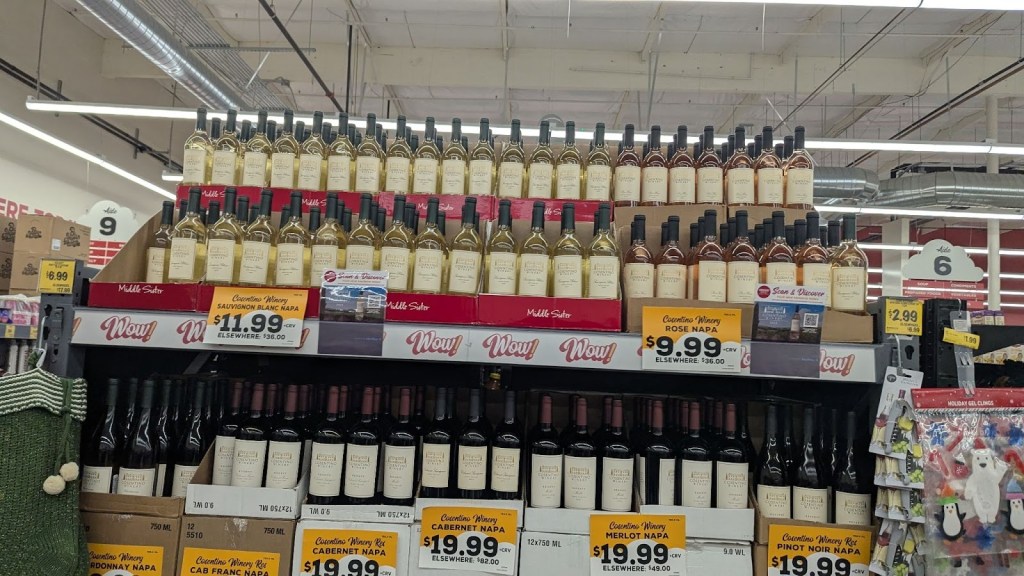
Yesterday, in a Grocery Outlet in Southern California, the shelves were practically falling over into the aisles. Piled high were wines from Cosentino, reds and whites. The 2023 Cosentino Sauvignon Blanc was excellent and sells for $11.99 a bottle. The winery’s website says that wine retails for $30 but is “out of stock.”  But Grocery Outlet has it along with Cosentino’s Merlot, Cabernet Sauvignon, Rose and others.  It also has the Reserve Cabernet Sauvignon for $19.99 which you can buy direct from the winery for …$82.

Cosentino Vineyards developed a following for its Zinfandel,Merlot,  Cabernet Franc and Sangiovese, but founder, Mitch Cosentino, sold the winery and is no longer involved. It is now part of the Foley Family portfolio, but the overall quality is still better than that of other once-famous brands now  under corporate owners.

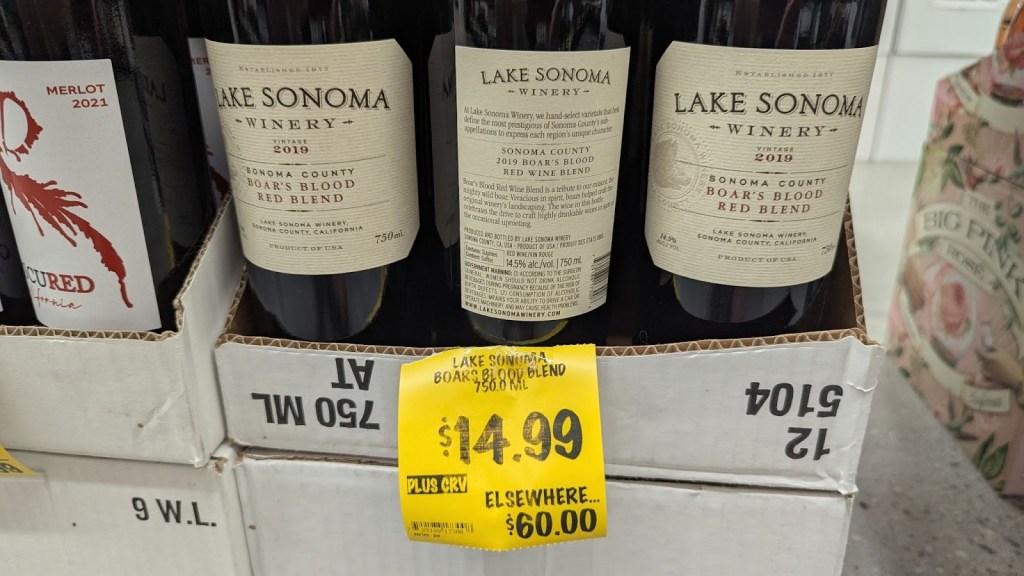
Back to my recent shopping adventure, Pinot Noir lovers should check their local Grocery Outlet to see if it stocks the 2021 Diora Pinot Noir from Monterey County. If you prefer Cabernet blends, then the 2019 Red Blend made by Lake Sonoma Vineyards is quite attractive. A few stores carry Napa Cabernet from Monticello Vineyards.

Yes, the offerings vary from store to store with Grocery Outlet. When it comes to bargain priced Bordeaux wines, I find Grocery Outlet is on a par with Trader Joe’s.  Decent, everyday wines from Firestone and Sebastiani are sold at many Grocery Outlets. 

Also, the end of the year is a good time to shop for Rose wines because wines from the most recent  vintage are about to hit the market. Right now, Bonny Doon 2023 Rose, the Central Coast bottling, not the Vin Gris, is a safe bet.

Discover the Hidden Gems of Fort Ross Vineyard

People living on the edge, the bet it all risk takers, and even those simply taking the less traveled road are exceptions in today’s wine world. Because they don’t follow conventional wisdom or marketing trends, these outliers can be exciting to follow. And when they succeed, they can come up with brilliant wines. But by going against the grain they risk going unnoticed, flying way under the radar of wine writers, somms, and influencers. 

Well, this writer was lucky to have been directed to one of those wineries by a good friend, and after tasting through the wines, I’m going to blow through the cloud cover and shine the spotlight on a great discovery: Fort Ross Vineyard.

In 1988, when phylloxera was beginning to take its toll in the North Coast wine regions, Lester and Linda Schwartz purchased a large slice of rugged land on a steep coastal ridge above the Pacific Ocean near the historic Russian settlement of Fort Ross. In 1994 they established Fort Ross Vineyard and made their first wine in 2000.

First, the Vineyard Story

 South African natives who had immigrated to the San Francisco Bay Area in the 1970s, they appreciated  fine wine and food and were convinced the site was suitable for growing wine grapes. Located 5 miles north of Jenner, their land is literally along the Coast of Sonoma. As an AVA, the “Sonoma Coast” extends inland and includes parts of Carneros, Russian River Valley  and the so-called Petaluma Gap. The land they were considering turning into a vineyard, however, would be the closest in California to the Pacific Ocean.

So, to review, 1988 was not the best of times for venturing into winemaking and the site sitting above and less than a mile in from the Ocean had not yet been explored.  There were many risks but the elevations of these potential vineyards range dramatically from 1,200 to 1,700 feet, or just above the coastal fog.

In 1991 Lester ordered two dozen dormant rootstocks, and when the initial plantings proved successful, the couple expanded their experiment, planting a test vineyard with 16 varieties, three trellis systems, assorted clones and several rootstocks. 

When all of the extensive trials were evaluated, they developed a vineyard  which now consists of four varieties: Chardonnay, Pinot Noir, Chenin Blanc and Pinotage.  No surprise with the first two; Sonoma Coast Chardonnay and Pinot Noir were made famous by the likes of Marcassin, Flowers, Hirsch, and Peter Michael  But their vineyards are hidden away inland, not along the riskier coast.  

And although both Chenin Blanc and Pinotage are popular in South Africa, no one else, except  native South Africans, would even think about planting them in California. Chenin Blanc had fallen out of favor by 1991 and there was nowhere you could obtain Pinotage vines. 

Not a problem for them. They sourced Pinotage budwood from two of the finest sites in South Africa, and became the first independent growers to import grapevine cuttings from there through the Foundation Plant Services that operates alongside the U.C. Davis School of Viticulture and Enology. 

Then when they laid out their vineyard, they didn’t take the easy way of uniformity. Instead, the Fort Ross Seaview Vineyard comprises 32 vineyard blocks over 53 planted acres, with each block varying in size from approximately one-half to two acres each.  Having 32 blocks is not the easy way to plant, to tend, and to harvest for sure. 

But each block is based upon a carefully selected clone and rootstock for the variety. The vineyard is planted with heritage clones and field selections, which generally produce low yields with small bunches and berries that deliver very distinct wines.  

  • Pinot Noir – Calera, Pommard, Swan, Dijon clones 115 and 777
  • Chardonnay – Old Hyde, Wente, 
  • Pinotage – Proprietary clones MM1, MM3 from South African budwood

Now for the Wines

Fort Ross Vineyard Seaview Sonoma Coast Pinotage 2019 $62

If you’re unfamiliar with Pinotage, here’s a great place to start. Created by crossing Pinot Noir with Cinsault, Pinotage led the way to the revival of winemaking in South Africa. At the time, Cinsault was associated with Hermitage which explains the “tage” in the name. This rendition from Fort Ross is a stunning example.  

After the fruit was hand harvested in early October of 2019, winemaker Jeff Pisoni aged the wine for 12 months in 20% new French oak and bottled it unfined and unfiltered. In the glass this wine is quite dark in color with an intriguing aroma that leans slightly toward the earthy Rhone side with berry fruit, green tea and cassis. On the palate it is vibrant and energized with black plum, spice and tea leaf flavors that are supported by velvety tannins. Finishes with good length, suggesting this would reward lengthy cellaring. Not to sound corny, but it does capture the earthiness of a Rhone and the velvety smooth texture of a Pinot. Who knew?  360 cases made 94

Fort Ross Vineyard  Fort Ross-Seaview Sonoma Coast, Chenin Blanc 2023 $44

Popular decades ago and made in a slightly sweet style, Chenin Blanc rarely gets anyone’s attention these days and few people know that it can yield an excellent dry wine.  Cool climate Chenin Blanc is rare in California with most acreage now in warm sites. In its third vintage of estate grown Chenin Blanc, Fort Ross came up with an extraordinary rendition. It  brings together concentration, energy, complexity in a seamless package. 

In the glass it is light yellow with a healthy green tint and the Initial assertive aroma asserts itself in a combination of lemon meringue and fresh pear. With airing, the aroma takes on some ginger spice and melon. On the palate it is medium bodied with concentrated flavors of lemon and stone fruits. From start to finish it is solidly structured and remains lively on the palate. With its crisp acidity, the flavors continue to a crisp finish with background notes of honeysuckle and bosc pear fruit. Unquestionably one of the finest Chenins in my experience, the wine was made by Jeff Pisoni who aged 80% of the wine in neutral French oak for seven months and bottled it unfiltered. 100 cases made. 95

And Now Bring On the Clones

Fort Ross Vineyard Stagecoach Road Fort Ross-Seaview Sonoma Coast Pinot Noir 2022 $80

This pitch perfect Pinot is from two clones (Calera and Pommard) planted on steep hillsides overlooking the Pacific Ocean. Early spring rains during flowering reduced the crop in 2022 and at the harvest the berries were unusually small. That comes across once the wine is poured and the color is a deep garnet. Initial scents of cranberry and plum with anise are a bit reticent, but with airing and swirling, black cherry, tea and toasty oak scents emerge. 

Smooth and silky on the palate, it offers concentrated flavors of cherry and earthy, forest floor that are bright and charming with very light tannins. Youthful and balanced, it was showing even greater harmony a day later, indicating a long future lies ahead. But can be enjoyed whenever the mood hits.  230 cases.  94

Fort Ross Vineyard The Terraces Fort Ross-Seaview Sonoma Coast Pinot Noir 2022 $80

Pinot lovers should make room in their cellars for this one. From a low yielding vintage, this Pinot was made from a vineyard block planted entirely to the Calera clone, and the wine was aged for 11 months in French oak, 40% new. Known for its small berries, high acidity and solid frame, the Calera clone is often a key component in multi-clone Pinots. 

Once poured, this ‘22  gets your attention with its lovely ripe plum and raspberry aroma, and the palate impression also makes it stand out with its bright cherry flavors along with definite oak spice and youthful acidity. Concentrated with some tannic grip, this one is for the cellar and, with aging, it should be outstanding. 250 cases made 94-95

For the Final Touch: Chardonnay

Not surprisingly, the Fort Ross Chardonnay is not your Rombauer’s  buttery, oaky, commercial stuff.  To begin with, the  clones planted are the Went and Hyde  field selections, seldom seen these days. Grown in the coastal, breezy climate, the vines in 2022 yielded a small crop.

But once poured, the ‘22 Chardonnay announces its individuality with its unusual yellow color. Then the aroma is fresh and vibrant with lovely apple, and lemon as it expands.

On the palate the apple and stone fruit flavors are concentrated and sustained right through a long finish. It also is one of the very few Chardonnays that will reward cellaring which became apparent when it showed great complexity 24 hours after being opened.

So there you have it. 

Go to http://www.fortrossvineyard.com to get on their mailing list. 

You can purchase new releases at a 10% discount and don’t have to be club members.

Also, they now have a line of wines called Sea Slopes to supply top restaurants and wine shops in select markets around the country.

Sea Slopes wines are made by the same winemaker using the estate vineyards.

Savvy Wine Shoppers: Start Your Engines

Exciting online wine deals and steals are really happening.  They are not the typical, over-hyped discounted wines that have been offered over the last year or two.  It strikes me as a new beginning, a fresh start to Spring. 

The real deal door began to swing open around April 1st and by the day of the eclipse, it was no illusion, no April Fool’s prank.

 And the wines that signaled this change  were excellent, time-proven Cabernets, Pinot Noirs,  Chardonnays, a few imports and, well, many others. What was different was the appearance of so many authentic wines from real producers instead of made up private labels and brands. And often, new vintages, newly released wines, not leftovers.

Before getting to the reasons behind this development, let me lists those deals offered online  that caught my attention:

2021 Peju Cabernet Sauvignon, Napa Valley, regularly $70, offered at $26 

2021 Daou Reserve Cabernet Sauvignon, Paso Robles $65 to $39.99

2018 Whitehall Lane Estate Cabernet, Napa Valley $90 to $59

2020 Beringer Vineyards Knights Valley Reserve Cabernet Sauvignon $32 to $23.99

2019 Handley Cellars Anderson Valley Pinot Noir, $37 to $19.

2018 Ketcham Estate Pinot Noir, Russian River Valley $45 to $19.95

2022 Long Meadow Ranch Rose of Pinot Noir, Anderson Valley $32 to $12

2022 Caymus Vineyards, California Cabernet Sauvignon, $75 to $49

These are top names and the reason the last two are cited is to reinforce the fact that new vintages, not old stuff getting dusty in warehouses, are showing up as real deals! That’s a spanking brand new release from Caymus and I’ve not seen any Peju wine so deeply discounted until now. Clos du Val just released its new Cabernet Sauvignon vintage to an online retailer at 20%, not enough to make my list but good support for the trend.

Just now winespies.com announced a 30% off deal on an absolutely great California Chardonnay, one of the top 3-4 made and never ever discounted, until now. It is the 2021 Wayfarer ‘The Estate’ Fort Ross-Seaview Chardonnay 30% off. 

Then I’m seeing a few unknowns and  newbies to the Napa Cabernet scene resorting to the online discounters to help their launch. The garigiste.com site announced the sale of  Rockmere Estate Cabernet Sauvignon Napa Valley from 2018 for $59.71 a bottle, with the winery price being $95.

So why now, you ask? Well, it has to do with supply and demand. Over the last several months, business stories have focused on the global surplus of wine, and here at home, both Napa and Washington State wine folks are trying to deal with the present surplus of wine and the need to start removing vineyards in big numbers for future stability. Talk about pulling up vines let’s you know this is not a blip.

Meanwhile, retailers are staring at big inventories in their stores and warehouses. I’ve noticed much more exciting offerings from vivino.com so far in 2024. This online site works directly with retailer partners across the country. Sales are slow in brick & mortar places across the country.

Who’s to blame? Well, the easy way out is to point fingers (the middle one?) at the Gen Zers.

Apparently, recent surveys indicate a lack of interest in wine. That’s a demographic representing 18% of the population and it is more interested in energy boosting drinks. Is “Liquid Death” an energy drink? Just asking. 

The brains behind Drizly analyzed the alcohol beverage market and came up with this conclusion: “When it comes to trying new bev alc brands, Drizly’s 2023 Consumer Trend Report found that pricing was the top factor that influences Gen Z “

The  high price of wine is a big deal these days. Recent surveys show that the average bottle price of a Napa Valley Cabernet is $108. An article in The Wall Street Journal  surveyed restaurants and came up with the belief that $25 is the new restaurant normal for a glass of wine. And, yes, the prices for many consumer items are now high. But wine is non-essential, a choice, not on the same level of importance as eggs and fuel. 

Driving the prices of wine up and Gen Zers away is that wine is perceived as a luxury enjoyed by those who equate price with quality. Snobs! Yes, those who buy what others can’t afford and those who associate inexpensive wine as “cheap stuff.” And the big corporations have not helped by their push to create so-called “luxury brands.” 

But right now it is the online wine retailers, the flash sale types, that are driving the discount wine deals.  A report from the Silicon Valley Bank made this observation:

“Wholesalers are full up, as far as they can go,”  which is making them “more picky” in what they buy from wine producers. Wholesalers “are more afraid of being stuck with inventory that they may have to discount.” 

It concluded with a prediction that “flash sales and increased discounts” are likely in the offing in the near future.”

5 Real Deal Dealers

That future is now. Flash sales, meaning limited time offerings are leading the way. For those  interested in checking out the best wine deals offered online, here are my top 5 best sites for non-snobbery, savvy shopping wine drinkers:

www.reversewinesnob.com  This site was finding super wines at great prices before the glut, and so far in 2024 has earned my top spot for its selection of wines from California and the Northwest. It works directly with small, family owned wineries. Begin here.

www.winespies.com  Off to a great month of April with exceptional finds such as the 2020 Caymus California Cabernet and the Wayfarer Chardonnay. Also, super price for a Flying Goat Pinot Noir. Special deals on Lake County Cabernets are frequent.

www.lastbottleswines.com

 Still the best flash sale site, and is keeping up by finding wines never offered before the glut. A great offer for Handley Cellars 2019 Pinot Noir at $19. It also has marathon wine sales, and recently offered dozens of wines as “under $26 deals and steals.”    

www.vivino.com 

These are the people who have a huge database and encourage subscribers to offer reviews, But its main strength is its partnerships with retailers around the country. Here I found the 2020 Beringer Knights Valley Cabernet at 30% off. The new 2022 Caymus “California” Cabernet was first offered by vivino.

http://www.wtso.com

WTSO was one of the first, if not the first site for flash sales. It offers many wines, but I found it is a great resource for imports, especially Spanish and Italian wines. Here are three examples of excellent deals:

2021 Resalte Ribera del Duero Vendimia Seleccionada for $19.99 (50%)

2018 Famiglia Castellani Chianti Classico Riserva  DOCG $14.99

2019 Luca Bosio Barolo  $24.99

Joe Dobbes: Veteran Winemaker Journeys Back to His Roots

Check out http://www.iterumwines.com for wine club info

And for my reviews: winereviewonline.com

At the Oregon Wine Experience’s awards ceremony last August, when accepting the Best of Show White Wine award for a 2021 Chardonnay, Blakeslee Vineyard’s owner first thanked everyone and then casually noted, “I didn’t make the wine. Joe Dobbes did.” That caught everyone’s attention. Joe who?  

Oh, that Joe. The veteran winemaker who also excels as a brand builder. The one behind “Wines by Joe,” a best selling brand found on many supermarket shelves which he developed simultaneously with his high-end Dobbes Family Estate Wines. He later added ”Jovino” as a label for Willamette Valley Pinot Noir and Pinot Gris produced exclusively for restaurateurs. And later created a custom bottling facility in Dundee where he made wines for a dozen or more other wineries. Yes, that Joe.

After adding canned wines under the “Joe to Go” name, he guided his wine company on an upward course and it grew to become the third largest in Oregon by sales. As of  2018, he explained, “We owned 214 acres of vineyard and benefited from the work of more than 30 full-time, dedicated employees, as well as dozens of part-time and seasonal.” That success caught the attention of investors and in that year Bacchus Capital Management acquired 50% interest in 2018.

I met Joe and his wife, Patricia at that awards ceremony. After chatting briefly, he handed me his card which read “Founder, Proprietor & Winemaker” of Iterum Wines. “Iterum” roughly translates as “once more, afresh” and again, as in starting over again. 

A brand from him with no mention of “Joe” in the name is by itself newsworthy.  A few days later I began firing questions his way and I learned  that  to him “Iterum is all about getting back to my roots and being highly focused.” He is doing what he always wanted to do: getting dirty in the vineyards and focusing on high-end wines. 

There’s also a circle on the label to convey that Dobbes has come full circle with Iterum Wines and is back to where he began. 

His father was an amateur winemaker, and he grew up on the family’s large farm which included a vineyard planted in the early 1980s. In the mid-1980s, Dobbes apprenticed at Wiengut Erbhof Tesch, in the German Nahe region and in Burgundy first with Christope Roumier of Domaine G. Roumier and then with Dominique Lafon of Domaine des Comtes Lafon. Returning to Oregon, he worked with Elk Cove Vineyards, Ken Wright Cellars and others before becoming head winemaker at Willamette Valley Vineyards from 1996 to 2001. 

In 2002, he noted, “I started Wine By Joe with a small amount of money in my back pocket, a lot of experience and passion, and a sufficient ignorance of what I was up against.” 

Starting over in 2019, Joe, it is fair to assume, not only had much more money in his back pocket but also an impressive resume to show as a winemaker for 34 or so vintages. Also, along the way he worked with numerous vineyards within Oregon for both his own brands and for others. But he didn’t rush to start anew. When asked about his options then, he explained:

“I essentially took a two year winemaking sabbatical after the 2016 vintage and 34 overall vintages.  It was refreshing in a lot of ways, and allowed me to really think about who, and what I wanted to be in my next winemaking act.  I had started Dundee Mobile Bottlers in 2017; however, I never intended to give up on making wine. In 2018 we bought our 21 acre dream estate from which I had made wine from in previous years for previous owners, as well as for Dobbes Family Estate. I never intended to give up on making wine. It was only a matter of when. The when for Iterum Wines ended up being the 2019 vintage.”

The “dream estate”  is the Orchard House Estate located near Salem, the 21-acre Eola-Amity Hills property contained a vineyard started by Greg Cost. The first six acres of Pinot Noir were planted in 2000, followed by Chardonnay and Sauvignon Blanc plantings in 2016 and 2021. The vineyard now totals 11.98 acres. It was a “dream” for him because, he adds, “I made wine for the Cost family for several years starting in 2005, so I had a strong connection and understanding of the site. I then leased the vineyard through 2012 for Dobbes Family Estate.”

He bought it in 2018, and it came with clones 114 and 115 of Pinot Noir and clones 76 and 548 of Chardonnay.

With Dobbes Family, he was making 8 different Pinot Noirs, often from single vineyards, and now with Iterum, he has added a new twist to single vineyard bottlings: single clone wines from single vineyards. Part of that dream he mentioned about his vineyard was that for Chardonnay, “the two clones that I would have planted were 76 and 548, which was crazy,” Dobbes says. 

I threw out the question of how he ranked the various clones and his thoughts on the market for single clone Pinot and Chardonnay.

“When I think about all the years of working with many different clones, I would have to say that one of my favorite wines I have produced, and continue to produce from a particular vineyard is made from two of the original heritage clones that were planted here in Oregon – Pommard and Wadenswil. Every clone that I work with from any particular vineyard is always fermented separately. I will have enough fruit of each of these clones this year to bottle the clones separately.”

 And he continues, “My Orchard House Vineyard estate presents a wonderful opportunity to compare the red fruited 115 Pinot Noir to the blue fruited 114.  The single clone bottlings from the same vineyard source produced by the same hand off of the same land, is the ultimate opportunity to geek out. Our customers absolutely love this.”

On the subject of geeky opportunities, I noted that Joe was the first in Oregon to make a Viognier and a Grenache Blanc. More recently, he has joined with a small band of winemakers intent on making a case for Sauvignon Blanc. He is on record calling Sauvignon Blanc “a world class wine for Willamette Valley.”  So what’s behind that remark?

“Yes, indeed I have been quoted stating that I believe Sauvignon Blanc can be a world-class 

 wine from Oregon just as we are known for Chardonnay and Pinot Noir. Sauvignon Blanc ranges from being low acid, low fruit and herbaceous to crisp, zesty and fresh and then of course there is Sancerre. 

I love the character in the richness of Sancerre and also appreciate the fresh zestiness of New Zealand. My first Sauvignon Blanc produced from the 2021 vintage under the Iterum brand was made with the advanced intention of a style that is a combination of both regions, but of course is and reflects Oregon.”

Iterum is indeed a fresh start for Joe. That first estate Sauvignon Blanc has yet to be released. But the winery is marketing a 2021 Sauvignon Blanc from the Oak Grove Vineyard, a vineyard he first worked with in 1989.  This Sauvignon is part of an “Old Friends” Collection of wines from vineyards he has worked with over the years. Currently, there are 4 different Pinots under this moniker.

But to return to single clone wines, he does not see them necessarily as a trend-setter because, he explains, “The single clonal bottlings from the same vineyard source is not something that everybody is able to do, and they also present additional sales work, so I think this is why you don’t see this very often.”

So what does he hope to accomplish and add to his resume through Iterum’s wines? 

“I think at this time it is difficult to be completely unique or a first in the industry. However, I will refer back to my goals, and objectives for Sauvignon Blanc, by helping the cause for Sauvignon Blanc from Oregon. My goals and objectives for Iterum are to produce world class, stylistic, delicious and highly regarded wines to the point where the brand is eventually considered to be the equivalent of a three star Michelin restaurant rating.”

Well, based on tasting the inaugural Sauvignon Blanc, Chardonnay and the two single clone Pinot Noirs, I would say he is off to a great new beginning. 

Pinot Noir Deal of the Day

Deal of the Day!

Just noticed one of my favorite Pinot Noirs is being offered at an amazing price of $22.

The offer comes from www.wineaccess.com.

Here’s what they have to say:

“Solena Grande Cuvée is the Pinot that led us to rethink the term “quality-to-price ratio” and start saying “quality-to-price disparity” instead. The 2021, from a landmark year, has it all: balance, deep red fruit, cleansing acidity, and a personality that makes it hard to put that cork back in.”

Better yet, here’s my recent review from http://www.winereviewonline.com

Soléna Estate, Willamette Valley (Oregon) Pinot Noir “Grand Cuvée” 2021 ($28):

This may well be today’s best value in Oregon Pinot Noir.  Made from a selection of the family’s vineyards in the Yamhill and McMinnville AVAs, this Cuvee offers a lovely aroma that is at once complex and compelling.  A subtle melange of raspberry, and truffles with hints of earthiness define both the aroma and flavors.  On the palate it is medium bodied with bright raspberry / blackberry flavors that gain in intensity with airing and take you to a big, rich finish.  With light tannins, it can be enjoyed now or cellared a few more years.  It bears repeating: an excellent value.       

94 Norm Roby Mar 21, 2023

End of February Wine Sale

Get ready to cherry pick a big wine sale featuring 150 wines at 40-50% price reductions

And $5 case shipping. 

Highlights: 150 wines up for sale

The website: vintagewineestates.com 

On Tuesday the 28th, Vintage Wine Estates will offer 150 wines from its portfolio of wineries. 

The collection ranges from top notch wineries like Owen Roe, Qupe, Kunde, Laetitia, Clos Pegase and several others that are fully functional real wineries.

And, yes, the portfolio includes your basic supermarket brands like cherry pie and layer cake.

VWE as the company likes to be called, has so far encouraged many of its wineries to function as they always have.

It added a new brand “Bar Dog” that may appeal to some of you.

And I do like to fun/pun it created with the brand, “If You See Kay.” 

Here are the wineries to look for in this sale:

Owen Roe Cabernet Sauvignon, Cabernet Franc and other reds from Red Willow Vineyard

Tamarack  Firehouse Red for $12

Qupe Grenache $18

Laetitia Pinot Noir

Kunde Zinfandel

B.R. Cohn Chardonnay, Cabernet

Delectus Napa Valley

Can’t  find anything you like? Well then, just If You See Kay it!

Special Spring Sales Alert

A truly exciting winery is having a sale now until this Sunday.

You can buy wines at prices that are normally “members only” so you can first select some exciting wines to sample. And then also through these wines, consider joining the club.

And THE winery is: Tooth & Nail Winery

www.toothandnailwine.com

Based in Paso Robles, this oddly named winery offers several types of wines under 4 different brand names:

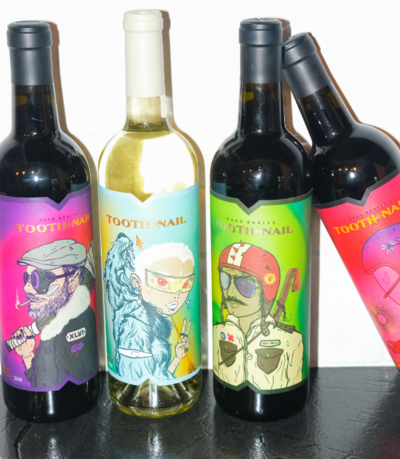
Tooth & Nail: Creative, unconventional wines with unusual names and stunning labels. For example, “The Fragrant Snare” brings together Chardonnay, Albarino, and Viognier.

Amor Fati: Syrah, Grenache, Pinot Noir and Chardonnay, all from cool climates.

For me, these 4 were love at first taste. All scored 92 points or higher. See reviews at 

http://www.winereviewonline.com

 Stasis: Pinot Noir from Santa Maria and a Viognier. Both excellent.

Destinata: Drink now, no fanfare Chenin Blanc, Riesling, and Syrah. All good. All fun. Especially the drink-now style Syrah. The dry Riesling and Chenin will surprise you.

Bundles: special packages at 20% off prices. 

There’s a Pure Bliss” bundle and a” Once in A Lifetime” bundle you should check out.

BTW: the labels are so artsy, so creative, and so collectible!

You can see my wine reviews at winereviewonline.com and better understand my enthusiasm.
Who’s Behind these Wines?

Rob Murray is the owner. After making Rabble Wine a raving success, he sold it to start Tooth & Nail. With Rabble, he was the first to use augmented reality technology in wine labeling, thereby injecting a sense of movement and play onto a bottle of wine. When it comes to label artwork and design, he is far ahead of everyone.

Winemaker Jeremy Leffert’s motto is: “Pour now. Live for today.” He has a degree in Environmental Science and later studied at Cal Poly. At Tooth & Nail, Jeremy leans toward the philosophical and is ever alert to avoid “the dominance of the winemaker’s hand.” With that in mind, he views himself as a shepherd as much as a maker.

Wait! A winemaker without a BIG ego? Not puffed up about high scores, not an icon or living legend? Just a highly skilled professional.

As a wine club, Tooth & Nail not only meets but nails it by exceeding my 4 very demanding standards:

1.High quality wines

2. Wide variety of wines, unusual wines, and wines at all price points

3. Membership has real value, VIP, being part of cutting edge thinking, something trending

4. Fun

Well, the “fun” requirement eliminates about 90% of all winery wine clubs, the snobby places with way over the top prices.

Also those wineries where members feel pressure to buy or else get dropped. And those with the weekend traffic and the crowds? 

So  hello Paso Robles, the home to high quality wineries owned by crazy, gifted, fun loving, creative, enthusiastic and, well, nice people.

And one more major thing, this winery is within reach of TinCity, home to dozens of other wineries, a few artisan breweries, and a food vendor or two. Yes, part of a wine destination!!

A Heads Up: Major Wine Sale Starts Tuesday

Vintage Wine Estates is running a serious sale with heavy (50-70%) discounts. 

While its portfolio of wineries runs the gamut, there are a few wineries you

might check out. You might pass on the Cherry Pie and Layer Cake, 

but there are some real fine brands represented.

Here are two examples of real deals:

Kunde Family Estate: the 2018 Zinfandel is on sale for $12.10 a bottle

Swanson Vineyards 2019 Pinot Grigio, San Benito $13.80 a bottle

Also, on Tuesday when the sales begins, see what is offered from these established wineries: 

Qupe, one of the most reliable Rhone wine producers 

Laetitia  is good for its cool climate Chardonnay and Pinot Noir

 Clos Pegase is one of Napa’s big names. Look for its Chardonnay

B.R. Cohn has a great Zinfandel from Moon Mountain and several Cabernets

Here’s where to begin:

www.vwecellarevent.com

Shipping is 1 cent for a case

You can thank me later

The Rogue Valley’s Diverse Wines

Exploring the Diverse Wines of the Rogue Valley 

Seeking out unusual wine regions for their great diversity seems to be high on the must-do lists for today’s sommeliers. At least, the hard working SOMMS.  Makes sense because discovering new wines and/new regions pretty much validates their jobs. Recently the head of sommselect.com singled out the Santa Cruz Mountains AVA for its success with Pinot Noir and Syrah among others. He ended by praising Santa Cruz as “one of the few regions anywhere in the world hospitable to such a diverse range of varieties.” 

Really? Now that “diverse range of varieties” phrase struck a chord. Coincidentally over the last 2 years, I’ve been interested in the same subject.  Well, as much as I enjoy wines from Santa Cruz, there are other regions working with a far wider range of varieties that make Santa Cruz seem normal. 

Santa Clara County, for example, has all of the mainstays, all of the Rhones, and, thanks to Guglielmo,  some unusual Italian varieties. An even wider range of varieties was encountered during my visit to the Okanagan Valley. Not just a few remaining hybrids, but there’s an exciting diversity there including many obscure vinifera grapes like Chasselas and Pinot Auxerrois, both made into impressive wines.

What also ties these two regions together is neither has what could be called a signature wine. A wine that consumers automatically equate with that place, like Napa Cabs or Amador Zins.

So this lack of a signature wine leads us to another region where winemakers actually seem to enjoy working with a diverse range of varieties: the Rogue Valley in Southern Oregon. Because it has so little in common with the Willamette Valley, winemakers get a little touchy if you refer to it as “The other Oregon” wine region. 

Yes, Pinot Noir and Chardonnay are grown here, but so too are Cabernet, Zinfandel along with Spanish, Italian, and the full range of French grapes. And one or two Portuguese.

How Do you Define Diverse?

 In the Rogue Valley, it is common to grow a dozen or more varieties within a small estate. Established in 2004, Quady North has 15 acres under vine and grows 12 different varieties. Most are Rhone grapes, but it also farms Cabernet and Cabernet Franc. On its 40 acre estate vineyards, Schmidt Family Vineyards in Applegate Valley grows 14 varieties, and produces 6,700 cases a year. It also makes 25 different wines in a given year.

Its neighbor, Wooldridge Creek, one of the oldest wineries, has 56 acres planted to twelve varieties: Cabernet Sauvignon, Merlot, Cabernet Franc, Syrah, Chardonnay, Pinot Noir, Viognier, Sangiovese, Zinfandel, Malbec, Petit Verdot and Tempranillo. And a similar wild assortment is seen in many, many other wineries across the entire Rogue Valley. The Weisinger Family, on the eastern edge in Ashland is said to specialize in Tempranillo, Pinot Noir, Rhone and Bordeaux varietals, as well as proprietary blends. Quite diverse for a 3,000 case annual output.

But are these wineries growing a dozen or more varieties like the proverbial jack of all trades, master of none? It seems crazy for small vineyards to grow grapes from Bordeaux and Burgundy, along with the Rhones. Then add a few from Spain and Italy and it seems way beyond normal. 

At Belle Fiore Winery, where 56 acres are planted to such a wide mix which includes many unusual Italian varieties, the owners have identified what they call “16 micro-blocks” based upon soil types and elevation. Two-Hawks’ winemaker, Kiley Evans, has singled out several blocks based on soil types led by a Darow Series of wine grown in one predominant soil. So the soils and sites are indeed diverse.

NOT THE WILLAMETTE VALLEY

Taking its name from the Rogue River, the Rogue Valley wine region wears that rogue title well. Approved as an AVA in 1991, the Rogue Valley is the southernmost growing wine region of Oregon and the Valley is 70 miles wide by 60 miles long. The area runs from Ashland in the southeast through the north and south sides of Medford and stretches to Grants Pass in the west. 

Today, this high elevation (1,000-2,300 foot level) generally mountainous growing area is home to 100 wineries. While most of these wineries started after 2000, the Rogue Valley is Oregon’s oldest wine region, with first vineyards planted in the 1850s. And it is home to the State’s first operating winery opened in 1873. 

Vineyards have been expanding recently and now cover around 5,000 acres, growing no fewer than 70 varieties. Yes, from Albarino to Zinfandel, the roster includes the obligatory Chardonnay and Cabernet and, no surprise, Pinot Noir. But with vineyards planted at different elevations with different aspects, the Rogue is no Willamette.

Because most of today’s vineyards were developed after 2000, many wines, Rhones, Spanish, or Italian, are likely made from relatively new vines. Typically, vineyards are densely planted and organically grown with “sustainable” a popular theme.

Dancin is one of a handful on wineries making a Pinot Noir, but as owner Dan Marca explains,

“ Our site was created for Pinot Noir and Chardonnay with its north, northeast facing aspect, 1800 foot average elevation and shade occurring beginning at 5:45pm (depending on the Block) throughout the growing season. We are finding that we can produce delicious Pinot Noir with great flavors and balance at alcohol levels in the mid to upper 12’s to the very low 13’s. Our wide diurnal swings allow for flavors and ripeness to occur during the day with acids retained during the overnight hours. We can see daytime highs to overnight lows vary by 40 degrees!” 

And he adds that the same Pinot Noir clones ripen later at his site than they do in McMinnville or Dundee.

Dancin’s vineyards are in the mid-section of the Rogue Valley, just outside Jacksonville. Far to the west is the The Applegate Valley AVA which was established in 2000 as a sub-region within the Rogue. With over 700 acres under vine, the Applegate Valley “has a warm-summer Mediterranean climate, like much of coastal California. However, it has four very distinct seasons, a relatively short growing season, and fog is not a factor. Winter is cold, with occasional snow. That allows the vines to go into full hibernation. Half of the area’s annual 20-30” of precipitation arrives in winter.”

Because the growing season is on the short side and features cold nights and wide diurnal swings, the Applegate Valley AVA is best-suited to  grapes which ripen quickly or are pleasing at low levels of ripeness. Here, veteran viticulturist Herb Quady who manages many vineyards in addition to his own for Quady North, is a strong advocate of Rhone varieties. He is joined by the founders of Cowhorn Vineyard who planted 25 acres to the Rhones.  He explained his choice this way:“While our latitude is a bit lower than the Rhône, and our growing season is shorter, other qualities are similar, especially to Châteauneuf-du-Pape: river-side bench-land with little rain, hot summers, and rocky soils that don’t hold much water.”

But even in this corner, the Rogue Valley is not the exclusive Rhone Zone. A few miles away from Cowhorn, Red Lily Vineyards has emphasized Tempranillo planted along benchlands of the Applegate River and has vines located on three distinct sites.  Winemaker/owner Rachael Martin tells us her “newest vineyard site planted to Tempranillo “has a predominantly northern aspect on a varying slope surrounding a knoll, and sits at an average elevation of 1500 feet.” And another vineyard site “has a predominantly western aspect on a 12% average slope that rises to an elevation of 1630 feet.” She makes Tempranillo in three styles, including a Rose.

As specialists, Dancin and Red Lily are rare in this region where it is more common to grow a dozen or more varieties within an estate.  But, looking closer, Dancin makes 4 distinct Chardonnays, 4 Pinots from different blocks or different clones. It also makes a Syrah and a Barbera. Its kindred spirit near Ashland is Irvine & Robert Vineyards. Also specializing in Chardonnay and Pinot Noir, it typically bottles 3 of each varietal, all small batches identified by clone or vineyard block. And, no surprise, makes a rare Pinot Meunier.

However they go about it, Rogue Valley winemakers are making most wines in small batches based upon some unique condition, be it soil, micro-climate, clone, or block by block. 

And this is how I read the situation after talking to winemakers at Peter William, Weisinger, 2-Hawk, Quady North, Goldback, and Schmidt Family: winemakers revel in the diversity. Making a wide variety of small batch wine is what being a winemaker is all about. Hands on winemakers: they can be creative and make decisions that they were trained to do. They dont have to be told what to make and how to make it from the sales team, the bosses, and the market or some focus group.

 But since consumers naturally like to have reliable information and advice, the question of what is the Rogue Valley’s signature wine needs to be addressed. Not long ago, W. Blake Gray writing for winesearcher.com made a case for Malbec as the region’s best. He included wines from the Umpqua Valley but highlighted the Malbecs from Weisinger Family and 2-Hawk. 

Though I share his enthusiasm for those Malbecs, his argument largely based upon grape prices failed to convince Malbec is it. On my first few visits,  I thought the star was Syrah, but then I tasted a stunning Grenache from 2-Hawk, a beautiful Viognier from Quady North, Cabernet Franc from several wineries, and more recently Tempranillo from Peter William Vineyard and others. And then there are creative blends such as Tempranillo and Syrah.

In fact one could easily argue that the standout Rogue Valley wine is Cabernet Franc. While admittedly being on the Cab Franc bandwagon, I draw support from the excellent medium bodied versions made in Applegate by Quady North, Schmidt Family, and Wooldridge Cellars and then head south east to Ashland and add Cab Francs from Belle Fiore and Weisinger Family. Here’s a tip: when released in the Spring of ‘22, Weisinger’s 2019 Cabernet Franc will rank as one of the best made in the West Coast. 

Tempranillo, the third most widely planted variety in the world, has not yet established a beachhead anywhere in the USA. Given the Spanish heritage, that’s odd.  But there’s more new acreage being developed in the Rogue Valley.  Today, close to 100 wineries offer one in their tasting room. 


Winemakers, Not Rock Stars

Giving the great diversity of varieties that can be successfully grown, the Rogue Valley is attracting young, creative winemakers. Goldback is a new winery launched in 2016 by Andy Myer. In an interview, he explains: 

“Wine had always been of some interest to me, but the big moment happened after I moved to Oregon from Pennsylvania in 2006.  I was transferring to Willamette University in Salem and was looking for a summer job.  I answered a craigslist ad for a tasting room job for the summer, which just happened to be for Cristom Vineyards.  Within 15 minutes of driving up the driveway for the interview, a lightning bolt struck.  I knew that working in wine was what I wanted to do for the rest of my life.”

From there, he gained experience by working at William Selyem and Hirsh in Sonoma, Felton Road in New Zealand, back up to Wahington at Mark Ryan and then to Cape Mentelle in Western Australia.

From these experiences, he came to favor “a minimalist approach to winemaking and aims to preserve natural acidity in whites and tannin integration in reds.” After wandering the wine globe, his search for a region took him to the Rogue Valley. 

The region’s diversity fits in perfectly with Myer’s view of wine:

“Wine itself is irreducibly complex.  The fact that you could spend your entire life working one piece of land with one type of grape and never quite figure it all out, because there are thousands of variables every year in growing grapes, and about the same in making wine.  That it’s impossible to make the same wine twice… and that every vintage everywhere is completely different.”  

For detailed reviews of Goldback and other Rogue Valley wineries, see my reviews at

winereviewonline.com