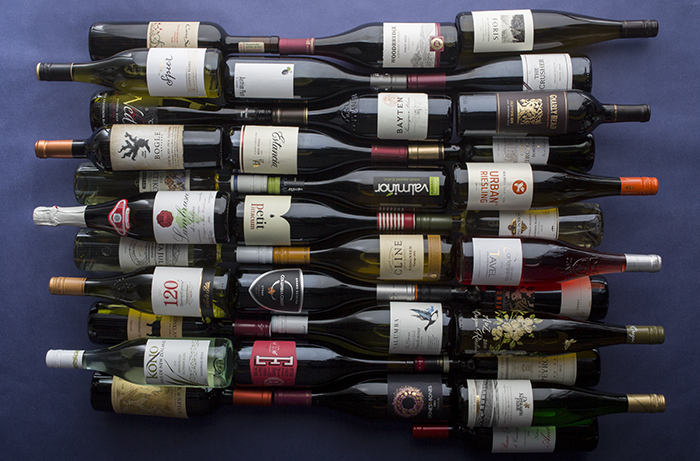
A Wake-Up Call for Wine Shoppers!

Wait. Are any wine drinkers actually shopping these days or did Amazon train us all to stay home and let others think for us? Then there was Covid  and now there’s Doordash delivering wines in some states. And subscription wine clubs are happy to deliver a box of unknown wines to your door. Oh well!

As 2025 winds down and the wine market faces a serious oversupply of wines, there’s never been a better time to shop around.  Sure, the online retailers hustling wines at WTSO.com, lastbottle.com and the rest of the gang are now offering a wider range of wines. On November 11th, winelibrary.com is set to offer a variety of wines at the $11.11 a bottle price point. By then Trader Joe’s and Costco will surely have come up with some deals for the holidays.

But the most exciting sale this week is at Grocery Outlet which has about 500 stores across the country. Yes stores, as in places you drive to, check out the shelves, load up a cart, and pay at the registers. Sounds old fashioned to many of you, but  most of us who love a wine bargain can adjust to it.

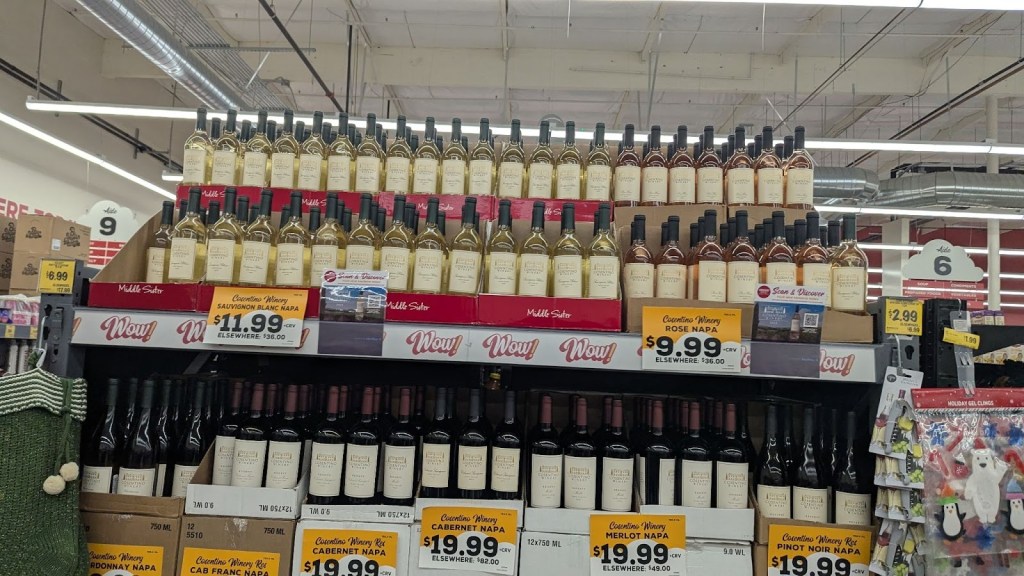
Yesterday, in a Grocery Outlet in Southern California, the shelves were practically falling over into the aisles. Piled high were wines from Cosentino, reds and whites. The 2023 Cosentino Sauvignon Blanc was excellent and sells for $11.99 a bottle. The winery’s website says that wine retails for $30 but is “out of stock.”  But Grocery Outlet has it along with Cosentino’s Merlot, Cabernet Sauvignon, Rose and others.  It also has the Reserve Cabernet Sauvignon for $19.99 which you can buy direct from the winery for …$82.

Cosentino Vineyards developed a following for its Zinfandel,Merlot,  Cabernet Franc and Sangiovese, but founder, Mitch Cosentino, sold the winery and is no longer involved. It is now part of the Foley Family portfolio, but the overall quality is still better than that of other once-famous brands now  under corporate owners.

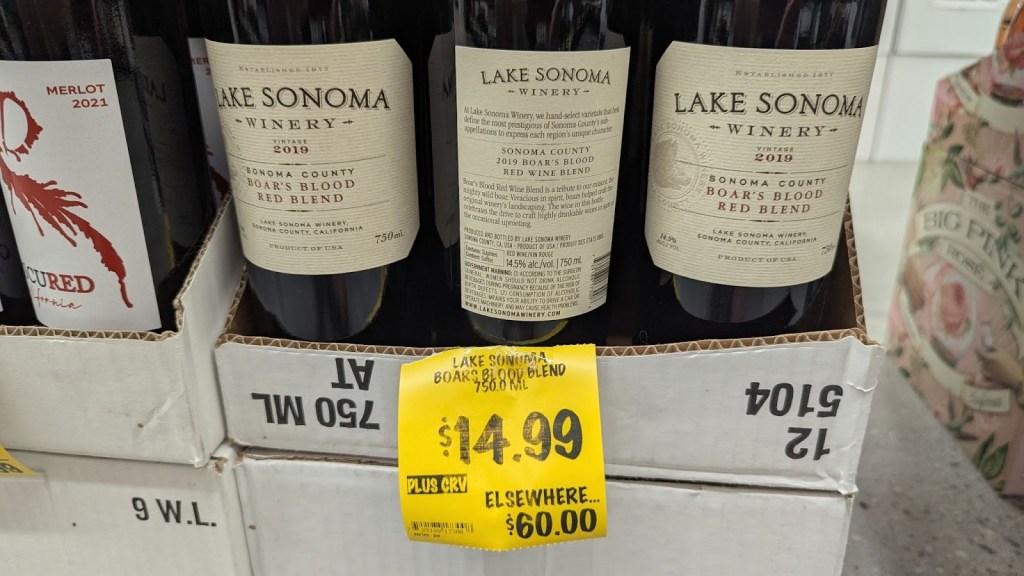
Back to my recent shopping adventure, Pinot Noir lovers should check their local Grocery Outlet to see if it stocks the 2021 Diora Pinot Noir from Monterey County. If you prefer Cabernet blends, then the 2019 Red Blend made by Lake Sonoma Vineyards is quite attractive. A few stores carry Napa Cabernet from Monticello Vineyards.

Yes, the offerings vary from store to store with Grocery Outlet. When it comes to bargain priced Bordeaux wines, I find Grocery Outlet is on a par with Trader Joe’s.  Decent, everyday wines from Firestone and Sebastiani are sold at many Grocery Outlets. 

Also, the end of the year is a good time to shop for Rose wines because wines from the most recent  vintage are about to hit the market. Right now, Bonny Doon 2023 Rose, the Central Coast bottling, not the Vin Gris, is a safe bet.

WALLA WALLA: Recent Notes & Updates

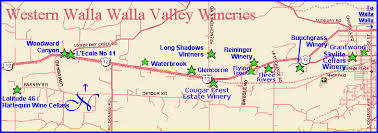
Walla Walla is unusual in many, many ways. First it is a rare AVA falling within two states, Washington and Oregon. About 60% is within Washington. Defined by the Blue Mountains to the southeast, the Palouse to the north, and the Columbia River to the west, Walla Walla is said to be the size of Napa but contains only 3,000 vineyard acres. 

But, for surprise #2,  there now are about 120 wineries calling Walla Walla home. Nothing much happened vineyard-wise after Repeal as the region expanded its orchards and wheat growing. Then In 1974, Gary Figgins planted a small vineyard and by 1978 his Leonetti Cellars was the first new winery. Figgins who was interested in Italian reds like Sangiovese made a 1978 Cabernet that by the early 1980s won so many awards and earned so many high ratings that it was being talked about as a cult wine. Walla Walla had awakened with a bang.

As its reputation spread, Figgins responded to his new found success and high demand by announcing release dates for subsequent vintages. The wines sold out quickly over a weekend in May.

Leonetti’s success, it is fair to say, kick-started Walla Walla as a special wine region which until then was better known for its onions, apples, and wheat. Selling wine to visitors from out of town caught the attention of Marty Clubb, who founded the nearby family winery, L’Ecole No 41 in 1984. Clubb was soon offering his attention-getting Merlot, Semillon and Cabernet on the same day Leonetti scheduled its open house. Not surprising, there were traffic jams caused by wine lovers coming from Portland and Seattle.  Adding to the evolving wine scene, Rick Small who planted a vineyard in the late 70s converted a machine shop into a winery in 1981. His Woodward Canyon Winery was yet another reason to hit the road to Walla Walla.

To be frank, Walla Walla is in the proverbial middle of nowhere. Portland is 250 miles west, Seattle around 275 miles away, and otherwise, nothing but farmlands and magnificent rock formations. The area is beautiful and the town of Walla Walla with its brick buildings is absolutely charming, home to Whitman College and more bike trails than you thought existed.

My first visit to Walla Walla was in 1996 and during that time I was welcomed by the owners of Leonetti, L’Ecole, and Woodward Canyon. Two wineries had tasting rooms downtown, Seven Hills and Canoe Ridge. My hosts were the owners of a new vineyard named Pepper Bridge who were at the time also major apple growers shipping their product worldwide. All three wineries remain family owned and Pepper Bridge, owned by Ginnie and Norm McKibben, is now both a winery and a major grower selling to dozens of  wineries.

But to return to my list of what makes Walla Walla unusual, #3 is the fact that in the little town there are presently 32 winery tasting rooms open to the public and to wine club members. That’s almost a third which is amazing. As I was packing up to leave on the most recent trip, a local stopped to ask what I thought of Walla Walla. After mentioning I first visited years ago, she noted,  “Yes, the wineries saved the town and brought it back to life.”

But what really sets Walla Walla apart from most AVA is that 95% of the grapes grown are red. Cabernet, Merlot and Syrah combine for 70% of the total. On the Oregon side, The Rocks District sub-appellation, approved in 2015 and known for its distinctive gravel, cobblestone soil,  Syrah edges out Cabernet and Merlot is a distant third.

While it is fairly clear that Syrah is the rockstar of The Rocks, Cabernet faces some stiff competition from Merlot and Bordeaux blends as the signature wine of Walla Walla Valley. And Syrah is gaining some steam with new wineries like Valdemar Estate raising the bar. 

From the revisit, I left with the belief that Walla Walla is just gaining momentum and is on track to become a leading voice for many red wines. Currently, there are excellent Cabs and Merlots but it is easy to get excited about the Bordeaux blends, especially those with a good dose of Cabernet Franc. 

5 Best Representatives: All have wine clubs

Northstar Winery “Red Blend,” Walla Walla Valley 2016 $60

Pepper Bridge Winery Merlot, Walla Walla Valley 2018 $55

Amavi Cellars Cabernet Sauvignon, Walla Walla Valley 2018 $36.00

Valdemar Estate Syrah, Walla Walla Valley  2019 $65

Saviah Cellars 2018 Cabernet Franc Walla Walla Valley, 2018 $35

Merlot

L’Ecole No 41 remains a leader with both its regular and Estate Merlot. Northstar has 14 acres planted to Merlot but uses the Columbia Valley AVA.  Northstar’s 2013 Merlot, with 23% Cabernet, is a gorgeous, concentrated berry-infused, lightly oaked version for $41. Northstar’s limited production 2017 Premier Merlot, is as big and beautiful as Merlot gets. Loaded with flavors, It only needs cellaring. The retail price is $100.

Pepper Bridge Winery Merlot, Walla Walla Valley 2018 $55

With 13% Cab Franc, this Merlot made from Seven Hills and the estate vineyard, this is a perfect example of what Walla Walla offers. It displays ripe cherry, raspberry and light herbal aromas with a touch of oak spice. On the palace it is medium-full bodied with ripe fruit, an earthy streak and good acidity to accompany the tannins. Concentrated, textured, and balanced, it begs to be cellared 3-5 years. While owning both Pepper Bridge and Seven Hills Vineyard, the winery produces only 8,000 cases a year. Dozens of wineries buy grapes from Pepper Bridge, including Leonetti which bottles a vineyard designated Cabernet. All Pepper Bridge wines were excellent. One reason why the winery is not better known is that it sells almost all direct to wine club members. But if there were one club I would join , this would be it.

Cabernet Sauvignon

A recent taste of a 2002 Leonetti Cabernet confirmed that this winery remains in the forefront with its signature balance and longevity. Woodward Canyon with its Estate Reserve Cab also remains in top form. The 2016 Northstar Walla Walla Cab ($60) offered beautiful aromas with light tannin and was presented in an attractive elegant style. Offered through its wine club,the 2016 Pepper Bridge Cabernet ($56), blended with the four other Bordeaux grapes, is a classic, ripe, structured version with bright fruit and rich tannin that will drink beautifully for many years.

Amavi Cellars Cabernet Sauvignon, Walla Walla Valley 2018 $36.00

A vintage that was warm in July and threatened by smoke, 2018 turned out to be fine thanks to the ultra-long growing season that is a hallmark of the region. The last Cab was picked in mid-October. Made from 76% Cabernet and equal portions of the usual suspects, it was aged primarily in neutral French oak. With cherry, sweet spices and black currant fruit, it is medium bodied, nicely balanced with hints of anise and dusty tannins. As an estate wine that is sustainably grown, Amavi’s Cabernet has been consistent over recent vintages and is attractively priced. A little over 5,000 cases were made in 2018.

Bordeaux Blends

Here as elsewhere, what to label traditional Bordeaux blends remains a problem. Meritage never caught on as a useful moniker. One of the early proponents of Bordeaux blends in Walla Walla, Reininger which began in 1997 finally decided by the 2017 vintage to label the wine “BDX Red Wine.” A relative newcomer to the scene, Va Piano labeled its attractive blend, “Uniti.”  “Trine” is a name newly adopted for Pepper Bridge’s Bordeaux blend.  “Night Owl” is used by Amaurice Cellars for its red blend.  Oh well, one that stood out was Northstar’s “Red Blend.”

Northstar Winery “Red Blend,” Walla Walla Valley 2016 $60

Northstar’s first vintage was in 1994 and the state-of-the-art winery was built in 2002.

In its earliest years, Northstar was guided by  California’s well-known winemaker, Jed Steele. It is part of the Ste. Michelle portfolio which was recently sold. The 2028 Red Blend is made from 51% Merlot, 47% Cabernet Sauvignon, and 2% Cabernet Franc. The barrel regime consisted of 100% French oak with 38% new barrels for 18 months. It is definitely not shy with wide open aromas of herbs and ripe dark cherries, and is rich and silky smooth on the palate. Beautifully textured, it finishes long with sweet, toasty oak notes. It does throw some sediment, so decanting is recommended.

Another standout Bordeaux blend:

Va Piano Vineyards, Walla Walla Valley “Uniti”, Estate Grown 2018 ($85): 

Born and raised in Walla Walla, winemaker/owner Justin Wylie started Va Piano in 2003.  A year in Florence encouraged the “va piano” name from an Italian proverb that means go slow and take it one step at a time.  For a wide range of red wines led by Cabernet and Syrah, he relies on grapes from his 20-acres in mid-Walla Walla and the high elevation Octave Vineyard on the Oregon side.  A top-of-the line blend, the 2018 Uniti is 30% Cabernet, 30% Cab Franc, 28% Merlot and 12% Malbec.  The winery has a tasting room in Bend.

Syrah

Although I didn’t taste many Syrah on this trip, one caught my attention: 2019 Valdemar Estates from Walla Walla. This new winery is simply amazing! Founded by the 6th generation Bujuda family who also own Bodegas Valdemar in Rioja.  It is both a restaurant, featuring tapas, and a state of the art winery. To date, the investment is said to be well over $10 million. It is run by Jesus Bujuda who attended the University of Washington and fell in love with Walla Walla on a visit. The mantra heard in the tasting room is that “we are here to help put Walla Walla on the international wine map.” An attractive lineup of Rioja wines are also offered in the tasting room and are for sale. The 2012 Conde Valdemar Reserva is delightful for $30 and there’s a selection of older library vintages going back to 1985. As good as the Grenache was, the Walla Walla Syrah was a standout.

Valdemar Estate Syrah, Walla Walla Valley  2019 $65

A little under 200 cases were made, and the fruit was sourced from Stoney Vine Vineyard located south of Walla Walla with its rocky terroir. The Syrah is the old style head-training method for vine management. Blended with 5% Grenache, the wine was aged 16 months in 25% new and 75% 2-year-old, French oak. It’s dark and vibrant, loaded with dark blackberry fruit, anise, and a slight earthy streak. The flavors are ripe and concentrated but are under control with light tannin leading to a balanced finish.

Cabernet Franc:

As another writer finding more to like these days with Cabernet Franc, I was happy to see several wineries offering a varietal version. Saviah’s is a splendid example.

Saviah Cellars, Walla Walla Valley Cabernet Franc 2016 ($35): 

Founded in 2000, Saviah Cellars offers an extremely wide range of limited production wines including the only Barbera from Walla Walla, an attractive Nebbiolo, and this extremely well-made Cabernet Franc.  It was sourced from three vineyards: Watermill Vineyard which is located in The Rocks District, Dugger Creek Vineyard and the Summit View Vineyard.  It is a textbook example of the varietal with aromas of ripe berry, spice, tobacco and anise.  Medium bodied, it has similar flavors with highlights of dried herbs and raspberry fruit.  It has a slightly fleshy palate feel and no rough edges as it finishes long and smooth.
Real Wine Deals: Two Days Left

Super Savings: 2 Days Left

If This is your Wine Mantra:

Just say “no”: to over-hyped “culty wines.”

Wines are for drinking.

You wouldn’t pay $20 for any Pinot Grigio.

But the Swanson Pinot Grigio at $12.60 might get a look.

Then check this sale out

Running from October 21-22nd

At www. vintagewinestates.com

https://www.vwecellarevent.com

With 1 cent case shipping!!

Browse the large offering, find a wine, go for it.

3 that caught my attention:

2017 Kunde Family Estate Zinfandel at $12.10 a bottle

2017 Firesteed Chardonnay Willamette Valley $11.90

2015 Qupe Syrah, Edna Valley $20.80

And a Columbia Valley Cabernet for $13.20 also sounds like a fine deal.

What are you waiting for?

You can thank me later

Okanagan Valley Wines: Lakes, Glaciers & Deserts


Visiting Canada’s Okanagan Valley in British Columbia has been on my must-do list for years. Not for skiing, or hiking, biking, boating, backpacking…all of which make the region a tourist attraction. The reason was to check out the wines.

Canadian wine? Yep, and not Ice Wine. Although Canada may have been once known for Ice Wines, most are made today in Ontario. In British Columbia the wine business is growing rapidly and the Okanagan Valley is the hub, the epicenter of exciting new wines.

kelowna

As a longtime wine writer, I’ve visited just about every wine region in Europe and South America and also both islands in New Zealand and every corner of the West Coast. Exploring new places, visiting overlooked regions, and discovering new and highly enjoyable wines are what come naturally to me as a wine writer.

So my remarks about Okanagan are not hyped up euphoria from a newbie influencer. Or from someone who was wined and dined and shown only what some PR person wanted to be seen.

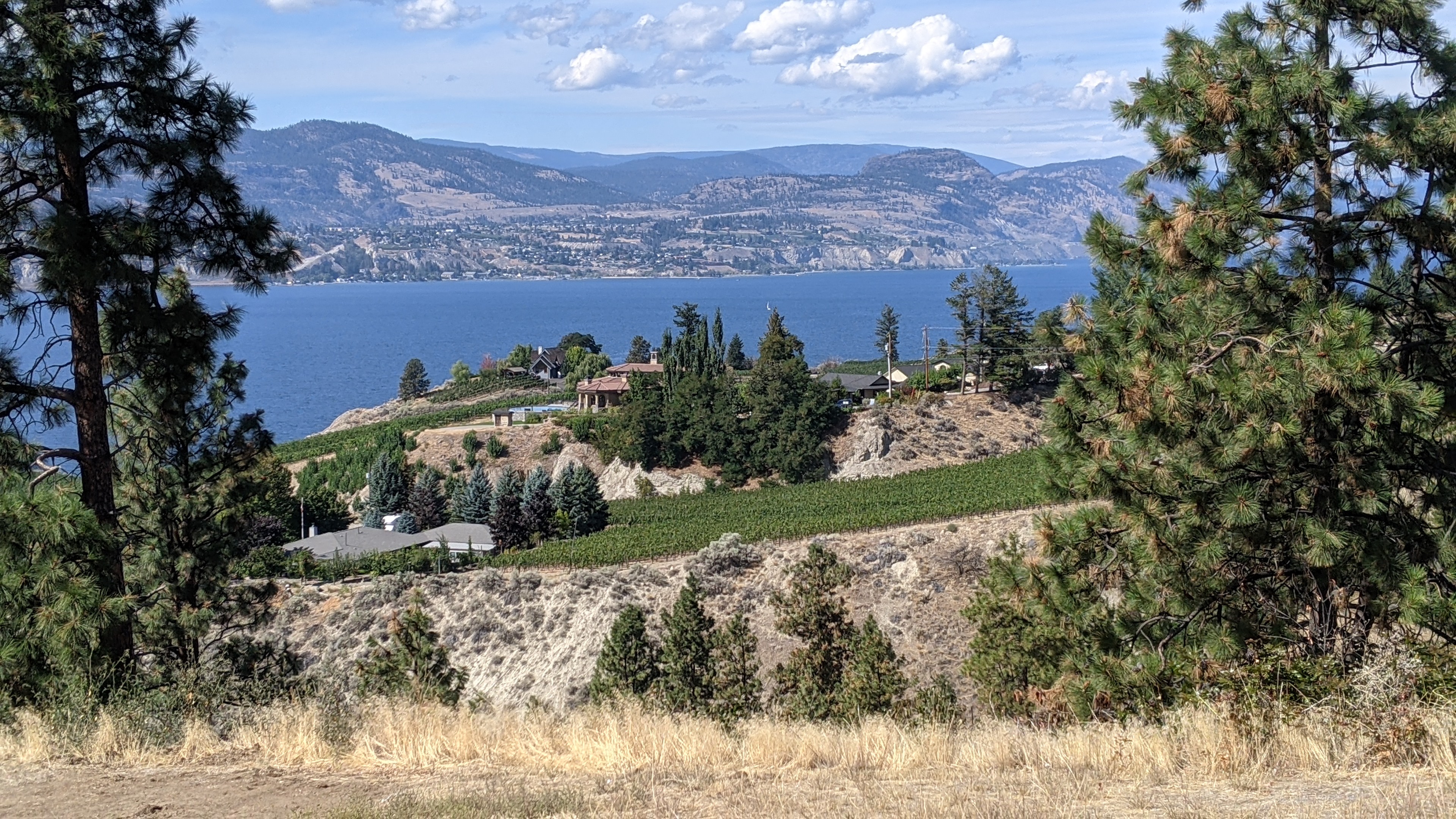
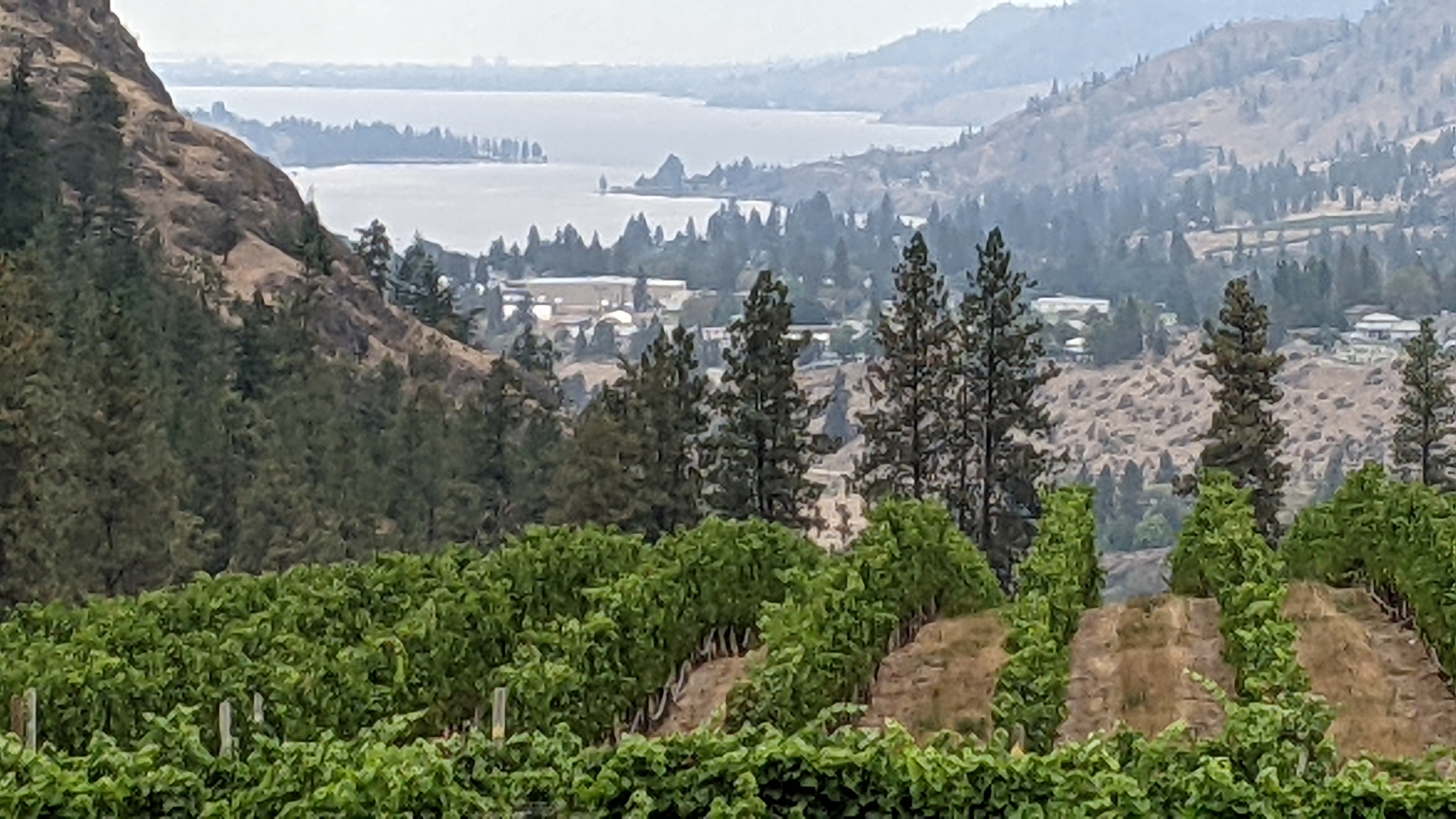
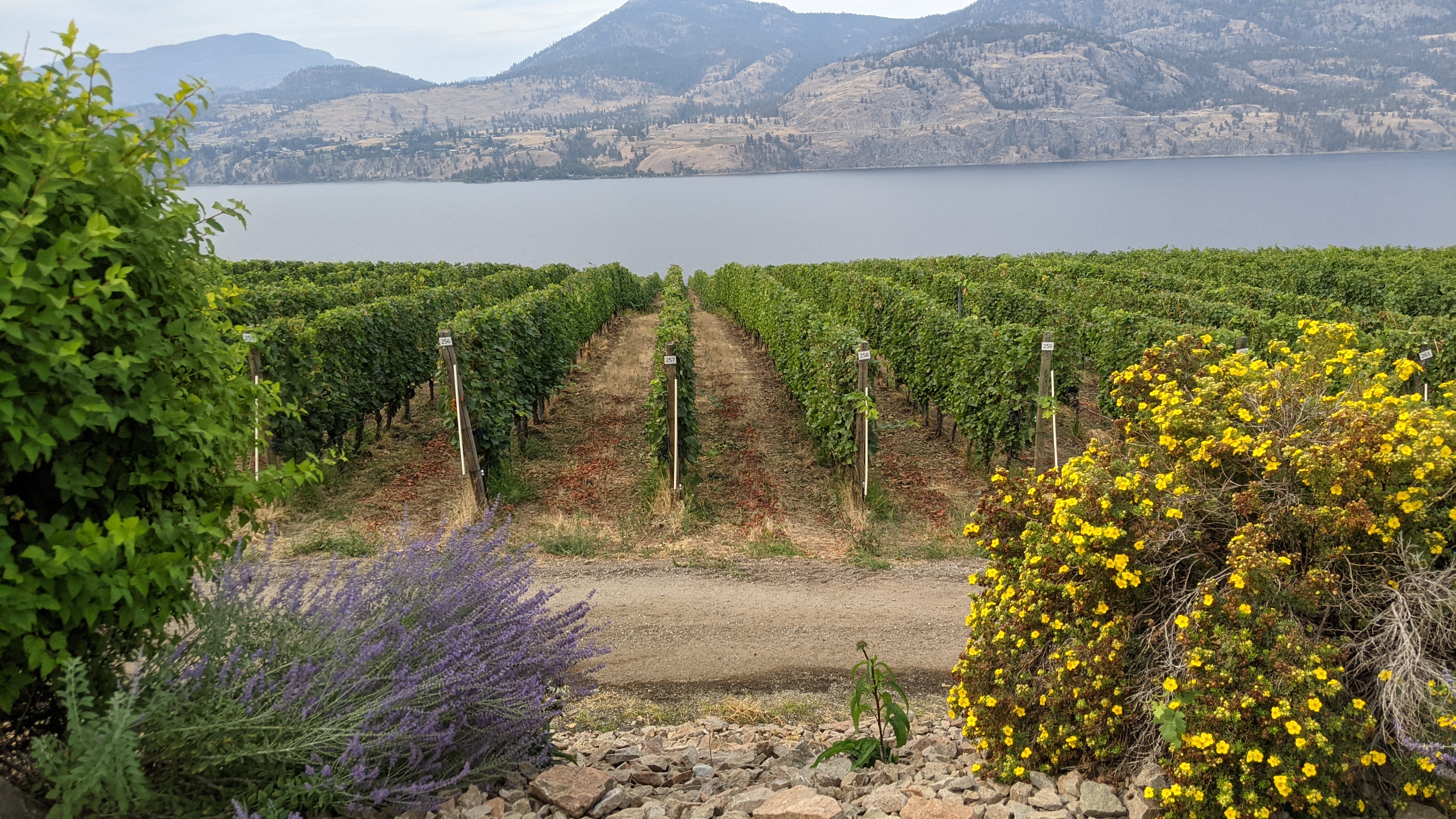
It took a lot of planning to finally visit Okanagan and of course there were restrictions and social distancing protocols everywhere, but after an extended stay it became clear that Okanagan is an amazing place with dramatic lakes, mountains, and vineyard vistas and wines that can compete on the world stage. 

Check out Okanagan wines at www.winereviewonline.com for current ratings and for an earlier post.

5 Reasons why Okanagan Should be on Everyone’s Wish List

  1. Okanagan is a major wine region with 10,000 acres of vineyards & 275 wineries
  2. Okanagan grows all the classic European wine varieties from Cabernet to Viognier
  3. The quality is high and the best wines are truly terroir-driven, due to diverse soil, climate, elevation 
  4. It is an exciting young, fast growing wine region that jump started in 1990
  5. Amazingly diverse with southern vineyards located in Canada’s only desert and the most northerly vineyards exposed to Arctic freezes.

Most wineries are small and family-owned, focusing on wines from their own vineyard which explains the widespread use of “Estate” in so many winery names.  Wine clubs are “the” thing for most, and quite a few wineries are also restaurants or bistros.  Sit-down tastings are usually by appointment, but it was amazing to see the tasting fees were around $10 for 4 or 5 wines. And that’s $10 Canadian which makes wine tasting fun.

dirty laundry

Getting there from Vancouver required a 4+ hour drive over the steep mountain range to arrive at Kelowna, a bustling lakeside city that happens to be in the middle of the Okanagan Valley.  The lake is the Okanagan Lake, a deep one gouged out by glaciers that is 85 miles long and 3 miles wide.  Some 40 wineries are located just outside of Kelowna and neighboring West Kelowna.  As you drive around the steep hillsides noticing lava rocks here and there you sense the presence of Mt. Boucherie, a once active volcano.

While most wine regions claim to be unique in some way, the Okanagan Valley with its history of glaciers and volcanoes is unquestionably unusual, arguably unique.  Then factor in the location, the 49th parallel east of the mountains in British Columbia, and it is a kind of high desert made semi-arid as the mountains keep annual rainfall totals low.  

And this is BIG: When compared to Napa Valley, the Okanagan enjoys at least 2 extra hours of daylight from July through the harvest. That’s according to winemakers who add that the season is short as budbreak occurs much later. In other words, different from any other wine region.

During my visit in early September when the harvest was in full swing in California’s North Coast, Okanagan winemakers were wrapping up their final pre-harvest cleaning of tanks and barrels, anticipating harvest to be in full swing by the end of September.

Most wines are labeled “Okanagan Valley” as their origin, but within that area are over a dozen sub-regions. But within each sub-region, the growing conditions vary widely due to elevation, aspect, proximity to a lake, and soil types. 

 For instance, the east side of Lake Okanagan is much warmer than the west side of the Valley because it receives hot afternoon sun well into the evening. There can be ripening differences of as much as two weeks for the same variety at the same latitude depending on which side of the valley it is planted.

PXL_20210910_193141280

Kelowna and Penticton are the two major cities and sub-regions.  The Kelowna area stretching from Peachland to the north end of the Okanagan Valley has the coolest climate of the Okanagan. This makes it an area well suited to earlier ripening varieties. Tantalus won me over with its Chardonnays and neighbor Spearhead Vineyards is a bona fide Pinot Noir specialist. Pinot Noir dominates with 27% of the acreage while Chardonnay, Pinot Gris and Riesling together cover another 40%.  

vineyards okanagan

Summerland, a lakeside village south of Peachland, is home base for two dozen wineries, including one of my favorites, Dirty Laundry. Evolve Cellars is another quality-minded winery.

Naramata Bench

Located at the southern end of the Lake, Penticton is a lively village and some 85 wineries are within a 20 minute drive. Many wineries can be found on the Naramata Bench as you travel along the eastern side of the lake from Penticton north to the tiny village of Naramata. Several, such as Da Silva, Hillside Winery and Popular Grove, are classy bistros with excellent food to go with the fine wine. The west-facing vineyards of Naramata Bench and Skaha Bench can ripen later ripening varieties in the warmer sites.  Merlot, Pinot Gris, Pinot Noir, Chardonnay and Gewürztraminer are the most planted varieties there. 

With so many outstanding wineries along the route, you can easily spend 4-5 days exploring the Naramata Bench region, Skaha and Okanagan Falls. Best advice is to start with these seven:

Hillside Winery

Da Silva Vineyards

Poplar Grove

Bench 1775 Winery

Upper Bench Winery

Painted Rock

See Ya Later Ranch

see ya later

Despite the incredible diversity of sites, a few generalizations hold up.  For instance, the east side of Lake Okanagan is much warmer than the west side of the Valley because it receives hot afternoon sun well into the evening. There can be ripening differences of as much as two weeks for the same variety at the same latitude depending on which side of the valley it is planted.

Similar patterns and wided diurnal temperature swings exist in other regions. In Lake Country way to the north, the vintages risk an occasional arctic freeze, while in the south close to the USA border, vineyards in Osoyoos and Oliver thrive in a hot, arid summer in Canada’s only desert. It may be a desert, but before vineyards were established,  Oliver was famous for its cherries and peach orchids. Impressive red wines, such as Syrah, Cabernet Franc, Merlot and Bordeaux blends,  are being made by Church & State Vineyards, Burrowing Owl and Moon Cursor. The name of one nearby winery, Bordertown Winery, reminds you that the US border is only a few miles away.

One fascinating new-ish region is the hard to say Similkameen Valley. A little northwest of Osoyoos, this region now has 20 wineries located along the river. I didn’t get there, but two wineries making terrific wines are Orofino and Corcelettes Estate Winery. The 2019 Syrah from Corcelettes was a stunning, rich, and flavorful version.

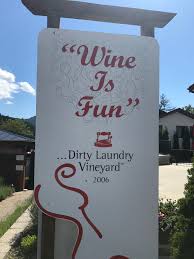
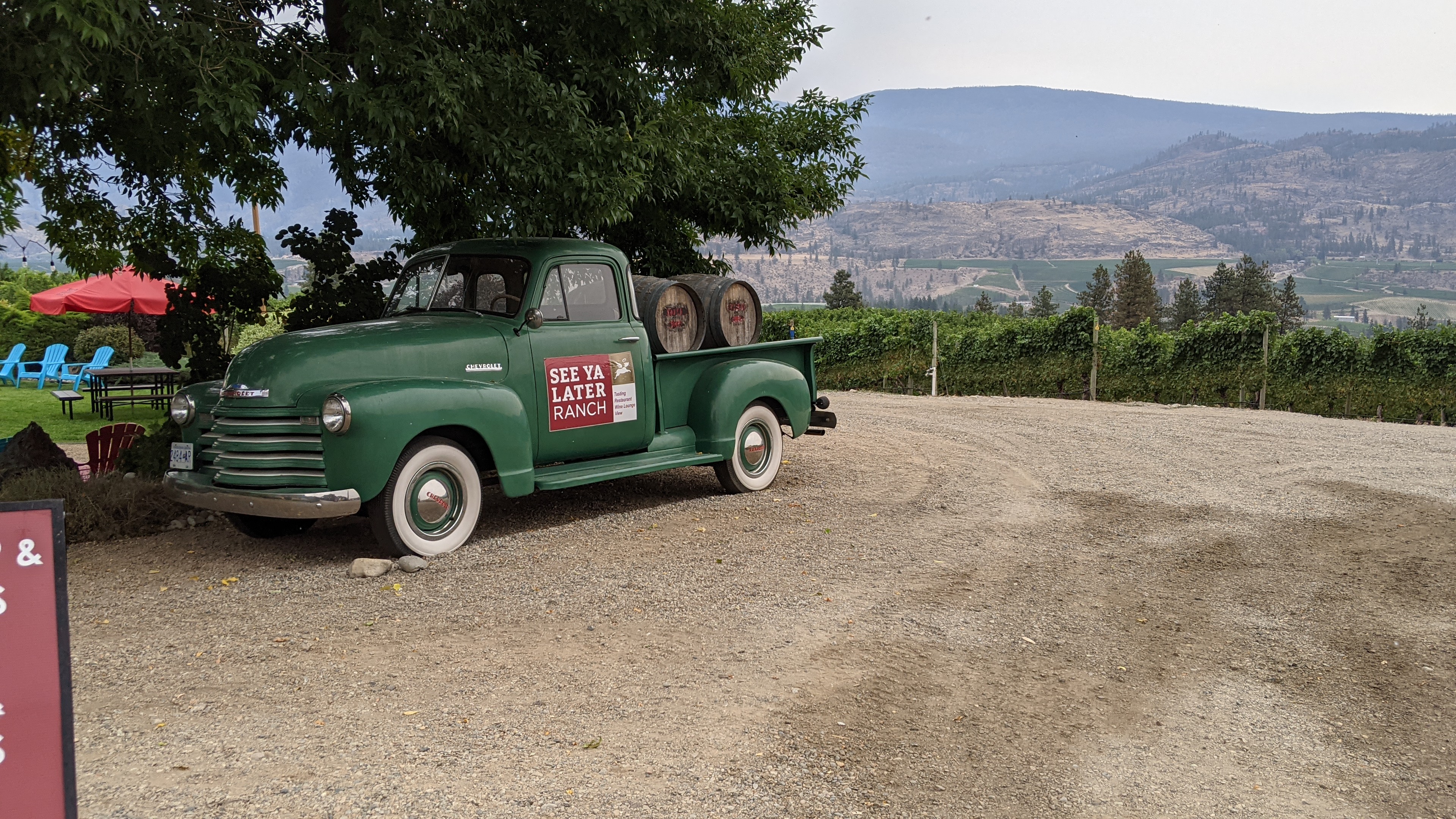
Several winery names are intriguing, self-deprecating and a little irreverent. My first wine tasted was a Rose from Dirty Laundry Vineyard before moving on to See Ya Later Ranch Pinot Noir and then to Blasted Church with its Bordeaux blends:  “Holy Moly,” “Nothing Sacred,”and “Cross to Bear.”  My favorite was Blasted Church’s 2019 “Big Bang Theory,” a Merlot based mélange.  Another winery bottles a red named “Hot Flash.” Oh, and of course there’s a clothesline with laundry drying in front of Dirty Laundry.  


Next: My Top 20  Okanagan Wines

A Worthy List of Cellar Worthy Wines

 Bravo Oldtimer Wine Pub

The Wine Enthusiast magazine, an oldie for sure, just released its list of the Top 100 Cellar Worthy wines. A great timely list to help re-stock your cellars.

These are my top ten reasons why this list is a must read for today’s non-snobby, open-minded wine drinker.

  1. The list is fascinating in its choices because the wines are not the usual predictable big names. And it is not pimping (too much) to advertisers. Only the top ranked Antinori was predictable along with Biondi-Santi Brunello and, yes, Dominus. The La Jota mention may be a bone thrown to the Jackson Family.
  2. It gets you out of the cult Cabernet rut. The number 2 most cellar worthy wine is a Syrah, not Cabernet or Bordeaux. And it was Terre Rouge’s Ascent from Sierra Foothills which, BTW, I’ve been praising for years.  Betz Family Syrah is also an excellent choice.

3. Not based on price: The list includes many nicely priced wines, about half priced below $75.

4. It reminds us white wines can age:  The selections include the Tablas Creek Esprit Blanc, a Copain Anderson Valley Chardonnay, a German Riesling, and a Pinot Gris from Alsace. Another Bravo for that daring choice.

5. It lists quite a few wines from Oregon and Washington. Kudos for including a Merlot from Walla Walla, home to some of the best Merlot around. Intriguing mention of Horsepower Syrah from Walla Walla which I’ll try to find.

6. Not Napa Valley driven: It lists very few Napa wines, but does have the Heitz Martha’s Vineyard Cabernet and a Mayacamas Chardonnay.

7. A few wines are downright discoveries and bargains such as the Buty Semillon-Sauvignon from Washington for $25 and a 2017 Cahors for $24. Biggest discovery of all may be the Halcon “Esquisto” Red Yorkville Highlands.

8. Great choices of Pinot Noir from Central Otago, Alsace, and Oregon. There’s even a German Pinot Noir.

9. Sparkling wines as age-worthy? Of course, but great to see Roederer’s Hermitage from Mendocino getting full recognition along with Bollinger and Cliquot.

10. Excellent choices of 2017 Bordeaux: the Chateau Carbonnieux is the 4th best and priced at $45. Right, no Petrus, no chateau Margaux. No hyping of the latest vintage for another bravo.

Serious Red Wines at Super Prices

On “International Chardonnay Day,” the trending story within online wine sales was….great deals in bigtime red wines.

Seeing many collectible reds quickly made me forget about Chardonnay.

Researching many, many special offerings during the week leading up to Memorial Day weekend, I discovered the time was ripe to buy serious red wines not to sip, but to savor and stash away.

The background that helps make sense is that the closure of so many restaurants and wine bars has famous reds not being re-ordered. Producers and importers have seen inventories stagnate. 

So the leading online wine sellers are being offered rare wines that normally would not be seen online at discounted prices.

It hit me when I saw Paradigm Cabernet offered way below normal at winespies.com. Paradigm, Heidi Barrett’s longtime client, normally sells for big bucks and mainly to mail list clients.

Today, another site offered the 2015 Beringer Private Reserve Cabernet Sauvignon for $109 a pop. 

Another featured a 2010 Chateau Lascombes, a coveted Margaux for $99.

Yes, culty wines usually snapped up by collectors and high-rollers are backing up in warehouses.

 So make room in your wine cellars and wait for the home deliveries to begin arriving.

Here are 10 great examples of serious red wines that caught my eye.

The web addresses are provided and represent the best sites for finding these or similar wines over the next few days:

2010 Château Lascombes, Margaux $99 at  www.wtso.com

2015 Beringer vineyards Private Reserve Cabernet Sauvignon, Napa Valley $109.00 at http://www.lastbottlewines.com

2015 Robert Craig Howell Mountain Merlot, $49.00 at www.winespies.com

2017 Sequoia Grove Cabernet Sauvignon, Napa Valley, $36.95 at www.finalcase.com

2015 Anthill Farms Pinot Noir, Sonoma Coast $40.00 at www.sommselect.com

2015 Seghesio Family Vineyards, Old Vine Zinfandel $29.00 at www.wineaccess.com

2014 Saxon Brown Zinfandel Parmelee Hill, $26.99 at www.vivino.com

2015 Domaine Du Grand Montmirail  Gigondas, Cuvée Vieilles Vignes, $28.47at www. wineExpress.com

2016 Cos Pegase Cabernet Sauvignon, Napa Valley $29.99 at www.vivino.com

2017 Vina Robles Paso Robles Cabernet Sauvignon, $21.97 at www.napacabs.com

With wineries and restaurants beginning to open to some degree, the high-end red wines wont be offered at reduced prices for too long.

The window will soon be closing.

So act fast.

You can thank me later.

Clueless No Longer


Wine Sleuthing 2.0

2020 has quickly provided a great, unexpected surprise. No, I’m not going political on you. This discovery relates to the online wine world.

The clues were there but I just kept getting sidetracked by the silly name and seemingly casual attitude. 

 Then this week with the offer of a fabulous Châteauneuf-du-Pape and special Zinfandel,  it was impossible yto ignore the clues.

Winespies, a wine merchant that I’ve been hesitant to write about,  has totally won me over with its exciting daily specials throughout January.

It meets and often now exceeds my 5 basic criteria:  

  1. Sourcing under the radar, first rate wines from non-corporate wineries

    2. Discounting in the 25-50% range, closer to 50%

   3. Providing informative background material about the wine and people

   4. Avoiding over-hyped, point scores and fake reviews

   5. Offering good free shipping options with temperature control

The standout wines in January that helped make me a new fan are an Oakville Cabernet, Napa Valley Merlot, Anderson Valley Pinot Noir, Brut Premier Cru Champagne and a knockout Zinfandel blend from the Sierra Foothills.

For more detail about http://www.winespies.com go to: www.robywine.com


The Best Online Wine Shop?

So, I have to confess my picks for the Sweet 16 college teams did not fare well. Each one has, alas, gone home.

My game is online wine shopping, and here is my choice for one of the Final Four

http://www.garagistewine.com

garagistewine.com is the most peculiar online retailer I follow. One reason is that its founder Jon Rimmerman who has been offering wines for over 20 years often presents his daily offers late at night.  He is based in Washington State which may explain some things.

He sometimes seems a bit chatty and becomes so excited and enthusiastic that he might belabor a point about a particular wine or region.

He is also insistent about when he will ship your wines and specifies the required temperature and humidity for proper shipping.

But these minor quirks are greatly offset by the pluses.

  • He seeks out wines that are organic, biodynamic and farmed sustainably  
  • He favors small artisan producers and family owned wineries
  • He obtains many wines direct so truly cuts out the middleman
  • He doesn’t use inflated scores from Somms
  • His wines are attractively priced
  • And he is unpredictable, sometimes offering olive oil, nutella, or food items. All high quality.

I enjoy reading his detailed notes because he truly knows his stuff. His background insights about vintages and regions are extremely useful. He is particularly on top of the vintage variations in France’s Burgundy and the Rhone.

He provided a detailed report on 2016 and 2017 based on travels and tastings throughout France and it is spot on. His remarks about 2015 and 2016 Bordeaux are the most reliable in the wine trade.

His analysis of 2016 in Burgundy and of the 2017 Northern Rhone are some of the best I’ve read.

And to this fellow Loire Valley lover, he has the inside track on Loire Valley wines:

“2018 is one of those “pinch me, this can’t possibly be true?” red wine vintages in the Loire. I can’t really compare it to anything else – it has the ripeness of a vintage like 1989 but the freshness of 1996 (another classic year.”

He also looks closely for super wines from Washington, of course but also Oregon. A recent Washington Tempranillo was remarkable.

He often locates super wines under $15 a bottle.

Here are examples of recent offerings:

  • 2018 Bourgueil, Domaine Cotellergie, $16.76
  • 2016 Scott Paul Pinot Noir, Chehelam Mts, $19.71
  • 2014 Rioja Riserva, Burgo Viejo, $13.98
  • 2017 Sancerre, Dezat $19.99
  • 2016 Renvoise “Jasmieres,” dry Loire Valley Chenin Blanc $16.70
  • 2015 Domaine de Cambes, Bordeaux $33.71
  • 2016 Ribbonwood Sauvignon Blanc, Marlborough $7.99

He recently offered a lovely Provence Rose for sale at $9.99.

He found “the best Bordeaux you’ve never heard of” from 2011.

He comes across as frank, as in these recent notes:

“This is fastidiously produced Chardonnay without a smidge of pretense but the stuffing and expression to, well, pummel just about any other example from outside the Burgundian reach under $30. In addition, the impact is from fruit, stone and clarity, not from alcohol, wood or from winemaker strategic manipulation/enhancement.”

Or

“If you think “bargain” wine is devoid of potential pleasure or cannot be in the league of top-drawer entrants, guess again. This wine can easily compete with Sauvignon Blanc at 2-3 times the $ and many of its competitors are not as delicious to drink.”

Sometimes to keep prices low, he suggests buying 6 or 12 bottles or more which may seem like hype and hustle, but I think he is sincere and honest in his emphasis on offering value.

A maximum number of bottles a person may purchase is always listed, ranging from 6 to 60.

Pros:

Wildly eclectic selection not found elsewhere.

Excellent prices

Seeks out biodynamic and other green products.

Cons:

Complicated shipping procedures and delivery dates but only to assure wines arrive in fine condition.

Best Sunday Sales: Red Wines on Fire

Quite a few online wine sellers came up with sales items on Sunday, probably as part of end of the month sales.

But the best sale of all is also the biggest as www.wine.com focused its sale on wines under $20 that were rated 90+

Of the 1,032 wines listed, quite a few are deeply discounted, but most are no big deal.

But we found five red wines that should be snapped up by bargain hunters before the sale ends.

  • 2011 Montecillo Rioja Reserva ($12.99)
  • 2013 Merlot H3Columbia Crest, (9.98)
  • 2013 Petite Sirah, Shannon Ridge High Elevation, ($13.99)
  • 2015 Nozzole Chianti Classico Riserva ($19.99)
  • 2015 Pinot Noir, Scott Family, Arroyo Seco ($19.99)

The Pinot is offered at 50% below retail. The others are also super values.

For an analysis of the fallacies of the 90+ scoring system,  see the discussion at

http://www.bestonlinewineshopping.com


Making Wine Tasting Great Again


Sensible and Informative

Just when I was about to give up the search for an online wine site that not only offers good wines at good prices but also serves as a vehicle for educating and teaching about wine, I found one.

The Weekly Tasting, a relatively new site related to WTSO.com,  is refreshingly sensible and informative. No membership requirements or hard sales tactics involved. No superficial program or pretend algorithm to create your tasting profile. Just two sommeliers working hard to select wines and to help you learn more about wine.

Such a change from the many sites that use sommeliers to shill for some overpriced wine by their rambling wine descriptions, overflowing with buzz words and baloney, to lead up to a rating of 95-100 points.

Each week, The Weekly Tasting usually offers 4 wines organized around a theme, and the packages are selected by two sommeliers, Elizabeth Schneider and Laura Maniec. Both are the real deal.

The themes are usually on a region or a varietal. As someone who has taught wine classes for many years, I can say It is not as easy as people think and so much comes down to selecting the best wines to illustrate the point or points you are trying to get across.

So, to get to my point, I find the wines selected for the different weekly tasting themes to be first-rate and reasonably priced. The package includes a video, tasting notes, wine pairing suggestions, all arranged in the box containing the bottles.

Let me cite a few examples to demonstrate why this is a vast improvement over the other so-called “curated” packages found elsewhere. The current weekly package focuses on Cru Beaujolais, a type that is probably not known to many, is not sexy or trendy, but might just appeal to red wine lovers looking for something different and delicious.

The current package is brilliant and performs a real service to those who truly want to learn about wine.  Here is it:

“Cru Beaujolais. Do not confuse the Cru of Beaujolais with Beaujolais Nouveau or even regular Beaujolais – these are serious wines. In fact, the region of Beaujolais has officially designated these villages as the best of the best. Many people compare Gamay, the grape in Beaujolais, to Pinot Noir in Burgundy. They have similar textures, but Gamay has softer acidity and is more plush on the palate. At this price point, I’d go so far as to say these four wines have more finesse and elegance than any Pinot Noir.” -Jennifer Simonetti-Bryan, MW

The price is $69.99 but with free shipping.

Then, I suspect many new wine drinkers buying Malbec by the boatload are curious about the difference between Malbecs from Argentina and France. So, here’s what is selected in another package:

What Elizabeth Schneider Has Picked For This Tasting

  • Domaine Des Bateliers Cahors 2009
  • Château Vieux Poirier Bordeaux 2014
  • Pascual Toso Reserva Malbec 2014
  • Famiglia Bianchi Malbec 2014

The price for this is $59.99, with free shipping.

Though everyone reading this is a wine expert, if you happen to know someone who would like a solid introduction to different wine varietals, consider this 6 bottle package:

See What Laura Maniec Has Picked For This Tasting

  • Seven Hills Oregon Pinot Gris 2015
  • Bernardus Monterey County Griva Vineyard Sauvignon Blanc 2015
  • Domaine Les Chenevieres Mâcon Villages Blanc Chardonnay 2015
  • Windmill Valley Vineyards Sonoma County Cabernet Sauvignon 2009
  • Metz Road Pinot Noir Mesa del Rio Monterey 2013
  • Château Tour du Moulin Les Terres Rouges Fronsac 2014

While unfamiliar with Windmill, I can understand how the other 5 are typical examples of the respective varietal.

Now don’t get me wrong; this is not master sommelier classwork. But the site and its packages are excellent starting points to wine education. The list of terms is solid as in the breakdown of the major wine varieties.

And yes, the point is to sell more wine.  Learning about the wine before you buy it is not a bad thing.