Exploring Guadalupe ValleyWines

5 Takeaways from Guadalupe Valley 

Throughout 2023, numerous stories appeared in national media outlets announcing Mexico’s Guadalupe Valley as “the next Napa Valley.” Or Guadalupe as “Mexico’s Napa Valley.”

In one of those annual reader survey pieces, it finished a close second to Walla Walla. 

Travel articles with a romantic getaway theme or wine country destination focus were common.  A google search for Guadalupe Valley wines will show dozens of travel suggestions, tours tips, tour packages, tour guides and itineraries featuring wineries and culinary recommendations. 

 Located about 60 miles south of the US border, or just over an hour’s drive from San Diego, Guadalupe’s wine route has come alive with new wineries, new resorts, boutique hotels, and trendy restaurants. Wine-related income in Guadalupe Valley hovers around $200 million a year.

No longer flying under the radar, Guadalupe Valley secured international recognition in late 2022 by hosting the 43rd annual World congress of vines. Many of its wines win awards and medals in various annual wine competitions. With only 25 wineries existing before 2005, Guadalupe is now home to 150+ wineries, 100 restaurants, 92 hotels and boutiques, and 12 taco stands. A few sources now say there are over 180 wineries. 

Regarding viticulture, Guadalupe Valley is a real anomaly. Standard logic in all textbooks maintains that wine grapes should only be grown within the 30 to 50 latitude. Guadalupe is located at the 21-22 degree latitude and there are over 10,000 acres planted to a wide range of vinifera varieties. 

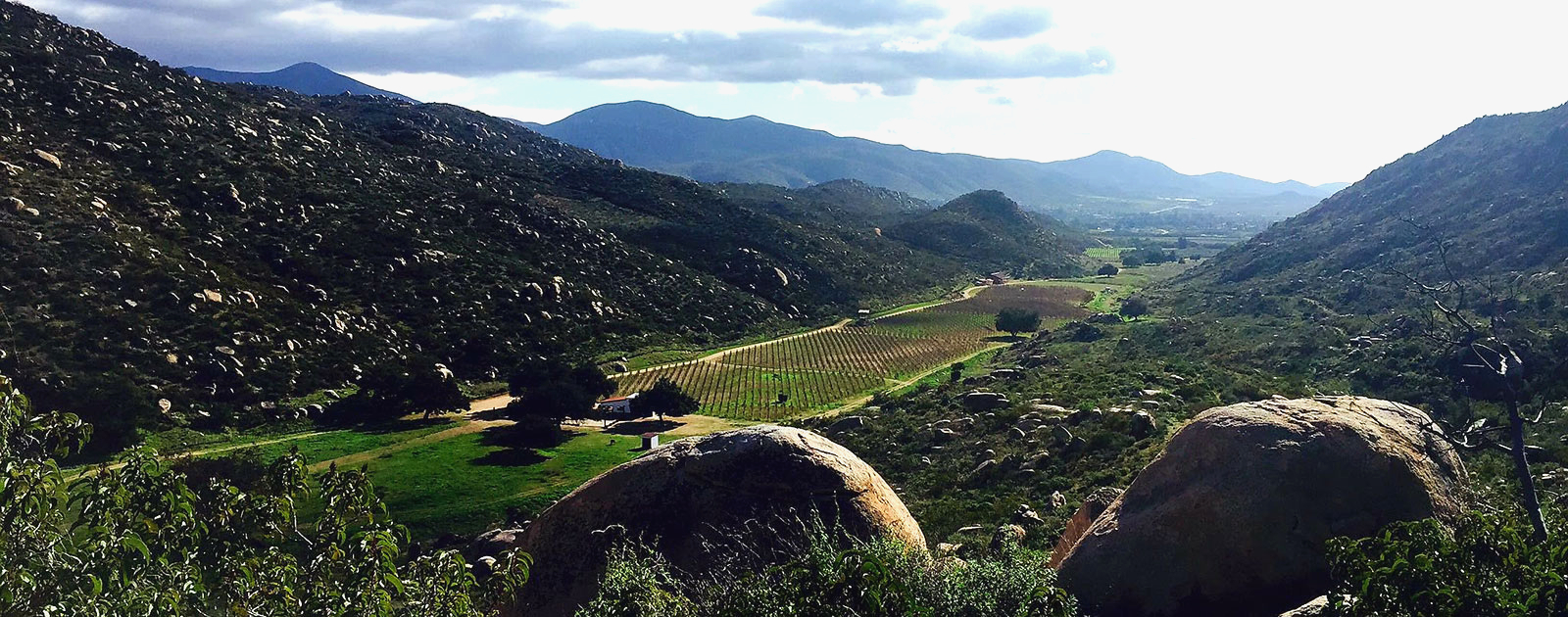
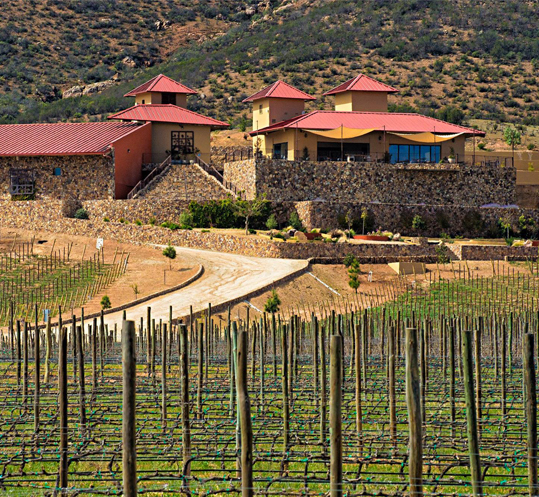
Defying logic, the mantra in Guadalupe is that it is all about altitude, not latitude. Located at elevations from 500 to 2000 feet above sea level, most vineyards benefit from cooling breezes from the Pacific on one side and the Sea of Cortez on the other. With wide diurnal swings during the summertime, the climate is basically Mediterranean. Or “best described as Mediterranean” as one winemaker explained because being dry and desert-like, it doesn’t fit into any neat category. 

So after postponing a planned visit due to covid, I finally visited this much talked about wine valley in Northern Baja. Research before the visit entailed reading many of the feature stories and, of course, tasting as many Guadalupe wines that were available during my stay in Cabo San Lucas.

My vinous version of the Baja 1000 began by departing the totally screwed up city of Tijuana in a crappy rental car that barely made it out of town. Later in the day we were welcomed to Guadalupe by rain that challenged the car’s wipers. That’s right, rain in Guadalupe Valley is about as common as rain in the Sahara.

That rain was a great omen or set up for a series of unexpected experiences that followed when visiting wineries, tasting wines, and getting a feel for this most unusual wine region. The rain made the sandy roads to the wineries even more challenging to navigate with deep potholes filled with water along with rocks and a few chickens. But holding on tight to the wheel we visited the region. What follows are takeaways from five wineries that capture the uniqueness of Guadalupe as not only an emerging wine destination but also an exciting wine producing region.  

“This can’t be Nebbiolo,” I tactfully mentioned to the Vinedos Malagon hostess. It was deep garnet, concentrated, with ripe flavors and some tannin. She brought over the bottle and yes it was Nebbiolo. I shouldn’t have been so surprised since the previous wine was Malagon’s Grenache, also unusually rich. She explains that the winery has access to Grenache planted by Russian immigrants in the 1940s. That’s right, the vines are at least 70 years old. And as for Nebbiolo, it was said to be brought into Guadalupe long ago but identity tags were never found to verify its DNA. Well, that was my first visit.

#1 Takeaway: Prepare for Guadalupe wines that aren’t typical and for wines made from odd, old varieties, old vines.

Malagon was founded in 1997 when only a dozen wineries were operating in Guadalupe and very few wine varieties besides Grenache and Nebbiolo were planted. Pedro Domecq opened a winery in 1972 but like many of the distillers who arrived earlier, it favored Palomino and Colombard in the early years. Also in the 1970s Jim Concannon and others from California visited and introduced then popular varieties such as Chenin Blanc, Petite Sirah, Zinfandel, Barbera, Cabernet, Carignane, and the once popular Ruby Cabernet. The latter variety is a key component in Domecq’s XA red and Petite Sirah is one of Cetto’s most popular and attractive wines. 

Today the Valley’s wineries reflect a balance of an international cast of characters and local families. Those established varieties attracted foreign investors such as the Henri Lurton Medoc family. It seems telling that Bodegas Henri Lurton’s flagship wines from Guadalupe are Nebbiolo and Chenin Blanc. 

Next stop was Casa Magoni whose wines I had enjoyed prior to the visit. In the new tasting room, white wines were first offered and they were not the typical blends. Magoni poured a Chardonnay and Fiano blend named “Manaz.” Also, another white brings together Chardonnay and Vermentino which is just as impressive. Among the reds, the Sangiovese-Cabernet is excellent, but the most unusual tasted was labeled Origen 43 which combines Montepulciano, Aglianico, Canaiolo, Sangiovese and Cabernet Sauvignon. All those varieties were established 16 years ago. But, of course, Magoni makes a Nebbiolo which is excellent.

Turns out that Camillo Magoni, who studied Enology and Viticulture degree from the Enologica a Di Alba in Piedmont, Italy was invited by the Cetto winery to work in the cellars. After 40 years he left to establish Casa Magoni where he introduced many Italian varieties as well as others from France. Today with more than 100 different grape varieties on 278 hectares, this is the largest experimental vineyard in Guadalupe and all of Mexico. 

#2 Takeaway

Today with over 100 wine varieties being grown, some of Guadalupe’s finest wines are rare combinations and unique blends. There’s the Red from SantoTomas that is made from 34% Mission, 33% Tempranillo, and 33% Carignan. I love Emerve’s “Isabella” which brings together Chardonnay, Sauvignon Blanc and Viognier in a bright, full bodied style. El Cielo’s 2020 Blanc de Blancs consists of Sauvignon Blanc and Chenin Blanc with a good dose of Palomino and Chardonnay. 

So be prepared to encounter wines with fanciful proprietary names derived from the planets, the stars, children, family pets, nicknames, whatever. 

Moving on, I finally visited a new winery unknown to me but one I drove by several times: Emerve.

Many of the new wineries are locally owned and started by home winemakers or by cellar workers moving on after apprenticing at one of the big wineries. That door opened In 2004-2005 when Hugo D’Acosta who studied at Montpellier, France, and the Agrarian University of Turin, Italy, organized La Escuelita, a school teaching local farmers and families the fundamentals of winemaking and cellar procedures. The school also functions today as a cooperative, providing the necessary equipment to growers and future winemakers to make wine. 

Today, Emerve, which was one of those wineries,  draws from 18 ha and produces around 5,000 cases a year. In addition to a lovely Rose of Cabernet, Emerve is best known for its proprietary blends. “Isabella” brings together Chardonnay, Sauvignon Blanc and Viognier mentioned earlier. There’s a red Bordeaux named “Los Nietos” and another red blend, “Armonia de Tintos,” a blend of Merlot, Cabernet, Syrah and Cabernet Franc. That cuvee was aged for 8 months in a combination of French and Hungarian oak.  It is much more than a simple red. And just for a little variation there’s a 100% Shiraz that’s bottle aged for 5 years before its release.
#3 Takeaway

While the top 3 wineries of Cetto, Santo Thomas, and Bodegas Pedro Domecq produce 80% of wines from Guadalupe Valley, there are 100 or more small family owned businesses offering a wide variety of high quality wines. And the wines are often unique.

Next up in my learning journey, Casta de Vinos

Whether it was sheer luck or fate, my visit to Casta was truly eye opening. Opened in 2010, Casta is an authentic mom & Pop family winery with Sergio Castañeda as owner/winemaker and Claudia, his wife, as director. With an annual output of 4,500 cases, Casta makes 12 wines, 10 red. The 2018 “Domina,” a 100% Merlot exudes charm in an elegant style, and the 2019 “Cirio,” a Cabernet Sauvignon and Mourvedre blend is big with multi- layered flavors. “Casta Tinta, “ a Bordeaux blend, could easily be mistaken for a young Medoc. Another amazing accomplishment, the 2020 Syrah is heavenly and stylishly refined for a young Syrah. I also liked the Petit Verdot. Clearly, the winemaking is top notch and shows a subtle use of small oak and tannin management that makes this one a genuine superstar.

#4 Takeaway

Not only are there many new wineries, Guadalupe is a paradise for anyone who loves to explore and discover previously unknown wineries. Or one that opened the week earlier.

Tuscany also has a strong foothold here thanks to the Paoloni family.  Born in Tuscany, Paolo Paoloni left his post as an Enologist at the Perugia University to manage the Valle Redondo wine company in Aguascalientes, Mexico. After several years with Valle Redondo, Paoloni purchased 38 hectares in the Toros Pintos section of the Valle de Guadalupe. 

If anyone doubts the uniqueness of Guadalupe, well the wines that were presented at the Paoloni/Villa Montefiori winery will erase all doubts.  First came the dramatic 2020 “Ross del Valle” made from 100% Montepulciano with amazing concentration. It is the first mono-Montepulciano from Mexico. Even more exciting was the 2019 Nebbiolo, a dark colored, deeply flavored version, aged for 15 months in French oak. Then the house speciality is Nero d’Avola, and the 2018 aged 12 months in oak is stunning for its depth and layers of flavors.

#5 Takeaway

Located on a steep hillside, Paoloni’s vineyards look beautifully maintained, indicating that grape growing here is as good as anywhere. Overall, the yields work out to be slim by Napa’s standards, estimated as between 1.2 to 2 tons per acre. With little water available, irrigation is not excessive with many vines being dry farmed.

 I heard during my visit  and have also read that farming practices are moving toward sustainability and organic methods.  Carrodilla is said to be the first certified organic and biodynamic vineyard in Mexico. More recently, Santos Brujos which makes a lovely Tempranillo has earned its stars as a certified biodynamic vineyard. 

So, I’ll stop here after noting that despite what you may be thinking, Guadalupe Valley wines are showing up in more and more US markets. That was reinforced a few weeks ago when looking over the shelves of Desert Wine, a small retailer in Palm Desert, there were several Paoloni wines and a few others.  

Thankfully, in 2024 you might not have to travel along those bad dirt roads to explore Guadalupe Valley wines. Check out  the list of wineries available and which states they are sold in at La Competencia Imports in Napa, Same goes for Tozi Imports on the East Coast, Nossa Imports in Arizona and Beso imports in Washington. LMA imports in San Diego specializes in wholesale to restaurants. 

And one more thing about those rough, unpaved roads: don’t expect any improvements soon. Arguing that bad roads attract good tourists and good roads will appeal to the loud, rude, sloppy wine drinkers who will ruin the character of the Valley, a powerful resistance group has been organized to control growth.

In other words, they don’t want Guadalupe to become the “next Napa Valley,”

A Personal Wine Shopper’s One Stop Shopping Plan


In this era of online shopping and home deliveries, we all tend to prefer one stop shopping. It is simply easier, less annoying and frustrating. And studying several websites and going over lists will only add a little more stress to daily living. We dont need that.

If you share these beliefs, then allow me to share where I would go online for one-stop wine shopping. Since my choice may surprise you, let me explain my reasoning. 

First, I prefer more than bargain wines, I want wines with some excitement and sizzle. Small production, distinctive wines, not wines or brands owned by giants like Gallo and Treasury which will always be available.

I also look for wines that before discounts, I would normally find way over my budget.

And right now, I am going all out to take advantage of the temporary market which has many restaurants unable to take showcase wines allocated to them. 

For instance today the Flowers 2016 Sonoma Coast, Seaview Ridge Pinot Noir is offered at $55, but it retails for $80 and is usually on wine lists for around $125.

As for timing, I’m looking for more lively, refreshing wines to drink over the summer, not blockbusters or age-worthy monsters.

So, here’s this weekend’s shopping list for one-stop wine shopping. Within a monthly wine budget of $250, I would buy 3 bottles each of the following:

2019 Private Property by Caraccioli, Rosé Santa Lucia Highlands, $14.00

2017 Le P’tit Paysan, Chardonnay Jack’s Hill Monterey, $14.00

2018 Cotes du Rhone, Domaine L’Abbe Dine, $15.00

2018 Brassfield Estate Malbec, Volcanic Ridge $18.00

2018 Tank Garage Winery Fast Machine Red Blend Sierra Foothills $20.00

So, there you have it.

And, yes I expect most have not heard about these wines. These are all limited production wines normally sold direct and/or destined for restaurant wine lists.

The lovely Rose is from a region famous for Pinot noir. The racey Chardonnay is a single vineyard version made by Ian Brand, noted sommelier. The Rhone is made by a famous winemaker. The pure, balanced Malbec is from Lake County which is known for red wines, and Tank Garage in Calistoga was on its way to becoming a hot wine destination for the in crowd. 

You can find these wines at  www.invino.com which is based in Napa County.

Any Disclaimers? 

None. I’m not an influencer auditioning for free samples. I’m not an affiliate working on a commission. I have no personal relationship with anyone at invino.com. 

Next week, new selections.

I drink wines and I know things.


Real Winemakers & Great Wines for SIP Home Deliveries


Silver lining? Purple Lining?

The longer we are sheltered in, we are seeing better and better offers coming our way from some of California’s super winemakers.  I don’t mean ego-driven winemakers hyped by the likes of parker wannabes. I mean real winemakers who know how to prune and drive a tractor. And make fabulous wine!

First up Jeff Runquist. Based in Amador, Jeff is best known for Zinfandel and Barbera, but he has the touch with all wines. Best Barbera from anywhere!  He also makes super Grenache from Paso and Viognier. A real sleeper is the Runquist Dolcetto.

The deal:  Jeff Runquist Wines is offering FREE SHIPPING on online orders of 6+ bottles, and half price shipping on orders of 1-5 bottles. This offer is valid for ground shipping to the 48 contiguous United States. Simply order online and they will adjust the shipping charges when the order is received. https://www.jeffrunquistwines.com

Scherrer Winery: Fred Scherrer, one of the best winemakers in Sonoma and anywhere for that matter, has put together a special Nepenthe 2020 collection at 50% below retail.

He explains:

“These wines offer different uses and  no need to cellar them in order to realize their potential, yet they will be in prime shape for years to come.  Just enjoy these in the weeks and possibly months to come and let some of the younger additions to your cellar creep into their adulthood. 

  • 2018 Dry Rosé  We sat down and tasted a vertical of 2017-2019 Dry rosé and were blown away by how lovely they all are.  While different kinds of good, we think the 2018 is perfect for drinking right now and during the next 20-30 months.  
  • 2012 Russian River Syrah  The 2012 Russian River Valley Syrah will have a very long life, being Syrah of course.  Yet this has opened up to a beautiful spot just like the Pinot Noir and will satisfy needs for richer red wines.
  • 2013 Russian River Pinot Noir The 2013 Russian River Valley Pinot Noir has emerged from its cocoon just over the past months.  I cannot think of a more gratifying glass to pop and pour before, during and after dinner.  It is our main Pinot Noir and prioritized production-wise as if it was our estate wine.

So here it is: Fred’s Nepenthe of 2020.  50% off regular price with free ground shipping* on 12 or more bottles.  You can always fill out the case or two or three with our other wines normally available.  While those additional wines won’t discount more than the usual rate of 10%, they will ship free with an order of 12 or more bottles.”

My assessment: a rare opportunity to enjoy wines absolutely impossible to get in normal times. Cant  make up your mind? Go with 4 of each.

Papapietro Perry Winery began in 1990 and has carved out a stunning reputation for small batch Pinot Noir and Zinfandel.  The 777 Clone Pinot Noir is on every collector’s radar. The winery is offering $5 shipping for 1 to 12 bottles AND they are donating $2 per bottle to Redwood Empire Food Bank.

 Alexander Valley Vineyards has been a personal favorite for, well, many, many years. The Wetzel family has always been all about quality starting in the vineyard. Highlights here are the estate wines, the Cabernets and the surprisingly terrific Cabernet Franc. For spring sipping, the Sangiovese Rose is hard to beat. Several lovely older Cabernet vintages are offered.

The deal: Order 2+ bottles and ship to your home for $1 per bottle + $1 order processing fee. Plus, there are numerous case special on their top wines: https://shop.avvwine.com

ACORN Winery

This unusual winery is offering  10% off 4-11 btls, with $10 shipping, and 15% case discounts, with $5 shipping. Continental US, ground only.

Looking for something different, while here’s your chance to see what Acorn Winery is all about.Owners Bill and Betsy Nachbaur have been farming their famous Alegria Vineyard since 1990. Winemaking is handled by Bill Nachbaur & Clay Mauritson.

In their words: “Our production remains small, at about 3,000 cases each year. All our wines are made from grapes we grow ourselves at Alegría. Every wine is a field blend, following the ancient tradition represented in the mixed planting that is our original 129-year old vineyard. Every wine is made by co-fermenting multiple varieties. We like to say that our wines are blended from the day they are picked. This is what sets ACORN wines apart.”

Look for the Super Tuscan, ‘Acorn Hill.”

There you have it.

Act fast.

You can thank me later.


SIP Wine: More Steals & Deals


“Free shipping anywhere in the US and 35% off retail.

Now that’s a headline that caught my attention. We all need to have something to look forward to during these sheltered in place weeks.

And to know we are helping small, independent wineries (the only ones I

focus on) stay in business during the closure adds to the enjoyment.

Turns out the headline was for the 2018 Greenwood Ridge Syrah, Mendocino. Heck of a deal on a case.

A longtime follower of Mendocino wines, I was thrilled to discover dozens of other Mendocino wineries had stepped up their game, suggesting while you stay at home they are offering “more steals and deals.”

Here is the website to explore….https://mendowine.com/taste-mendo-at-home

Many excellent offers but each is a little different. Some highlight low or no shipping; others push discounts. A few toss in an herb or plant. Pennyroyal offers a lovely Farm Box. Cakebread pitches a new Rose.

As an added bonus, the website’s photos are gorgeous. 

In Mendocino, because it is such a large county with so many micro-climates, you can find many, many super wines. Add in the fact that the winemakers tend to be rugged individualists “doing their thing,”  and you have lots of different wines in different styles.

For those seeking a little inside information, here’s my tip sheet:

Barra Family: one of the oldest and most highly regarded family vineyards. The Barra Petite Sirah is one of the best made anywhere.

Husch Vineyard: all about value, value, value. The Sauvignon Blanc, Chenin Blanc are of superior quality at everyday prices. The Pinot is a real steal.

Fathers & Daughters: Never heard of them? Well, the family’s vineyard is coveted by Williams Selyem and many others. So go with the Pinots but this vineyard makes super Sauvignon Blanc, and Gewurztraminer.

Graziano Family: Look for Monte Volpe and Enotria labels. An amazing roster of Italian wines from Greg Graziano who if he lived in Napa would be an icon. Dolcetto is my fav. But the whites are top notch as well.

Saracina: John Fetzer’s beautiful winery makes one of my favorite Sauvignon Blancs. The Malbec is a pleasant surprise.

Maggy Hawk: A relative newcomer to the Anderson Valley Pinot scene. One gorgeous Pinot is labeled “Unforgettable.” It is that and is included in the attractive 3-pack offering.

Scharffenberger: Still so underrated for its bubbly. Excellent value. Go with the Brut or Rose.  A case ships for $1.

Waits Mast Family Cellars: This Pinot specialist is my current exciting discovery. Now you too can explore this cult wine candidate with a 6 bottle pack or a 4-bottle vertical. Painless with a $5 shipping rate. 

Navarro Vineyard:  This is the family winery that pioneered direct shipping to consumers. It also makes terrific wines. It is offering Spring Samplers with savings up to 23% as well as One-Cent Ground Freight on all 12 bottle orders of wine or juice until May 31st. Pick any one sampler and you will be thrilled.

Goldeneye: Needs no introduction.  Just look at what is currently offered and go for it.

With such tiny, limited production wineries like Fathers & Daughters, Waits Mast and Maggy Hawk, this might be the time to join a club or two.

And yes, neither Goldeneye nor Scharffenberger are family owned. But they

are key players within the Anderson Valley family.

Back to the Future: Wine Travels


Just because you have enjoyed a Sangiovese or Nebbiolo doesn’t mean you have explored the full range of Italian-inspired wines.

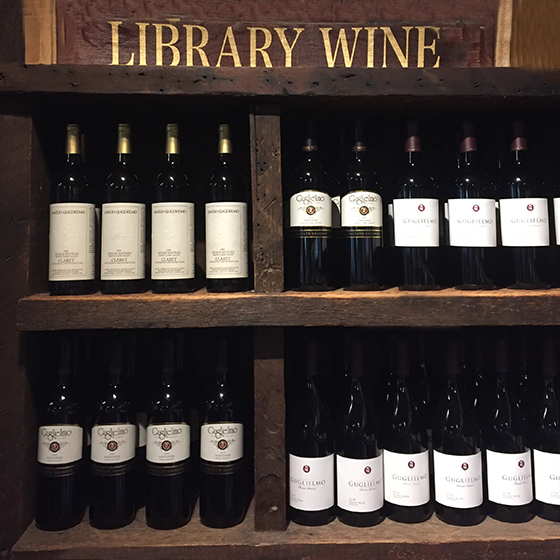
Ever tasted a Charbono, Dulcetto, Grignolino, or Vermentino? Well, if you are still nodding “yes “ to all four, how about a Sagrantino? That one caught my attention during a visit to the Guglielmo Winery in Morgan Hill. 

Guglielmo is a family owned winery that has been making wines for close to a 100 years. It was founded in 1925, in the early stage of Prohibition, which tells you what one Italian-American family thought of that crazy experiment.

Sagrantino is a new addition to the family’s estate holdings and the vines border the imposing brick winery. This red wine grape is at home in Umbria, in Central Italy. It is the grape used for Montefalco wines. Janics Robinson mentions it in her definitive book, and one other California winery grows the grape.

But back to Guglielmo Winery, now run by the fourth generation.

That in itself is amazing for California wine but not that unusual in Italy.

The only other California wineries that have been in family hands longer are Wente and Concannon. The Mondavis bought Charles Krug in the 1940s and for those curious, Gallo started up in 1933.

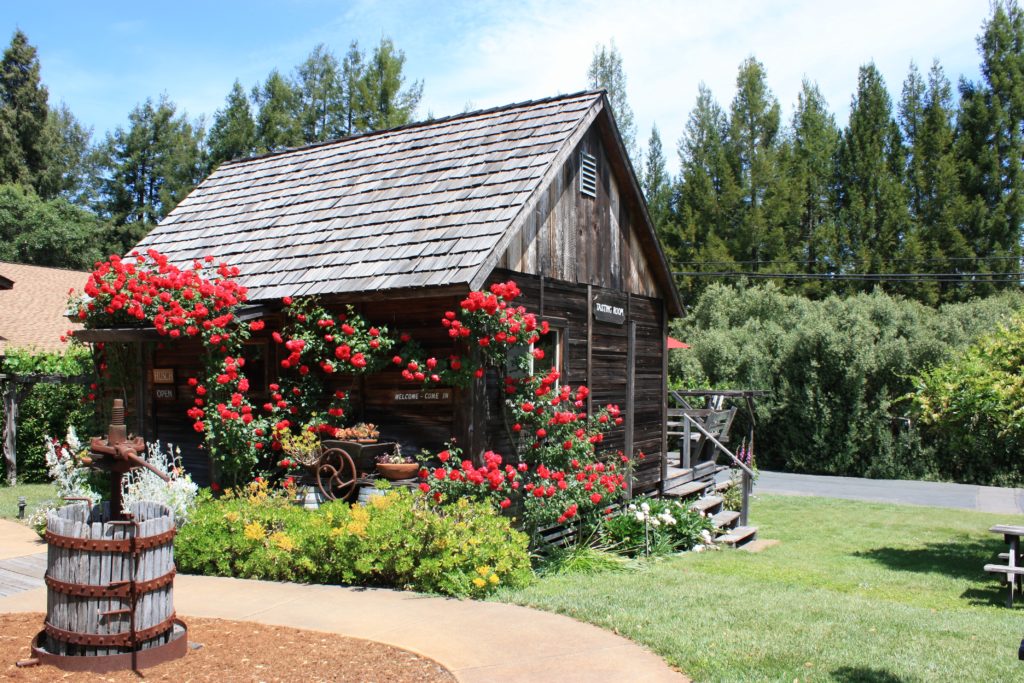
Guglielmo is a great winery to visit, not only for its history but for its current wines. You feel like you are going back in time, seeing what wineries were like in Santa Clara County before trophy Napa wines and Silicon Valley.

Before Apple and Google, Santa Clara was a major wine region, with more history and vineyards than Napa Valley.

I love the fact that the winery and the 80 acre estate vineyards are surviving today as urban life moves into the neighborhood and Google buses are circling the area.

Tasting five wines will set you back $10. And all of $15 if you want to taste the Reserve line. My favorites are the Barbera, one of the very best, Dolcetto, Grignolino, Sangiovese, and the Sagrantino which was first produced in 2016. 

 It is richly flavored with ripe dark fruit…sort of like Zinfandel with more structure and balance. “Zinfandel without the flab” was my note.

And, Guiglielmo’s Grignolino Rose is a thing of beauty. Old-fashioned Rose in the good sense, meaning best with food.

The winery also makes Teroldego and Charbono which I plan to taste on my next visit. 

If you like history, enjoy trying new wines, and want to travel back in time, then, check out the winery and its wine club.

Guglielmo Winery:

 located at 1480 East Main Avenue, Morgan Hill, CA. The winery is less than 20 minutes south of San Jose, 1.5  hours south of San Francisco and 45 minutes north of Monterey.