Wine Clubs Without Commitments

Two of the best-kept secrets among wine clubs offer exceptional introductory offers.

Joining a Wine Club without any membership fee or contractual obligation is like dating without any commitment. In other words,  quite appealing. That is so long as you don’t waste your time and encounter bad experiences on your first date or wine purchase.

In addition to almost every online wine merchant that offers some kind of club, we also have wine clubs from major publications like the New York Times and big businesses like American Express offering special wine deals through a club.

As is true of all online wine purchases, the key points to consider are quality, discounts, and shipping costs. We have recently been reviewing the field and found two that offer special 15 bottle deals that you might want to check out. Each promise major discounts.

But the most attractive feature you want is to be able to enjoy the introductory offer, and then cancel your membership. 

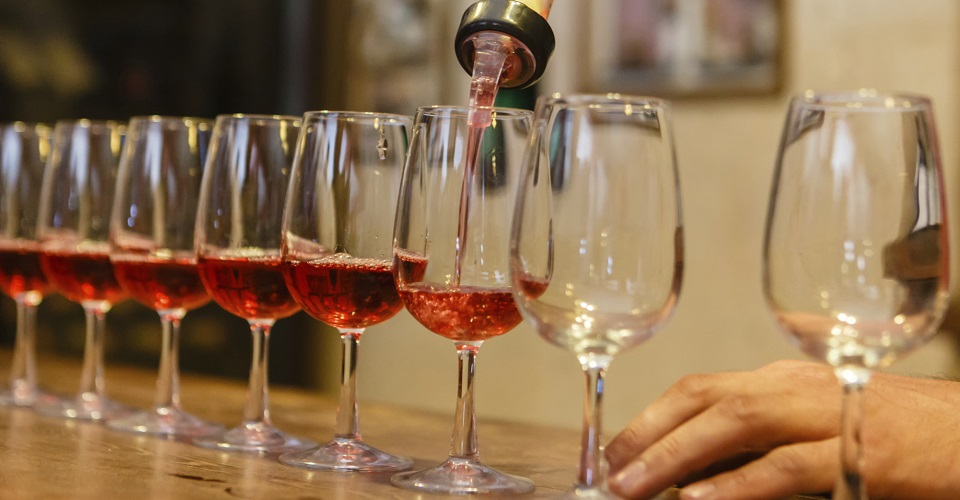
First, and this blew me away is the wine club offer from Virgin America Airlines. The current offer is a 15 bottle collection of Dry Rose wines from around the world. The price is $79.99, plus any applicable taxes. So no shipping cost.

The deal is you have to fill out a lot of paperwork and become a member of The Club from Virgin Wines. If you continue, they will ship a case 4 times a year. But you can cancel at any time. There is a mention of a money back guarantee. You also can earn 3,000 Elevate Points for future flight purposes.

All Roses are from 2015, so nice and fresh. The selection is excellent. Their origin ranges from European regions to South Africa, New Zealand, California and Long Island. Yes, good wines are made there.The 3 extra Roses are from the cool Edna Valley and made by a top local winemaker.

The learning opportunities are intriguing because the Roses are made from a variety of grape varieties. So you can judge whether you prefer Pinot Noir, Syrah, Malbec, Sangiovese or a few blends.

If you like Rose, this is a fantastic deal.

www.virginwines.com

Secondly, The WSJ Wine Discovery Club has “Special  Introductory offers” that merit your attention.

Here’s the deal: 15 bottles for $69.99 plus $19.99 shipping, and any taxes. You can choose red, white, or a mixed selection of 15 bottles.  So, we are talking $6 a bottle.

On the plus side, you can cancel anytime and there is even a reference to refunds and money back guarantees.  

Here’s the Inside Story:  The wines are billed as “World Class” which of course is far from the truth. And the producers are said to be “Small Estates” which is open to debate. Expert tasting notes are included which really doesn’t sweeten the deal much.

Of the three  choices,  the collection of red wines is a slightly better deal than the wines. The Cabernet and Zin from California are good, and the Chianti, Aglianico, and Tempranillo are also from reliable producers.

The whites are good enough, if you prefer whites. The White Bordeaux, Ch. Le Coin, the Spanish Albarino and California Chardonnay are very good.

The mixed case includes most of the better reds and whites. So this is an excellent way to go if you like reds and whites equally.

 

Rating Wines by Points

Once upon a time in a kingdom far away, only Robert Parker’s Wine Advocate  and The Wine Spectator dueled over which one could score the most wines 90 points or more. Then along came Stephen Tanzer, The Wine Enthusiast and others  to jump on the 100 point scoring system with a steady barrage of 90 point scores in their publications.

Then,  things really began to get out of hand. Parker’s onetime protege, Galloni or Baloney or whatever, split off and now pumps out 90+ ratings on hundreds of wines.

Today, I can’t think of a qualified expert who does not rate wines by the 100 point system and now with the bloggers, everyone is an expert.

And as more and more sommeliers land a day job as consultants or advisors to online publications, well, the points just keep on coming at you.

You need  to understand  that this scoring system for wine as it has evolved is all about mutual promotion. By that I mean  every producer whose wine is rated 90 or above is likely to promote that wine and also mention that writer or publication or blogger.

That’s how Parker became so well-known early on and forced The Wine Spectator to start using the 100 point rating system to keep up.

For producers, the 90+point ratings only encourages them to increase prices at every opportunity. That is good for the producers; not so good for the consumer.

Even www.wineaccess which is no stranger to hype and self-promotion had this to say recently:

“But perhaps more than anything, what most has us reaching for the TUMS are the soaring prices of Napa Valley’s (admittedly herculean) 2013 Cabernet Sauvignons.

Wine Spectator primed the Napa Valley pump, calling 2013 “an ideal season.” Then Parker came on like gangbusters, posting a record 19 perfect 100-point ratings, before calling 2013 “the greatest vintage in 37 years.” Finally it was Galloni’s turn. Parker’s former protege has always been stingier than his counterparts, causing many to suggest that if you want to compare a Parker score to Galloni’s, it’s best to just “subtract two.” Galloni poured fuel on The Wine Advocate’s Napa Valley fire, publishing a record 46 reviews of 97 points or more.”

And this week, wine.com emailed everyone announcing that “New Big Scores have been Added.” The wine and/or price is now second in importance to the scores?

The whole system is indeed flaming out of control, rendering most point scores in the 90s, well, rather pointless, when it comes down to being useful information for wine consumers.

visit http://www.bestonlinewineshopping.com  for tips on how to game the system


Amazon’s Wine Dept

Chances are good if you own a smartphone, have a credit card, and are over the age of thirteen, you are familiar with Amazon. And if you are among those who once enjoyed hanging out at bookstores, you may still be a bit resentful, but for most people, Amazon is the Mother of all online sellers.

So you will not be shocked to hear that Amazon has a large wine department. Not the biggest, but close enough as the most recent listing of available wines exceeds 9,000.  Amazon is a little different from other online wine sellers and Amazon loves to assemble wine packs of 2, 4, or 6 bottles. And toss in a few 12 bottle packs as well. So that 9,000 wine items listed includes these packs.

To digress, it is fascinating to hear Amazon label this category “wine packs” whereas the other sites prefer to label a selection of two or more wines as something curated. And the curation, if that’s a word, is almost always performed by experts curators.  

But Amazon is not without shame as many wine packs are grouped by producer, by region or by theme, as in wines to give to pacify the “Mad Housewife” or some other equally silly theme. Then there are wines sporting  the “Fifty Shades of Grey” theme. That’s pushing it.

That said, now let’s get back to the details. About two-thirds of the wines on Amazon are US in origin, mostly California, but Washington State (1,500) is well-represented as in New York (550). These last two states have earned the recognition, so bravo Amazon.  French wines offered hover around 1,000, and Italy shows up with 485 offerings.

Maybe my expectations were too high, but after the first few hours of checking it out, I felt like I was browsing the wine section at Rite­Aid with so many Barefoot wines and others found in most supermarkets and drugstores with a wine dept.

Amazon invites advertising, and it would appear that many of those wine packs feature wines from their advertisers. No problem with that; it is good business to punch up its featured brands and partners.

When you begin hunting for deals and discounts, Amazon surprisingly is not exactly a savvy wine shopper’s paradise.  In fact, as is often pointed out in their customer’s reviews, quite a few of the wines can be bought at better prices at grocery stores like Safeway and at Costco and similar stores. Cupcake, Layer Cake, Pacific Rim, Smoking Loon, Pepperwood Grove and Barefoot….and many other brands owned by Gallo may be cheaper at Rite-Aid, Safeway and CVS. (Note to Amazon brass: you often get as many negative reviews from your wine customers as 4 stars.)

When it comes to basic discounts, again Amazon pushes its mixed packs, offering 20% off on most of them. All told, there are about 165 “Deals,” many of them packed. But I could not find much to get excited about under that category. Not totally discouraged, I then clicked on  the category of “1 cent shipping,” Eureka! The mother lode. The Mother’s mother lode. If you have some leisure time, you can browse through about a 161 pages with about 4,000 listings.

Better yet, save yourself the time: there’s not much there of interest save for a few French wines.

Best Tip: go to the 20% off list and look for those items that are also part of the 1 cent shipping for the best deals on Amazon.

For more of our review of Amazon, go to: http://www.bestonlinewineshopping.com/amazon