Savvy Wine Shoppers: Start Your Engines

Exciting online wine deals and steals are really happening.  They are not the typical, over-hyped discounted wines that have been offered over the last year or two.  It strikes me as a new beginning, a fresh start to Spring. 

The real deal door began to swing open around April 1st and by the day of the eclipse, it was no illusion, no April Fool’s prank.

 And the wines that signaled this change  were excellent, time-proven Cabernets, Pinot Noirs,  Chardonnays, a few imports and, well, many others. What was different was the appearance of so many authentic wines from real producers instead of made up private labels and brands. And often, new vintages, newly released wines, not leftovers.

Before getting to the reasons behind this development, let me lists those deals offered online  that caught my attention:

2021 Peju Cabernet Sauvignon, Napa Valley, regularly $70, offered at $26 

2021 Daou Reserve Cabernet Sauvignon, Paso Robles $65 to $39.99

2018 Whitehall Lane Estate Cabernet, Napa Valley $90 to $59

2020 Beringer Vineyards Knights Valley Reserve Cabernet Sauvignon $32 to $23.99

2019 Handley Cellars Anderson Valley Pinot Noir, $37 to $19.

2018 Ketcham Estate Pinot Noir, Russian River Valley $45 to $19.95

2022 Long Meadow Ranch Rose of Pinot Noir, Anderson Valley $32 to $12

2022 Caymus Vineyards, California Cabernet Sauvignon, $75 to $49

These are top names and the reason the last two are cited is to reinforce the fact that new vintages, not old stuff getting dusty in warehouses, are showing up as real deals! That’s a spanking brand new release from Caymus and I’ve not seen any Peju wine so deeply discounted until now. Clos du Val just released its new Cabernet Sauvignon vintage to an online retailer at 20%, not enough to make my list but good support for the trend.

Just now winespies.com announced a 30% off deal on an absolutely great California Chardonnay, one of the top 3-4 made and never ever discounted, until now. It is the 2021 Wayfarer ‘The Estate’ Fort Ross-Seaview Chardonnay 30% off. 

Then I’m seeing a few unknowns and  newbies to the Napa Cabernet scene resorting to the online discounters to help their launch. The garigiste.com site announced the sale of  Rockmere Estate Cabernet Sauvignon Napa Valley from 2018 for $59.71 a bottle, with the winery price being $95.

So why now, you ask? Well, it has to do with supply and demand. Over the last several months, business stories have focused on the global surplus of wine, and here at home, both Napa and Washington State wine folks are trying to deal with the present surplus of wine and the need to start removing vineyards in big numbers for future stability. Talk about pulling up vines let’s you know this is not a blip.

Meanwhile, retailers are staring at big inventories in their stores and warehouses. I’ve noticed much more exciting offerings from vivino.com so far in 2024. This online site works directly with retailer partners across the country. Sales are slow in brick & mortar places across the country.

Who’s to blame? Well, the easy way out is to point fingers (the middle one?) at the Gen Zers.

Apparently, recent surveys indicate a lack of interest in wine. That’s a demographic representing 18% of the population and it is more interested in energy boosting drinks. Is “Liquid Death” an energy drink? Just asking. 

The brains behind Drizly analyzed the alcohol beverage market and came up with this conclusion: “When it comes to trying new bev alc brands, Drizly’s 2023 Consumer Trend Report found that pricing was the top factor that influences Gen Z “

The  high price of wine is a big deal these days. Recent surveys show that the average bottle price of a Napa Valley Cabernet is $108. An article in The Wall Street Journal  surveyed restaurants and came up with the belief that $25 is the new restaurant normal for a glass of wine. And, yes, the prices for many consumer items are now high. But wine is non-essential, a choice, not on the same level of importance as eggs and fuel. 

Driving the prices of wine up and Gen Zers away is that wine is perceived as a luxury enjoyed by those who equate price with quality. Snobs! Yes, those who buy what others can’t afford and those who associate inexpensive wine as “cheap stuff.” And the big corporations have not helped by their push to create so-called “luxury brands.” 

But right now it is the online wine retailers, the flash sale types, that are driving the discount wine deals.  A report from the Silicon Valley Bank made this observation:

“Wholesalers are full up, as far as they can go,”  which is making them “more picky” in what they buy from wine producers. Wholesalers “are more afraid of being stuck with inventory that they may have to discount.” 

It concluded with a prediction that “flash sales and increased discounts” are likely in the offing in the near future.”

5 Real Deal Dealers

That future is now. Flash sales, meaning limited time offerings are leading the way. For those  interested in checking out the best wine deals offered online, here are my top 5 best sites for non-snobbery, savvy shopping wine drinkers:

www.reversewinesnob.com  This site was finding super wines at great prices before the glut, and so far in 2024 has earned my top spot for its selection of wines from California and the Northwest. It works directly with small, family owned wineries. Begin here.

www.winespies.com  Off to a great month of April with exceptional finds such as the 2020 Caymus California Cabernet and the Wayfarer Chardonnay. Also, super price for a Flying Goat Pinot Noir. Special deals on Lake County Cabernets are frequent.

www.lastbottleswines.com

 Still the best flash sale site, and is keeping up by finding wines never offered before the glut. A great offer for Handley Cellars 2019 Pinot Noir at $19. It also has marathon wine sales, and recently offered dozens of wines as “under $26 deals and steals.”    

www.vivino.com 

These are the people who have a huge database and encourage subscribers to offer reviews, But its main strength is its partnerships with retailers around the country. Here I found the 2020 Beringer Knights Valley Cabernet at 30% off. The new 2022 Caymus “California” Cabernet was first offered by vivino.

http://www.wtso.com

WTSO was one of the first, if not the first site for flash sales. It offers many wines, but I found it is a great resource for imports, especially Spanish and Italian wines. Here are three examples of excellent deals:

2021 Resalte Ribera del Duero Vendimia Seleccionada for $19.99 (50%)

2018 Famiglia Castellani Chianti Classico Riserva  DOCG $14.99

2019 Luca Bosio Barolo  $24.99
BEST SUMMER SIPPER WINE SALE

SEE IT AT  http://www.cawineclub.com

One of the oldest online wine sellers, the California Wine Club has a solid reputation for pricing and reliability. So it comes as no surprise that several small wineries looking for new sales outlets have discovered it.

And you should see what it is offering right now.

The summer sippers for under $20 are led by two of my favorites, each at $10.99:

2021 Clos La Chance Estate Sauvignon Blanc

2018 South Coast Winery Viognier

For the Pinot Grigio lover, check out the Mountain View Winery’s at $16.99

And there are two first rate wines from Brutocao Cellars in Mendocino: Chardonnay and

Cabernet Sauvignon

The selection at the cawineclub changes as new wineries catch on and offer their wine.

Among recent additions that are out of the ordinary are Malbec From Yorkville Cellars, a Carmenere made by Plaisance Ranch and one of the most sought after dry Rieslings, the 2020 Poet’s Leap from Long Shadow.

 the EX Monterey Pinot Noir from Wrath wines is another hard to find wine

Not all wines are deeply discounted as this club also functions like a traditional retailer.

And it offers hard to find wines like this beauty from Joel Peterson:

2020 Once and Future Zinfandel, Teldeschi Vineyard, Frank’s Block

With occasional new offerings like that, you owe it to yourself to check out the site

Specializing in small, family owned wineries, most from California, the site works smoothly with 4 categories: 

Super Savers

Artisan and Under $50

For Connoisseurs

Recent Club Features

Frequently, this club has a $1 case shipping deal, so it is wise to get on the email list.

El Dorado Wines: Checking All the Terroir Boxes

El Dorado wines: A Case Study in Terroir

In 1988, Steve Edmunds, one of the original Rhone Rangers, was looking for new sources of Mourvedre and Syrah for his Edmunds St. John winery. He was referred to Richard Bush, owner of El Dorado County’s pioneering Madrona Vineyards, who introduced him to a nearby grower. And soon Edmunds St. John was making an El Dorado Syrah. It was and remains one of the finest. More recently, his Edmunds St. John Gamay from El Dorado is a beauty.

Steve, who was responsible for the clever Rhone Ranger designation, summarized his experiences: “ Over the years the Barsotti Vineyard in El Dorado planted, at my request, or urging/suggestion: Syrah, Grenache, Gamay, Mourvedre, Vermentino, Grenache Blanc, Pinot Gris, Cabernet Franc. Each has performed admirably, and in some cases, spectacularly.”

That’s certainly high praise and in fact from my recent experience, a great case can be made that El Dorado, still a well kept secret, may be the mother lode of terroir driven wines. Well, at least it checks most of the boxes. 

Unusual location? Check. It is one of the few U.S. appellations defined entirely by elevation, which ranges from 1,200ft-3,500ft. The region’s elevation and proximity to the alpine terrain of the Sierra Nevada Mountain strongly influences the grapes and wine.  

Special soils? Check. The majority of the vineyards in El Dorado are planted in young volcanic, granitic, and slate soils. The soils are thin and lack a permanent water table allowing growers to control the availability of water during the growing season. Vine roots extend deep below the surface which many experts feel is a key to terroir. 

Different growing conditions? Check. Budbreak is 2-4 weeks later than Coastal regions. Heat spikes are rare. Vines enjoy longer daylight hours. Harvest is under cool conditions in late September into October.

High quality wines? Check. But El Dorado remains under the radar for now. But not for long.

Now with over 80 varieties being cultivated, there’s much more than Zinfandel in these ther hills. In recent years, winemakers looking for special wine have discovered El Dorado. A few like Marco Capelli, long time Swanson winemaker, and Joe Norman from Heitz Cellars have settled in. Recently, more and more  outsiders like Helen Keplinger, Donkey & Goat, Jolie-Laide, Belong Wine, Tank Garage Winery, Rombauer for Zinfandel and Edmunds St. John, to name only a few, regularly source El Dorado varieties that offer something not found in their home area. 

A Little Background

Gold was discovered in 1848 and those old mining towns later remained alive as vineyards caught on and grew to over 2,000 acres. Then Prohibition came along. Vineyards were abandoned and its wine history buried. 

El Dorado, 40 miles or so east of Sacramento and within driving range of Lake Tahoe and Reno, remained flatlined during the 1960s when California wine was re-born.  It started its comeback In 1972 when Boeger Winery became the first modern-day winery in the El Dorado AVA. Greg Boeger became a pioneer by experimenting with lesser known varieties such as Barbera, Carignane, Refosco, Charbono, and Aglianico, just to name a few of the over thirty varietals that the winery grows today.

 In 1980 Madrona Vineyards settled in to offer several El Dorado grown wines, including remarkable vintages of Riesling and Gewurztraminer. Today Maggie and Paul Bush, the second generation, continue with their winery’s outstanding Rieslings, but now cultivate 25 varieties at their 3,000 foot elevation vineyards.

Setting the Gold Standard Today for Terroir Wines

As the region slowly came back to life, these pioneers set the tone for taking the less traveled road. Both remain family owned, and today Barbera is Boeger’s flagship wine and it sets the bar high for first rate Barbera. Meanwhile, Madrona offers a Grenache and Syrah that are at the top of their class. With their help, the El Dorado A.V.A. was established in 1983 and has since grown to encompass over 2,000 acres of grapes and is now home to over 70 wineries.

Attracting mavericks making wines from unsung or obscure varieties at high elevation sites in a remote corner of California is only a part of the El Dorado story. But If you seek out wineries that are specialists and happen to love Rhone wines, then a newcomer, Holly Hill’s Vineyard, merits your full attention. Within its full range of Rhones, this winery is going all out to explore Mourvedre. Right now, Holly Hill’s offers six wines made entirely or in part from Mourvedre, including a Vin Doux dessert wine. The real attention getter is its 2020 “Patriarche,” a GSM blend that is 41% Mourvedre.

However, in my review of El Dorado, the most important box checked is high quality, distinct wines. When tasting through a selection of El Dorado wines, I kept noting the balance, solid structure, and concentration. The varietal wines came across as ideal benchmark wines. Boeger’s Barbera, Miaflores Malbec, Lava Cap’s Cabernet Sauvignon, Madrona’s Grenache,  Element 79’s Syrah, and Cedarville’s Viognier…all true to type, unmanipulated wines loaded with old fashion varietal character.

With El Dorado, I rediscovered wines that, well, taste like wine. Powerful, but well-mannered. Wines that are not trophy culty wines but rather beg to be enjoyed with food. 

Regarding the uniqueness of El Dorado wines, several winemakers suggest that the mountain elevations result in Increased exposure to UV radiation which leads to lower berry size, and a higher ratio of skin to juice in red wine. “This combination of hours and intensity of sunshine leads to ripening conditions unique to El Dorado, and are critical in shaping the character of the wine.”

Paul Bush of Madrona draws from his family’s 40 years of experience and sees the soils as another key. He explains,  “The Aiken Clay soil  is a volcanic decomposition soil that is relatively fertile and drains beautifully. This soil series for us has a pH level of between 5.7 to 6.2. My understanding is that high pH soils give more mouthfeel. Low pH soils give more elegance and varietal focus. And since we have the sun, we generally already have the tool for working with mouthfeel. I’ll take elegance and varietal focus.”

And he continues: “But once we get into fall, the days shorten, our temperatures are often cooler than other regions during the day, but our nights aren’t so cool that the vines shut down. All in all, it’s perfect (in my humble opinion).”

Whatever the underlying factors may be, El Dorado wines have, in my not so humble opinion, their own distinct and engaging personality.  

Current Wines: All Terroir Driven

2020 Holly’s Hill Vineyards El Dorado “Patriarche” $38

 For its GSM Châteauneuf-du-Pape rendition, the winery makes Mourvedre the lead with 41% followed by Syrah at 38%, with 11% Grenache and 10% Cournoise. And the winemaker is said to get first dibs on each to assemble this blend. The wine is aged for 10 months in neutral French oak. Well, this wine is enormously appealing with lots of spice, cranberry, black pepper and savory flavors. Medium full bodied, it has a solid core of ripe fruit that is vibrant and persistent. It unfolds with each sip, showing a slight earthiness and smooth tannin. It is

much more complex and refined than most GSM wines. 95 points

2020 Cedarville Vineyards El Dorado Estate Bottled Viognier  $25

Offering a mix of wines, Cedarville organically farms 15 acres and was the first to plant Viognier in the area. With twenty vintages now under its belt and working with Viognier on the coldest, north facing site,  it has learned to harvest on the earlier side of ripeness. And the end result is a distinct, and full bodied style. The primary fermentation is finished in barrels and with lees stirring, the wine is bottled unfiltered.  In the glass it shows a bright, light yellow color and its aroma displays meyer lemon, lemon zest and lychee nut along with a floral note. But on the palate, this is full throttle with round, mouth filling pear & citrus flavors that are lively yet viscous. And it surprises with its lovely rich texture and  a slight fresh lime and acid tingle in the finish. 92 points

2019 Boeger Winery El Dorado Estate Barbera 2019 $30

From the pioneering winery, Barbera is made in several versions with the Estate being the standard bearer.

From 3 high elevation sites, the Barbera is harvested as late as mid-October, and is blended with 9% Cabernet. Aged for 14 months in neutral French and American oak, it is a big mouthful of a wine that has an amazing structure and somehow remains vibrant and refreshing.  With a little airing, it displays the lovely blackcurrant, dark berry and spice side of Barbera with nicely layered flavors that are surrounded by fine grained tannins.  It can be aged for many years, but I found it appealing now with its solid core of fruit and rich texture. 94 points

2020 Edio Vineyards at Delfino Farms Estate “Robyn’s Blend,” El Dorado  $32

Highly regarded for their apple orchards and bakery, the Delfino family have been farming in El Dorado for 60 years. After studying at Cal Poly and gaining wine experience in San Luis Obispo, the third Delfino generation (2 brothers and a sister) planted vines in 2007 and named the winery after their grandfather, Edio. In 2017 they ventured into winemaking, and based upon this wine, they are super talented and Edio could well be a rising star. Robyn’s blend is 75% Viognier and 25% Roussanne, co-fermented in barrels and aged in French oak (10% new) for 5 months. It has a lovely aroma of fresh sliced pear and honeysuckle, and its flavors pick up a touch of peach, citrus and oak spice. Smooth and viscous, it has a good touch of acidity to keep it lively right through the aftertaste. Holds up well to chilling 93 points

2017 Element 79 Vineyards Fair Play, El Dorado County Syrah $40

As some of you may recall from your high school chem class (and to save others from embarrassment) element 79 is gold. In 2016 Les and Sharon Heinsen purchased property and an established 32 acre vineyard in El Dorado County. The 2017 vintage was a few weeks early with the Syrah picked on October 5th. Consulting winemaker Scott Johnson harvested some Viognier on the same day and the field blend was fermented in open top tanks. With 2% Viognier, the wine was aged for 20 months in French oak, 44% new. Dark in color with beautiful upfront black fruit aromas of blueberry and plum and, with some airing, a hint of lavender pokes through. It is silky smooth in texture and the flavors expand to showcase berry, dried herbs and spice with refined tannins in the finish. Despite the declared alcohol of 14.5%  it comes across as youthful, vibrant and charming. It should develop even more complexity with short-term cellaring. 94 points

2019 Starfield Vineyards El Dorado, Cinsaut  $32

Seldom bottled as a varietal, Cinsaut, also spelled Cinsault, is more often found in a Rose. It is used as a blender for red wines in the Rhone and elsewhere. But Starfield and several neighbors in El Dorado are giving it a fresh look on its own. From its 31 acre vineyard, Starfield produces several Rhone wines as well as others in its “Mountain Mediterraneans” program.  Fresh picked strawberry and cranberry juice dominate the expansive aroma in this medium light-bodied red. Without any noticeable tannin, iit really turns on the charm as its lively flavors expand across the midpalate with fresh berry and spice and red fruit that all persist well into the aftertaste. More than a summer sipper, this is a versatile food companion. And delicious. 91 points

2019 Holly’s Hill Vineyards El Dorado Fenaughty Old Vines Syrah  $27

This new Rhone-centric winery is on a hot streak, especially with Mourvedre and Syrah. This old vine Syrah is concentrated and focused. Dark garnet, almost black in color, it displays spicy, earthy, some leathery aromatics along with black olive. On the palate it is dense, with savory ripe black fruits and dried herbs with a hint of pepper, all with light tannin as a backdrop. But everything is under control and the wine opens up beautifully over time. Give it at least a year or two, and you’ll be thrilled. 93 points

For more specific wines, see all the El Dorado reviews at winereviewonline.com 


The Rogue Valley’s Diverse Wines

Exploring the Diverse Wines of the Rogue Valley 

Seeking out unusual wine regions for their great diversity seems to be high on the must-do lists for today’s sommeliers. At least, the hard working SOMMS.  Makes sense because discovering new wines and/new regions pretty much validates their jobs. Recently the head of sommselect.com singled out the Santa Cruz Mountains AVA for its success with Pinot Noir and Syrah among others. He ended by praising Santa Cruz as “one of the few regions anywhere in the world hospitable to such a diverse range of varieties.” 

Really? Now that “diverse range of varieties” phrase struck a chord. Coincidentally over the last 2 years, I’ve been interested in the same subject.  Well, as much as I enjoy wines from Santa Cruz, there are other regions working with a far wider range of varieties that make Santa Cruz seem normal. 

Santa Clara County, for example, has all of the mainstays, all of the Rhones, and, thanks to Guglielmo,  some unusual Italian varieties. An even wider range of varieties was encountered during my visit to the Okanagan Valley. Not just a few remaining hybrids, but there’s an exciting diversity there including many obscure vinifera grapes like Chasselas and Pinot Auxerrois, both made into impressive wines.

What also ties these two regions together is neither has what could be called a signature wine. A wine that consumers automatically equate with that place, like Napa Cabs or Amador Zins.

So this lack of a signature wine leads us to another region where winemakers actually seem to enjoy working with a diverse range of varieties: the Rogue Valley in Southern Oregon. Because it has so little in common with the Willamette Valley, winemakers get a little touchy if you refer to it as “The other Oregon” wine region. 

Yes, Pinot Noir and Chardonnay are grown here, but so too are Cabernet, Zinfandel along with Spanish, Italian, and the full range of French grapes. And one or two Portuguese.

How Do you Define Diverse?

 In the Rogue Valley, it is common to grow a dozen or more varieties within a small estate. Established in 2004, Quady North has 15 acres under vine and grows 12 different varieties. Most are Rhone grapes, but it also farms Cabernet and Cabernet Franc. On its 40 acre estate vineyards, Schmidt Family Vineyards in Applegate Valley grows 14 varieties, and produces 6,700 cases a year. It also makes 25 different wines in a given year.

Its neighbor, Wooldridge Creek, one of the oldest wineries, has 56 acres planted to twelve varieties: Cabernet Sauvignon, Merlot, Cabernet Franc, Syrah, Chardonnay, Pinot Noir, Viognier, Sangiovese, Zinfandel, Malbec, Petit Verdot and Tempranillo. And a similar wild assortment is seen in many, many other wineries across the entire Rogue Valley. The Weisinger Family, on the eastern edge in Ashland is said to specialize in Tempranillo, Pinot Noir, Rhone and Bordeaux varietals, as well as proprietary blends. Quite diverse for a 3,000 case annual output.

But are these wineries growing a dozen or more varieties like the proverbial jack of all trades, master of none? It seems crazy for small vineyards to grow grapes from Bordeaux and Burgundy, along with the Rhones. Then add a few from Spain and Italy and it seems way beyond normal. 

At Belle Fiore Winery, where 56 acres are planted to such a wide mix which includes many unusual Italian varieties, the owners have identified what they call “16 micro-blocks” based upon soil types and elevation. Two-Hawks’ winemaker, Kiley Evans, has singled out several blocks based on soil types led by a Darow Series of wine grown in one predominant soil. So the soils and sites are indeed diverse.

NOT THE WILLAMETTE VALLEY

Taking its name from the Rogue River, the Rogue Valley wine region wears that rogue title well. Approved as an AVA in 1991, the Rogue Valley is the southernmost growing wine region of Oregon and the Valley is 70 miles wide by 60 miles long. The area runs from Ashland in the southeast through the north and south sides of Medford and stretches to Grants Pass in the west. 

Today, this high elevation (1,000-2,300 foot level) generally mountainous growing area is home to 100 wineries. While most of these wineries started after 2000, the Rogue Valley is Oregon’s oldest wine region, with first vineyards planted in the 1850s. And it is home to the State’s first operating winery opened in 1873. 

Vineyards have been expanding recently and now cover around 5,000 acres, growing no fewer than 70 varieties. Yes, from Albarino to Zinfandel, the roster includes the obligatory Chardonnay and Cabernet and, no surprise, Pinot Noir. But with vineyards planted at different elevations with different aspects, the Rogue is no Willamette.

Because most of today’s vineyards were developed after 2000, many wines, Rhones, Spanish, or Italian, are likely made from relatively new vines. Typically, vineyards are densely planted and organically grown with “sustainable” a popular theme.

Dancin is one of a handful on wineries making a Pinot Noir, but as owner Dan Marca explains,

“ Our site was created for Pinot Noir and Chardonnay with its north, northeast facing aspect, 1800 foot average elevation and shade occurring beginning at 5:45pm (depending on the Block) throughout the growing season. We are finding that we can produce delicious Pinot Noir with great flavors and balance at alcohol levels in the mid to upper 12’s to the very low 13’s. Our wide diurnal swings allow for flavors and ripeness to occur during the day with acids retained during the overnight hours. We can see daytime highs to overnight lows vary by 40 degrees!” 

And he adds that the same Pinot Noir clones ripen later at his site than they do in McMinnville or Dundee.

Dancin’s vineyards are in the mid-section of the Rogue Valley, just outside Jacksonville. Far to the west is the The Applegate Valley AVA which was established in 2000 as a sub-region within the Rogue. With over 700 acres under vine, the Applegate Valley “has a warm-summer Mediterranean climate, like much of coastal California. However, it has four very distinct seasons, a relatively short growing season, and fog is not a factor. Winter is cold, with occasional snow. That allows the vines to go into full hibernation. Half of the area’s annual 20-30” of precipitation arrives in winter.”

Because the growing season is on the short side and features cold nights and wide diurnal swings, the Applegate Valley AVA is best-suited to  grapes which ripen quickly or are pleasing at low levels of ripeness. Here, veteran viticulturist Herb Quady who manages many vineyards in addition to his own for Quady North, is a strong advocate of Rhone varieties. He is joined by the founders of Cowhorn Vineyard who planted 25 acres to the Rhones.  He explained his choice this way:“While our latitude is a bit lower than the Rhône, and our growing season is shorter, other qualities are similar, especially to Châteauneuf-du-Pape: river-side bench-land with little rain, hot summers, and rocky soils that don’t hold much water.”

But even in this corner, the Rogue Valley is not the exclusive Rhone Zone. A few miles away from Cowhorn, Red Lily Vineyards has emphasized Tempranillo planted along benchlands of the Applegate River and has vines located on three distinct sites.  Winemaker/owner Rachael Martin tells us her “newest vineyard site planted to Tempranillo “has a predominantly northern aspect on a varying slope surrounding a knoll, and sits at an average elevation of 1500 feet.” And another vineyard site “has a predominantly western aspect on a 12% average slope that rises to an elevation of 1630 feet.” She makes Tempranillo in three styles, including a Rose.

As specialists, Dancin and Red Lily are rare in this region where it is more common to grow a dozen or more varieties within an estate.  But, looking closer, Dancin makes 4 distinct Chardonnays, 4 Pinots from different blocks or different clones. It also makes a Syrah and a Barbera. Its kindred spirit near Ashland is Irvine & Robert Vineyards. Also specializing in Chardonnay and Pinot Noir, it typically bottles 3 of each varietal, all small batches identified by clone or vineyard block. And, no surprise, makes a rare Pinot Meunier.

However they go about it, Rogue Valley winemakers are making most wines in small batches based upon some unique condition, be it soil, micro-climate, clone, or block by block. 

And this is how I read the situation after talking to winemakers at Peter William, Weisinger, 2-Hawk, Quady North, Goldback, and Schmidt Family: winemakers revel in the diversity. Making a wide variety of small batch wine is what being a winemaker is all about. Hands on winemakers: they can be creative and make decisions that they were trained to do. They dont have to be told what to make and how to make it from the sales team, the bosses, and the market or some focus group.

 But since consumers naturally like to have reliable information and advice, the question of what is the Rogue Valley’s signature wine needs to be addressed. Not long ago, W. Blake Gray writing for winesearcher.com made a case for Malbec as the region’s best. He included wines from the Umpqua Valley but highlighted the Malbecs from Weisinger Family and 2-Hawk. 

Though I share his enthusiasm for those Malbecs, his argument largely based upon grape prices failed to convince Malbec is it. On my first few visits,  I thought the star was Syrah, but then I tasted a stunning Grenache from 2-Hawk, a beautiful Viognier from Quady North, Cabernet Franc from several wineries, and more recently Tempranillo from Peter William Vineyard and others. And then there are creative blends such as Tempranillo and Syrah.

In fact one could easily argue that the standout Rogue Valley wine is Cabernet Franc. While admittedly being on the Cab Franc bandwagon, I draw support from the excellent medium bodied versions made in Applegate by Quady North, Schmidt Family, and Wooldridge Cellars and then head south east to Ashland and add Cab Francs from Belle Fiore and Weisinger Family. Here’s a tip: when released in the Spring of ‘22, Weisinger’s 2019 Cabernet Franc will rank as one of the best made in the West Coast. 

Tempranillo, the third most widely planted variety in the world, has not yet established a beachhead anywhere in the USA. Given the Spanish heritage, that’s odd.  But there’s more new acreage being developed in the Rogue Valley.  Today, close to 100 wineries offer one in their tasting room. 


Winemakers, Not Rock Stars

Giving the great diversity of varieties that can be successfully grown, the Rogue Valley is attracting young, creative winemakers. Goldback is a new winery launched in 2016 by Andy Myer. In an interview, he explains: 

“Wine had always been of some interest to me, but the big moment happened after I moved to Oregon from Pennsylvania in 2006.  I was transferring to Willamette University in Salem and was looking for a summer job.  I answered a craigslist ad for a tasting room job for the summer, which just happened to be for Cristom Vineyards.  Within 15 minutes of driving up the driveway for the interview, a lightning bolt struck.  I knew that working in wine was what I wanted to do for the rest of my life.”

From there, he gained experience by working at William Selyem and Hirsh in Sonoma, Felton Road in New Zealand, back up to Wahington at Mark Ryan and then to Cape Mentelle in Western Australia.

From these experiences, he came to favor “a minimalist approach to winemaking and aims to preserve natural acidity in whites and tannin integration in reds.” After wandering the wine globe, his search for a region took him to the Rogue Valley. 

The region’s diversity fits in perfectly with Myer’s view of wine:

“Wine itself is irreducibly complex.  The fact that you could spend your entire life working one piece of land with one type of grape and never quite figure it all out, because there are thousands of variables every year in growing grapes, and about the same in making wine.  That it’s impossible to make the same wine twice… and that every vintage everywhere is completely different.”  

For detailed reviews of Goldback and other Rogue Valley wineries, see my reviews at

winereviewonline.com 

The 2021 Marathon Wine Sale is On

August 26 and 27th

9:00 am Napa Time

At www.lastbottlewines.com

Plus, FREE GROUND SHIPPING on ALL ORDERS (contiguous states)! TRUE, UTTER MADNESS. Yup, you read it right — FREE SHIPPING ON EVERY AND ALL ORDERS, regardless of # of bottles.

That’s it – madness it is, and all first come, first served!!

This year is different & This is Awesome!!

This 2021 marathon is all about TEACHERS, supplies, and support. We’re donating $1 per order (last one was 83,000) to the Napa Valley Education Foundation to directly benefit teachers’ needs for nearly every school in Napa County, many of which are strained to the maximum post-Covid.

A Little Background

I have bought from this site, and never had a problem.

I also still enjoy the crazy, super-paced descriptions.

Based upon the flash sale model, lastbottlewines is headquartered in Napa Valley and has been gaining momentum and clients since its humble beginning in 2011. Its Three partners (Cory Wagner, Stefan Blicker and Brent Pierce) have good connections in the wine world.

If you order too late, you get an empty wine case image with the not so subtle snooze you lose message. If you happen to buy the last bottle, they give you a $25 credit. 

The comments are obviously aimed at millennials with an overuse of CAPS, preponderance of buzz words from awesome, bang, boom, wow, and references to a killer Vintage or “Rockstar winemaker.  Then you usually encounter more exclamation marks and 3 dots than your English teacher ever thought possible in one paragraph.

So many ROCKSTARS, so little time. The 2018 Ridge Lytton Springs quickly sold out.

The 2016 Luna Cabernet Sauvignon, Rutherford was an out and out steal.

Other recent examples of wines offered that’ll rock your world are excellent Brunello and Barolo. Recently a 2016 Douro was tempting as was a Malbec from Cahors. Yes, they have an importer’s license and can offer super discounts on imports. Sorry I missed out on a super St. Emilion, the 2016 Château Haut-Sarpe, the real deal from St. Emilion.

 I couldn’t resist the 2019 Sauvignon Blanc from  Matahiwi Estate, NZ, for $10. The 2018 Rivetto Langhe Nebbiolo for $18 was so tempting. And so on and on…

Celebrate World Malbec Day

 2-Hawk Vineyard Malbec “Darrow Series,” Rogue Valley, Oregon 2017   $49

With so many solid, pleasant drinking Malbecs available for under $25, anything above that price point has to be exceptional to get my attention. I was looking for a special Malbec to celebrate the occasion.

Well, I recently discovered an exceptional Malbec from 2-Hawk,  a small winery in Southern Oregon. “Darrow” refers to the dominant soil profile in the home vineyard.  As winemaker Kiley Evans notes, “ Malbec is one of the real stars in the Rogue Valley because it shows a consistent ability to ripen while at the same time being sensitive to vintage variation.” 2017 was an unusually cool vintage with the last Malbec picked in early November. And the wine, blended with 21% Cabernet and aged for 20 months in 50% new French oak, is a show stopper. Dark in color, it displays layers of blueberry, licorice, and leathery aromas mingled with hints of thyme and cassis. The whole package is more elegant and refined than blockbuster, powerhouse. It finishes with persistent fruit flavors joined by light toasty oak spice and refined tannins.  341 cases made. 95

http://www.2hawk.wine

3 Big Wine Sales for President’s Day: Deal or No Deal?

Well, after a lackluster Valentine’s Day, several online wine sellers/wine clubs woke for President’s Sales.

Three made big headline splashes:

www.cawineclub.com

www.insiderwine.com

www.wineawesomeness.com

Let’s look at each, weigh the pros and cons, and decide whether it’s a deal, or no deal.

First up  wineawesomeness.com

Really tempting. For $99 you get a case of the 2014 Tedeschi Valpolicella Capitel del Nicalo

And shipping is included. The pitch says that would normally cost $240.

Assessment: I like Valpolicella, though many may not know much about it. It is a smooth, medium weight red, proudly poured throughout Venice and the region. A check of the producer and Tedeschi is indeed legit, making a range of wines and with a good reputation.

But the 2014 is kind of old for this type of wine, normally enjoyed in its youth. Makes me wonder where it has been stored for the last few years. Probably not at the winery. More likely in a warehouse on the East Coast. Now more than 6 years old, it may have lost some of its best traits.

And now let’s consider the discounted price of $99 for 12 bottles. Roughly $8-ish a bottle delivered. A check with wine searcher gives a range of prices in the US from $11.99 up to $18 or an average of $15.00.

The website estimates the total package is worth $240. With case shipping estimated at $40, the $240 somehow seems a little on the high side.

Later in the day it added a similar deal for 2019 Italia Foto Wine Co. Grillo which while a current vintage did not interest me at all. 

So back to the case of Valpolicella for $99. The price is right.

http://www.wineinsider.com

The Headline: 14 Wines for the Price of 7

The deal: “Get 7 great bottles, some traditionally priced up to. $29.99/ea. We’re sweetening the deal and adding 7 ADDITIONAL wines at no cost to you. That means you’ll get 14 wines for an exclusive price of $132.86. That’s only $9.49/bottle. Tired of all that math? The international award winners in this case can help!” 

In other words, two bottles of each and the offer is for all red, all white, or a mix. Additionally, an aerator is added to this particular deal. Okay, I use that type of aerator but mine is old and worn out, so a new one is value at $15.95, and now I’m more than curious. And the deal is sweetened still by shipping everything for free.

Let’s look at the wines: 

Preferring red wines in general and especially at this time of the year, I checked out the reds.

Turns out the California wines from Wolfson Cellars and George Phillips are available at only two places: wineinsider.com and Heartwood & Oak in LA. Same was true of the Argentinian red, finca Los Olmos. I found no reference to the French wine by Le Bosq, and while wineinsiders lists a Bordeaux from Chateau Le Redon, there is a real Chateau Redon. Oh, those French and their names. I did discover that there is a German Pinot Noir named The Modernist, but the labels didn’t match.

When you click on heartwood& oak it takes you to winesiders, so basically one and the same.

About to nix this deal, but then I noticed an offer to add 6 bottles of French red wines for $59.94 and recognized the names of the 2 other chateaux. The one in Castillon is excellent. Le Redon is part of this add-on.

Now definitely tiring of the math, I am looking at 20 bottles of red wine play a badly needed aerator shipped to my door for around $200.

Deal or no deal? 

www.cawineclub.com

“Presidents’ Day BLOWOUT” was the headline. But the sale, $1 case shipping actually extends to March 31, 20212. The announcement went on:

“SPRING WINE SALE

Save up to 61% on every bottle of handcrafted wine, plus save up to $38 in shipping on every case!

Sale ends on March 31, 2021.  Half, full, and/or mixed cases all ship via ground for $1 to most states.”

So we are talking savings and $1 shipping on 6 or more bottles. 

One of the oldest. This site has long proven itself for reliability and good service. It specializes in family owned, real wineries that it calls “artisan wineries.”  

Right away I was drawn to one example, 2018 Merlot from Lucas and Lewellen Estate for $13(regularly $32) Great price for a current vintage, not old inventory, and from a proven family winery.  

Since the shutdown, this wine club has added wines from better known, more exciting wineries such as Talley and Testarossa for Chardonnay lovers. 

Always looking for the best deals, I automatically click on deals under $25. Right away I liked the two wines from Madrona Vineyards in the Sierra Foothills: the 2020 Barbera Rose($11.99) and the 2016 Hillside Zin($12.99). Moving on I remember the home for this wine club is the Central coast so no surprise to see appealing wines from that area. Among them there’s the Le Vigne Paso Robles Malbec($13.99),  Courtney Benham Central Coast Grenache($14.99) and Testarosa’s 2016 Monterey Chardonnay ($14.99). 

From Sonoma the old vine Jeff Cohn Zinfandel is another standout, and it was also a pleasant surprise to see wines from C.C. DiAries which often fall under the radar and a Syrah from everyone’s favorite, Terre Rouge. It, like many others is not deeply discounted, but, of course, a few bottles could be included for the $1 case shipping.

The downside with this wine club is, as the name implies, it is a California specialist. But when it does reach out into Oregon, it has a beauty, Maysara Pinot Noir, half off at $26.00.

Imports are few but then the organic white Bordeaux at $17.00 is one I’d like to explore.

Among top tier wines, the Lail Blueprint Sauvignon Blanc is a collector’s wine, priced 24% below retail.

An absolute deal is Testarossa Winery 2018 Cuvée Los Gatos Monterey Pinot Noir at $17.99.

The conclusion?

First of all, it is much better if you can make your own selections. 

It is far better for many reasons, but now as the shutdown continues on, to buy wines from real wineries made by real people.

Anyway, all of this is to suggest how I approach buying wines online. 

You will have to make your own decisions.

You can thank me later.

And, I could really use a new aerator.

Thankfully, A Versatile Wine

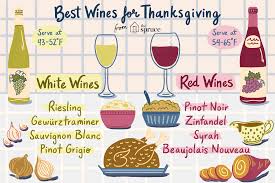
Wondering about a Thanksgiving wine? Even with a trimmed down dinner list as small as two people, the wine choice remains a dilemma for most people. But no problem if you approach with the same attitude you had when dining out when everyone selects a different entree. 

You need to go with the best all purpose, versatile wine. Until recently, most experts would automatically suggest Beaujolais, the fruity light-bodied French Red. But honestly, that was a weak compromise, leaving nobody happy.

Now there’s another choice. The go-to wine for this Thanksgiving should be today’s very popular restaurant wine by the glass…Malbec. Before the recent restaurant restrictions, it had become my go-to wine by the glass.  

Malbec is versatile enough to please the red and white wine drinker and it is, or should be, reasonably priced. It is neither too tannic as some other red wines nor too acidic or sweet like many white wines. And you dont need some silly vintage chart with vintage ratings. 

A safe choice for sure.

Though originating in France and made in many countries, Malbec from Argentina has become so popular that it is practically a brand. And as its popularity continues to grow, there’s not a lot of difference between one major brand of Malbec and another. 

That’s a nice way of saying they are many decent, reliable and, well, not terribly exciting Argentinian Malbecs on the market. Still a good choice.

But recently, I’ve encountered Malbec from two wineries new to me that are the real deal and also offer some flavor excitement. And are priced well below the famous brands.

First up: Proemio

Proemio means prologue or first page in old Spanish.

2017 Proemio Red Blend, Estate Bottled, Mendoza, Argentina  $10.99

If this Red Blend is Proemio’s entry level wine, then we are at the door of a super discovery. Made from a single vineyard in Maipu, this is 50% Malbec with equal doses of Cabernet Sauvignon and Petit Verdot.  It is dark and opens to reveal plum and ripe blackberry fruit with lovely notes of sage and violets along with some earthiness. Lively and mouth-filling spicy flavors show smooth tannins with touches of black pepper and leather. 

Seems like the 25% Petit Verdot added some complexity and earthy, leathery notes to turn this one into something very special at this price. 

Based in Mendoza, Proemio is a family owned winery founded in 2001 that is not the typical Argentinian producer. With vineyards in three distinct regions, it features “Icon”which is a Bordeaux blend as the top of the line. Offering several Malbecs, it also bottles a Syrah-Grenache blend as well as a varietal Cabernet Franc and Petit Verdot.

Next: Siete Fincas

The name refers to vineyards in seven locations.

2019 Siete Fincas, Tupungato, Argentina $16.00

Dark, almost black in color suggesting it is not watered down, big volume stuff. With ripe plum fruit along with a black pepper edge, the aroma is also slightly floral-earthy. Medium bodied with soft edges, fine grained tannin, but nicely structured with a touch of oak and good length in the finish. Holds up well in the glass over time, a sign it can be cellared for a few years. 

Siete Fincas is also a family winery. Created in 2000 by Edgardo Stallocca to continue the viticultural tradition his grandfather, Juan Stallocca, began in Mendoza in 1904, it has vineyards in several sub regions. 

Other Malbecs:

Best reliable brands:

Norton

Domaine Bousquet

Susana Balbo

Salentein

Finca Flichman

Personal favorites worth a special search:

Zuccardi Q

Pascual Toso