Is Grenache the New Pinot Noir?

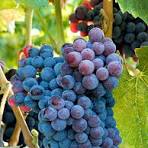
Is Grenache, aka Grenache Noir, the next Pinot Noir?  That’s not as far-fetched as it may seem at first glance since the Grenache name has become highly visible with the growing popularity of Grenache Rose. But no, I don’t think there will be a follow up to “Sideways” with Miles dumping a bucket of Pinot and singing the praise of Grenache.

However, it has come a long way and Randall Grahm puts things in proper perspective when saying, “I never thought I’d see it but Grenache definitely seems to be having a moment.”

While Grenache is not about to replace Pinot Noir, I can’t count the times a recent conversation or comment about Grenache was somehow linked to Pinot Noir. Bill Easton of Terre Rouge Vineyards sees it as “sort of a warmer climate Pinot Noir. Delicate; less tannic; tends to be more complex when blended with a bit of Mourvèdre and Syrah” while Mike McCay of McCayCellars calls it “Lodi’s Pinot Noir.”

In El Dorado, Cedarville’s Jonathan Lachs told me “I introduce our Grenache as our middleweight wine, similar to a Pinot Noir, though equally regal, with less oak dependance and a tremendous sense of place.” 

I’ll return to a comment from Randall: “As someone far wittier than I once said, “Grenache is the grape that Pinot Noir drinkers are in fact looking for.”  My slight reformulation of that is:  “For my entire career I’ve been trying to make Burgundy in California.  It just took me a while to realize that the most successful “Burgundy” in California is not likely to be made from Pinot Noir.”

After several more winemakers emphasized the grape’s Pinot Noir like delicacy and sensitivity to site, that was enough for me to put on my deep diving gear and check out what’s going on with Grenache in California. 

A Little Background

The first step took me back to 1989 when the Rhone Rangers were making news and being the cover story of The Wine Spectator. That was also the year of Randall Grahm and Bonny Doon’s first vintage Grenache named “Clos de Gilroy.” There were only a few winemakers who viewed it positively and were aware of the importance of Grenache in Châteauneuf du Pape. The most  passionate voice was that of John Alban who admits today that “Grenache has been our unwavering obsession.”  From his first vintage onward, he says he  was “determined to figure out how to grow and produce a California Grenache that people might just respect.”  

He went on to clarify his position: “When I spoke of establishing respect for Grenache, it was breaking the paradigm and silly notion of noble varieties: nobility is in the wine, not in the variety.  I wanted to make a Grenache that people viewed as delicious and cellar worthy.”

Like many of his fellow Rangers, Alban knew Chateau Rayas was a rare Chateauneuf-du-Pape that was predominantly Grenache. Unlike them, he went to France and apprenticed in the cellars of Rayas. In a recent conversation, he explained what he and others were up against when he returned:  “The prevailing notion was that California Grenache was limp in color, texture, structure, and appeal. I have referred to these wines as ‘pinky dink picnic wines.’ These warm climate, deep soiled plantings pre-dated sincere efforts for a quality wine by many decades.” Starting out way back then, he adds, “you naturally have a consumer base that is imprinted with the perception and experience of Grenache as mass produced plonk.”

Unlike the other Rhone varieties, Grenache was not unknown. It just had a bad reputation. In the mid 1970s, there were 20,000 acres planted in California.  In 1990, there were still plenty planted, some 13,000 acres, but all but 1% was in the warm Central Valley. Overproduction was the main problem. Jason Hass of Tablas Creek recalls that when his dad, Robert Hass, was considering starting a winery in California, there was “a photo my dad sent me of him holding a Grenache cluster he’d found in the Central Valley. It was the size of a basketball and probably weighed 20 pounds!” 

Moving Inland

Today’s total acreage approaches 5,000 and the majority is in the Central Coast, not the hot Central Valley.The good news is that over half of the current acreage has been planted since 2000, and much of the newer vineyards were in Santa Barbara, San Luis Obispo, and  Paso Robles. On a smaller scale, but no less important, were new plantings of Grenache in the Amador and El Dorado counties since 2000.

As a silver lining,California’s  phylloxera epidemic in the 1990s opened the door for exploring clones, emphasizing matching rootstocks to clones and better farming practices: all of which eventually helped resuscitate Grenache. In 1989 Tablas Creek began importing cuttings from Beaucastel, and John Alban was focusing on clones from Rayas. With a new emphasis on sustainable farming and organic practices, he and others went to work on controlling Grenache. He adds, “My effort started from the ground up: careful selections of the variety that had demonstrated the ability to make profound wine, rootstocks that would limit vigor, and vineyard sites that had the potential for greatness.”

Leaving the question of greatness aside for now, Grenache has certainly come a long way and has responded especially well to today’s sustainable and or biodynamic farming approaches. Selecting vineyard sites is part of the story, and I discovered there are two opposing camps: the high elevation advocates and the cool-climate school.

Mountain High

 I was surprised to find Grenache thriving alongside Zinfandel in the Sierra Foothills. So I asked around and Nolan Jones of Lava Cap has this to say when asked how it compares to Zinfandel:

“Grenache is considerably easier to grow and manage both in the vineyard and in the cellar. We rarely see problems with mold or mildew in our Grenache, whereas Zinfandel requires significantly more attention to prevent these issues. The ripening process also differs, with Zinfandel often needing 2-3 passes in a block due to unevenness. Grenache, on the other hand, ripens uniformly. Grenache also demonstrates good resilience to both heat and rain, unlike Zinfandel, which tends to raisin in heat and mold in rain.”

Lava Cap, family owned since 1986, has been making Grenache since 2000. Founded by a geologist, the family established vineyards at elevations high above the valley and coastal fog belt, ranging from 2,400f-2,700ft. The more I looked into the success of Grenache today, high elevation sites are one of the keys.  Basically, Jones explains, “the elevation and the resulting cool air, play a key role in limiting elevated temperatures during extreme heat spikes.” 

In recent years, Argentinian Malbec has dominated the link between elevation and wine quality, but now Grenache is adding a voice. When talking about it as a “mountain wine,” Jones explains, by that “I mean the fruit is fresh and vibrant as opposed to bulky and heavy, the acid is bright, and phenolics show a firm structure that is unique to high elevation sites.”  

Not far away is Cedarville Vineyards and its organically farmed estate at 2,500 feet in the Fair Play and El Dorado AVA. Delfino Farm’s Estate Grenache sits on granite soils at the 2,800 ft level. Also in El Dorado County, Madrona which also makes an excellent Grenache is situated at 3,000 feet in the El Dorado County Appellation. Madroña consists of three family-owned vineyards, and its 2019 Grenache, reviewed earlier, is a real bell-ringer.

In Amador County, Bill Easton of Terre Rouge has been making wines from Grenache since 1985. For his top of the line L’Autre he sources fruit from The Duarte-Georgetown Vineyard, located at 2,500 feet near the town of the same name. Another of my favorite discoveries is Weisinger Winery in Southern Oregon whose attractive Grenache is from the Avra Vineyard, elevation 2221 feet.

Cool Climate Grenache

However exciting those Mountain grown Grenache may be, the major hub of activity is the Central Coast where winemakers in Santa Barbara are promoting cool climate Grenache. Ironically, it was at the Hitching Post Restaurant in Santa Barbara where Miles in Sideways cursed Merlot and started the big push for Pinot Noir. 

In describing its 2023 Santa Barbara Grenache, Stolpman Vineyards, one of my favorite wineries, offers this tidy summary: “Light hued, cool climate Grenache has proven itself as one of the most compelling success stories out of Santa Barbara County.  When we nail the harvest date, the Grenache varietal naturally gives a ripe, fleshy red-fruit profile while retaining bright verve and balance.” And the Santa Barbara Winery adds this overview:: Grenache grown in cooler climates tends to develop spicier components than in warmer climes, …Cool climate Grenache has a long hang time for flavor development.”

When Bob Lindquist, an original Rhone Ranger, made his first Grenache at Qupe in 2001, he sourced the grapes from the  Purisima Mountain Vyd in Ballard Canyon. He is now making Grenache from the Reeves Vineyard in the San Luis Obispo Coast AVA under his own label. Here’s his take: “Cool climate Grenache is quite different from most of the great Grenache wines of the world, which are normally grown in warm climates such as: Châteauneuf du Pape; Priorat; Barossa or even Paso Robles.  This Grenache is grown in an area where Pinot Noir and Chardonnay dominate and excel.  The unique climate and geography of this part of the Central Coast allow Grenache to ripen fully, 4-6 weeks after Pinot Noir ripens! 

A few years ago I was blown away by the 2018 Amor Fati Grenache from Santa Maria Valley in Santa Barbara. It was so lively and complex that it remains one of my highest rated wines. At the time it seemed odd that the Tooth & Nail winery in Paso had developed the cool-climate Murmur Vineyard for Grenache. Now, nothing surprises me about Grenache.

News from Paso

As for Paso Robles, Tablas Creek Vineyards is a major part of the Grenache story. From its vineyards in the Adelaida District planted to the Beaucastel clones, many wineries have obtained cuttings from its nursery, and the winery now cultivates 18 acres of Grenache. When asked for his thoughts on Grenache today, Jason Hass said, “As for Grenache, yes, we find it versatile and rewarding. It’s relatively vigorous, productive, and easy to grow. It’s great as a lead player in a blend, as a supporting player, and (most years) as a varietal wine. It has fruit, spice, and acid.”

Anyone interested in Grenache and all Rhone grapes should subscribe to the Tablas Creek blog. There you’ll find a detailed history of all the varieties. If you really want to go deep, a recent post evaluated  20 different blocks of Grenache made by Tablas Creek in the 2024 vintage. 

Also, as part of its single vineyard line, Tablas Creek recently added a Grenache from

the Hook Vineyard, part of the Hahn property in the Santa Lucia Highlands, in Monterey County. The cool, coastal-influenced 122-acre vineyard includes 21 acres of Grenache Noir from Tablas Creek clones. “The climate, quite different from Paso Robles and on the coolest edge of where Grenache will ripen, leads to very long hang times, dark colors, and thick skins, making this 100% Grenache a fun contrast to our higher-toned expression of the grape.”

Yes, there are new and fun Grenache wines to explore. My conversation with Jason ended on this note: I also love that it’s a great rosé grape and (I think) a lovely grape to make a chillable red from. That gives growers flexibility to respond to a changing marketplace. And of course there’s the white variant Grenache Blanc, which has proven to be a superstar here in California.”

Of the many other wineries making Grenache in Paso, I was intrigued by the way Calcareous Vineyard introduced its 2023 Grenache with these words: Grenache has found a home in Paso Robles as not only a key contributor to our Rhone blends but as a standout single varietal as well. Known for its elegant texture, lively fresh fruit, and great balance, our Grenache is easily one of our best food pairing wines.”

Yes indeed, from Paso we hear Grenache is “a chillable red” and “one of the best food pairing wines.”

For anyone considering jumping on the Grenache bandwagon, one winery, A Tribute to Grace, is a Grenache specialist.  No kidding.  At its tasting room in Los Alamos, it offers nine different Grenache bottlings.

 And now for the last word, I yield to Paul Bush of Madrona, “Approachable in nature for sipping on the deck, but serious enough for the table. This is Grenache!” 

 Wines that reinforce the notion that Grenache offers a wide range of styles.

Delfino Farms Edio Vineyards El Dorado Grenache 2023 $40

Delfino’s high elevation vineyard was planted primarily to the Alban clone of Grenache. In 2023, the wine was 100% Grenache, whereas previous vintages were blended with Syrah. Aged for 10 months in neutral French oak and bottles unfined and unfiltered, this is a super example of pure vibrant, mountain grown Grenache. The color is a lively red, and the aroma is all about cranberry and cherry with light spices. Medium bodied, sleek and structured, it has fresh flavors of cherry and plum, with a slight tannic edge in the finish. The acidity lengthens the finish and leaves you thinking of serving it with light cheese or summer fare. 92

Lava Cap Winery El Dorado AVA, Sierra Foothills (California) Grenache 2023 $32

Deep red in color, it immediately offers an effusive aroma of baking spices with cranberry and light floral. The palate is smooth with vibrant flavors of black fruit, mostly plum and hint of dried herbs. Finishes with light, gentle tannin and a lingering note of plum. It was aged for 9 months in neutral French oak. Overall, it showcases youthful fruit and spice and you’d never know when tasting it that the alcohol is 14%. Drink now but will hold up well over time.  450 cases made. 93

 Lindquist Family Wines San Luis Obispo Coast, Reeves Vineyard  Grenache 2022  $45

From the cool-climate SLO region, this Grenache is blended with 20% Syrah. Each variety is fermented separately and aged for 11 months in oak. Then, once combined, the wine ages an additional 5 months. Dark in color, it has an aroma of black cherry and cranberry with plenty of spice. Solid and concentrated in flavors, it remains vibrant on the palate with a hint of herbs. Savory overall, it can be slightly chilled without losing its core appeal. As attractive as it is now, it will age with grace for another 5 years, probably longer. 94

 Terre Rouge Grenache “L’Autre”, Sierra Foothills 2016 $35

(78% Grenache, 15% Mourvèdre & 7% Syrah)

L’Autre means “the other one, “ it is now the winery’s top Rhône varietal blend. From the 2016 vintage, this confirms that Grenache based wines do indeed develop with cellaring. The Grenache is from Duarte-Georgetown Vineyard located at 2,500 feet and the budwood is from Chateau Rayas, Beaucastel, and Remelluri in Rioja. The wine opens immediately and is full of ripe plum, light spice and herbs on the nose. On the palate, it is amazingly rich and round yet elegant with black fruit flavors and just a hint of gaminess. Finishing soft with a velvety texture, it is so inviting to drink now but has the balance to continue to please over the next several years. 

The winery says it “is a dead ringer for a top Gigondas,” and that is an understatement.  95
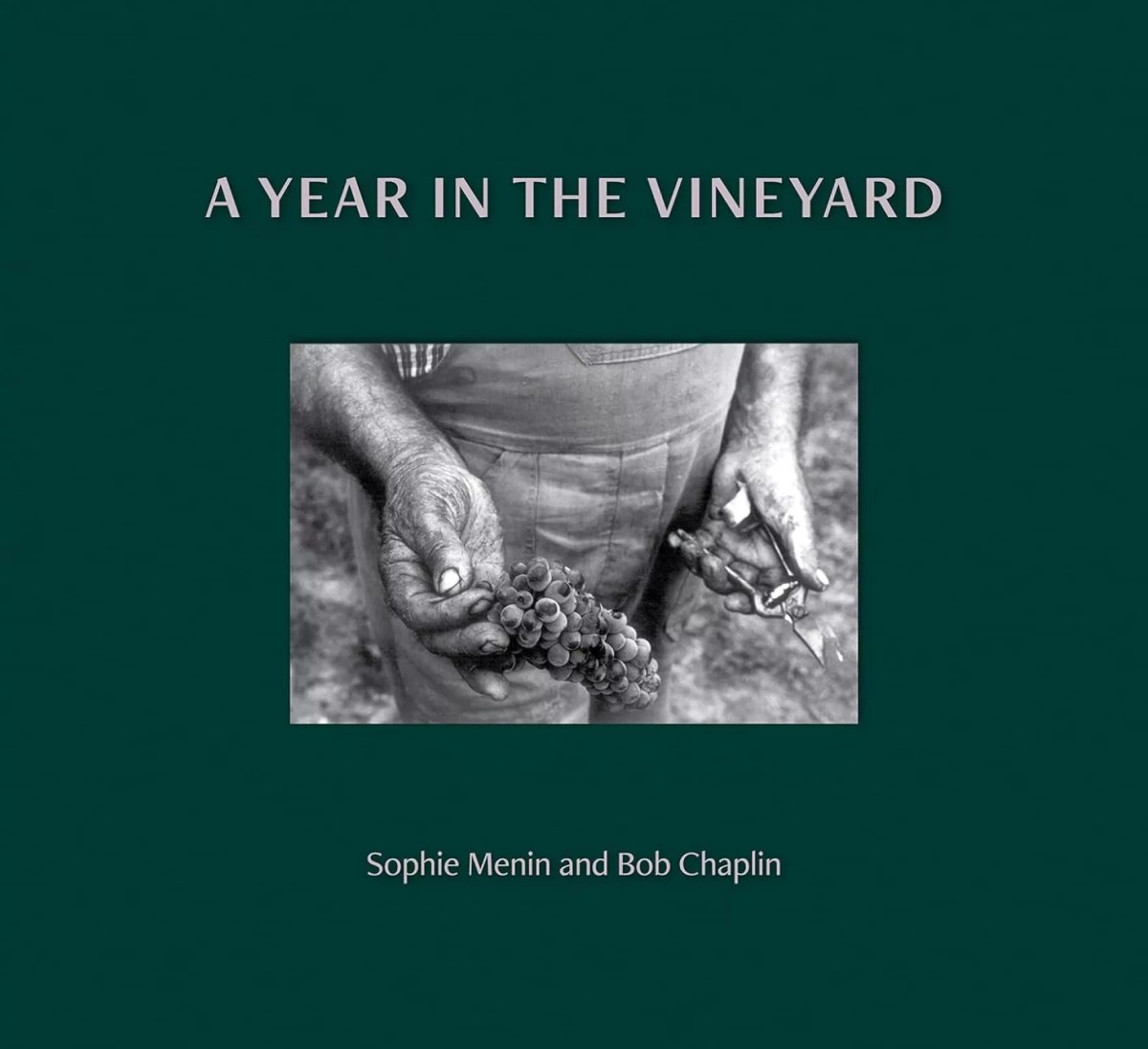
A Year in the Vineyard

A Year in the Vineyard

Sophie Menin and Bob Chaplin

Published by Cultureshock, 2024

Foreword by Hugh Johnson

This book is all about the cycle of the vine. It is divided into five sections:  dormancy, budburst, 100 hundred summer nights, harvest, and preparing for rest. Through its magnificent photos and insightful commentary, it also “documents the ongoing evolution of viticulture.” 

Sophie Menin notes in the Introduction that the book is not trying to catalogue every vineyard activity or feature every wine region in the world, but instead, she explains: ”we capture gestures, steps in a dance with the natural world” as winegrowers, vignerons “search for practical solutions to changing conditions.”

When the book arrived, my first thought was “wow, this is one heavy book.” But to be fair, I then went carefully through it, stopping at each photo, reading the sidebars, and when finished, the word “heavy” came back to mind. “Heavy” as the hippies used it back in the day meant powerful and significant, something that really grabs your attention. Nowadays with the TikTok crowd, this book would be  “heavy on meaning.” So let’s just go with thought-provoking. 

A Year in the Vineyard should be made available to every student in every wine class today. Whether referenced in an introduction to wine, or a certified wine course, this book will help put everything back into perspective. It captures the reason why we enjoy, study, and share wine.  Unlike hearing someone lecture about the importance of pruning and crop size in the Spring or the burning of cuttings in Europe after the harvest, you can see for yourself and practically experience them through these superb photos.

My favorite scene, the one that gets you thinking, is on p 80-81. In it, there’s a woman in the vineyards, likely a worker, but maybe the owner, she’s surrounded by vines with full clusters but is looking up at the dark ominous clouds heading her way. We’ll never know if it rained, hailed, or passed over. 

Another one depicts 10 workers bending over in the vineyards of Champagne Roederer as they prune and thin the shoots which will have an impact on the harvest months later.

Cultivating vines, as this book shows, also involves many aspects of nature. Butterflies are important, so are horses in ploughing some vineyards, and then roses are often grown to warn growers of possible diseases. And, yes, bats can be employed to discourage hunting moths from ruining the clusters. In some regions birds have to be discouraged by netting. Then there are some healthy, helpful pigs working the vineyards of Bairrada, Portugal.

 What makes this book so compelling is that the photos come from different sources, so there’s  different perspectives along the way. A number are from Bob Chaplin and Sophie, a few from Jon Wyand, and others from independent photographers as well as from wine producers. 

And the vineyard scenes are also eclectic, ranging all over the wine map. No favorites or pay back here! 

This book will answer lots of questions.

The book is of course available from Amazon. 

Better yet, signed copies are available at: 

Discover the Hidden Gems of Fort Ross Vineyard

People living on the edge, the bet it all risk takers, and even those simply taking the less traveled road are exceptions in today’s wine world. Because they don’t follow conventional wisdom or marketing trends, these outliers can be exciting to follow. And when they succeed, they can come up with brilliant wines. But by going against the grain they risk going unnoticed, flying way under the radar of wine writers, somms, and influencers. 

Well, this writer was lucky to have been directed to one of those wineries by a good friend, and after tasting through the wines, I’m going to blow through the cloud cover and shine the spotlight on a great discovery: Fort Ross Vineyard.

In 1988, when phylloxera was beginning to take its toll in the North Coast wine regions, Lester and Linda Schwartz purchased a large slice of rugged land on a steep coastal ridge above the Pacific Ocean near the historic Russian settlement of Fort Ross. In 1994 they established Fort Ross Vineyard and made their first wine in 2000.

First, the Vineyard Story

 South African natives who had immigrated to the San Francisco Bay Area in the 1970s, they appreciated  fine wine and food and were convinced the site was suitable for growing wine grapes. Located 5 miles north of Jenner, their land is literally along the Coast of Sonoma. As an AVA, the “Sonoma Coast” extends inland and includes parts of Carneros, Russian River Valley  and the so-called Petaluma Gap. The land they were considering turning into a vineyard, however, would be the closest in California to the Pacific Ocean.

So, to review, 1988 was not the best of times for venturing into winemaking and the site sitting above and less than a mile in from the Ocean had not yet been explored.  There were many risks but the elevations of these potential vineyards range dramatically from 1,200 to 1,700 feet, or just above the coastal fog.

In 1991 Lester ordered two dozen dormant rootstocks, and when the initial plantings proved successful, the couple expanded their experiment, planting a test vineyard with 16 varieties, three trellis systems, assorted clones and several rootstocks. 

When all of the extensive trials were evaluated, they developed a vineyard  which now consists of four varieties: Chardonnay, Pinot Noir, Chenin Blanc and Pinotage.  No surprise with the first two; Sonoma Coast Chardonnay and Pinot Noir were made famous by the likes of Marcassin, Flowers, Hirsch, and Peter Michael  But their vineyards are hidden away inland, not along the riskier coast.  

And although both Chenin Blanc and Pinotage are popular in South Africa, no one else, except  native South Africans, would even think about planting them in California. Chenin Blanc had fallen out of favor by 1991 and there was nowhere you could obtain Pinotage vines. 

Not a problem for them. They sourced Pinotage budwood from two of the finest sites in South Africa, and became the first independent growers to import grapevine cuttings from there through the Foundation Plant Services that operates alongside the U.C. Davis School of Viticulture and Enology. 

Then when they laid out their vineyard, they didn’t take the easy way of uniformity. Instead, the Fort Ross Seaview Vineyard comprises 32 vineyard blocks over 53 planted acres, with each block varying in size from approximately one-half to two acres each.  Having 32 blocks is not the easy way to plant, to tend, and to harvest for sure. 

But each block is based upon a carefully selected clone and rootstock for the variety. The vineyard is planted with heritage clones and field selections, which generally produce low yields with small bunches and berries that deliver very distinct wines.  

  • Pinot Noir – Calera, Pommard, Swan, Dijon clones 115 and 777
  • Chardonnay – Old Hyde, Wente, 
  • Pinotage – Proprietary clones MM1, MM3 from South African budwood

Now for the Wines

Fort Ross Vineyard Seaview Sonoma Coast Pinotage 2019 $62

If you’re unfamiliar with Pinotage, here’s a great place to start. Created by crossing Pinot Noir with Cinsault, Pinotage led the way to the revival of winemaking in South Africa. At the time, Cinsault was associated with Hermitage which explains the “tage” in the name. This rendition from Fort Ross is a stunning example.  

After the fruit was hand harvested in early October of 2019, winemaker Jeff Pisoni aged the wine for 12 months in 20% new French oak and bottled it unfined and unfiltered. In the glass this wine is quite dark in color with an intriguing aroma that leans slightly toward the earthy Rhone side with berry fruit, green tea and cassis. On the palate it is vibrant and energized with black plum, spice and tea leaf flavors that are supported by velvety tannins. Finishes with good length, suggesting this would reward lengthy cellaring. Not to sound corny, but it does capture the earthiness of a Rhone and the velvety smooth texture of a Pinot. Who knew?  360 cases made 94

Fort Ross Vineyard  Fort Ross-Seaview Sonoma Coast, Chenin Blanc 2023 $44

Popular decades ago and made in a slightly sweet style, Chenin Blanc rarely gets anyone’s attention these days and few people know that it can yield an excellent dry wine.  Cool climate Chenin Blanc is rare in California with most acreage now in warm sites. In its third vintage of estate grown Chenin Blanc, Fort Ross came up with an extraordinary rendition. It  brings together concentration, energy, complexity in a seamless package. 

In the glass it is light yellow with a healthy green tint and the Initial assertive aroma asserts itself in a combination of lemon meringue and fresh pear. With airing, the aroma takes on some ginger spice and melon. On the palate it is medium bodied with concentrated flavors of lemon and stone fruits. From start to finish it is solidly structured and remains lively on the palate. With its crisp acidity, the flavors continue to a crisp finish with background notes of honeysuckle and bosc pear fruit. Unquestionably one of the finest Chenins in my experience, the wine was made by Jeff Pisoni who aged 80% of the wine in neutral French oak for seven months and bottled it unfiltered. 100 cases made. 95

And Now Bring On the Clones

Fort Ross Vineyard Stagecoach Road Fort Ross-Seaview Sonoma Coast Pinot Noir 2022 $80

This pitch perfect Pinot is from two clones (Calera and Pommard) planted on steep hillsides overlooking the Pacific Ocean. Early spring rains during flowering reduced the crop in 2022 and at the harvest the berries were unusually small. That comes across once the wine is poured and the color is a deep garnet. Initial scents of cranberry and plum with anise are a bit reticent, but with airing and swirling, black cherry, tea and toasty oak scents emerge. 

Smooth and silky on the palate, it offers concentrated flavors of cherry and earthy, forest floor that are bright and charming with very light tannins. Youthful and balanced, it was showing even greater harmony a day later, indicating a long future lies ahead. But can be enjoyed whenever the mood hits.  230 cases.  94

Fort Ross Vineyard The Terraces Fort Ross-Seaview Sonoma Coast Pinot Noir 2022 $80

Pinot lovers should make room in their cellars for this one. From a low yielding vintage, this Pinot was made from a vineyard block planted entirely to the Calera clone, and the wine was aged for 11 months in French oak, 40% new. Known for its small berries, high acidity and solid frame, the Calera clone is often a key component in multi-clone Pinots. 

Once poured, this ‘22  gets your attention with its lovely ripe plum and raspberry aroma, and the palate impression also makes it stand out with its bright cherry flavors along with definite oak spice and youthful acidity. Concentrated with some tannic grip, this one is for the cellar and, with aging, it should be outstanding. 250 cases made 94-95

For the Final Touch: Chardonnay

Not surprisingly, the Fort Ross Chardonnay is not your Rombauer’s  buttery, oaky, commercial stuff.  To begin with, the  clones planted are the Went and Hyde  field selections, seldom seen these days. Grown in the coastal, breezy climate, the vines in 2022 yielded a small crop.

But once poured, the ‘22 Chardonnay announces its individuality with its unusual yellow color. Then the aroma is fresh and vibrant with lovely apple, and lemon as it expands.

On the palate the apple and stone fruit flavors are concentrated and sustained right through a long finish. It also is one of the very few Chardonnays that will reward cellaring which became apparent when it showed great complexity 24 hours after being opened.

So there you have it. 

Go to http://www.fortrossvineyard.com to get on their mailing list. 

You can purchase new releases at a 10% discount and don’t have to be club members.

Also, they now have a line of wines called Sea Slopes to supply top restaurants and wine shops in select markets around the country.

Sea Slopes wines are made by the same winemaker using the estate vineyards.

Going On and On About Roussanne

Roussanne is a white wine that is full of promise. It is a challenge to grow, but winemakers and vineyard owners are on a sharp learning curve.

Here are two textbook examples:

Truchard Vineyards Carneros, Napa Valley Estate Bottled Roussanne 2023 $30
One of the first to make a Roussanne in California, Truchard planted 3 acres back in 1998. Over the years the Truchards have learned how to deal with the variety’s many challenges. In 2023, they harvested Roussanne in early November, and fermented the juice in French oak barrels (20% new). As the wine aged on the lees for 6 months, it was frequently stirred and went through a partial malolactic fermentation. Showing some green in its light yellow color, the wine opens up and is both vibrant and full flavored.  Nectarine and apricot fruit aromatics lead the way and pick up subtle jasmine and a touch of oak with swirling.  Medium full-bodied, the wine is smooth and continues with flavors of peach, apricot and citrus which are delivered with a hint of minerality and firming acidity. Layered and balanced, it is solid now and should peak in 3-4 years.  94

Peter William Vineyard Rogue Valley (Oregon) Roussanne 2024 $28.50 Roussanne Is a challenge to grow, and the winery made a few viticultural changes in its estate vineyard. In 2024 those changes paid off and resulted in a vibrant, textured wine. Harvested in mid-october at a relatively low Brix of 22.8, this Roussanne was barrel fermented and aged for 5 months in neutral French oak. Straw colored, it offers an attractive aroma of white peach with hints of ginger and jasmine for added intrigue. Medium-bodied and smooth in texture, the wine remains vibrant with rich flavors of peach and some honeyed notes. The finish is long and lively with some of that ginger spice showing up in the aftertaste. 93

If you love hearing about winemakers who think out of the box, well then read on. Founded by Sue Tipton, Acquiesce Winery & Vineyards is a white wine specialist in Lodi. You heard right, Lodi white wines only. The story goes that when vacationing in the Rhone Valley, she tasted a white Châteauneuf-du-Pape and that changed everything. Not long afterwards, she researched the white varieties, discovered Tablas Creek and its nursery, and, well, uprooted her Zinfandel vineyard and went full on white rhones. At Acquiesce today she offers wines made from Picpoul Blanc, Grenache Blanc, Roussanne, Viognier, Bourboulenc, and Clairette Blanche as well as several blends.

She was the first in California to plant the Bourboulenc variety and has not backed down when dealing with the white Rhone problem child, Roussanne.  But to those winemakers who love a challenge, it can be rewarding.

Acquiesce Winery & Vineyards Mokelumne River, Lodi Roussanne 2022 $41

The 2022 Acquiesce Roussanne is a perfect example of the multi-faceted white. Harvested in late august from the estate’s 2 acres, this Roussanne  is incredible in many ways. It keeps changing in the glass as it airs, and in the final analysis, is nuanced and balanced. The medium yellow color has a youthful green edge. The initial aroma of peach and jasmine takes on a hint of honeysuckle and tea.  On the palate it is medium full-bodied, soft and smooth in texture, and the flavors of peach and green tea also have a mineral, chalky back taste. There’s just enough acidity to add to the finish which still has a fresh fruit and chalky aftertaste. Entirely stainless steel fermented and lees aged, it can be matched with your favorite white wine main course.  94 points

Roussanne is known to improve with cellaring, so this 2022 will be fascinating to try again in a few years.

And here is proof positive that it ages well indeed:

Domaine de la Terre Rouge Sierra Foothills (California) Roussanne 2005 

From the winery’s cellar courtesy of Bill Easton. The color here is medium yellow but with some lively green glints. Don’t let the “old” look mislead you because this wine is still very much alive. The aroma is a combination of nectarine and candlewax with some citrus and green tea subtleties. Concentrated with layers and layers of flavors, the wine offers a silky smooth, creamy texture through bottle aging. Ii has developed some pear and honey flavors and a touch of almond but it is all seamless and harmonious at this stage. Finishes long and lively. What a treat to experience how well Roussanne responds to cellaring. It held up well when tasted a day later. Amazing wine.


Also, see my  other reviews of  Roussannes at http://www.winereviewonline.com

Sales Alert!

At Tooth & Nail which is one of my favs. Great wines from Paso and the Central Coast.

Shop at  toothandnailwine.com

Here you go:

“We are opening our warehouse for a major sale of all of our wines.

All of our wines are now 40% off and if you’re a member with us, you’ll receive an additional 10% off, making all of our wines 50% off for our members.

Since our tasting room is closed, this is an online offer only with complimentary shipping on orders of $100 or more.”

While supplies last. All sales are final.

For reviews, see the reviews at winereviewonline.com

I love the Syrahs and gave one of their Grenache a score of 97 points!

There are several different labels, such as:

Amor Fati: Syrah, Grenache, Pinot Noir and Chardonnay, all from cool climates.

For me, these 4 were love at first taste. All scored 92 points or higher. See reviews at 

http://www.winereviewonline.com

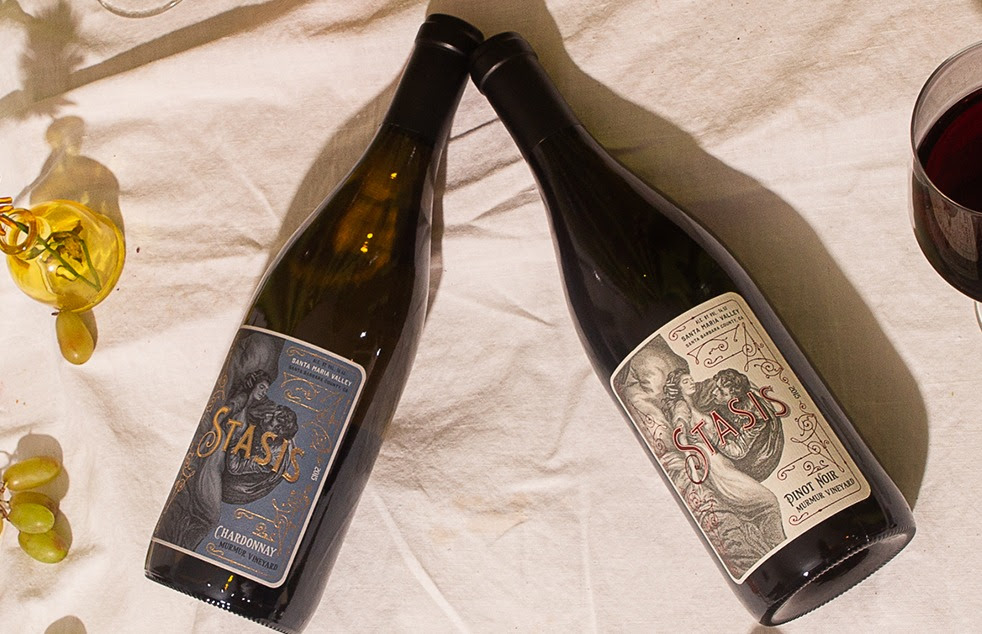
 Stasis: Pinot Noir from Santa Maria and a Viognier. Both excellent.
Destinata: Drink now, no fanfare Chenin Blanc, Riesling, and Syrah. All good. All fun. Especially the drink-now style Syrah. The dry Riesling and Chenin will surprise you.

Tasting Well-Aged Cult Wines 


As 2024 was coming to an end, I had an opportunity to taste two aged Napa Valley cult wines.  They were the Bond 2007 Pluribus and the 2011 The Mascot. Both belong to the father of cult wines, Bill Harlan of Harlan Estate. 

Just to make sure I got a good fix on the aging trajectory of these two, the bottles before me were half bottles, 375ml. There’s no argument that wine ages faster in half-bottles, we just don’t know how much faster. Both bottles before me had excellent levels of fill, and the corks were in excellent condition. There was some sediment on both corks. Those signs usually indicate the wines were properly cellared.

Parker’s Wine Advocate rated the 07 Pluribus 98+ and the Spectator gave it a 97.  From Parker’s notes, it was  “A wine of great intensity and full-bodied power yet with a freshness and delineation that are remarkable, this stunning wine should drink well for 25-30 years. Drink: 2010-2040.” 

The Wine Spectator reported: “Wonderful aromatics lead to a rich, layered mix of spicy currant, blackberry, wild berry and currant flavors that are full-bodied, intense, dense and concentrated, slow to reveal pleasing earth, black licorice, graphite and roasted herb. The tannins give the flavors great traction. To be released spring 2011. Best from 2012 through 2024. 566 cases made. “ 

Yes, both publications were reviewing the wine several months before it was released to the public.  That both these guys were given special treatment might explain the use of words like “stunning” and “wonderful” as some sort of indirect payback for advanced review samples. 

To return to the wines, here are my notes for the 07 Pluribus:

Good dark color.  With aeration, the nose was vague and with diligent swirling showed dried prune, a hint of tobacco, and walnut. Overall, it smelled like old wine. The body was smooth and the flavors were gentle. But the wine was going gently into that good night for sure. 

It would not surprise me to hear the Pluribus is now over the hill in a standard bottle. The value given it by wine-searcher is $525. Then again, people who pay that kind of money for a bottle are not likely to ever say they were disappointed if only to protect their ego and reputation.  As for some background, the Bond Pluribus which debuted in 2003  is from a  mountainous 7-acre site in the Spring Mountain District with steep exposures to the north, east and southeast. It comes with a high price and wine pedigree and was sold only to members  on a mailing list.

Among Harlan’s other wine projects is  “The Mascot” which was the brainstorm of his son, Will.  This wine was a Cabernet made from a selection of younger vines from the primary estate vineyards, and The Mascot made its debut in 2008. As I understand it, The Mascot was made from a selection of new vines created by the routine replanting procedure. The concept is similar to the way many of Bordeaux’s famous estates produce wine from young vines and they are known as “second label” wines. 

In 2018, Decanter Magazine reviewed the 2011 The Mascot and the description is interesting. I was intrigued by the last line: “2011 was a relatively cool year, which gives the wine its freshness. The nose is vibrant and seductive, with blackcurrant aromas. Sumptuous and concentrated on the palate, it’s also sustained by firm tannins and sufficient acidity. The finish is robust and long, and although intended to be drunk on release, it will certainly age.”

So seven years after the vintage and after being bottle aged for five years,  The 2011 Mascot seemed to have surprised the Brits, even though they awarded it only 92 points, as capable of further cellaring. The current vintage is priced from $125 a bottle on up, and according to wine-searcher, you can buy the 2011 for the same price at several retailers in the UK.

Of the two wines I tasted, The Mascot was more attractive and in much better condition. Even in a half-bottle, it opened up with airing and displayed a delicate aroma or bouquet of dark fruit and dried herbs. It was soft and harmonious on the palate and had just a touch of velvety tannin left that carried through in the aftertaste. It is 4 years younger and tasted younger. But on its own, it may have been more exciting to taste in 2018. 

The Takeaways

Tasting old wines is an experience that should never be passed up, but often it is not a pleasurable experience. 

Not all wines get better with age is an old saying but even those capable of aging dont always reward long term cellaring. 

With aged wine, it often turned out that each individual bottle ages differently. This I’ve learned over the years: two bottles from the same case in the same cellar  can and often do, taste different. Wine is full of surprises, both pleasant and disappointing.

As for wine reviewers suggesting a wine’s aging capability is a sign of greatness, it is at best a guess. People like Parker and many Somms today pump themselves up believing they have a special gift.  

Maybe they should heed Mark Twain’s view: “It is difficult to make predictions, especially about the future.”

Do you know the way to Vezelay?

Do you know the way to Vezelay? Well, it leads to a great wine discovery in France and I, pumped up like a new WSET level 4 “expert,” was about to invite you to come along in the journey, only to be brought back to reality. As I learned from a little research. My discovery road trip was 40 years too late.  I found that out when I opened a favorite book from my wine library.

In 1988 in his Adventures of the Wine Route Kermit Lynch described Vezelay as a then “freshly minted AOC capable of producing distinct, world-class Chardonnay.” Just to rub it in a little further, my discovery was a 2022 wine made by Domaine Montanet-Thoden. Kermit’s reference was to Vezelay wine  “especially in the hands of a vigneron as talented as Valentin Montanet.” Same family of winemakers, just different generations.

Well, better late than never, or whatever cliche AI might use. Another point brought home to me when browsing through the Kermit Lynch book is how mechanical, predictable and boring a lot of wine reviews have become these days.  Here’s how Lynch described the Vezelay Chardonnay: “This climate, a clay-and-limestone soil, and stainless-steel vinification are the pillars of Valentin’s Galerne Blanc, a divine rendition of pure, chiseled Chardonnay, bearing notes of orchard fruit, citrus, and oyster shells.” 

a divine rendition of pure, chiseled Chardonnay.

Yep, he described the wine as “a divine rendition of pure, chiseled Chardonnay.” If this has caught your attention, you should try to get hold of the latest edition of  Adventures of the Wine Route which is available from Amazon. 

The writing style is so different from today’s wine ramblings.  It was not only written in a different era in which Lynch was not shackled by the 100 point rating system but it is also written from the point of a view of a wine retailer, a wine merchant. A self-taught wine merchant who approaches visiting wine regions as an “adventure” no less. Not a SOMM, not a WSET holder, not an influencer.

Returning  to Vezelay

And now back to Vezelay and what I learned. It is located south of Chablis and its winemaking goes back for centuries. The medieval village was an important resting place in pilgrimages. And of course, good pilgrims likely enjoyed the local wine. But the vineyards were pretty much wiped out by phylloxera, and it was not until the late 1970s that replanting was underway. 

By 1985, the vineyards were still growing and they were merged into the Burgundy AOC. A few years later they were upgraded to the regional AOC of “Bourgogne-Vezelay.”

Montanet-Thoden, the producer that I “discovered,”  was founded in 2000 by Catherine Montanet of Domaine de La Cadette in collaboration with Tom Thoden. Around that time they planted 6 hectares of Chardonnay and farmed them organically in Vezelay. Largely due to their efforts, Vezelay was granted AOC status in 2017. 

The soils are said to have more clay than Chablis, but they still have a good amount of limestone for their minerality.  Most of the Vezelay vineyards are planted along the higher elevations of the region. Montanet-Thoden Bourgogne Vézelay Blanc Le Galerne is the wine’s full identity, and “Le Galerne” refers to the wind that also helps define this appellation.

In a review posted in winereviewonline.com I gave Domaine Montanet-Thoden Bourgogne Vézelay Blanc Le Galerne 2022 which sells for $39 with a rating of 93. 

Now I realize how impersonal any score is. But I did describe the wine as having oyster shell minerality, and wish I could have come up with “divine, pure chiseled Chardonnay.”  

Checking the Lists of Best Wines of 2024

“The Best Wines of 2024” lists keep coming our way in December as each day another one pops up.  The major publications like The Wine Spectator and the Wine Enthusiast magazines have been offering these Best of the Year lists for decades. Both recently announced their 2024  100 best wines. Though they try to make the announcements dramatic, both The Wine Spectator and the Wine Enthusiasts annual lists have lost whatever drama and sizzle they may once have had.  

No surprise since by now most readers have figured out these lists are either payback for an advertiser or fodder for a PR campaign from the producer. Many of the wines are off the market by year’s end, so the lists are often not useful as buying guides.

 What criteria are used to come up with the typical Best of lists is an interesting subplot. It seems that the major publications ask each reviewer for his or her candidates for best of the year. Scores on the 100 point system are a major consideration, but every so often a wine touted for great value makes the list. But it has to also be rated in the 90-94 point range, of course. I applaud the fact that the Enthusiast also publishes an annual list of great values. 

Listicles

Lists have emerged as a popular format that has taken over the internet over the last decade. “Listicles” have replaced articles in a way. Probably because the number appears in the title or subject line and it sounds newsworthy. More likely, search engines love them. 

Or most likely because a list is easy to compile, while articles need a thesis and require some command of the language to present the argument or position. It wouldn’t surprise me to learn some of these Top 100 lists of wines or of other subjects are done by AI. 

But since listicles, whether compiled by humans or non-humans, have now become a mainstream communications format, I still look them over. One that caught my eye was an end of the year “The Best Argentinian Wines of 2024.”  It appeared at Wine-Searcher, a highly respected and popular website. Like many of my colleagues, I find Argentina to be one of the most dynamic wine countries to follow. The list was based on the 100 point scoring system used by the major reviewers.

As I made my way through the top ten, things got weird. After noting how wonderful Argentina is I read that “prices remain as attractive as ever.” All good. Then the stuff hit the fan. The #1 wine was priced at $245 a bottle, #2 at $226, and, well, the least expensive wine was $128.  Only one white wine made the list, it was a Catena Chardonnay, and the list maker noted, “the White Bones Chardonnay back in 2015 sat at $105, today it comes in at an average of $137. ”  For a Chardonnay from Argentina?

Excuse me, but none of those are attractive prices nor are wines priced at triple digits what Argentina is best known for. Back to Argentina wine #1 in this  wine-searcher list I read, “It’s also extremely attractive pricewise, having gone from $153 in 2020 to today’s price of $246.” 

So that’s what happens when the selection is based on wine ratings from the prime time reviewers. You end up with a list of wines that normal people, non-snobs will never find even if they were fool enough to pay these exorbitant prices.

The Better “Best of Wine” Lists

But for the rest of us, a few “Best of” lists are well worth reading.  James Suckling is much better with the top wines of Argentina. As you go through the list of top 100 wines, you hear about trends and are alerted to new wines to look for. Here’s the method behind the choices: “In curating this year’s Top 100 Wines of Argentina list, we prioritized quality, value for money, each wine’s “wow” factor and general market availability.” 

And as for trend-spotting, Suckling adds this: “Chardonnay may dominate the 14 white wines featured on this list, but rising interest in old-vine semillons and chenin blanc highlights the growing diversity of Argentine whites.”  Suckling’s list also mentions Cabernet Franc, a rising star, and also a Torrontes, the often overlooked wine, made by Susana Balbo.

The “wow factor” is also part of another fascinating list offered by the New York Times list of “Most Memorable” wines of 2024. Compiled by Eric Asimov, the wines are chosen for their quality but also for their impact on the taster and for the reactions they spark. You know, human reactions. And the pleasure wine brings to people. 

Forbes offered several Best of lists. One is “The World’s Best Wine Values of 2024.” Fascinating selections that show a lot of thought went into them.  

Better yet, Forbes asked writer Katie Bell for her “Best Wines of 2024” and she came up with a fabulous list. Her premise, which I thoroughly  support is this: 

“Every year I take note of the wines that moved me, rocked my universe or dazzled me with their quality at an unbelievable price. Long ago I started sharing this list because the best things in life are shared and wine is the ultimate shared experience.” Looking for values and believing that wines are for sharing, now that’s the basis of a great list.

Among the wines she lists are an under the radar Oregon Pinot Noir from Maysara, a white wine from Greece and a Viura from Spain. Oh, and a wine from Argentina: a Malbec from Catena that sells for $20.

And one other list really caught my attention a few days ago. It was posted on Jeb Dunnick’s website. He, of course, offered his top 100 wines, but the list that everyone should read is the Top 50 Best wines of 2024 by R. Drexel. It begins with a Chenin Blanc from  Nalley, a winery new to me and moves along with all kinds of thought-provoking choices and ends up with the #1 wine of the year being a Grenache. A Napa Valley Grenache…totally unexpected but makes me want to get my hands on a bottle.

Discovering a new wine. Now that’s a great way to end a year or celebrate the New Year.

In 2025, Let’s Make Wine Fun Again!

Chablis’ Dirty Little Secret

Chablis may well be one of the most recognizable wine names and also among the most  misunderstood by wine consumers. Some old-timers associate the Chablis name with cheap jug white wine. Then the French don’t help by their obsessive categorization of wine regions. So there are 4 types of Chablis which is a major wine region located in the northeast of France, all made 100% from Chardonnay. 

The four types which are really appellations are: Grand Cru, Premier Cru, Chablis, and Petit Chablis. And the most understood is “Petit Chablis.”  And the most likely of the four to offer super bang for your bucks is…Petit Chablis. So do I have your attention now?

Petit Chablis has nothing to do with being little, but everything to do with place and soils. That’s what most French wine is all about, in case you forgot. While the other categories of Chablis share a type of ancient limestone soil known as Kimmeridgian, Petit Chablis is grown on a more recent type of limestone categorized as Portlandian. 

As vineyards were expanded in Chablis, all of the vineyards on this type of soil were most often on the higher slopes or the beginning of the plateau. In other words, on the outskirts.   A relative newcomer in French wine history,  Petit Chablis became official in 1944.

By today’s standards, the vineyards of Petit Chablis which now represent 20% of all Chablis are not inferior so much as they are not located on that precious ancient limestone soil. And, no surprise, Somms and influencers thrive on babbling about how much they know about the 180 million year old soils. And that rant might lead to terroir, another soil-related subject SOMMS will beat to death.

So back to plain talk and the wine that ignited this conversation.

The wine is: Prieuré Saint-Come Petit Chablis (France)  2021 $25 and I’ve seen it selling for $20. 

It is bright and lively from the get-go with an aroma of fresh cut apple, and a little hint of lemongrass and citrus. The taste is again vibrant with tart apple and a chalky, crisp aftertaste that is a hallmark of Chablis. ALL Chablis.  This Petit has all the right stuff without oak and is moderate in alcohol, so it invites a second glass and is ever so food-friendly.

Fresh, lively, and with no ponderous oak or alcohol, Petit Chablis is worth exploring as a white wine that happens to be made from Chardonnay. In addition to the wine mentioned earlier, here are my 5 suggestions of the leading producers of Petit Chablis.

Domaine Jean-Marc Brocard 

Michel Laroche et Ses Enfants 

Samuel Billaud

Domaine Jolly et Fils

Domaine Roland Lavantureux

The Mad Crush: An Insider’s View

If you are looking for a gift for the special wine drinker in your life, here’s a suggestion that is a sure bet to please, and it is NOT a wine.

The Mad Crush, a new edition written by Sean Weir is highly recommended for those who are into wine or remotely curious but also for anyone out there dreaming about starting a winery.  Available on Amazon ($14.95) this new edition is beautifully written by someone who knows his wine but more importantly, knows how to engage and entertain the reader. 

It is an easy read, but also hard to put down.

On one level, it is the story of Bill Greenough, who “left a successful business world in favor of moving to a remote canyon, digging out an abandoned old vineyard, and making wine off the grid.” The vineyard was established in 1880, abandoned after Prohibition, and Greenough began the process of restoring that vineyard in 1974. Today, the original 3-acre block of head pruned Zinfandel is still producing. Located in what’s known as the Edna Valley today, It is the oldest in San Luis Obispo County. Greenough added 6 acres of Zin in the 1970s and 80s.

The winery is now in the hands of  the second generation and still focusing on Zinfandel.

On another level, the book is also the story of this old vineyard established about 150 years ago which was tended to by several generations who like Greenough become full time stewards of the vines and the land. Along the way the book gives life to many of the cliches tossed around in the wine world. Among them are winemakers being caretakers of the land or stewards as many now like to say, along with communicating with the vines. Stuff like this is made believable through Weir’s first hand experiences and poignant observations.

What held my attention from the first page is the feeling the book is also about the author as he comes to understand the commitment needed to succeed in tending vines and making wines. And as the process unfolds, it may all sound romantic but you sense he comes to realize that pursuing the dream of becoming a winemaker, a dream so many people have shared, is not for everybody. 

Weir grew up in the wine country. He worked in the cellars of Kenwood Vineyard and saw first hand how the partners worked hard to make a go of it.  In 1992 as a student at Cal Poly in San Luis Obispo, he worked one summer as a cellar rat with Greenough as he revived the old vineyard. 

In 1995, out of the blue, Greenough contacts him to work the harvest. That included monitoring the vines as they matured, cleaning the winery, and  preparing for the harvest, crush, and fermentations. That experience, he explains, “is what ultimately drove him to write the book.” As the story unfolds, readers learn a lot about vines, making wines, cleaning, and dealing with the weather, equipment, and the workers during the harvest and crush. It is an inside look at the nitty-gritty, the dusty, dirty boots side of winemaking, not to forget the long hours.

When you go to Amazon for the book, there’s a plot summary. This is a revised edition and includes an afterword and a section called “Prunings,” consisting of some tidbits and stories that didn’t fit the main story.

As for the author, when asked about his winemaking experience after 1995, Sean notes:  “That was my third and final crush. That was enough for me. I caught the winemaking bug, but it wasn’t terminal.”