Introducing An Exciting New Wine Site


www.lastcase.com

This relatively new site appeared on my radar screen about 6 months ago. Turns out while also based in the town of Napa, it is unrelated to similar sounding sites, lastbottle.com and firstbottle.com.

I’ve been following it closely and it now deserves your attention.

Why I like  http://www.lastcase.com 

Professional and unpretentious format: no gimmicky taste profiles, no hype, no silly descriptions, no subscription box mentality.

Ratings are reliable: Chris Sawyer is a real sommelier with genuine credentials

Real wines from real wineries: No custom-made, private label rip-offs.

Serious searching is evident in the selection (curating) of many, small, hard to find wines: Good example is the “One” Cabernet Franc from Knight’s Valley, only 3 barrels made.

A few other points:

While the offerings are limited in number, the wines are not your usual suspects. In fact, some of my favorite CA brands are included such as Robert Craig, Madrigal, MacPhail, and Walt. Also, some wines from Biale, Clos du Val, Mira, and Miner Family have recently been highlighted.

Secondly, discounts are attractive, especially for the daily deals. You can pay close to full fare for the likes of Opus One and Jordan.

But most wines are discounted.

Thirdly, shipping costs are reasonable. Typically the fee is $6 for a flat shipping rate. Or, shipping is free on order of $120 or more.

Here are 4 stellar examples, all at 30%-50% below retail:

2016 Robert Hall Cabernet Sauvignon, Artisan Collection, Paso Robles,  $24.99

2016 Foris Winery Estate Pinot Noir, Rogue Valley, $13.99

2013 Madrigal Vineyards Cabernet Sauvignon, Napa Valley, $29.99

2017 MacPhail, Pinot Noir, “The Flyer,” Sonoma Coast, $34.95


Exploring the Most Diverse Wine Region

Oregon’s Most Diverse Wine Region: The Rogue Valley, Part 1, Updated and expanded in March 2024

Unlike the Willamette Valley, the Rogue Valley makes such a wide variety of wines that it defies easy generalizations. Though small by comparison with just in excess of 5,000 acres planted, the Rogue Valley grows 70 different wine varieties. Yes, from Albarino to Zinfandel. Acreage is expanding and so is the number of wineries, now well over 100. 

It is not unusual for a Rogue Valley winery, most of which are small and family owned, to cultivate over a dozen varieties and offer a dozen or more wines. But why is this diversity of any interest to normal wine consumers?  Well, being a normal enough person, as I began exploring Rogue Valley wines, my skeptical voice kept saying the stale “Jack of all trades, master of none” refrain. 

But after visiting dozens of wineries and evaluating many wines, I’ve concluded the rewards are numerous. Other than the obvious one of having more choices, you can discover varietal wines like Tannat or Vermentino at one winery, top-notch Roussanne and Cabernet Franc at another, and Tempranillo blended with Malbec, an unusual duo at several. You can also find a Mourvedre and Montepulciano and a Carmenere.  

Also, it struck me that because most of the wineries offer such a wide range of wines, visiting the area to buy direct or joining one of the clubs can be like one stop shopping.

The Background: Preparing for the Journey

Taking its name from the Rogue River, the Rogue Valley was approved as an AVA in 1991 which makes it relatively new in wine years. It is the southernmost growing wine region of Oregon. It is also large in size being 70 miles wide by 60 miles long. The AVA runs from Ashland in the southeast through the north and south sides of Medford and stretches to Grants Pass in the west. Today. What makes this diversity possible is that vineyards are planted at different elevations with different aspects and soils which lead to a wide range of opportunities.

While most of  today’s wineries started after 2000, the Rogue Valley is actually Oregon’s oldest wine region, with first vineyards planted in the 1850s. And it is home to the State’s first operating winery opened in 1873. Because most of today’s vineyards were developed after 2000, many wines, Rhones, Spanish, or Italian, are likely made from relatively new vines farmed with the latest techniques. Typically, vineyards are densely planted and organically grown with “sustainable” a common theme.

 But since consumers naturally like to have reliable information and advice, the question of what is the Rogue Valley’s signature wine needs to be addressed. On my first few visits, I thought the star was Syrah, but then I tasted a stunning Grenache from 2-Hawk (now Padigan), a beautiful Viognier from Quady North, Cabernet Franc from several wineries, and more recently Tempranillo from Peter William Vineyard and others. And then there are creative blends such as Tempranillo and Syrah. 

Getting Acquainted, One Winery at a Time

If you are unable to visit, then the best introduction to Rogue Valley and its wines is a virtual tour of the leading wineries. Your tour guide accepts tips, of course.

Our first five stops are in the Applegate Valley located on the west which was established in 2000 as a sub-region within the Rogue. With over 700 acres under vine, the Applegate Valley “has a warm-summer Mediterranean climate, like much of coastal California. However, it has four very distinct seasons, a relatively short growing season, and fog is not a factor. Winter is cold, with occasional snow. That allows the vines to go into full hibernation. Half of the area’s annual 20-30” of precipitation arrives in winter.”

Quady North

Established in 2004, Quady North has 15 acres under vine and grows 12 different varieties. Most are Rhone grapes, but it also farms Cabernet and Cabernet Franc. It recently relocated its facility and tasting room  to the Applegate Valley. Owner Herb Quady is from the California winemaking family, Quady Vineyards, best known for its dessert wines. With Quady North, he is focusing on the Rhones, especially Syrah, and special blends. Keep an eye out for his Cabernet Franc named La Battalla and his Viognier. The 2021 “La Battalla” typifies the hands on approach as the winemaker co-ferments Cab Franc with 15% whole cluster Malbec in open top fermentors using native yeasts. Old school maybe, small batch definitely and absolutely  fascinating wines. The single vineyard Syrahs lead the way.

Troon Vineyard

Tucked away in the Applegate Valley a few miles away from Quady North, Troon is the real deal when it comes to farming. It is a Demeter Biodynamic® Regenerative Organic CertifiedTM Farm which is populated by bees, sheep, and chickens. Among its recent successes, Its 2020 Tannat is a big, multi-layered Tannat with balance and refined tannins, unlike what typically comes our way from South America. It was co-fermented with 24% Malbec and 75%  was aged in neutral French oak for 18 months.. Dark in color, it is brimming with ripe plum, and raspberry aromas with background notes of baking spices.  On the palate, there’s good concentration in a polished, medium-bodied package. It remains vibrant right through the lingering finish. Impressive and enjoyable now and over the next several years. 

Also keep an eye out for the Amphora Amber which is made from Vermentino, a variety Troon has explored for years and used in a wide range of wines, this one is their version of an orange wine. You have to try the Tannat, but my recent favorite is the 2022 Siskiyou Syrah, beautiful and nuanced.

Schmidt Family

 On its 40 acre estate vineyards, Schmidt Family Vineyards in Applegate Valley grows 14 varieties, and produces 6,700 cases a year. It also makes 25 different wines in a given year.

The tasting sits in the middle of beautiful gardens with picnic tables inviting visitors to linger and relax. Many come for the food, especially the pizzas. As for the wines, I like the Albarino Reserve and also the Viognier. As is true of so many wineries, it has a hit or miss track record with Viognier. But it hit the bullseye in recent vintages. The 2021  exudes the orange blossom, honeysuckle aromatics that show Viognier at its unblended, unoaked best. Medium full on the palate, it is rich and smooth in texture with a delightful floral and citrus-edged finish. It is downright refreshing. A versatile summer white!

 Plaisance Ranch Applegate Valley 

A real working ranch with 157 acres devoted to certified organic vineyards and to grassy pastures feeding beef cattle. Most of the land is devoted to pastures.  Now run by third generation farmers, Suzi and Joe Ginet, Plaisance is located in a remote corner of the Applegate Valley.  They literally do everything by hand from grafting new vines to bottling the wine. About two dozen wines are made from the family vineyards, each in small quantities. But after tasting through the roster on a sunny afternoon, I came away amazed at the consistent quality. Their Carmenere is a solid version with excellent varietal character and no excesses. It is deep in color and offers aromas of black plum, cocoa powder  and pomegranate in a medium bodied, well balanced package. One of the best I’ve tasted not made in South America. The plum flavors are vibrant and the tannins are gentle. Their Sauvignon Blanc is also very attractive. 

Red Lily Vineyards

 Dedicated to Spanish varieties, Red Lily Vineyards has emphasized Tempranillo since it started out in 2008 when vines were established along benchlands of the Applegate River.   Winemaker/owner Rachael Martin tells us her “newest vineyard site planted to Tempranillo “has a predominantly northern aspect on a varying slope surrounding a knoll, and sits at an average elevation of 1500 feet.” And another vineyard site “has a predominantly western aspect  that rises to an elevation of 1630 feet.” She makes Tempranillo in three styles, including a Rose. A rare Verdejo is another of her specialities. The site is beautiful and picnicking along the river is especially peaceful. The picnic is complete with my favorite, the Tempranillo Rose.

Cowhorn Vineyards, Applegate Valley

With biodynamic and Demeter approved farming, Cowhorn has attracted some well-deserved media attention for its Rhone wines. Only home grown grapes are used and vines are densely planted at 2,600 vines per acre.  A little pricey for the area, but good to high quality. Of those tasted, the 2015 Sentience (100% Syrah) was loaded with fruit and peppery notes and lovely rich texture. The  ”Sprial 36”, the flagship white Rhone blend, is delicate, beautifully textured and sells for $28

As you can see in this first part we have discovered excellent rhone wines led by Syrah and Viognier, as well as Tempranillo, Malbec, Albarino, Tannat, Carmenere and the list goes on. 

Stay tuned…there’s much more ahead for us to go Rogue.
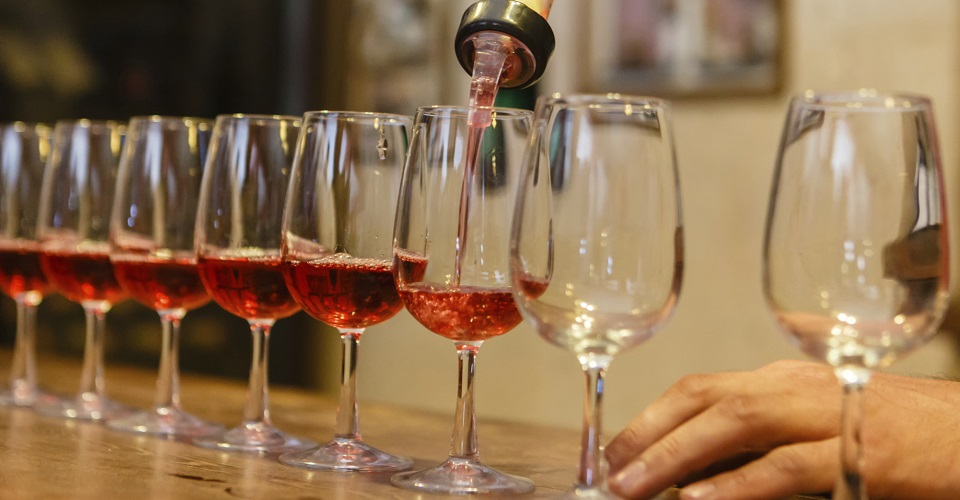
Going Rogue on the Wine Tasting Trail


“Pinch me, pinch me! I must be dreaming.”

A reasonable estimate is that I’ve visited hundreds of wineries over my career. Often with an appointment; most often as a drop in.

I am also compelled to disclose that my favorite play is A Midsummer Night’s Dream. 

You see I may have been under the influence of Puck during a recent visit to a wine country. So if you don’t believe any of what follows, maybe we need to get the Puck out of the conversation.

My first stop also had a good restaurant and superb valley views. Enjoying a small plate of delicious mushrooms, I sample 3 Pinot Noirs, all good with different personalities. Make that really good. Wandering inside the tasting room, I’m offered a bright, lovely Chardonnay, followed by a magnificent Pinot Noir from 7 clones, and then end with a stunning Cornas-tasting Syrah.

Turns out the well-informed tasting room guy was the owner. “Only in your dreams” you are probably saying.

Or, maybe you are curious about those mushrooms.

Next stop, a few miles away, A small winery focusing on Spanish varieties. Wait! Spanish. I definitely must be dreaming. We start with the 2017 Verdejo…bright and lively with crisp citrus flavors. Who in their right mind would make a Verdejo?

Well, it was followed by a Rose, mostly Tempranillo with Grenache and Graciano blended. In a word,”Lovely.” Next were two Tempranillos, the first with 19% Cabernet and the second, 100% Tempranillo. Well, both were excellent, beautifully made versions, one to drink now, the other to age.

After some polite chit-chat, we figure out the woman talking about the wines is the winemaker, the woman pouring, her sister. They are the owners. 

The tasting fee was waived.

Third winery was a distance away but on the other end of the pretty valley. A valley with vineyards on steep hillsides and a year-round river. Not knowing what to expect, my eyes immediately go to the manicured grounds and picnic area set up for concerts and /or weddings. We walked through the brilliant flower garden which is adjacent to the herb garden. Inside, the tasting room doubles as a restaurant. The outdoor tasting bar overlooks the picnic area and vistas. Families are picnicing; kids are playing.

We begin with a spicy, minerally Pinot Gris followed by a Viognier, ripe, rich, and powerful. Next up is a blend of 75% Viognier with 25% Chardonnay, which is more subtle, more complex, more complete. The wine is named “Amuse” and although when in a waking state I’m suspicious of wines with cutesy names, I’m in love. (Damn you, Puck!)

This dream was sure to end with a glass of 2014 Barbera plunked down before me. Nobody ever thinks of a sturdy, plummy, herbal, Barbera with definite acidity today. Unless it is complementing my last piece of pizza.

 Perfect match!

Better yet, a 2016 50-50 blend of Syrah and Cabernet was so appealing with a touch of leather with black cherry fruit and great structure, that I decided to buy a few bottles before I depart. 

That’s the big clue.

Now you too must suspect this has to be a dream because when would a wine writer ever buy a wine?

Or was it? 

The wine-cup is the little silver well,
Where truth, if truth there be, doth dwell.


Serious Sunday Special

Super Value St. Emilion

At:

www.lastbottlewines.com

2015 Chateau de Saint Pey, Saint Emilion Grand Cru, $20.00

With free shipping on 6 

Excellent St. Emilion at $20

Act quickly and hope everyone else is watching tennis.


4th of July Wine Sales: The Wrap Up

4th of July wine sales were pretty much a dud with over-hyped items being paraded out but with nothing much worth celebrating until….

Along came www.wine.com pitching over 200 wines at 30% off or more.

This is my kind of sale.

Sure, some familiar supermarket wines like Dark Horse were in the pack. But

Overall, the list contains a number of great deals on wines not often seen online.

These caught my eye:

2018 Sobon Estate, Amador Rose, $9.99

2018 Cline, Ancient Vines Mourvedre, $9.99

2016 Panther Creek Pinot Gris, Willamette Valley $15.99

2014 Marques de Murrieta, Rioja Reserva, $19.99

2014 Sanctuary Pinot Noir, Bien Nacido Vineyards, $24.99

Check out the entire list for yourself. There were several other good Pinot Noirs, Riojas and other wines from Willamette Valley.

Those not on a budget could go big with the 2014 Justin Savant, at half-price,$59.99

www.sommselect.com

This site also worked hard over the long weekend. 

A great find was this gem:

2017 Pinot Noir from Big Table Farm. The price is $45 a bottle.

www.wiredforwine.com

Best deal: 2017 Far Niente Chardonnay, $50

Also offers the 2017 Big Farm Table Pinot for $44.97

www.wineexpress.com

The best price for the 2015 Robert Mondavi To Kalon Cabernet Sauvignon Reserve, $134.95

www.wtso.com

The one wine that stood out to me over the weekend:

2018 Sancerre, Jean-Paul Picard, $16.99 

Best June Cellar Clearance Sale


Here’s a cellar clearance sale that truly is a fantastic “blow-out sale.”

offered by  http://www.cawineclub.com

With $1 shipping and an extra 20% off clearance sale wines.

Why We Like this Sale:

  • Excellent discounts goes almost without saying
  • Wines are made by real, family-owned wineries, not brands or virtual con jobs
  • Wines are from exciting non-Napa regions, well-worth exploring
  • Several from up and coming star wineries such as
  • Jason-Stephens in Gilroy and Youngberg Hill in Oregon
  • Excellent shipping rates
  • And, the sale is from the California Wine Club, an established club with a proven track record


Start With These Three:

Chardonnay lovers will not be disappointed with the 2013 Jason-Stephens Winery from the Central Coast, $14.99 before other discounts. It is lively, delicious and a pefect summer sipper

A Fantastic Rhone blend is from Rabbit Ridge in Paso Robles. A great red for $14.99 before discounts. A classic mix of Grenache, Syrah and Mourvedre.

A perfect, precise Pinot Noir from Oregon comes from the Youngberg Hill Winery, overlooking the Willamette Valley at $38.00 before discount. Both the winery’s view and this Pinot impressed on my last visit.

This sale ends June 14th.

What are you waiting for?

Check out these and other deals

Robert Parker, Jr: The Emperor of Wine As Seen by A Contemporary

In 1976, when my first wine article was published in Vintage Magazine, Robert Parker, Jr. was just getting into wine publishing.  That’s about the only thing we share.

But we were contemporaries, a nice way of saying while he became famous and powerful, I hacked away and tried to make a living. I recall reading something he once wrote that made reference to my early wine articles. He once offered a few snippy comments about a book I co-authored which was published in 1980. And of course, every now and then, I read his newsletters and his books.

For over 30 years, whether I was with The Wine Spectator or with Decanter Magazine, he was sort of omnipresent. If any writer dared criticize him and his reviews, you were usually accused of being jealous. Sour grapes and all that.

Well, now that Parker has officially announced his retirement, I would like to offer my thoughts as a contemporary wine writer who was frequently made aware of his influence and who, honestly, was never envious or jealous.

My mixed feelings about Parker was not so much that he scored wines on a 100 point system, or even that he encouraged a riper, powerful style of wine in Bordeaux and elsewhere. My basic issue is that he crossed a serious line. He went over to the side of the producer early on, and neglected the consumer, the wine lover seeking advice of how to spend his money.

In an ironical way, he enabled producers to increase prices before the consumer could vote in the marketplace.

He did so maybe by lucky accident at first, but stuck to it most of his career. And what sin did he commit? It may seem picky but let me try to explain the way it works.

In some of his very early issues, he reported on the 1982 Bordeaux and went wild over the wines. Nothing wrong with a little enthusiasm, but the key point is that the wines were still in barrels, unfinished and many months away from being bottled and presented to a retailer and eventually to a wine buyer.

As every new, inexperienced wine writer soon learns, the opportunity to try wines out of the barrel is usually fun, often instructive, and ego flattering. So one can imagine the new-to-the scene Parker tasting through the 1982s from barrel and going gaga over them.

When a writer is invited to a winery, chateau, bodega, or a garage to taste wines from a barrel, the winemaker, owner or cellar worker has far more experience at this that you are. Part of winemaking is tasting samples from barrels and keeping notes of the wine, the vintage, and each barrel.

Here’s an inside secret that is also a fact: the same wine can and often does taste differently from barrel to barrel. So at Chateau Mouton Rothschild, Latour or Margaux there may have been over 200 barrels holding wines at each cellar made in 1982.

Want to guess who might know which barrel is tasting the best at a certain time? Known as the maitre de chai, the cellar master is the answer.

That barrel that is the choice du jour for a visiting wine critic is known in the wine trade as the “sweet barrel.” Who can blame anyone for offering it to taste? Later on the contents of that barrel gets tossed into the same blending tank along with the other 199 barrels and, once bottled, becomes a tiny part of the wine of the vintage.

Winemakers  everywhere know these “tricks” of the trade. Helen Turley, still regarded as a goddess, met me one day and drew barrel samples from several of her clients whose wines were at Napa Wine Cellars in Oakville. Not only had she pre-selected the one best barrel for each wine, but she also brought along her favorite special, extra large and perfectly cleaned Riedel wine glass for me to sample each wine. Slick!

The fact remain that no matter how similar the final big batch may be to the sweet barrel, it is not the exact same. It could be quite different. Only one or two defective barrels is needed to make the final wine far less attractive than that sweet barrel.

But most of the time, the final wine, to return to Bordeaux, the master blend of all 200 barrels is not that different, so what’s the harm? It may seem more like a technicality than a sin.

To understand the sin, remember that most wine goes through a three tier marketing system in the US. In Bordeaux, the marketing is ever more complicated as each chateau can offer a percentage to the agent or exporter who then can hold or sell that share to the importer or retailer BEFORE THE WINE IS BOTTLED.

Traditionally, Bordeaux wines are sold to the wine trade in slices, a tranche every few months, and each slice normally carries a different price. Usually higher as time goes by. Typically six months after the harvest the Bordeaux wines are presented to prospective agents at what’s known as En Primeur time. The topic of bottle price is “the” topic. Some chateaux owners wait to see what others are doing price wise.

It is a kind of cat and mouse situation. The top chateaux, the high-priced ones, rarely tip their hand early.

So Parker by rating and publishing his report before a wine is bottled and long before it is ready to be sold is playing right into the profit-minded, sometimes greedy hands of the producer. If his score is high, the bottle price goes up at each tranche. But the wine is still in barrel. Many barrels. And in Bordeaux, at each tranche, prices are adjusted.

At some point, you the consumer can place an order for some of the wines through the importer or, more likely, via your friendly retailer. You are then buying “wine futures,’ but have not personally tasted the wine.  Nor has your trusty wine merchant.

Yes, that is totally nuts! Yes, there have been many disappointments and more than a few scams and scandals. Remember John Fox, the Berkeley wine merchant, who sold futures over and over and ran into problems and jail time with his ponzi scheme?

As for Parker’s original sin, he enabled producers, the chateaux owners, and their middlemen or negociants to hike up the price in advance of the ultimate release of that wine. He also enabled the importer and retailer to promote that wine with his glowing rating and review far in advance of the release date.

Retailers with newsletter to clients and shelf talkers in the store loved this heads up.

This process encouraged wine lovers and collectors to order limited production wine ahead of time from the retailer or importer before it is sold out. Keep in mind although people have put down some serious money, these buyer have not tasted the wine.

It is an act of faith. Faith in Parker, faith that the final bottled wines are as good as he says, faith in believing the wines they paid for will be the same wines delivered to them.

Faith and gullibility are not totally unrelated.

Human nature is such that no person is likely to ever admit being duped, tricked, or slightly misled.

Parker often did the same in California with a new winery. The first vintage of Dominus which has an ownership connection to Petrus, was sampled from barrel before the final blend was composed.

The first Dominus vintage was 1983, and under Moueix direction, Chateau Petrus had become the glamour name, especially after the 1982 earned rave reviews from Parker and most others. Parker wrote that the 82 Petrus “was absolutely celestial from cask” and gave it 100 points in his March, 1985 issue. Key point to note: his rating was based on a cask, or barrel sample, not the final wine.

Like other writers,  I was anticipating the inaugural vintage of Dominus Estate. A year earlier writers had been invited to the official release of the inaugural Opus One.

Then two things happened that were surprising. First, the owners decided to release the 1984 and held the 1983 off the market for a time. Why? Obviously, the 84 was much better, showed better, and was stronger out of the gate. Putting your best foot forward is a cliche for good reason.

The second thing that happened I found unforgivable. The owners/partners decided to provide advance samples of Dominus to Parker and nobody else. He tasted barrel samples either in Napa or in his office and declared Dominus to be the greatest wine since Bacchus or some such wild, over-blown comment.

Writers like me and my colleagues at the Spectator read the rave reviews from Parker before we had an opportunity to check the wine out for ourselves.

Sadly, the rules of the game had changed. I devoted my next Wine Spectator column to the subject and it got some reaction. A few weeks later I bumped into Robin Daniel Lail who owned the Napanook vineyard and she commented on my “testy tone.” That conversation went nowhere; I was pissed, not testy. I still respect Robin; I suspect she was trying to let me know that special early bird privilege was not her doing.

The rules, procedure or protocol…whatever you call it had changed with wine writers. Parker continued tasting and rating wines usually before their release dates and most producers working the high end of the market needed only one score before offering their wine.

By the end of the 90s, writers like me would get samples of many wines with a letter announcing how happy they were to release these wines. And then it would go on to present the rating and tasting notes from Parker. That puts you in a funny position, like should you disagree with the rating, the standard reaction was you must be jealous.

No wonder the Palmeyers and Marcassins of the California wine world wine loved him.  He was the advanced man, the enabler encouraging owners to set prices based on his ratings, not on an open market and not on multiple reviews which happily now exist.

No wonder the Bordeaux chateaux owners invited him to the annual en premier tasting which was once open only to members of the wine trade. That secured his special status as the advance man for many years. By 2000, Roger Voss and many other British writers had complained about the unfairness and from then on, en premier was open to the press by invitation only.

When prices are high, everyone is happy and everyone from producer to retailer benefits from Parker’s early ratings.

Except maybe the average consumer who ended up paying for a wine on the basis of Parker’s advanced hype. I have long maintained he totally overrated the 2003 vintage in Bordeaux, the year of an intense heat wave late in the season. When attending Vin Expo in Bordeaux in June, 2003, I realized it was incredibly hot over that entire week and most of the month. In some of the non-air conditioned rooms, corks were popping out of bottles during the convention.

Again, when I returned to our home in Bordeaux in September, the heat wave continued. It was the earliest harvest since 1883 because of the heat.

Parker went way out on a limb, and most other legit wine critics disagreed with his assessment of 2003. One wine often used as an example of his over-rating was the 2003 Chateau Pavie, a St. Emilion.  Parker placed it in a small group of wines he rated 96-100 points. Jancis Robinson frequently cited this wine as an example of Parker’s over-ratings and misleading his readers.

In  June of 2007, I was hosting two couples who bought a trip to Bordeaux at Winesong auction the previous year. Part of the itinerary arranged by me happened to be a visit to Pavie. The guide offered 3 vintages, one of which, hold on, was the 2003. As they tasted, I said nothing. Then, rather quietly, Bill Shubin, one of the guests and a seasoned wine collector, muttered, “There is something wrong about this wine.” And he thought it was over-ripe, raisined and slightly pruny.

But however you look at it,  Parker changed the wine market. When the initial offering of the 1982 Chateau Petrus was made, the price was $30 a bottle. By 1985, after the big build up and the wine was on retail shelves, the price was over $300 a bottle.

The average price of a 2014 Petrus is around $2,500.

Rating wines that are still in barrel is a practice that didn’t begin or stop with Parker. Many continue doing so in order to get the jump on the competition.

Parker called his guide”The Wine Advocate,” not the consumer advocate.

He helped the wine industry more than the wine consumer.

His books on bargains and values were too little and too late in the game.

He was not the wine consumer’s best friend.

An Amazing Move


Today’s best sale, a moving sale, is almost too good to be true. As a lover of real Sauvignon Blanc, not the watery, sweet stuff, and a fan of genuine Dolcetto, I suggest we all move quickly and take advantage of the move.

Go to www.invino.com

Check out these two 10 buck specials:

2016 Beltane Ranch Sauvignon Blanc, Sonoma Valley, $10

2016 Dolcetto d’Alba, La Collina, $10

Priced 60-67% below retail, they are perfect for picnic or BBQ fare….and whatever.

Great opportunity to see why Dolcetto is so popular in Piedmont.

The 2016 Montepulciano could also be a winner.

What are you waiting for?


First Great Memorial Weekend Wine Deal


The first of many we hope, is a super white wine and a total no-brainer:

2014 Acacia Winery Lake Chardonnay, Carneros  $9.96

Offered by www.garagistewine.com

Acacia’s Winery Lake Chardonnay has been a longtime favorite of those preferring real Chardonnay over the over-oak, manufactured style.  

The story here is that Treasury Wine Estates bought Acacia along with others in 2016. It sold the winery, and now operates Acacia as a brand.

I’m guessing the marketing guys assume this 2014 is getting old and they want to get rid of the inventory.

I’m also guessing they are totally wrong.

This Chardonnay was originally offered in the $30-$35 price range.

It is sad to see a once great name like Acacia heading off into the corporate world.

But, hey, why not take advantage of the corporate thinking and experience what made Acacia famous.

You cant beat the price.

Garagiste.com has been checked out and it is upfront and delivers. It was the first to offer Wind Gap wines at deep discounts.

Stunning Wine from An Unknown Region


Here’s one brilliant selection for the truly open-minded and adventurous wine lover, if there are any left.

Sommselect.com is offering a super red wine from one of the world’s most under-appreciated wine region, Roussillon in the south of France. The vineyard is close to the Spanish border in a sub-region known as the Côtes Catalanes.

If you are man enough to try something new, here it is:

2017 Domaine de l’Horizon, “L’ESPRIT DE L’HORIZON”

$39 a bottle, free shipping for 4 or more. Limit 12 bottles per order.

By no coincidence, this wine is from Calce, a high elevation special mountainside vineyard area that neighbors the lone superstar, Domaine Gauby.

I visited Gauby several years ago and came away convinced the $100 bottles of wine were actually a deal. And I’m frugal!

And, for those of you who never thought much of the Carignan grape, you will be, as I was, astonished by the depth and complexity of wines made from old Carignan vines grown in this tiny region.

It is 60% Carignan and 40% Syrah which adds flesh and spice to this exciting 2017 red.

This is definitely NOT one of those over-ripe, fruit bombs that are all jam and usually given inflated 90+ scores by bogus Somms.

Best of all, this is a wine of place, one that demonstrates that terroir is a real concept.

And that is what wine is, or should be, all about.

Check it out at http://www.sommselect.com