Do you know the way to Vezelay?

Do you know the way to Vezelay? Well, it leads to a great wine discovery in France and I, pumped up like a new WSET level 4 “expert,” was about to invite you to come along in the journey, only to be brought back to reality. As I learned from a little research. My discovery road trip was 40 years too late.  I found that out when I opened a favorite book from my wine library.
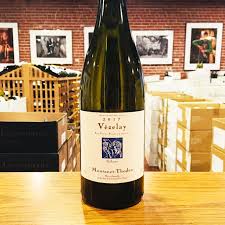
In 1988 in his Adventures of the Wine Route Kermit Lynch described Vezelay as a then “freshly minted AOC capable of producing distinct, world-class Chardonnay.” Just to rub it in a little further, my discovery was a 2022 wine made by Domaine Montanet-Thoden. Kermit’s reference was to Vezelay wine  “especially in the hands of a vigneron as talented as Valentin Montanet.” Same family of winemakers, just different generations.

Well, better late than never, or whatever cliche AI might use. Another point brought home to me when browsing through the Kermit Lynch book is how mechanical, predictable and boring a lot of wine reviews have become these days.  Here’s how Lynch described the Vezelay Chardonnay: “This climate, a clay-and-limestone soil, and stainless-steel vinification are the pillars of Valentin’s Galerne Blanc, a divine rendition of pure, chiseled Chardonnay, bearing notes of orchard fruit, citrus, and oyster shells.” 

a divine rendition of pure, chiseled Chardonnay.

Yep, he described the wine as “a divine rendition of pure, chiseled Chardonnay.” If this has caught your attention, you should try to get hold of the latest edition of  Adventures of the Wine Route which is available from Amazon. 

The writing style is so different from today’s wine ramblings.  It was not only written in a different era in which Lynch was not shackled by the 100 point rating system but it is also written from the point of a view of a wine retailer, a wine merchant. A self-taught wine merchant who approaches visiting wine regions as an “adventure” no less. Not a SOMM, not a WSET holder, not an influencer.

Returning  to Vezelay

And now back to Vezelay and what I learned. It is located south of Chablis and its winemaking goes back for centuries. The medieval village was an important resting place in pilgrimages. And of course, good pilgrims likely enjoyed the local wine. But the vineyards were pretty much wiped out by phylloxera, and it was not until the late 1970s that replanting was underway. 

By 1985, the vineyards were still growing and they were merged into the Burgundy AOC. A few years later they were upgraded to the regional AOC of “Bourgogne-Vezelay.”

Montanet-Thoden, the producer that I “discovered,”  was founded in 2000 by Catherine Montanet of Domaine de La Cadette in collaboration with Tom Thoden. Around that time they planted 6 hectares of Chardonnay and farmed them organically in Vezelay. Largely due to their efforts, Vezelay was granted AOC status in 2017. 

The soils are said to have more clay than Chablis, but they still have a good amount of limestone for their minerality.  Most of the Vezelay vineyards are planted along the higher elevations of the region. Montanet-Thoden Bourgogne Vézelay Blanc Le Galerne is the wine’s full identity, and “Le Galerne” refers to the wind that also helps define this appellation.

In a review posted in winereviewonline.com I gave Domaine Montanet-Thoden Bourgogne Vézelay Blanc Le Galerne 2022 which sells for $39 with a rating of 93. 

Now I realize how impersonal any score is. But I did describe the wine as having oyster shell minerality, and wish I could have come up with “divine, pure chiseled Chardonnay.”  
Checking the Lists of Best Wines of 2024

“The Best Wines of 2024” lists keep coming our way in December as each day another one pops up.  The major publications like The Wine Spectator and the Wine Enthusiast magazines have been offering these Best of the Year lists for decades. Both recently announced their 2024  100 best wines. Though they try to make the announcements dramatic, both The Wine Spectator and the Wine Enthusiasts annual lists have lost whatever drama and sizzle they may once have had.  

No surprise since by now most readers have figured out these lists are either payback for an advertiser or fodder for a PR campaign from the producer. Many of the wines are off the market by year’s end, so the lists are often not useful as buying guides.

 What criteria are used to come up with the typical Best of lists is an interesting subplot. It seems that the major publications ask each reviewer for his or her candidates for best of the year. Scores on the 100 point system are a major consideration, but every so often a wine touted for great value makes the list. But it has to also be rated in the 90-94 point range, of course. I applaud the fact that the Enthusiast also publishes an annual list of great values. 

Listicles

Lists have emerged as a popular format that has taken over the internet over the last decade. “Listicles” have replaced articles in a way. Probably because the number appears in the title or subject line and it sounds newsworthy. More likely, search engines love them. 

Or most likely because a list is easy to compile, while articles need a thesis and require some command of the language to present the argument or position. It wouldn’t surprise me to learn some of these Top 100 lists of wines or of other subjects are done by AI. 

But since listicles, whether compiled by humans or non-humans, have now become a mainstream communications format, I still look them over. One that caught my eye was an end of the year “The Best Argentinian Wines of 2024.”  It appeared at Wine-Searcher, a highly respected and popular website. Like many of my colleagues, I find Argentina to be one of the most dynamic wine countries to follow. The list was based on the 100 point scoring system used by the major reviewers.

As I made my way through the top ten, things got weird. After noting how wonderful Argentina is I read that “prices remain as attractive as ever.” All good. Then the stuff hit the fan. The #1 wine was priced at $245 a bottle, #2 at $226, and, well, the least expensive wine was $128.  Only one white wine made the list, it was a Catena Chardonnay, and the list maker noted, “the White Bones Chardonnay back in 2015 sat at $105, today it comes in at an average of $137. ”  For a Chardonnay from Argentina?

Excuse me, but none of those are attractive prices nor are wines priced at triple digits what Argentina is best known for. Back to Argentina wine #1 in this  wine-searcher list I read, “It’s also extremely attractive pricewise, having gone from $153 in 2020 to today’s price of $246.” 

So that’s what happens when the selection is based on wine ratings from the prime time reviewers. You end up with a list of wines that normal people, non-snobs will never find even if they were fool enough to pay these exorbitant prices.

The Better “Best of Wine” Lists

But for the rest of us, a few “Best of” lists are well worth reading.  James Suckling is much better with the top wines of Argentina. As you go through the list of top 100 wines, you hear about trends and are alerted to new wines to look for. Here’s the method behind the choices: “In curating this year’s Top 100 Wines of Argentina list, we prioritized quality, value for money, each wine’s “wow” factor and general market availability.” 

And as for trend-spotting, Suckling adds this: “Chardonnay may dominate the 14 white wines featured on this list, but rising interest in old-vine semillons and chenin blanc highlights the growing diversity of Argentine whites.”  Suckling’s list also mentions Cabernet Franc, a rising star, and also a Torrontes, the often overlooked wine, made by Susana Balbo.

The “wow factor” is also part of another fascinating list offered by the New York Times list of “Most Memorable” wines of 2024. Compiled by Eric Asimov, the wines are chosen for their quality but also for their impact on the taster and for the reactions they spark. You know, human reactions. And the pleasure wine brings to people. 

Forbes offered several Best of lists. One is “The World’s Best Wine Values of 2024.” Fascinating selections that show a lot of thought went into them.  

Better yet, Forbes asked writer Katie Bell for her “Best Wines of 2024” and she came up with a fabulous list. Her premise, which I thoroughly  support is this: 

“Every year I take note of the wines that moved me, rocked my universe or dazzled me with their quality at an unbelievable price. Long ago I started sharing this list because the best things in life are shared and wine is the ultimate shared experience.” Looking for values and believing that wines are for sharing, now that’s the basis of a great list.

Among the wines she lists are an under the radar Oregon Pinot Noir from Maysara, a white wine from Greece and a Viura from Spain. Oh, and a wine from Argentina: a Malbec from Catena that sells for $20.

And one other list really caught my attention a few days ago. It was posted on Jeb Dunnick’s website. He, of course, offered his top 100 wines, but the list that everyone should read is the Top 50 Best wines of 2024 by R. Drexel. It begins with a Chenin Blanc from  Nalley, a winery new to me and moves along with all kinds of thought-provoking choices and ends up with the #1 wine of the year being a Grenache. A Napa Valley Grenache…totally unexpected but makes me want to get my hands on a bottle.

Discovering a new wine. Now that’s a great way to end a year or celebrate the New Year.

In 2025, Let’s Make Wine Fun Again!

Chablis’ Dirty Little Secret

Chablis may well be one of the most recognizable wine names and also among the most  misunderstood by wine consumers. Some old-timers associate the Chablis name with cheap jug white wine. Then the French don’t help by their obsessive categorization of wine regions. So there are 4 types of Chablis which is a major wine region located in the northeast of France, all made 100% from Chardonnay. 

The four types which are really appellations are: Grand Cru, Premier Cru, Chablis, and Petit Chablis. And the most understood is “Petit Chablis.”  And the most likely of the four to offer super bang for your bucks is…Petit Chablis. So do I have your attention now?

Petit Chablis has nothing to do with being little, but everything to do with place and soils. That’s what most French wine is all about, in case you forgot. While the other categories of Chablis share a type of ancient limestone soil known as Kimmeridgian, Petit Chablis is grown on a more recent type of limestone categorized as Portlandian. 

As vineyards were expanded in Chablis, all of the vineyards on this type of soil were most often on the higher slopes or the beginning of the plateau. In other words, on the outskirts.   A relative newcomer in French wine history,  Petit Chablis became official in 1944.

By today’s standards, the vineyards of Petit Chablis which now represent 20% of all Chablis are not inferior so much as they are not located on that precious ancient limestone soil. And, no surprise, Somms and influencers thrive on babbling about how much they know about the 180 million year old soils. And that rant might lead to terroir, another soil-related subject SOMMS will beat to death.

So back to plain talk and the wine that ignited this conversation.

The wine is: Prieuré Saint-Come Petit Chablis (France)  2021 $25 and I’ve seen it selling for $20. 

It is bright and lively from the get-go with an aroma of fresh cut apple, and a little hint of lemongrass and citrus. The taste is again vibrant with tart apple and a chalky, crisp aftertaste that is a hallmark of Chablis. ALL Chablis.  This Petit has all the right stuff without oak and is moderate in alcohol, so it invites a second glass and is ever so food-friendly.

Fresh, lively, and with no ponderous oak or alcohol, Petit Chablis is worth exploring as a white wine that happens to be made from Chardonnay. In addition to the wine mentioned earlier, here are my 5 suggestions of the leading producers of Petit Chablis.

Domaine Jean-Marc Brocard 

Michel Laroche et Ses Enfants 

Samuel Billaud

Domaine Jolly et Fils

Domaine Roland Lavantureux

The Mad Crush: An Insider’s View

If you are looking for a gift for the special wine drinker in your life, here’s a suggestion that is a sure bet to please, and it is NOT a wine.

The Mad Crush, a new edition written by Sean Weir is highly recommended for those who are into wine or remotely curious but also for anyone out there dreaming about starting a winery.  Available on Amazon ($14.95) this new edition is beautifully written by someone who knows his wine but more importantly, knows how to engage and entertain the reader. 

It is an easy read, but also hard to put down.

On one level, it is the story of Bill Greenough, who “left a successful business world in favor of moving to a remote canyon, digging out an abandoned old vineyard, and making wine off the grid.” The vineyard was established in 1880, abandoned after Prohibition, and Greenough began the process of restoring that vineyard in 1974. Today, the original 3-acre block of head pruned Zinfandel is still producing. Located in what’s known as the Edna Valley today, It is the oldest in San Luis Obispo County. Greenough added 6 acres of Zin in the 1970s and 80s.

The winery is now in the hands of  the second generation and still focusing on Zinfandel.

On another level, the book is also the story of this old vineyard established about 150 years ago which was tended to by several generations who like Greenough become full time stewards of the vines and the land. Along the way the book gives life to many of the cliches tossed around in the wine world. Among them are winemakers being caretakers of the land or stewards as many now like to say, along with communicating with the vines. Stuff like this is made believable through Weir’s first hand experiences and poignant observations.

What held my attention from the first page is the feeling the book is also about the author as he comes to understand the commitment needed to succeed in tending vines and making wines. And as the process unfolds, it may all sound romantic but you sense he comes to realize that pursuing the dream of becoming a winemaker, a dream so many people have shared, is not for everybody. 

Weir grew up in the wine country. He worked in the cellars of Kenwood Vineyard and saw first hand how the partners worked hard to make a go of it.  In 1992 as a student at Cal Poly in San Luis Obispo, he worked one summer as a cellar rat with Greenough as he revived the old vineyard. 

In 1995, out of the blue, Greenough contacts him to work the harvest. That included monitoring the vines as they matured, cleaning the winery, and  preparing for the harvest, crush, and fermentations. That experience, he explains, “is what ultimately drove him to write the book.” As the story unfolds, readers learn a lot about vines, making wines, cleaning, and dealing with the weather, equipment, and the workers during the harvest and crush. It is an inside look at the nitty-gritty, the dusty, dirty boots side of winemaking, not to forget the long hours.

When you go to Amazon for the book, there’s a plot summary. This is a revised edition and includes an afterword and a section called “Prunings,” consisting of some tidbits and stories that didn’t fit the main story.

As for the author, when asked about his winemaking experience after 1995, Sean notes:  “That was my third and final crush. That was enough for me. I caught the winemaking bug, but it wasn’t terminal.”

Marietta Cellars: Wines for Sharing

If you are shopping for excellent wines at reasonable prices, then forget about those made by celebrities, cult wines, and wines made by 100 point rockstar winemakers. Let them all be legends in their own minds, and seek out wines made by real people.

I recently rediscovered one of my favorite examples of a family owned winery making excellent, affordable wines. Here’s how the winemaker summarizes things:

“It feels right to make the best wine possible and to sell it at a fair price. Our instincts tell us that being honest, being consistent, working hard, and thinking outside the box is more important than anything else in business.” 

The California winery is Marietta Cellars, founded in 1978 by Chris Bilbro and now in the hands of Scot, his winemaker son. While the original winery in Sonoma County was a rented cow barn, they now own 300 acres in Mendocino and Sonoma. And  if you like old vine wines from Syrah and Grenache, well the Bilbros are your kind of people. They have some of the best vineyards farmed organically.

Since Day #1, Marietta Cellars produced affordable wines, starting with blended red wines based on Zinfandel. Their benchmark Old Vine Red was first made in 1982. “Affordable” and “blended” are not exactly popular search tags in today’s wine world. Then add that the production is not tiny and the wines are not allocated to a select few, and voila?  Marietta wines are available direct from the winery, online, and yes, even in wine shops.

Go to www. mariettacellars.com  You can also find 8 Marietta Cellars’ wines today at www.wine.com 

Here are my recent reviews on two of those wines:

Marietta Cellars California OVR Old Vine Rose 2023 $19

Here’s an absolutely lovely Rose to enjoy year round. The Bilbro family has long specialized in old vine wine, and Scot Bilbro has been the winemaker since 2012. Chris Bilbro, his dad, founded Marietta back in 1978. This 2023 Rose is made from 50% Syrah, 25% Grenache, and 25% Grenache Gris, with all of the fruit from the estate’s organically grown McDowell Valley vineyards established well over 100 years ago.  With its inviting coral-pink color and its lively peach and melon aroma, the wine charms you and seals the deal with its juicy peach and pomegranate flavors which come with  a hint of spice. Nicely textured, it remains lively on the palate and finishes on a crisp note. 93 points 

2021 Marietta Cellars “Christo,”  Estate Grown, North Coast  $20.00

“Christo” refers to the family nickname for Chris Bilbro, veteran Sonoma winemaker. A Rhone blend (68% Syrah, 20% Grenache, 18% Petite Sirah, & 4% Viognier), this is a powerful, full bodied red. Aged for 18 months in neutral oak, this blend offers a solid core of ripe fruit and is built on a solid foundation. The aroma is fantastic. It opens to reveal background notes of spice, ripe plums and earthy, forest floor. Some subtle floral hints of violets and lavender emerge with aeration. On the palate, black pepper pokes through in the intense, rich berry flavors. The lengthy finish has a pleasant touch of juicy blackberry fruit and light tannin.  Taken altogether, this wine has it all. It is a whole lot of wine for the money and should age well. 94 points

So why isn’t Marietta Cellars better known?

Well, I’ll let the Bilbros offer a reason: “We are hands-on and busy year-round.”