Exploring Guadalupe ValleyWines

5 Takeaways from Guadalupe Valley 

Throughout 2023, numerous stories appeared in national media outlets announcing Mexico’s Guadalupe Valley as “the next Napa Valley.” Or Guadalupe as “Mexico’s Napa Valley.”

In one of those annual reader survey pieces, it finished a close second to Walla Walla. 

Travel articles with a romantic getaway theme or wine country destination focus were common.  A google search for Guadalupe Valley wines will show dozens of travel suggestions, tours tips, tour packages, tour guides and itineraries featuring wineries and culinary recommendations. 

 Located about 60 miles south of the US border, or just over an hour’s drive from San Diego, Guadalupe’s wine route has come alive with new wineries, new resorts, boutique hotels, and trendy restaurants. Wine-related income in Guadalupe Valley hovers around $200 million a year.

No longer flying under the radar, Guadalupe Valley secured international recognition in late 2022 by hosting the 43rd annual World congress of vines. Many of its wines win awards and medals in various annual wine competitions. With only 25 wineries existing before 2005, Guadalupe is now home to 150+ wineries, 100 restaurants, 92 hotels and boutiques, and 12 taco stands. A few sources now say there are over 180 wineries. 

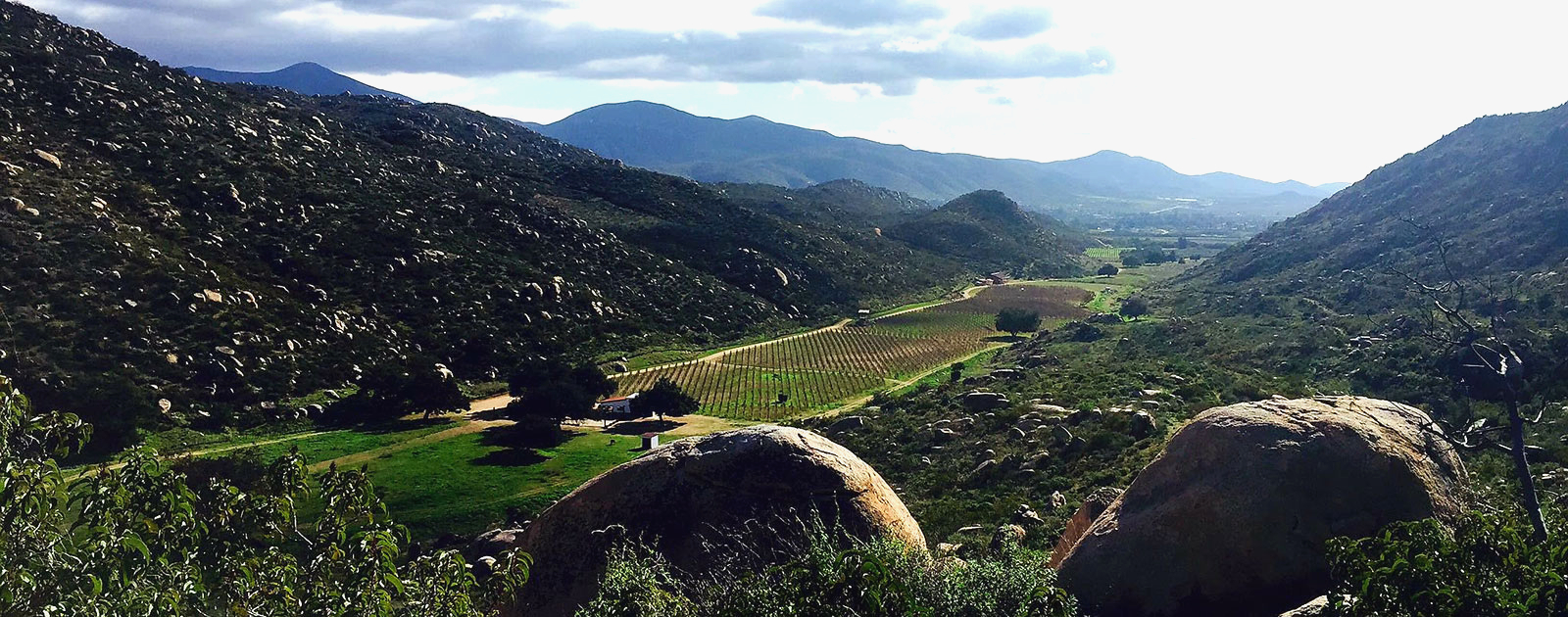
Regarding viticulture, Guadalupe Valley is a real anomaly. Standard logic in all textbooks maintains that wine grapes should only be grown within the 30 to 50 latitude. Guadalupe is located at the 21-22 degree latitude and there are over 10,000 acres planted to a wide range of vinifera varieties. 

Defying logic, the mantra in Guadalupe is that it is all about altitude, not latitude. Located at elevations from 500 to 2000 feet above sea level, most vineyards benefit from cooling breezes from the Pacific on one side and the Sea of Cortez on the other. With wide diurnal swings during the summertime, the climate is basically Mediterranean. Or “best described as Mediterranean” as one winemaker explained because being dry and desert-like, it doesn’t fit into any neat category. 

So after postponing a planned visit due to covid, I finally visited this much talked about wine valley in Northern Baja. Research before the visit entailed reading many of the feature stories and, of course, tasting as many Guadalupe wines that were available during my stay in Cabo San Lucas.

My vinous version of the Baja 1000 began by departing the totally screwed up city of Tijuana in a crappy rental car that barely made it out of town. Later in the day we were welcomed to Guadalupe by rain that challenged the car’s wipers. That’s right, rain in Guadalupe Valley is about as common as rain in the Sahara.

That rain was a great omen or set up for a series of unexpected experiences that followed when visiting wineries, tasting wines, and getting a feel for this most unusual wine region. The rain made the sandy roads to the wineries even more challenging to navigate with deep potholes filled with water along with rocks and a few chickens. But holding on tight to the wheel we visited the region. What follows are takeaways from five wineries that capture the uniqueness of Guadalupe as not only an emerging wine destination but also an exciting wine producing region.  

“This can’t be Nebbiolo,” I tactfully mentioned to the Vinedos Malagon hostess. It was deep garnet, concentrated, with ripe flavors and some tannin. She brought over the bottle and yes it was Nebbiolo. I shouldn’t have been so surprised since the previous wine was Malagon’s Grenache, also unusually rich. She explains that the winery has access to Grenache planted by Russian immigrants in the 1940s. That’s right, the vines are at least 70 years old. And as for Nebbiolo, it was said to be brought into Guadalupe long ago but identity tags were never found to verify its DNA. Well, that was my first visit.

#1 Takeaway: Prepare for Guadalupe wines that aren’t typical and for wines made from odd, old varieties, old vines.

Malagon was founded in 1997 when only a dozen wineries were operating in Guadalupe and very few wine varieties besides Grenache and Nebbiolo were planted. Pedro Domecq opened a winery in 1972 but like many of the distillers who arrived earlier, it favored Palomino and Colombard in the early years. Also in the 1970s Jim Concannon and others from California visited and introduced then popular varieties such as Chenin Blanc, Petite Sirah, Zinfandel, Barbera, Cabernet, Carignane, and the once popular Ruby Cabernet. The latter variety is a key component in Domecq’s XA red and Petite Sirah is one of Cetto’s most popular and attractive wines. 

Today the Valley’s wineries reflect a balance of an international cast of characters and local families. Those established varieties attracted foreign investors such as the Henri Lurton Medoc family. It seems telling that Bodegas Henri Lurton’s flagship wines from Guadalupe are Nebbiolo and Chenin Blanc. 

Next stop was Casa Magoni whose wines I had enjoyed prior to the visit. In the new tasting room, white wines were first offered and they were not the typical blends. Magoni poured a Chardonnay and Fiano blend named “Manaz.” Also, another white brings together Chardonnay and Vermentino which is just as impressive. Among the reds, the Sangiovese-Cabernet is excellent, but the most unusual tasted was labeled Origen 43 which combines Montepulciano, Aglianico, Canaiolo, Sangiovese and Cabernet Sauvignon. All those varieties were established 16 years ago. But, of course, Magoni makes a Nebbiolo which is excellent.

Turns out that Camillo Magoni, who studied Enology and Viticulture degree from the Enologica a Di Alba in Piedmont, Italy was invited by the Cetto winery to work in the cellars. After 40 years he left to establish Casa Magoni where he introduced many Italian varieties as well as others from France. Today with more than 100 different grape varieties on 278 hectares, this is the largest experimental vineyard in Guadalupe and all of Mexico. 

#2 Takeaway

Today with over 100 wine varieties being grown, some of Guadalupe’s finest wines are rare combinations and unique blends. There’s the Red from SantoTomas that is made from 34% Mission, 33% Tempranillo, and 33% Carignan. I love Emerve’s “Isabella” which brings together Chardonnay, Sauvignon Blanc and Viognier in a bright, full bodied style. El Cielo’s 2020 Blanc de Blancs consists of Sauvignon Blanc and Chenin Blanc with a good dose of Palomino and Chardonnay. 

So be prepared to encounter wines with fanciful proprietary names derived from the planets, the stars, children, family pets, nicknames, whatever. 

Moving on, I finally visited a new winery unknown to me but one I drove by several times: Emerve.

Many of the new wineries are locally owned and started by home winemakers or by cellar workers moving on after apprenticing at one of the big wineries. That door opened In 2004-2005 when Hugo D’Acosta who studied at Montpellier, France, and the Agrarian University of Turin, Italy, organized La Escuelita, a school teaching local farmers and families the fundamentals of winemaking and cellar procedures. The school also functions today as a cooperative, providing the necessary equipment to growers and future winemakers to make wine. 

Today, Emerve, which was one of those wineries,  draws from 18 ha and produces around 5,000 cases a year. In addition to a lovely Rose of Cabernet, Emerve is best known for its proprietary blends. “Isabella” brings together Chardonnay, Sauvignon Blanc and Viognier mentioned earlier. There’s a red Bordeaux named “Los Nietos” and another red blend, “Armonia de Tintos,” a blend of Merlot, Cabernet, Syrah and Cabernet Franc. That cuvee was aged for 8 months in a combination of French and Hungarian oak.  It is much more than a simple red. And just for a little variation there’s a 100% Shiraz that’s bottle aged for 5 years before its release.
#3 Takeaway

While the top 3 wineries of Cetto, Santo Thomas, and Bodegas Pedro Domecq produce 80% of wines from Guadalupe Valley, there are 100 or more small family owned businesses offering a wide variety of high quality wines. And the wines are often unique.

Next up in my learning journey, Casta de Vinos

Whether it was sheer luck or fate, my visit to Casta was truly eye opening. Opened in 2010, Casta is an authentic mom & Pop family winery with Sergio Castañeda as owner/winemaker and Claudia, his wife, as director. With an annual output of 4,500 cases, Casta makes 12 wines, 10 red. The 2018 “Domina,” a 100% Merlot exudes charm in an elegant style, and the 2019 “Cirio,” a Cabernet Sauvignon and Mourvedre blend is big with multi- layered flavors. “Casta Tinta, “ a Bordeaux blend, could easily be mistaken for a young Medoc. Another amazing accomplishment, the 2020 Syrah is heavenly and stylishly refined for a young Syrah. I also liked the Petit Verdot. Clearly, the winemaking is top notch and shows a subtle use of small oak and tannin management that makes this one a genuine superstar.

#4 Takeaway

Not only are there many new wineries, Guadalupe is a paradise for anyone who loves to explore and discover previously unknown wineries. Or one that opened the week earlier.

Tuscany also has a strong foothold here thanks to the Paoloni family.  Born in Tuscany, Paolo Paoloni left his post as an Enologist at the Perugia University to manage the Valle Redondo wine company in Aguascalientes, Mexico. After several years with Valle Redondo, Paoloni purchased 38 hectares in the Toros Pintos section of the Valle de Guadalupe. 

If anyone doubts the uniqueness of Guadalupe, well the wines that were presented at the Paoloni/Villa Montefiori winery will erase all doubts.  First came the dramatic 2020 “Ross del Valle” made from 100% Montepulciano with amazing concentration. It is the first mono-Montepulciano from Mexico. Even more exciting was the 2019 Nebbiolo, a dark colored, deeply flavored version, aged for 15 months in French oak. Then the house speciality is Nero d’Avola, and the 2018 aged 12 months in oak is stunning for its depth and layers of flavors.

#5 Takeaway

Located on a steep hillside, Paoloni’s vineyards look beautifully maintained, indicating that grape growing here is as good as anywhere. Overall, the yields work out to be slim by Napa’s standards, estimated as between 1.2 to 2 tons per acre. With little water available, irrigation is not excessive with many vines being dry farmed.

 I heard during my visit  and have also read that farming practices are moving toward sustainability and organic methods.  Carrodilla is said to be the first certified organic and biodynamic vineyard in Mexico. More recently, Santos Brujos which makes a lovely Tempranillo has earned its stars as a certified biodynamic vineyard. 

So, I’ll stop here after noting that despite what you may be thinking, Guadalupe Valley wines are showing up in more and more US markets. That was reinforced a few weeks ago when looking over the shelves of Desert Wine, a small retailer in Palm Desert, there were several Paoloni wines and a few others.  

Thankfully, in 2024 you might not have to travel along those bad dirt roads to explore Guadalupe Valley wines. Check out  the list of wineries available and which states they are sold in at La Competencia Imports in Napa, Same goes for Tozi Imports on the East Coast, Nossa Imports in Arizona and Beso imports in Washington. LMA imports in San Diego specializes in wholesale to restaurants. 

And one more thing about those rough, unpaved roads: don’t expect any improvements soon. Arguing that bad roads attract good tourists and good roads will appeal to the loud, rude, sloppy wine drinkers who will ruin the character of the Valley, a powerful resistance group has been organized to control growth.

In other words, they don’t want Guadalupe to become the “next Napa Valley,”

Exploring the Rhones Less Traveled

Having long been intrigued by Rhone wines, I regularly check out theTablas Creek Vineyards blog. A recent post mentioning the availability of Terret Noir and Bourboulenc stopped me in my tracks. Of all the varieties permitted to grow in Chateauneuf-du-Pape these two were total mysteries to me.

Never one to pass up an opportunity to try a new wine and maybe learn something along the way, I reached out to Jason Hass.  As always, he was helpful and informative and kindly made it possible for me to taste these two new Tablas Creek wines. 

 In wildly different ways, both the Bourboulenc and the Terret Noir were exciting new experiences. That set me off on a mission to explore other lesser known Rhone varieties, those usually dismissed or ignored as blenders, to see what they might offer as varietal wines.

But first, here are my notes on those two amazing wines that had me saddling up for this journey:

Tablas Creek Vineyard Adelaida Hills District Paso Robles Bourboulenc 2022 $40

From 2/3rd of an acre, this is the winery’s 4th Bourboulenc and it is wonderfully unusual. Medium straw in color, it offers an intriguing aromatic mix of orange rind, apricot and lychee nut. Surprisingly rich and round on the palate, it combines orange and citrus flavors with a hint of stone fruit. The texture is rich, and then it finishes with a rush of lemony flavors and bright acidity. All of this is to be enjoyed in a refreshing wine with only 12% alcohol. To summarize: lovely aromas, terrific texture, mouthwatering flavors and youthful acidity holding it together. A great food wine. What’s not to like?  94

Tablas Creek Vineyard Adelaida Hills District Paso Robles Terret Noir 2021 $40

Originally from the Languedoc, Terret Noir has seldom been made on its own, most often blended with Grenache or its fellow family members,Terret Gris and Terret Blanche. Tablas Creek bottled 70 cases in 2021 and offers it at the winery.  Once poured, it has an unusual light red color that sets it apart from most red wines. The aroma is also strikingly unusual, neither berry-ish nor overtly fruity, it offers a pretty floral nose of roses and orange blossom. While light medium bodied at best, it delivers refreshing flavors reminiscent of red currants that are sustained and persistent. Gentle, fresh and lively in the finish, it is all together pleasant and refreshing. It is a fun party or aperitif style red. Fun is good, right? 92

My takeaway after trying these two unusual wines was a suspicion that there probably are other lesser-known Rhone blending varieties that might be worthwhile looking into. And sure enough, by continuing along the Rhone road less traveled, I encountered four other Rhone varieties that also have much to offer as stand alone wines and, best of all, these four are being made by several key California winemakers, a few original Rhone Rangers and some new, younger folks dedicated to Rhone wines.

The four wines are two whites, Marsanne and Roussanne and two reds, Cinsaut and Counoise. Grenache Gris was on my list, but not many are available. Picpoul wines are enjoying a well-deserved surge, but are not as unusual as are Roussanne and Marsanne.

 Marsanne is hardly a newcomer since Bob Lindquist who founded Qupe, made California’s first back in 1987. But it is still usually downplayed as part of a blend with Viognier or Roussanne. And while there are many attractive blends now coming from Australia and Santa Barbera, on its own, Marsanne is still not that common. 

And from what I’ve experienced at this early stage, I can only wonder why. Marsanne is, afterall, the white grape of Hermitage fame. The 2022 Marsanne from Starfield Vineyards in El Dorado is a fantastic, complex and stunning version and it was a great wine to begin the journey. 

Starfield Vineyards El Dorado Marsanne 2022 $34

Aged for 6 months in neutral French oak, this Marsanne is attractive now but has all it needs to age long and well. On the nose it comes across with ripe peach and nectarine fruitiness with citrus as well. Then on the palate which is plush and round, it has vibrant flavors of orange rind

and cloves with minerality as well. Solid and well-integrated, it continues the ripe peach, apricot theme in its lengthy finish. Overall, it is concentrated but so lively it invites a second glass. 165 cases made. 94

After that re-introduction to Marsanne, I reached out to Bob Lindquist who sold Qupe in 2018 but has never stopped making Marsanne. As he explains,”Marsanne and Roussanne are near and dear to me, and I continue to make both of them under my Lindquist Family label.”  He adds, “In 1986 I got Marsanne budwood from Randall Grahm and grafted over some own-rooted Cabernet vines at a small vineyard just outside of Los Olivos called the Ibarra-Young Vineyard.”

Marsanne ages well, Lindquist noted, and his vintages from the early 90s are still showing well he added. As for style, he explains:” I make Marsanne in a lighter, fresher style, all in neutral barrels and bottled after about 8-9 months.”

“Lighter” it may be, but his current release is most attractive:

Lindquist Family Vineyard Edna Valley, Sawyer Lindquist Vineyard Marsanne 2020 $38

All of the fruit is grown in this the Demeter certified biodynamic vineyard.  Yellow with green tint, this wine is medium bodied with lots of youthful character. Aromatically, it combines nectarine and white peach fruit along with some almond and lemony accents. Smooth and refreshing on the palate, it has good acidity for a balanced impression and concludes with lively fruit and a crisp finish. 92

At the end of our conversation, Lindquist added this zinger:”I think Roussanne makes the more important and complex wine…I make mine very much in the same style as Chardonnay.”  

 It turns out Roussanne is a favorite of many other winemakers. Bill Easton of Terre Rouge who makes exquisite Syrah and Viognier chimes in with this: “Roussanne is the most serious white Rhône grape. It reaches its apex with age – slow oxidation.. But it is not easy to grow.” The team at Truchard in Napa simply say “it is a challenge.” And then John Alban the unchallenged champion of Viognier adds this: “There are legions of whites that one can make for all kinds of commercial reasons, even if the resulting wines are less than compelling, but Roussanne is for people you love.”

After tasting the latest from Terre Rouge and Lindquist, I can understand the appeal. Easton offers a perfect summary of what a newcomer will encounter:  “American palates are not accustomed to classic Roussanne characteristics: Straw golden color; with exquisite quince, honey-nut, and beeswax aromas.”  To that I’d add exotic pineapple fragrances, rich viscosity, and depth unique among white wines. It is definitely a white on steroids. The Terre Rouge Roussanne is given several extra years of bottle aging before being released to the market.

The name “Roussanne” relates to the French word for russet which explains the wine’s dark color. In the early phase of the Rhone Ranger period, what was thought to be Roussanne turned out to be Viognier. The true Roussanne was eventually introduced by Tablas Creek, so most of the current plantings began in the late 1990s. 

There’s one major exception: Terre Rouge. Its Roussanne clone is unique, originating from a Chave family parcel on the hill at Hermitage. It is the real deal and you can get a good feel for what Roussanne is capable of if you are fortunate, as I was, to taste the 2011 Terre Rouge and the 2021 Lindquist Family. See the tasting notes at the end. 

Cinsaut is another Rhone that was misidentified and that’s one likely reason why it was long overlooked. It turns out that in Lodi the Bechthold Vineyard which was planted in 1886 is actually the oldest Cinsaut vineyard in the world. Until 2003 when UC Davis proved by DNA testing that it was Cinsaut, the grape was believed to be Black Malvoisie. And it was sold to home winemakers.

Often spelled Cinsault, the grape is used these days to produce Roses or in blends. It is well-represented in South Africa likely due to its parenting role in Pinotage. It was not planted at Tablas Creek until  2017, and for now the winery suggests “it will be a useful blending partner to higher-alcohol, more tannic red grapes, and it makes for delicious lighter reds on its own.”  

Thanks to Holly’s Hill Vineyard in El Dorado, my most recent encounter with a varietal Cinsaut is highly memorable and is a delicious red. Here is my note:

Holly’s Hill Vineyard El Dorado Cinsaut 2020

Based on its color and the initial sniff, my instinct says this could be a Cotes du Rhone Villages. A real good one. But then after the initial taste, it comes across with subtle, but charming flavors that don’t match anything in my experience. Though Cinsaut is classified as a lightweight, this is no such thing. Its bright, fresh cranberry aroma mingles with spices and black tea, and the flavors are full of fresh picked dark cherries and an earthy, leathery back note.  Balanced, with light tannin it finishes on a slightly tart note along with lingering berries. Lovely! 93

Starfield Vineyards, also based in the Sierra Foothills, impressed me earlier with its 2019 Cinsaut. It turns out one of Randall Grahm’s most recent obsessions is with Cinsaut, so he had lots to say when approached.

“But let me tell you why I’m so enamored of Cinsault…. By restricting yields aggressively – via water restriction, bunch and cluster thinning – one can actually produce a very elegant wine of heady fragrance and beautiful color.  For me, this is the classical  (you will forgive the expression) conundrum of how to produce an elegant, complex, let’s call it “continental” wine in a warm and dry Mediterranean climate.”

While Cinsaut seems to be gaining in traction as a Rose and as a red wine in South Africa, that leaves Counoise as the ultimate, unwanted red grape on the Chateauneuf-du-Pape team. It ripens late in the season which makes it unappealing in Southern France. Only 60 acres are planted in California today. 

 But like the last player drafted in pro football, it too could become the next star. Tablas Creek has 6 acres and bottles it as a single varietal from time to time.  Fess Parker offers an excellent Counoise under its Epiphany label which impressed me a few years back. Others now on my radar are the new Counoise from Frick in Dry Creek Valley, Adelaida from Paso Robles and the 2019 Prie Cellars in Lodi. 

 However, in my most recent experience,  Counoise was well-represented by Holly’s Hill and that winery seems ready for stardom based on its 2020. As winemakers Carrie and Josh Bendick explain, when their various new wines were tasted every January, the Counoise lot always stood out. Eventually, the winery converted some Syrah to Counoise. It is difficult to grow, though, they add, because it ripens unevenly and you always have to focus on its color. 

Holly’s Hill Vineyard El Dorado Counoise 2020

Excellent, deep color with an aroma of raspberries, lovely baking spices and floral notes. On the palate it offers vibrant flavors of spices and berries. The subtle floral component adds intrigue and there’s plenty of crisp acidity keeping it nicely woven together. Tannins are light and smooth. And the finish is fresh and long with spices such as cinnamon and clove. 

It is reminiscent of a Moulin-A-Vent in weight and direct appeal but it offers more layers as a result of the floral note and baking spices. 94

As I begin wrapping this journey up, it hits me that this Counoise like the other three wines is a food-friendly wine. Both the new and older Roussanne reviewed here were definitely serious food wines.

Lindquist Family Vineyards Santa Maria Valley Bien Nacido Hillside Roussanne 2021 

From 5 acres on a west facing hillside,planted to the Tablas Creek clone between 1997-2000, Lindquist has made Roussanne from this block since 2000. It is aged on the lees in one year-old barrels for a year and then in neutral oak for 6 months. Bottled unfined and unfiltered, it is light yellow and with aeration, opens up to show pineapple, beeswax, and honey aromas with some oak. Big, generous palate, silky texture with deep flavors of ripe apples, hazelnuts and honey.

A little leesy, creamy texture and a long aftertaste of lemon curd and oak toast. 94

Domaine de la Terre Rouge Sierra Foothills  Monarch Mine Vineyard Roussanne 2011

In 2011, the crop ran into mildew problems and the yield was down by 80%. Following whole cluster pressing, the juice was barrel fermented and the wine aged on the lees. Beginning with its deep golden color, this wine was a unique experience. Rich and deeply concentrated with great viscosity, it delivers ripe pear flavors with some floral notes. Maturing nicely, but still has plenty of life ahead of it. As for a rating, how about rare and wonderful.

All of the wineries singled out here sell their wines direct, so for those wanting to jump aboard and continue the journey into the unknown Rhones, here are the contacts:

www.starfieldvineyards.com

www.hollyshill.com

www.lindquistfamilywines.com

www.terrerougewines.com

So that’s it. Oh, hold on, just got a late breaking news alert from Tablas Creek about another variety:

“Vaccarèse. There are just over 10 acres planted in Chateauneuf, just a little more than that elsewhere in France, and none, until we brought in ours, elsewhere in the world. But we believe it shows great potential, with lovely dark color and floral and herbal aromatics. It’s been so good that it’s already playing a significant role in the Esprit de Tablas.”

Well, now that sounds worth exploring on another trip!