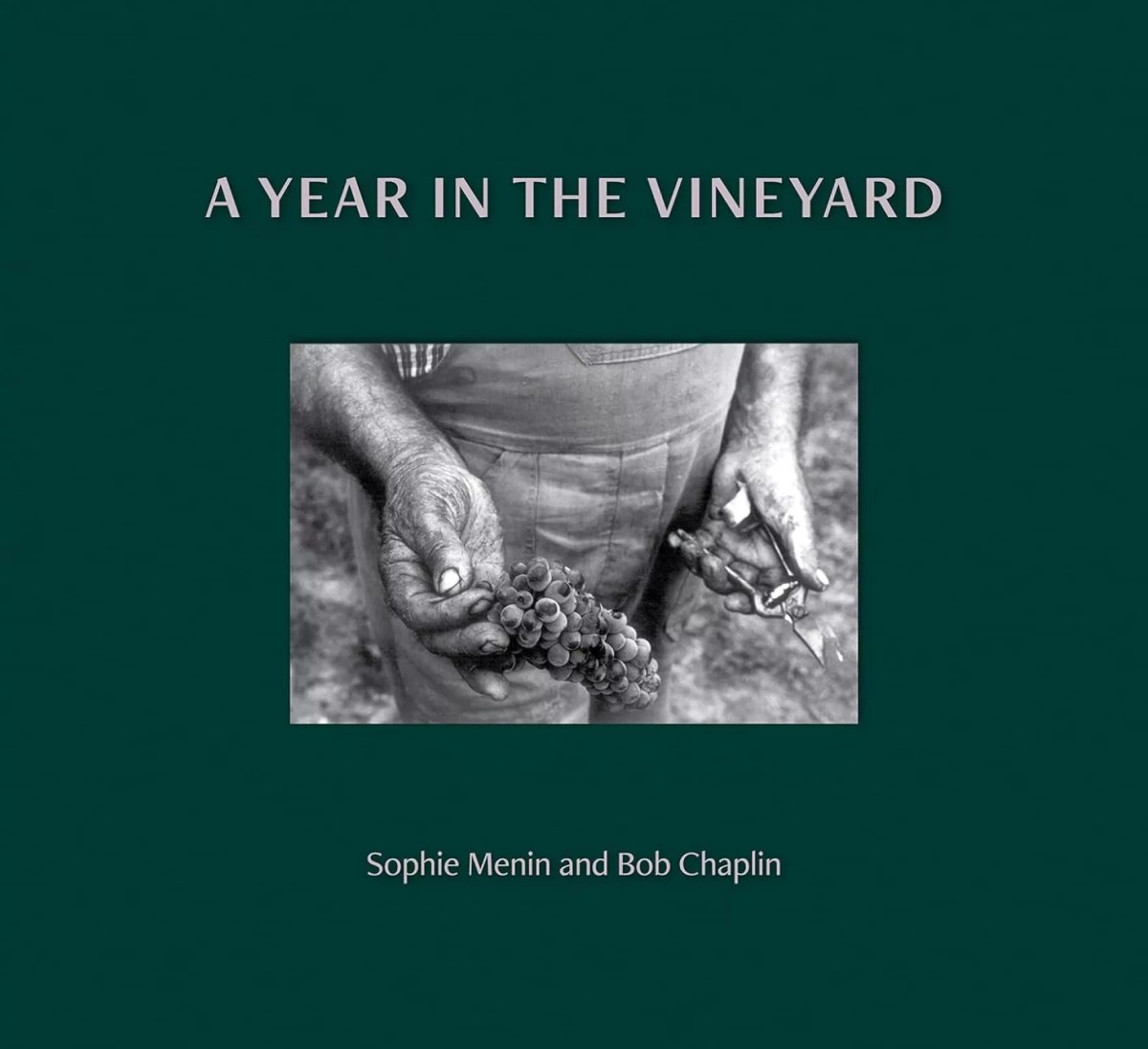
A Year in the Vineyard
Sophie Menin and Bob Chaplin
Published by Cultureshock, 2024
Foreword by Hugh Johnson
This book is all about the cycle of the vine. It is divided into five sections: dormancy, budburst, 100 hundred summer nights, harvest, and preparing for rest. Through its magnificent photos and insightful commentary, it also “documents the ongoing evolution of viticulture.”
Sophie Menin notes in the Introduction that the book is not trying to catalogue every vineyard activity or feature every wine region in the world, but instead, she explains: ”we capture gestures, steps in a dance with the natural world” as winegrowers, vignerons “search for practical solutions to changing conditions.”
When the book arrived, my first thought was “wow, this is one heavy book.” But to be fair, I then went carefully through it, stopping at each photo, reading the sidebars, and when finished, the word “heavy” came back to mind. “Heavy” as the hippies used it back in the day meant powerful and significant, something that really grabs your attention. Nowadays with the TikTok crowd, this book would be “heavy on meaning.” So let’s just go with thought-provoking.
A Year in the Vineyard should be made available to every student in every wine class today. Whether referenced in an introduction to wine, or a certified wine course, this book will help put everything back into perspective. It captures the reason why we enjoy, study, and share wine. Unlike hearing someone lecture about the importance of pruning and crop size in the Spring or the burning of cuttings in Europe after the harvest, you can see for yourself and practically experience them through these superb photos.
My favorite scene, the one that gets you thinking, is on p 80-81. In it, there’s a woman in the vineyards, likely a worker, but maybe the owner, she’s surrounded by vines with full clusters but is looking up at the dark ominous clouds heading her way. We’ll never know if it rained, hailed, or passed over.
Another one depicts 10 workers bending over in the vineyards of Champagne Roederer as they prune and thin the shoots which will have an impact on the harvest months later.
Cultivating vines, as this book shows, also involves many aspects of nature. Butterflies are important, so are horses in ploughing some vineyards, and then roses are often grown to warn growers of possible diseases. And, yes, bats can be employed to discourage hunting moths from ruining the clusters. In some regions birds have to be discouraged by netting. Then there are some healthy, helpful pigs working the vineyards of Bairrada, Portugal.
What makes this book so compelling is that the photos come from different sources, so there’s different perspectives along the way. A number are from Bob Chaplin and Sophie, a few from Jon Wyand, and others from independent photographers as well as from wine producers.
And the vineyard scenes are also eclectic, ranging all over the wine map. No favorites or pay back here!
This book will answer lots of questions.
The book is of course available from Amazon.
Better yet, signed copies are available at:
 Norm Roby's Unfiltered Guide to Savvy Wine Shopping