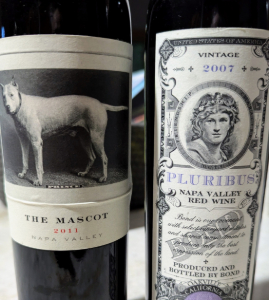
As 2024 was coming to an end, I had an opportunity to taste two aged Napa Valley cult wines. They were the Bond 2007 Pluribus and the 2011 The Mascot. Both belong to the father of cult wines, Bill Harlan of Harlan Estate.
Just to make sure I got a good fix on the aging trajectory of these two, the bottles before me were half bottles, 375ml. There’s no argument that wine ages faster in half-bottles, we just don’t know how much faster. Both bottles before me had excellent levels of fill, and the corks were in excellent condition. There was some sediment on both corks. Those signs usually indicate the wines were properly cellared.
Parker’s Wine Advocate rated the 07 Pluribus 98+ and the Spectator gave it a 97. From Parker’s notes, it was “A wine of great intensity and full-bodied power yet with a freshness and delineation that are remarkable, this stunning wine should drink well for 25-30 years. Drink: 2010-2040.”
The Wine Spectator reported: “Wonderful aromatics lead to a rich, layered mix of spicy currant, blackberry, wild berry and currant flavors that are full-bodied, intense, dense and concentrated, slow to reveal pleasing earth, black licorice, graphite and roasted herb. The tannins give the flavors great traction. To be released spring 2011. Best from 2012 through 2024. 566 cases made. “
Yes, both publications were reviewing the wine several months before it was released to the public. That both these guys were given special treatment might explain the use of words like “stunning” and “wonderful” as some sort of indirect payback for advanced review samples.
To return to the wines, here are my notes for the 07 Pluribus:
Good dark color. With aeration, the nose was vague and with diligent swirling showed dried prune, a hint of tobacco, and walnut. Overall, it smelled like old wine. The body was smooth and the flavors were gentle. But the wine was going gently into that good night for sure.
It would not surprise me to hear the Pluribus is now over the hill in a standard bottle. The value given it by wine-searcher is $525. Then again, people who pay that kind of money for a bottle are not likely to ever say they were disappointed if only to protect their ego and reputation. As for some background, the Bond Pluribus which debuted in 2003 is from a mountainous 7-acre site in the Spring Mountain District with steep exposures to the north, east and southeast. It comes with a high price and wine pedigree and was sold only to members on a mailing list.
Among Harlan’s other wine projects is “The Mascot” which was the brainstorm of his son, Will. This wine was a Cabernet made from a selection of younger vines from the primary estate vineyards, and The Mascot made its debut in 2008. As I understand it, The Mascot was made from a selection of new vines created by the routine replanting procedure. The concept is similar to the way many of Bordeaux’s famous estates produce wine from young vines and they are known as “second label” wines.
In 2018, Decanter Magazine reviewed the 2011 The Mascot and the description is interesting. I was intrigued by the last line: “2011 was a relatively cool year, which gives the wine its freshness. The nose is vibrant and seductive, with blackcurrant aromas. Sumptuous and concentrated on the palate, it’s also sustained by firm tannins and sufficient acidity. The finish is robust and long, and although intended to be drunk on release, it will certainly age.”
So seven years after the vintage and after being bottle aged for five years, The 2011 Mascot seemed to have surprised the Brits, even though they awarded it only 92 points, as capable of further cellaring. The current vintage is priced from $125 a bottle on up, and according to wine-searcher, you can buy the 2011 for the same price at several retailers in the UK.
Of the two wines I tasted, The Mascot was more attractive and in much better condition. Even in a half-bottle, it opened up with airing and displayed a delicate aroma or bouquet of dark fruit and dried herbs. It was soft and harmonious on the palate and had just a touch of velvety tannin left that carried through in the aftertaste. It is 4 years younger and tasted younger. But on its own, it may have been more exciting to taste in 2018.
The Takeaways
Tasting old wines is an experience that should never be passed up, but often it is not a pleasurable experience.
Not all wines get better with age is an old saying but even those capable of aging dont always reward long term cellaring.
With aged wine, it often turned out that each individual bottle ages differently. This I’ve learned over the years: two bottles from the same case in the same cellar can and often do, taste different. Wine is full of surprises, both pleasant and disappointing.
As for wine reviewers suggesting a wine’s aging capability is a sign of greatness, it is at best a guess. People like Parker and many Somms today pump themselves up believing they have a special gift.
Maybe they should heed Mark Twain’s view: “It is difficult to make predictions, especially about the future.”
 Norm Roby's Unfiltered Guide to Savvy Wine Shopping