“Tectonic Series” may sound like some new Netflix series, but it refers to wines that every curious wine lover should know about. Placing myself in that group, when Nolan Jones of Lava Cap in El Dorado County wondered if I might be interested in his Tectonic Series” I was all in.
Nolan explains the background this way: “Every year, certain lots stand out for their ability to capture the essence of our mountain soils and high-elevation vineyards. The “Tectonic Series “is my way of bottling these rare wines not defined by vineyard or variety but by their fascinating and one-of-a-kind expression of El Dorado red wines.”
So he had me at “rare,” but then added one of a kind, really? The key ingredients here obviously are mountain soils and high-elevation sites. Mountainous wine regions can be found in Napa, Lake County, Mendocino, and Santa Cruz. And from the 1990s on, Argentinian winemakers have made high elevations their key message.
But the closer I looked into the Lava Cap story, the more I learned or re-learned about high elevation vineyards and volcanic soils and what they bring to the winemaker. And, better yet, how they expand the wine tasting experience.

El Dorado County wines today are some of the most exciting and diverse that somehow still fly under the radar. Three years ago my enthusiasm was evident in an article posted at winereviewonline. Three wines were singled out—a Barbera, Viognier, and a Rhone GSM–and all were distinct and way above the ordinary. Shortly thereafter a Cinsaut from Holly’s Hill and a Malbec made by Miraflores also won me over for their unusual depth and liveliness.
Other than rating them all highly, I never stopped to explore what they had in common beyond being from El Dorado. Now, having tasted the Tectonic Series and after Nolan answered a few questions, I’ve learned a lot. And am happy to share.
Mountain High
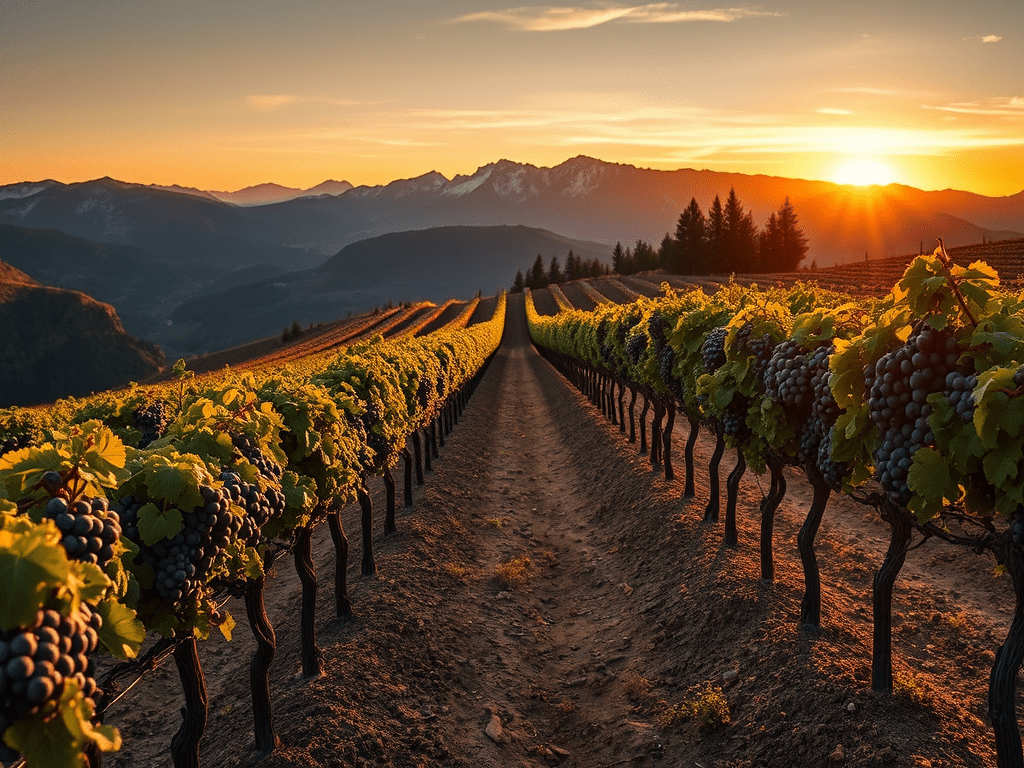
Though no one can top Argentina for elevation, El Dorado is probably the highest on the West Coast, and with his experience there Nolan provides a crash course on the advantages of high-elevation sites:
“El Dorado is unusual in that the AVA is largely defined by elevation, roughly 1,200 to 3,500 feet, and our estate sits about 2,400 to 2,750 feet. As air moves up the Sierra Nevada it is forced upward through orographic uplift, and it cools through the adiabatic process at roughly 4 degrees Fahrenheit per 1,000 feet of elevation gain. Practically, that means ambient temperatures here run meaningfully cooler than the Central Valley below and, importantly, our daytime highs are often moderated during heat spikes.”
He continues adding this: “We typically see more sunshine hours during the growing season. At the same time, higher elevation increases UV intensity, which acts as an environmental signal in the skins and is associated with phenolic development. That combination of sunlight hours and intensity can support skin-derived compounds while still preserving freshness because the air temperatures are cooler than many lower sites.”
Now for the Dirt on Volcanic Soils
Soil types and their impact on wine have attracted considerable attention, especially with the now trending descriptor, “minerality.” Limestone soils remain center stage thanks to France’s Bourgogne, Chablis and Sancerre. Wine historians remind us how an exhaustive search for limestone soil in California to grow Pinot Noir led Josh Jensen to develop Calera in Hollister.
I should mention limestone has been found in the southern end of Paso Robles.
But otherwise, there’s probably more volcanic soils in California than limestone. Oregon, especially in the Willamette Valley ranks right up there with its Jory soil series being heavily volcanic. And not to be forgotten, many of the wine regions of Chile are also distinguished to some degree by volcanic soils.
Lava Cap is owned by the Jones family, and as the winery’s name implies the owners probably know a thing or two about volcanos. Back in 1979, U.C. Berkeley Geology Professor David and his wife, Jean Jones, purchased the property in El Dorado County and established their winery in 1981. The winery is run today by their children, Emmet, Kevin, and Nolan.
David Jones, was a geologist who played a significant role in advancing the theory of plate tectonics. He was attracted to that site in El Dorado because of its volcanic soils, specifically the Miocene Mehrten Formation. After admitting my ignorance here, Nolan kindly helped me understand why these soils are distinct:
“Volcanic soils” can mean many things, but at Lava Cap a large portion of our estate is derived from the Miocene Mehrten Formation. In simple terms, we’re farming on roughly 10 million year old andesitic volcanic and volcaniclastic material laid down as ash flows and volcanic debris, compacted over time, then weathered into a thin topsoil over deep volcanic parent material. In the vineyard, that typically presents as very coarse, rock rich profiles with high macroporosity, rapid infiltration, and generally low inherent fertility compared to heavier valley soils.”
“From a viticulture standpoint, our Mehrten derived soils naturally moderate vine vigor because both plant available water and nitrogen availability are constrained. The canopy is easier to balance, there is less lateral growth pressure, and we typically get better light distribution with less internal shading without extreme intervention. Where the effective rooting zone is shallow or the profile is especially rock dominated, we often see smaller berries and a higher skin to juice ratio, which increases color, tannin, and flavor concentration.”
As a quick summary of the above: The grapevines grow in a thin layer of porous soil over hard, fractured, rock. So drainage is high and the vines are stressed from minimal access to water. Or, as I heard from a noted winemaker many years ago, “vines don’t like wet feet.”
As the winemaker, Nolan works closely with his brother, Emmet, educated as a geologist, who is now in charge of the family’s high-elevation vineyards.
From that background, it was time to focus on the wines from the Tectonic Series. For the two 2023 wines in this series, Barbera and Zinfandel, fruit from the Camino vineyard at 3,000 feet elevation was combined with fruit from another in Fairplay at 2,400 feet. The organically farmed Camino vineyard, is rooted in deep volcanic soil, …and the Fairplay Vineyard is ‘characterized by warmer temperatures and well-draining granitic soils.”
Now the Wines
But when pressed on why these wines are different from other wines from high elevation sites, he said, “when combined with naturally moderated vigor on rocky Mehrten profiles, you tend to get wines that show clarity, energy, and freshness with structure without heaviness. In reds, that often reads as tighter, more defined fruit and a more compact, savory structural feel rather than purely plush or jammy.”
That description was unexpected, since others working with volcanic soils have mentioned the wines acquire an earthy, smoky, or mineral character. In other words, from the geologist’s perspective, the wines don’t acquire an aroma and flavor profile that can be traced to volcanic soil.
While my questions and the responses were going back and fourth, the wines were tasted.
First up was the 2023 Barbera, and here are my notes from a review posted at winereviewonline.com
“Bold and concentrated, this is a unique expression of Barbera. It has an opulent nose of spicy dark plum with some anise and black currants. Big and round on the palate, it delivers lots of ripe fruit and an earthy undercurrent. Plush with integrated tannin and good balancing acidity, it tasted bright and youthful a day after being opened. Dense and concentrated, it was aged in neutral French oak.”
It definitely was different from some of my favorite Barberas from Asti and Alba which tend to be middle weight, tannic and often a bit rustic in the good, bring on the pizza sense.
Three years ago my posted review of another El Dorado Barbera, the 2019 by Boeger, went this way:
“It is a big mouthful of a wine that has an amazing structure and somehow remains vibrant and refreshing. With a little airing, it displays the lovely blackcurrant, dark berry and spice side of Barbera with nicely layered flavors that are surrounded by fine grained tannins. It can be aged for many years, but I found it appealing now with its solid core of fruit and rich texture.”
Without knowing it, I happened upon an unusual style of Barbera. While the Lava Cap and Boeger versions are not identical, they share many similarities. Too many to be a coincidence.
So with his Tectonic Series, Nolan set out to showcase the distinctive red wines of El Dorado. With Barbera, he makes a convincing case. It may not be to everyone’s taste, but it definitely is worth checking out.
We will leave the discussion of the Tectonic Series Zinfandel for another time.

 Norm Roby's Unfiltered Guide to Savvy Wine Shopping