Cool Wines for Warm Days

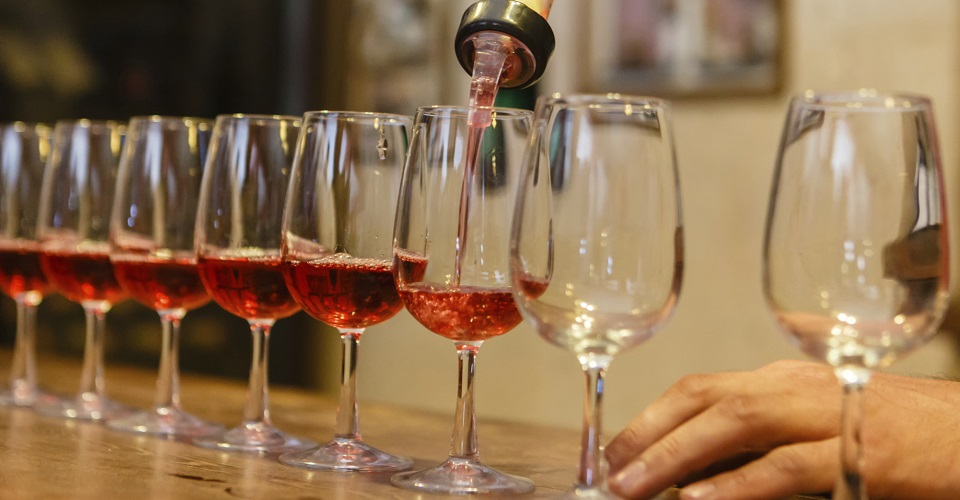
Wine enjoyment changes with the seasons, always has, always will. At least for normal, non-snobby people, who know better than to pop open a red Bordeaux, expensive burgundy or oak-driven Chardonnay when the temperature is over 90F. Sorry, but put aside your bottles of Petrus, The Prisoner or Rombauer Chardonnay for another day, thanks.

When the first heat spell arrived in mid-June, my mind, set on auto-pilot, immediately thought of a good dry rose. Provence and Tavel are associated with French Rose wines, and many West Coast producers have raised  the bar high with Roses of Pinot Noir. 

But if you like a little more flavor in a Rose that is also chillable and can carry over to be paired with your favorite summer dish, Grenache Rose is my fav choice for 2025. Here are a few examples of nicely-flavored, smooth as silk, and fun to enjoy this summer.

Peter William Vineyard Rogue Valley (Oregon) Grenache Rose 2024 $24

As Roses increase in popularity the trend is toward drier and more substantial flavor, but you never know until you taste the wine. Here’s a Rose that takes dry Rose to another quality level.  The appealing color is more coral than pink, and the aroma offers lovely fresh strawberries with a hint of spice. On the palate, this wine sets itself apart from the pack with its rich, round body and ultra-smooth texture. The finish is long with berry-ish flavors and just enough acidity to balance things off and makes you start thinking of food to enjoy it with. 92

Terre Rouge Vin Gris D’Amador Sierra Foothills (California) 2022 $32

The “Vin Gris” name along with the striking salmon-coral color suggest this is a Rose out of the ordinary. The juice was fermented in French barrels normally used for white wines. Made from 52% Grenache and 42% Mourvedre, it is quite rich but also vibrant from start to finish. Strawberry, fresh cut flowers, and a hint of orange rind aromas reward swirling, and the wine is round on the palate with lots of juicy watermelon and yellow peach flavors. Good balancing acidity keeps it fresh, suggesting you can enjoy this all summer long by the glass or with seafood all year round.  94

Verdad Wines Grenache Rose San Luis Obispo, Reeves Vineyard  2023 $20

This beauty is made from the organically farmed Reeves Vineyard in Edna Valley. It comes across as a lively, lovely rosé  with aromas and flavors of crushed raspberries and  citrus. On the palate it is ultra-smooth with persistent flavors that have you thinking of enjoying it with  summer salads and grilled chicken. 92

Mathilde Chapoutier, Côtes de Provence 2023 $12

 Mathilde wines are imported by Michael Mondavi Family.  This 2023 release brings together Grenache and Syrah with a drop or two of Cinsault and Rolle.  After being night harvested and cold fermented, the wine is aged in stainless for 5 months.  Pale pink, it offers a pleasing, delicate aroma of watermelon with a floral note.  Light and vibrant on the palate, it pleases with its direct, gentle flavors. I’ve seen it priced below $8 at many Grocery Outlet Stores.      

Domaine de Triennes, Mediterranée IGT (Provence, France) Rosé 2024 ($18)

This Rosé, a blend of Cinsault, Syrah, Grenache, and Merlot, is everything you would expect from Provence and more. Light salmon in color, with an aroma of fresh strawberries and watermelon, it is lively and refreshing on the plate with lush berry flavors. Not a lightweight, but simply a delicious Rosé with enough richness to enjoy with lunch or by the pool.

Long Walk Vineyard, Rogue Valley (Oregon) 2022 $23

 With Rosé wines being so trendy and Rosés now being made from just about every red grape available, it was refreshing to encounter a Rosé from a red grape that’s ideally suited for a Rosé:  Cinsault.  Popular in Southern France, Cinsault is light in color and low in tannin and remains the backbone for many Provence Rosés.  From vines planted in 2002, this is an attractive pink-copper color and offers an aromatic mix of just-picked strawberries, rose petals and summer flowers. Medium-bodied and vibrant, it is balanced and has just enough acidity to bring it to a delicate finish. 92

Julia’s Dazzle, Columbia Valley (Washington) Pinot Gris Rosé 2023 $20

 This Rosé is full of surprises starting with the fact that it is made from Pinot Gris. Then you look at its unusual onion skin color and move on to its pretty aroma of berries with a rose petal note.  In the mouth, it is soft with refined and lively berry flavors. Creamy in texture, it has just enough acidity to make you beg for a second glass. 92

But if you are among those who prefer red wines, there are plenty of choices out there to enjoy over the long summertime. Even the barbecue crowd can still confidently open a red wine, so you don’t need to change your diet, just change where you look.

Changing your attitude is also important, so you have to first think about red wines that can be chilled. Yes, it is okay to chill a red. You can also add an icecube which may shock some people, but remember, if you paid for the wine, you can do anything you want to do with it. 

It’s best to avoid wines that are high in tannins, or oak as well as those high in alcohol. The reason is that chilling will tone down or mute the fruitiness of a red, leaving a dull aroma and dried out tannic flavor.  

G.D. Vajra, Langhe Nebbiolo DOC (Piedmont, Italy) 2023 $25

Anyone looking for red wines to enjoy over the summer should seriously consider Nebbiolo. Vajra, a pioneer of sustainable and organic farming in Piedmont, offers an excellent example of a Nebbiolo that can be slightly chilled and still be a perfect complement to summertime fare. Light garnet in color with an aroma of berries, fresh roses, and a light note of tar, this wine is refreshing and nicely balanced. The flavors are a juicy mix of cherry, raspberry, and a touch of spice, complemented by light  tannins and good  acidity. Fun to drink and versatile.

91

Delfino Farms Edio Estate Grown Grenache, El Dorado 2023 $42

Grenache is typically rich in flavors and low in tannins, so smooth it often is. El Dorado is home to many wineries making excellent Grenache. Delfino is one of my favs. In 2023, the wine was 100% Grenache, whereas previous vintages were blended with Syrah. Aged for 10 months in neutral French oak and bottled unfined and unfiltered, this is an excellent example of pure, vibrant, mountain grown Grenache. The color is a lively red, and the aroma is all about cranberry and cherry with light spice accents. Medium-bodied, sleek and structured, it has fresh flavors of cherry and plum, with a slight tannic edge in the finish. The acidity lengthens the finish and leaves you thinking of serving it with light cheese or summer fare. 92

Troon Vineyard Druid’s Red, Applegate Valley 2023 $22

Troon is all about biodynamic and sustainability and delicious wines like this red. 

Druid’s Red  is a fun, all-purpose red wine. Made from 30% Syrah, 27% Grenache, 20% Cinsault, 19% Mourvèdre, and 4% Carignane, it offers fresh plum and raspberry aromas backed up by hints of dried herbs. Gentle and smooth on the palate with ultra soft tannins, it continues the lively plum and berry theme with subtle accents of earth and tobacco for added interest. The winery suggests it be served chilled, and it is a great pizza and picnic red to enjoy all summer.

Starfield Cinsault El Dorado $32

 Starfield and several neighbors in El Dorado are giving Cinsault, a popular grape for rose wines, a fresh look on its own.  From its 31 acre vineyard, Starfield produces several Rhône-style wines as well as others in its “Mountain Mediterraneans” program. In its 2019 Cinsault, freshly picked strawberry and cranberry juice dominate the expansive aromas in this medium light-bodied red.  Without any noticeable tannin, it really turns on the charm as its lively flavors expand across the midpalate with fresh berry and spice and red fruit that all persist well into the aftertaste.  More than a summer sipper, this is a versatile food companion.  And delicious.      

La Quercia Montepulciano d’Abruzzo DOC( Italy)  Riserva 2020 $22

From a vineyard organically farmed since the late ‘60s, winemaker Antonio Lamona aged this wine for a year in Slavonian oak. It has a deep, dark color and then you encounter an aroma that is absolutely enchanting. It opens with plums and blackberries along with anise and a light floral fragrance. Juicy and packed with flavors that are vibrant and youthful, it has light tannins that give it some bite in the finish. The flavors continue the emphasis on plum, cherry and earthiness with a fleshy mouthfeel. The slightly tannic finish makes this a great choice for the BBQ crowd.  This is a lot of wine for the price! 92

So there you are! Bring it on summer!!
Is Grenache the New Pinot Noir?

Is Grenache, aka Grenache Noir, the next Pinot Noir?  That’s not as far-fetched as it may seem at first glance since the Grenache name has become highly visible with the growing popularity of Grenache Rose. But no, I don’t think there will be a follow up to “Sideways” with Miles dumping a bucket of Pinot and singing the praise of Grenache.

However, it has come a long way and Randall Grahm puts things in proper perspective when saying, “I never thought I’d see it but Grenache definitely seems to be having a moment.”

While Grenache is not about to replace Pinot Noir, I can’t count the times a recent conversation or comment about Grenache was somehow linked to Pinot Noir. Bill Easton of Terre Rouge Vineyards sees it as “sort of a warmer climate Pinot Noir. Delicate; less tannic; tends to be more complex when blended with a bit of Mourvèdre and Syrah” while Mike McCay of McCayCellars calls it “Lodi’s Pinot Noir.”

In El Dorado, Cedarville’s Jonathan Lachs told me “I introduce our Grenache as our middleweight wine, similar to a Pinot Noir, though equally regal, with less oak dependance and a tremendous sense of place.” 

I’ll return to a comment from Randall: “As someone far wittier than I once said, “Grenache is the grape that Pinot Noir drinkers are in fact looking for.”  My slight reformulation of that is:  “For my entire career I’ve been trying to make Burgundy in California.  It just took me a while to realize that the most successful “Burgundy” in California is not likely to be made from Pinot Noir.”

After several more winemakers emphasized the grape’s Pinot Noir like delicacy and sensitivity to site, that was enough for me to put on my deep diving gear and check out what’s going on with Grenache in California. 

A Little Background

The first step took me back to 1989 when the Rhone Rangers were making news and being the cover story of The Wine Spectator. That was also the year of Randall Grahm and Bonny Doon’s first vintage Grenache named “Clos de Gilroy.” There were only a few winemakers who viewed it positively and were aware of the importance of Grenache in Châteauneuf du Pape. The most  passionate voice was that of John Alban who admits today that “Grenache has been our unwavering obsession.”  From his first vintage onward, he says he  was “determined to figure out how to grow and produce a California Grenache that people might just respect.”  

He went on to clarify his position: “When I spoke of establishing respect for Grenache, it was breaking the paradigm and silly notion of noble varieties: nobility is in the wine, not in the variety.  I wanted to make a Grenache that people viewed as delicious and cellar worthy.”

Like many of his fellow Rangers, Alban knew Chateau Rayas was a rare Chateauneuf-du-Pape that was predominantly Grenache. Unlike them, he went to France and apprenticed in the cellars of Rayas. In a recent conversation, he explained what he and others were up against when he returned:  “The prevailing notion was that California Grenache was limp in color, texture, structure, and appeal. I have referred to these wines as ‘pinky dink picnic wines.’ These warm climate, deep soiled plantings pre-dated sincere efforts for a quality wine by many decades.” Starting out way back then, he adds, “you naturally have a consumer base that is imprinted with the perception and experience of Grenache as mass produced plonk.”

Unlike the other Rhone varieties, Grenache was not unknown. It just had a bad reputation. In the mid 1970s, there were 20,000 acres planted in California.  In 1990, there were still plenty planted, some 13,000 acres, but all but 1% was in the warm Central Valley. Overproduction was the main problem. Jason Hass of Tablas Creek recalls that when his dad, Robert Hass, was considering starting a winery in California, there was “a photo my dad sent me of him holding a Grenache cluster he’d found in the Central Valley. It was the size of a basketball and probably weighed 20 pounds!” 

Moving Inland

Today’s total acreage approaches 5,000 and the majority is in the Central Coast, not the hot Central Valley.The good news is that over half of the current acreage has been planted since 2000, and much of the newer vineyards were in Santa Barbara, San Luis Obispo, and  Paso Robles. On a smaller scale, but no less important, were new plantings of Grenache in the Amador and El Dorado counties since 2000.

As a silver lining,California’s  phylloxera epidemic in the 1990s opened the door for exploring clones, emphasizing matching rootstocks to clones and better farming practices: all of which eventually helped resuscitate Grenache. In 1989 Tablas Creek began importing cuttings from Beaucastel, and John Alban was focusing on clones from Rayas. With a new emphasis on sustainable farming and organic practices, he and others went to work on controlling Grenache. He adds, “My effort started from the ground up: careful selections of the variety that had demonstrated the ability to make profound wine, rootstocks that would limit vigor, and vineyard sites that had the potential for greatness.”

Leaving the question of greatness aside for now, Grenache has certainly come a long way and has responded especially well to today’s sustainable and or biodynamic farming approaches. Selecting vineyard sites is part of the story, and I discovered there are two opposing camps: the high elevation advocates and the cool-climate school.

Mountain High

 I was surprised to find Grenache thriving alongside Zinfandel in the Sierra Foothills. So I asked around and Nolan Jones of Lava Cap has this to say when asked how it compares to Zinfandel:

“Grenache is considerably easier to grow and manage both in the vineyard and in the cellar. We rarely see problems with mold or mildew in our Grenache, whereas Zinfandel requires significantly more attention to prevent these issues. The ripening process also differs, with Zinfandel often needing 2-3 passes in a block due to unevenness. Grenache, on the other hand, ripens uniformly. Grenache also demonstrates good resilience to both heat and rain, unlike Zinfandel, which tends to raisin in heat and mold in rain.”

Lava Cap, family owned since 1986, has been making Grenache since 2000. Founded by a geologist, the family established vineyards at elevations high above the valley and coastal fog belt, ranging from 2,400f-2,700ft. The more I looked into the success of Grenache today, high elevation sites are one of the keys.  Basically, Jones explains, “the elevation and the resulting cool air, play a key role in limiting elevated temperatures during extreme heat spikes.” 

In recent years, Argentinian Malbec has dominated the link between elevation and wine quality, but now Grenache is adding a voice. When talking about it as a “mountain wine,” Jones explains, by that “I mean the fruit is fresh and vibrant as opposed to bulky and heavy, the acid is bright, and phenolics show a firm structure that is unique to high elevation sites.”  

Not far away is Cedarville Vineyards and its organically farmed estate at 2,500 feet in the Fair Play and El Dorado AVA. Delfino Farm’s Estate Grenache sits on granite soils at the 2,800 ft level. Also in El Dorado County, Madrona which also makes an excellent Grenache is situated at 3,000 feet in the El Dorado County Appellation. Madroña consists of three family-owned vineyards, and its 2019 Grenache, reviewed earlier, is a real bell-ringer.

In Amador County, Bill Easton of Terre Rouge has been making wines from Grenache since 1985. For his top of the line L’Autre he sources fruit from The Duarte-Georgetown Vineyard, located at 2,500 feet near the town of the same name. Another of my favorite discoveries is Weisinger Winery in Southern Oregon whose attractive Grenache is from the Avra Vineyard, elevation 2221 feet.

Cool Climate Grenache

However exciting those Mountain grown Grenache may be, the major hub of activity is the Central Coast where winemakers in Santa Barbara are promoting cool climate Grenache. Ironically, it was at the Hitching Post Restaurant in Santa Barbara where Miles in Sideways cursed Merlot and started the big push for Pinot Noir. 

In describing its 2023 Santa Barbara Grenache, Stolpman Vineyards, one of my favorite wineries, offers this tidy summary: “Light hued, cool climate Grenache has proven itself as one of the most compelling success stories out of Santa Barbara County.  When we nail the harvest date, the Grenache varietal naturally gives a ripe, fleshy red-fruit profile while retaining bright verve and balance.” And the Santa Barbara Winery adds this overview:: Grenache grown in cooler climates tends to develop spicier components than in warmer climes, …Cool climate Grenache has a long hang time for flavor development.”

When Bob Lindquist, an original Rhone Ranger, made his first Grenache at Qupe in 2001, he sourced the grapes from the  Purisima Mountain Vyd in Ballard Canyon. He is now making Grenache from the Reeves Vineyard in the San Luis Obispo Coast AVA under his own label. Here’s his take: “Cool climate Grenache is quite different from most of the great Grenache wines of the world, which are normally grown in warm climates such as: Châteauneuf du Pape; Priorat; Barossa or even Paso Robles.  This Grenache is grown in an area where Pinot Noir and Chardonnay dominate and excel.  The unique climate and geography of this part of the Central Coast allow Grenache to ripen fully, 4-6 weeks after Pinot Noir ripens! 

A few years ago I was blown away by the 2018 Amor Fati Grenache from Santa Maria Valley in Santa Barbara. It was so lively and complex that it remains one of my highest rated wines. At the time it seemed odd that the Tooth & Nail winery in Paso had developed the cool-climate Murmur Vineyard for Grenache. Now, nothing surprises me about Grenache.

News from Paso

As for Paso Robles, Tablas Creek Vineyards is a major part of the Grenache story. From its vineyards in the Adelaida District planted to the Beaucastel clones, many wineries have obtained cuttings from its nursery, and the winery now cultivates 18 acres of Grenache. When asked for his thoughts on Grenache today, Jason Hass said, “As for Grenache, yes, we find it versatile and rewarding. It’s relatively vigorous, productive, and easy to grow. It’s great as a lead player in a blend, as a supporting player, and (most years) as a varietal wine. It has fruit, spice, and acid.”

Anyone interested in Grenache and all Rhone grapes should subscribe to the Tablas Creek blog. There you’ll find a detailed history of all the varieties. If you really want to go deep, a recent post evaluated  20 different blocks of Grenache made by Tablas Creek in the 2024 vintage. 

Also, as part of its single vineyard line, Tablas Creek recently added a Grenache from

the Hook Vineyard, part of the Hahn property in the Santa Lucia Highlands, in Monterey County. The cool, coastal-influenced 122-acre vineyard includes 21 acres of Grenache Noir from Tablas Creek clones. “The climate, quite different from Paso Robles and on the coolest edge of where Grenache will ripen, leads to very long hang times, dark colors, and thick skins, making this 100% Grenache a fun contrast to our higher-toned expression of the grape.”

Yes, there are new and fun Grenache wines to explore. My conversation with Jason ended on this note: I also love that it’s a great rosé grape and (I think) a lovely grape to make a chillable red from. That gives growers flexibility to respond to a changing marketplace. And of course there’s the white variant Grenache Blanc, which has proven to be a superstar here in California.”

Of the many other wineries making Grenache in Paso, I was intrigued by the way Calcareous Vineyard introduced its 2023 Grenache with these words: Grenache has found a home in Paso Robles as not only a key contributor to our Rhone blends but as a standout single varietal as well. Known for its elegant texture, lively fresh fruit, and great balance, our Grenache is easily one of our best food pairing wines.”

Yes indeed, from Paso we hear Grenache is “a chillable red” and “one of the best food pairing wines.”

For anyone considering jumping on the Grenache bandwagon, one winery, A Tribute to Grace, is a Grenache specialist.  No kidding.  At its tasting room in Los Alamos, it offers nine different Grenache bottlings.

 And now for the last word, I yield to Paul Bush of Madrona, “Approachable in nature for sipping on the deck, but serious enough for the table. This is Grenache!” 

 Wines that reinforce the notion that Grenache offers a wide range of styles.

Delfino Farms Edio Vineyards El Dorado Grenache 2023 $40

Delfino’s high elevation vineyard was planted primarily to the Alban clone of Grenache. In 2023, the wine was 100% Grenache, whereas previous vintages were blended with Syrah. Aged for 10 months in neutral French oak and bottles unfined and unfiltered, this is a super example of pure vibrant, mountain grown Grenache. The color is a lively red, and the aroma is all about cranberry and cherry with light spices. Medium bodied, sleek and structured, it has fresh flavors of cherry and plum, with a slight tannic edge in the finish. The acidity lengthens the finish and leaves you thinking of serving it with light cheese or summer fare. 92

Lava Cap Winery El Dorado AVA, Sierra Foothills (California) Grenache 2023 $32

Deep red in color, it immediately offers an effusive aroma of baking spices with cranberry and light floral. The palate is smooth with vibrant flavors of black fruit, mostly plum and hint of dried herbs. Finishes with light, gentle tannin and a lingering note of plum. It was aged for 9 months in neutral French oak. Overall, it showcases youthful fruit and spice and you’d never know when tasting it that the alcohol is 14%. Drink now but will hold up well over time.  450 cases made. 93

 Lindquist Family Wines San Luis Obispo Coast, Reeves Vineyard  Grenache 2022  $45

From the cool-climate SLO region, this Grenache is blended with 20% Syrah. Each variety is fermented separately and aged for 11 months in oak. Then, once combined, the wine ages an additional 5 months. Dark in color, it has an aroma of black cherry and cranberry with plenty of spice. Solid and concentrated in flavors, it remains vibrant on the palate with a hint of herbs. Savory overall, it can be slightly chilled without losing its core appeal. As attractive as it is now, it will age with grace for another 5 years, probably longer. 94

 Terre Rouge Grenache “L’Autre”, Sierra Foothills 2016 $35

(78% Grenache, 15% Mourvèdre & 7% Syrah)

L’Autre means “the other one, “ it is now the winery’s top Rhône varietal blend. From the 2016 vintage, this confirms that Grenache based wines do indeed develop with cellaring. The Grenache is from Duarte-Georgetown Vineyard located at 2,500 feet and the budwood is from Chateau Rayas, Beaucastel, and Remelluri in Rioja. The wine opens immediately and is full of ripe plum, light spice and herbs on the nose. On the palate, it is amazingly rich and round yet elegant with black fruit flavors and just a hint of gaminess. Finishing soft with a velvety texture, it is so inviting to drink now but has the balance to continue to please over the next several years. 

The winery says it “is a dead ringer for a top Gigondas,” and that is an understatement.  95

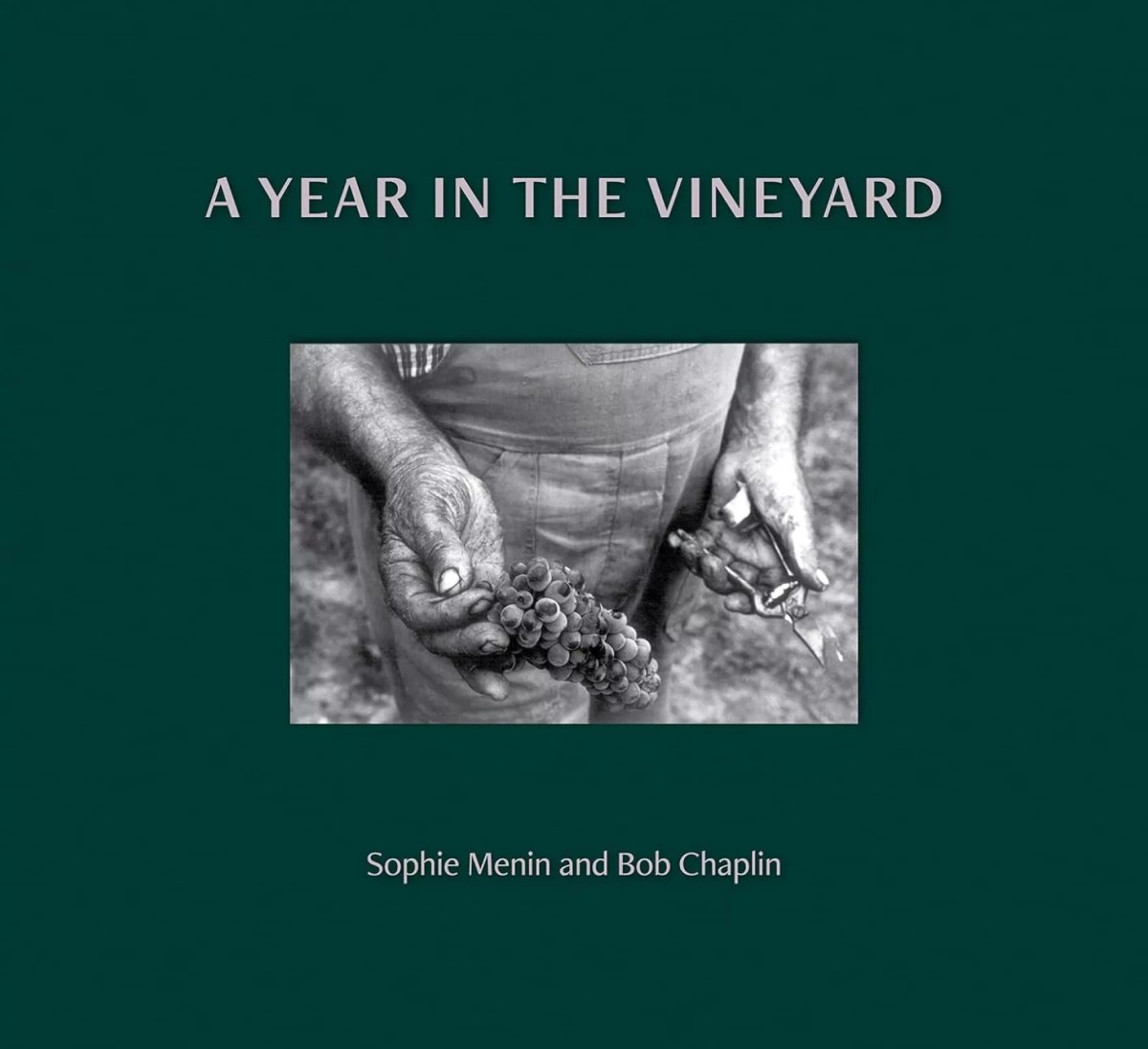
A Year in the Vineyard

A Year in the Vineyard

Sophie Menin and Bob Chaplin

Published by Cultureshock, 2024

Foreword by Hugh Johnson

This book is all about the cycle of the vine. It is divided into five sections:  dormancy, budburst, 100 hundred summer nights, harvest, and preparing for rest. Through its magnificent photos and insightful commentary, it also “documents the ongoing evolution of viticulture.” 

Sophie Menin notes in the Introduction that the book is not trying to catalogue every vineyard activity or feature every wine region in the world, but instead, she explains: ”we capture gestures, steps in a dance with the natural world” as winegrowers, vignerons “search for practical solutions to changing conditions.”

When the book arrived, my first thought was “wow, this is one heavy book.” But to be fair, I then went carefully through it, stopping at each photo, reading the sidebars, and when finished, the word “heavy” came back to mind. “Heavy” as the hippies used it back in the day meant powerful and significant, something that really grabs your attention. Nowadays with the TikTok crowd, this book would be  “heavy on meaning.” So let’s just go with thought-provoking. 

A Year in the Vineyard should be made available to every student in every wine class today. Whether referenced in an introduction to wine, or a certified wine course, this book will help put everything back into perspective. It captures the reason why we enjoy, study, and share wine.  Unlike hearing someone lecture about the importance of pruning and crop size in the Spring or the burning of cuttings in Europe after the harvest, you can see for yourself and practically experience them through these superb photos.

My favorite scene, the one that gets you thinking, is on p 80-81. In it, there’s a woman in the vineyards, likely a worker, but maybe the owner, she’s surrounded by vines with full clusters but is looking up at the dark ominous clouds heading her way. We’ll never know if it rained, hailed, or passed over. 

Another one depicts 10 workers bending over in the vineyards of Champagne Roederer as they prune and thin the shoots which will have an impact on the harvest months later.

Cultivating vines, as this book shows, also involves many aspects of nature. Butterflies are important, so are horses in ploughing some vineyards, and then roses are often grown to warn growers of possible diseases. And, yes, bats can be employed to discourage hunting moths from ruining the clusters. In some regions birds have to be discouraged by netting. Then there are some healthy, helpful pigs working the vineyards of Bairrada, Portugal.

 What makes this book so compelling is that the photos come from different sources, so there’s  different perspectives along the way. A number are from Bob Chaplin and Sophie, a few from Jon Wyand, and others from independent photographers as well as from wine producers. 

And the vineyard scenes are also eclectic, ranging all over the wine map. No favorites or pay back here! 

This book will answer lots of questions.

The book is of course available from Amazon. 

Better yet, signed copies are available at: